The lithium market has been turned into one of the most important players in the transition toward clean energy, powering everything from electric vehicles down to energy storage systems. Demand for lithium is set to skyrocket as the world ramps up efforts to cut carbon emissions. But with price volatility-most particularly in 2024 and 2025-what can investors expect in the coming year?
The given blog on lithium price predictions for 2025 has gone a step further in providing comprehensive data, expert views, and deep analysis that put one's thoughts into a broader perspective. Be it an established investor or a new entrant into the field of metals, the trends and hidden forces that prevail for this metal will make the course of informed decision-making quite clear.
The Role of Lithium in the Green Energy Revolution
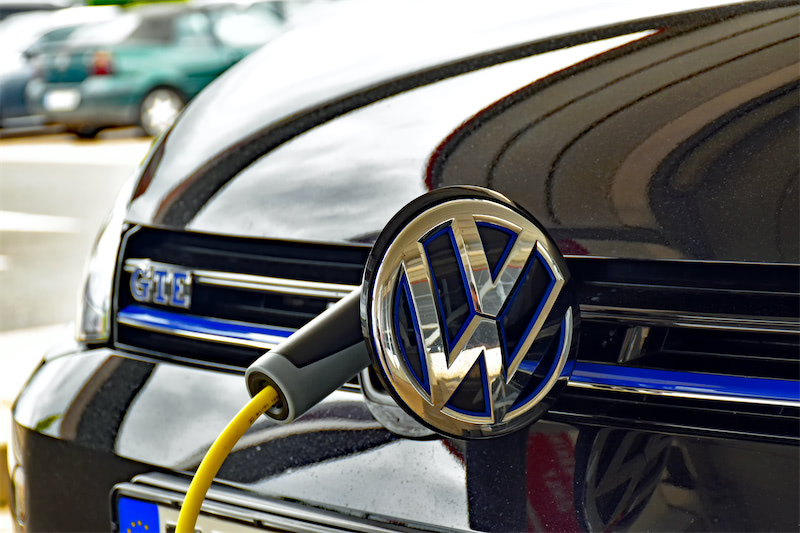
Naturally enough, this puts lithium right in the middle of the green energy revolution, not least with respect to growing market demand for electric vehicles and storage. According to a projection by the International Energy Agency, 145 million electric cars are expected to hit the roads by 2030. To many analysts, this trending electrification of everything drives lithium demand since the metal will be at the core of making lithium-ion batteries.
Prices of lithium shot upwards dramatically since 2021 amidst a shifting supply chain and increasing demand in the global market. Here, investors, policymakers, and businesses capture the volatility of lithium prices. It would be of greater importance to understand those factors which are going to influence lithium prices in 2025.
Lithium Price Trends: 2023 and 2024
The best way to project the price of lithium in 2025 would therefore be by reviewing market dynamics throughout the year 2023 and 2024. In 2023, lithium prices saw aggressive swings stirred by a perfect storm of robust demand, supply chain disruption, and geopolitical uncertainty. Lithium carbonate, for instance, shot upwards in the first quarter of 2023, passing USD 80,000 per metric ton, before going through a serious drawdown.
However, the prices of lithium hydroxide and lithium carbonate started to stabilize towards the end of 2024, partly due to resolution on some of the supply chain problems, and an increase in production capacity, particularly from leading lithium producers such as Chile, Australia, and China. Such was the case despite remaining volatile due to ever-growing demand for EVs and energy storage applications.
In January 2025, the average price for battery-grade lithium metal was USD 80,358.59/mt, down about USD 341.42 from the previous week. The price for industrial-grade lithium metal stood at USD 74,941.16/mt, marginally down.
This probably is a factor of seasonality, changes in the cost of production, or regional factors as an adjustment to the gradual normalization of the situation with the pandemic. Such fluctuations do not yet indicate any negative trend but reflect the healthy settlement of the market prior to its steep rise, as forecasted in 2025.
Main Drivers of Price Movements in Lithium in 2025
Various factors will continue to determine the prices of lithium in 2025, and companies or investors will be well-advised to be very attentive to these dynamics.
1. Demand from Electric Vehicles (EVs) and Energy Storage
Demand for lithium is driven mostly by the use of lithium-ion batteries. As governments worldwide raise their commitments to electrification, demand for EVs will keep on a fast growth track in 2025. Besides cars, lithium-ion batteries have become crucial for large-scale energy storage system development that would stabilize renewable energy grids.
This will lead to a sharp increase in lithium consumption. SMM estimates in its Lithium Industry Annual Report 2024 that lithium carbonate demand will increase by 25% YoY in 2025, mainly driven by EV and ESS demand.
2. Supply Chain Constraints
Firstly, lithium production is highly concentrated geographically, with a high share of supply from just a few major producers in countries like Chile, Argentina, Australia, and China. Their mining has gone up, though capacity remains somewhat constrained in some areas, thus making supply a challenge. With an effort to ramp up such production, regulatory hurdles, environmental concerns, and labor challenges may continue to limit supplies. This would obviously keep upward pressure on lithium prices likely in 2025.
For instance, the SMM report for the recent period showed that the lithium hydroxide (56.5% battery-grade) price continued its upward trends, having reached an average price of USD 9,130.80/mt as of January 15, 2025, thereby setting a wider market pressure on supplies.
3. Technological Advances and Recycling
Besides this, innovation in the methods of extraction and growing impetus for recycling could also stabilize the price of lithium. Companies are investing in the development of better extraction technologies, including Direct Lithium Extraction (DLE), promising efficiency and lower environmental impact for mining lithium. This forms one critical area in which price movements need to be considered, given that breakthrough technologies could ease some of the supply constraints.
4. Geopolitical Factors and Export Restrictions
The geopolitical situation can last longer and has effects on lithium prices. In January 2025, the Chinese Ministry of Commerce announced its intention to put restrictions on the export of certain types of lithium processing technologies that can further complicate the smooth supply chain flow in lithium around the globe. Furthermore, unpredictable changes will occur in the international trade scenario, especially the one which involves major lithium producers.
Therefore, such ambiguities give complex dimensions to any sort of price prediction, since these are the shocks that sometimes lead to spiraling up of prices or unprecedented volatility.
Prediction of Prices for Lithium in 2025
Under current market trends, the prices of lithium in 2025 are expected to further increase, possibly remaining volatile. Some analysts are projecting a value of lithium within a range between USD 9,000/mt and USD 12,000/mt for battery-grade lithium carbonate at the end of 2025, due to demand that would increase more than supply.
Key forecasts are that battery-grade lithium will increasingly become more volatile in price, given the tight supply, while industrial-grade stabilizes at a somewhat lower price level. Meanwhile, lithium hydroxide prices will similarly go up as the push for higher performance in batteries continues.
SMM's Role in Supporting Investors and Businesses
The SMM or Shanghai Metals Market provides daily updates on lithium prices with elaborate reports, analysis, and forecast. SMM provides incomparable insight into lithium market dynamics for investors and businesses in need of accuracy and timely information.
SMM's research reports, such as the Lithium Procurement Strategy Reports, delve deep into supply-demand fundamentals, cost structures, and market trends. For example, the SMM Lithium Hydroxide Procurement Strategy Report covers NEV market dynamics, consumption patterns, and the international trade of lithium, providing critical data businesses need to get ahead.
Besides, Lithium Index Prices by SMM reflect the updated price movement of battery-grade lithium carbonate and hydroxide, hence providing timely data for investors to make their trading decisions. For January 2025, the lithium carbonate index stands at USD 9,261.55/mt, moving upward due to the factors discussed.
Conclusion: A Bright Future for Lithium Prices
That means lithium prices continued to rise in 2025 within the electric vehicle and energy storage sectors, which have demanded massively under strains in a supply chain entangled with the rise of geopolitics. The long term might be bright, since technological innovation has gone ahead considerably to handle extraction and recycling.
From price forecasting to a detailed procurement strategy, SMM provides the critical intelligence businesses and investors need to understand this dynamic market. Equipped with robust data and insight from SMM, companies can position themselves to make informed, strategic decisions in the lithium market that's moving at such a rapid pace.
![[Observação Semanal] Cadeia industrial do cobalto em baixa na primeira semana após o feriado; preços dos sais de cobalto continuam em queda gradual; algumas empresas permanecem com produção reduzida ou paralisada](https://imgqn.smm.cn/usercenter/GVVKq20251217171728.jpg)
![[SMM News] Bikita, da Sinomine, aumentará capacidade anual de processamento de espodumênio em 50%, para 3 milhões de toneladas até o 2º trimestre de 2027](https://imgqn.smm.cn/usercenter/akEdZ20251217171728.jpg)
![[SMM Notícias Flash] Savannah Resources perto de segundo acordo de compra para o projeto de lítio Barroso em Portugal](https://imgqn.smm.cn/usercenter/WBREf20251217171728.png)