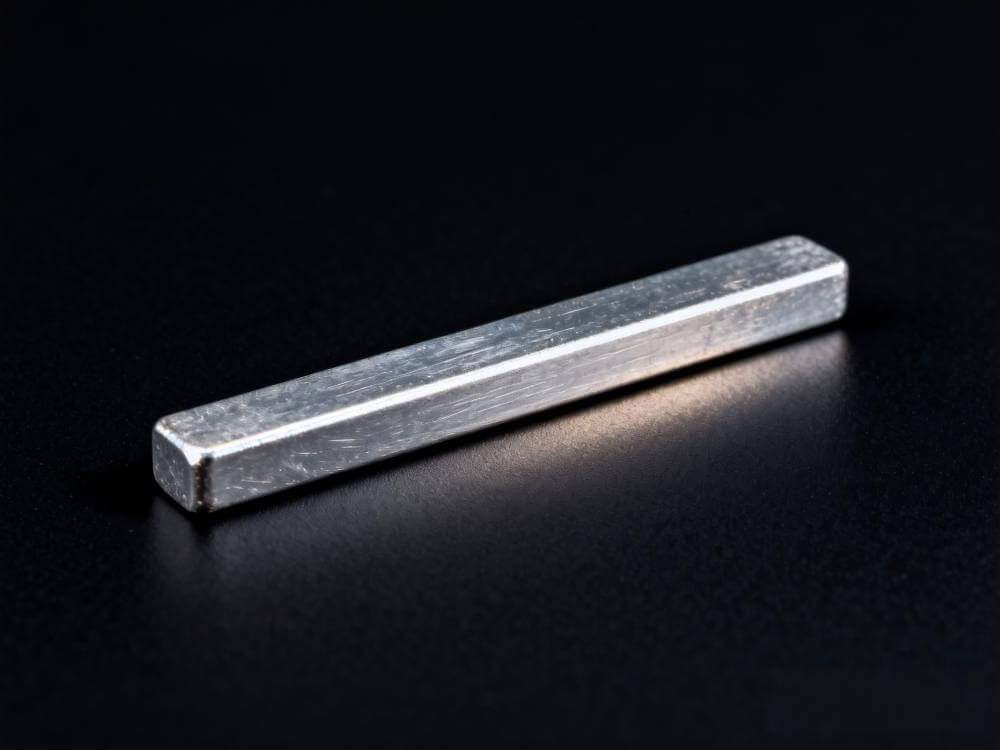
According to SMM data, the antimony market showed a stable-then-rise trend this week, with the price center continuing to move higher. The average price of #1 antimony ingot stabilized at 92,000 yuan/mt from Monday to Wednesday (Aug 10-12), was raised by 1,500 yuan/mt to 93,500 yuan/mt on Thursday (Aug 13), and remained unchanged on Friday. 99.8% antimony trioxide (domestic) largely moved in tandem, with its average price stabilizing at 82,000 yuan/mt from Monday to Wednesday, edging up by 500 yuan/mt to 82,500 yuan/mt on Thursday (Aug 13), and unchanged on Friday. The increase in antimony trioxide was noticeably smaller than that in antimony ingot, reflecting that downstream demand from flame retardants and other end uses improved but remained mild. In terms of pace, prices in the antimony products market mainly climbed steadily during this week's trading days; smelters generally held prices firm and held back from selling under loss-making pressure, and the market showed clear directional momentum. The mid-week rise was mainly driven by warming expectations of continued buyer stockpiling, but market participants widely reported that downstream rigid-demand restocking slowed noticeably and speculative interest also cooled, with overall market sentiment shifting to mildly bullish.
| Date | #1 Antimony Ingot Lowest Price | #1 Antimony Ingot Highest Price | #1 Antimony Ingot Average Price | Antimony Trioxide Lowest Price | Antimony Trioxide Highest Price | Antimony Trioxide Average Price | Change |
|---|---|---|---|---|---|---|---|
| 2026-08-10 (Mon) | 91,000 | 93,000 | 92,000 | 81,000 | 83,000 | 82,000 | Antimony +2,000 / oxide +1,000 |
| 2026-08-11 (Tue) | 91,000 | 93,000 | 92,000 | 81,000 | 83,000 | 82,000 | Unchanged |
| 2026-08-12 (Wed) | 91,000 | 93,000 | 92,000 | 81,000 | 83,000 | 82,000 | Unchanged |
| 2026-08-13 (Thu) | 92,000 | 95,000 | 93,500 | 81,500 | 83,500 | 82,500 | Antimony +1,500 / oxide +500 |
| 2026-08-14 (Fri) | 92,000 | 95,000 | 93,500 | 81,500 | 83,500 | 82,500 | Unchanged |
| Weekly Average | 90,500 | 92,900 | 91,700 | 78,750 | 81,400 | 80,075 | Weekly +1.6% / +0.6% |
According to SMM estimates, China's antimony ingot production in July 2026, including antimony ingot, converted crude antimony, and antimony cathode, jumped about 30% MoM, showing a sharp increase. Customs data show that antimony ore imports from outside China in April, May, and June all exceeded 10,000 mt, and large ore imports inevitably translated into higher antimony ingot production. In H1 2026, cumulative antimony ore imports reached 59,347.5 mt in physical content, already exceeding total imports for full-year 2025.
June antimony ores and concentrates imports were 10,688.6 mt, down 2.7% MoM from 10,980.1 mt in May, but still above the 10,000 mt mark. However, the previously market-worried "Spain variable" source is not sustainable. Combined with limited domestic mining output growth, the tight raw material pattern remained unchanged. Notably, a planned #1 antimony ingot smelting project with annual capacity of 10,000 mt in Xiaoerkule, Xinjiang may affect the future supply landscape. From a cost perspective, mining costs of some large producers' self-owned antimony ore plus smelting processing fees are now relatively close to spot prices, and smelters' willingness to hold prices firm and hold back from selling is highly consistent, which is also the core reason prices could sustain their uptrend this week.
June antimony trioxide export volume was 474.3 mt, up 145.6% MoM from about 193 mt in May, with Russia as the top destination. Export channels showed a diversification trend, but total volumes remained low. Over the same period, unwrought antimony exports were zero, indicating antimony ingot exports were still restricted. The import structure shifted markedly, with Spain's share rising; export channels became more diversified, but total volumes remained low. Looking at Thai trade data, Thailand's antimony ingot imports in June were 1,405 mt, up 173.1% MoM and a half-year peak, sourced mainly from Vietnam, Myanmar, and Hong Kong; exports were 689 mt, up 132.1% MoM, mainly destined for Belgium, South Korea, and Japan. Thailand's industry chain pattern of processing antimony ingots into value-added exports to developed economies is clear, with export unit prices generally above import costs and a notable processing value-added effect.
| Data Indicator | Latest Month | Previous Month | MoM Change |
|---|---|---|---|
| Antimony ores imports (mt) | 10,688.6 (Jun) | 10,980.1 (May) | -2.7% |
| H1 cumulative antimony ore imports (mt in physical content) | 59,347.5 | - | Exceeds full-year 2025 |
| Antimony trioxide exports (mt) | 474.3 (Jun) | 193.2 (May) | +145.6% |
| Unwrought antimony exports | 0 (Jun) | 0 (May) | Remained zero |
| Antimony ingot production | Jul +30% MoM | Jun | +30% |
Export controls continue. Since July 1, export controls on strategic minerals have been upgraded to "whole-supply-chain networked supervision"; compliant export channels have narrowed, which will further tighten domestic available supply. Although antimony trioxide exports rose sharply MoM, total volumes remained low compared with normal monthly exports of several thousand mt, and the industry chain's export willingness improved but the overall stance remained cautious.
On end-use demand, as the traditional off-season draws to a close, operating rates across downstream sectors are expected to rebound steadily; for example, operating rates in the flame retardant and alloy sectors are expected to increase with the arrival of the September-October peak season. After earlier capacity contraction, the PV glass industry also has production resumption expectations, but demand for sodium pyroantimonate still needs to be observed and verified. Bromine prices rose to 36,500 yuan/mt on tightening supply and consolidated at highs, providing cost support for antimony prices. However, after restocking for rigid demand in the previous period, end-users now hold some raw material inventory and are not highly motivated to continue restocking in the near term.
From this week's antimony trioxide transactions, downstream acceptance of high-priced antimony trioxide supply remained cautious, and there was some resistance in passing this through to the upstream smelting segment. This was also an important reason why this week's antimony price rise was measured and lacked momentum for a one-sided sharp rally. For example, sodium pyroantimonate production in July fell 20% MoM, and two consecutive months of decline showed that the peak demand season had not arrived.
From this week's trend, the pace of price increases reflected the market's core contradiction: a game between smelters' willingness to hold prices firm and downstream acceptance of high prices. Looking ahead to next week, the core logic supporting antimony prices remains solid: smelters generally face loss-making pressure from inverted prices of externally purchased raw materials and finished products, and their willingness to hold prices firm and hold back from selling is highly consistent; meanwhile, the approaching September-October peak season is further strengthening downstream expectations of future restocking.
Next week, antimony prices are expected to hold up well. Given that current gains are relatively mild and upward momentum still needs to accumulate, the probability of a sustained one-sided sharp rally is low. Attention should be paid to downstream actual acceptance of cargoes after price increases. In the medium and long term, over the next month, the antimony market is expected to continue its firm pattern as peak-season demand materializes. Late Q3 to early Q4 is the traditional peak consumption season for antimony products; the flame retardant industry entering its production peak will boost consumption of antimony trioxide and antimony ingot, and the PV glass industry has production resumption expectations. On the supply side, China's antimony ore is constrained by resources and can hardly see significant volume growth; export controls continue to deepen, and the price center is expected to rise gradually.
Key Points to Watch:
- Downstream actual acceptance of antimony ingot prices after increases and the sustainability of transaction volume expansion
- Changes in Antimony Oxide Capacity Outside China and China's Export Recovery Progress
- Actual Verification of "September-October Peak Season" Demand
- Subsequent Changes in Antimony Ore Imports
- Progress on the 10,000 mt Antimony Ingot Smelting Project in Xiaoerkule, Xinjiang
- Bromine Price Trend and Cost Support
- Enforcement of Strategic Mineral Export Control Policies
![Antimony Prices Drop Across the Board [SMM Antimony Market Spot Weekly Review]](https://imgqn.smm.cn/usercenter/aNMzb20251217171724.jpg)