

Historical cold-rolled and hot-rolled profitability data shows cold-rolled spot profit exceeded that of integrated hot-rolled coil in most cycles. However, from end-2025 to H1 2026, profit hubs for both shifted lower in tandem, their curves converged persistently, and cold-rolled's traditional processing premium over hot-rolled contracted markedly. At present, spot profits for both hover near break-even within a narrow range, and sector profitability has notably declined. On one side, raw material costs have been resilient, underpinning finished steel price floors; on the other, end-use demand has weakened continuously since the start of this year. Cold-rolled prices have struggled to hold, while steel mills have taken better hot-rolled coil orders than cold-rolled this year, with firm hot-rolled prices squeezing cold-rolled processing margins and narrowing the profit gap further.
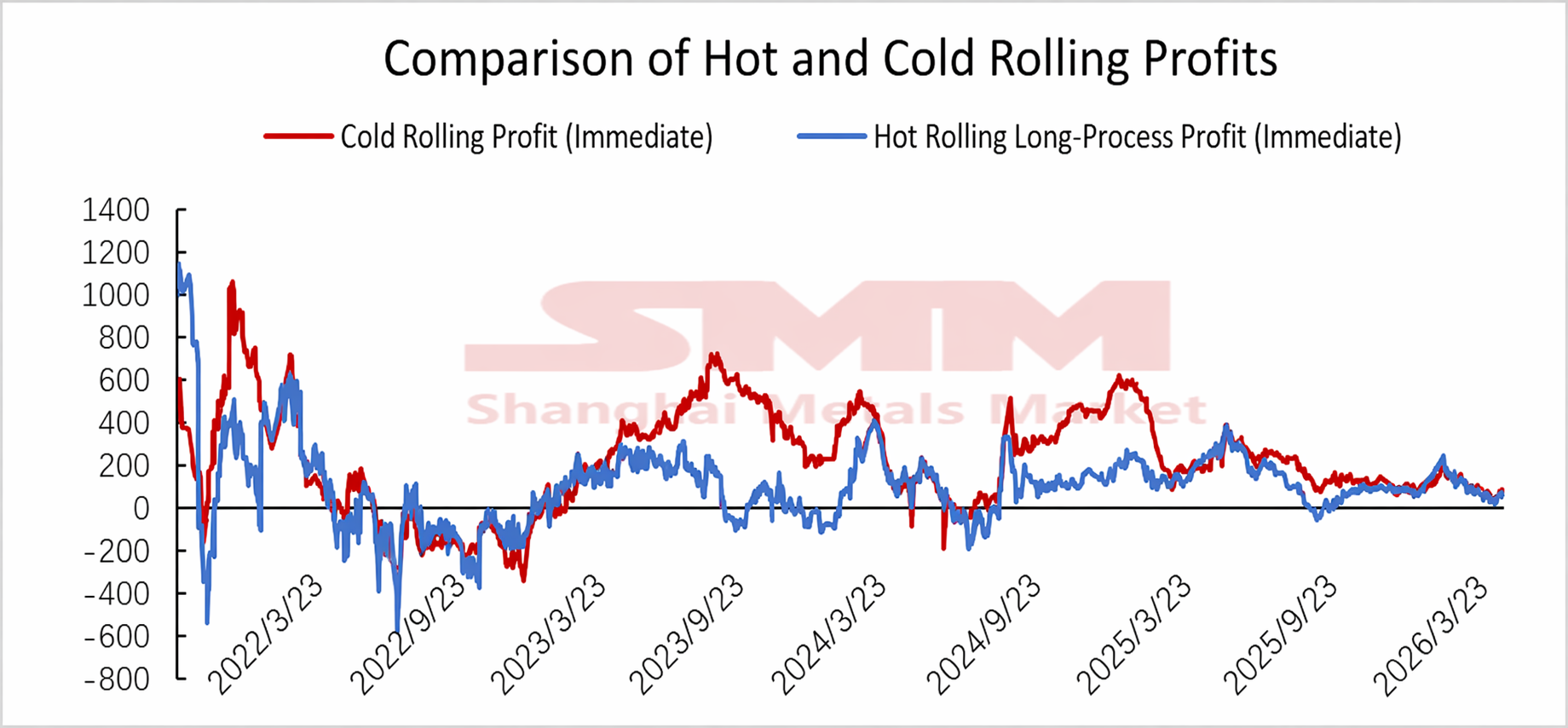
Looking to H2 2026, cold-rolled and hot-rolled profits are expected to consolidate on a subdued note overall. Cold-rolled is still likely to retain a small processing premium but will struggle to replicate the sharp profit upswings of 2023-2024. Supply side, seasonal maintenance expectations at integrated blast furnaces could intermittently floor hot-rolled coil supply; under persistently low profits, some cold-rolled lines at mills are showing a willingness to voluntarily cut production, which may provide a degree of support for cold-rolled processing fees. Demand will be the core variable steering profit direction. Traditional manufacturing is expected to undergo a seasonal recovery in the September-October peak season during H2, with downstream auto and home appliance sectors anticipated to sprint toward full-year production plans, offering some demand support.
Yet uncertainty remains over the height of this round's end-use demand recovery. In the short term, absent strong pro-growth policies, the downstream demand recovery pace is likely to be moderate, and cold-rolled and hot-rolled profits will probably continue to consolidate near the break-even line. Raw material side, iron ore lacks a distinct narrative and broadly tracks finished steel price fluctuations. The second coke price cut has landed, easing cost support and creating room for profit recovery. If downstream peak-season stockpiling sentiment turns firm from late August and orders flow steadily, cold-rolled profits could see a phased recovery supported by demand, and the cold-rolled vs hot-rolled price spread could re-widen. Should the manufacturing recovery fall short of expectations, both cold-rolled and hot-rolled profitability will come under pressure simultaneously. Going forward, focus on auto production and sales data, downstream order status, and raw material price fluctuation trends; be alert to profit disappointments driven by a peak-season letdown.
Data Source Statement:
All data in this report, other than publicly available information, are derived from public information (including but not limited to industry news, seminars, exhibitions, corporate financial reports, broker reports, National Bureau of Statistics (NBS) data, customs import and export data, and various data published by major associations and institutions), market communication, and SMM’s internal database models. They are produced through comprehensive analysis and reasonable inference by the research team, are for reference only, and do not constitute decision-making advice.
Shanghai Metals Market reserves the right of final interpretation of this statement and the right to adjust and amend its content based on actual circumstances.
![[SMM Sheets & Plates Daily Comment] HRC futures surged alongside costs, with production still expected to edge down](https://imgqn.smm.cn/usercenter/ntiFA20251217171719.jpg)
![Fundamentals Remain Under Pressure, Upside Room for Iron Ore Expected to Be Limited [SMM Daily Iron Ore Briefing]](https://imgqn.smm.cn/usercenter/bkAyC20251217171720.jpg)
![Tangshan Qian'an Raises Steel Billet Price by 10 to 3,000 Yuan/mt on August 24 [SMM Steel]](https://imgqn.smm.cn/usercenter/zLhJl20251217171720.jpg)