

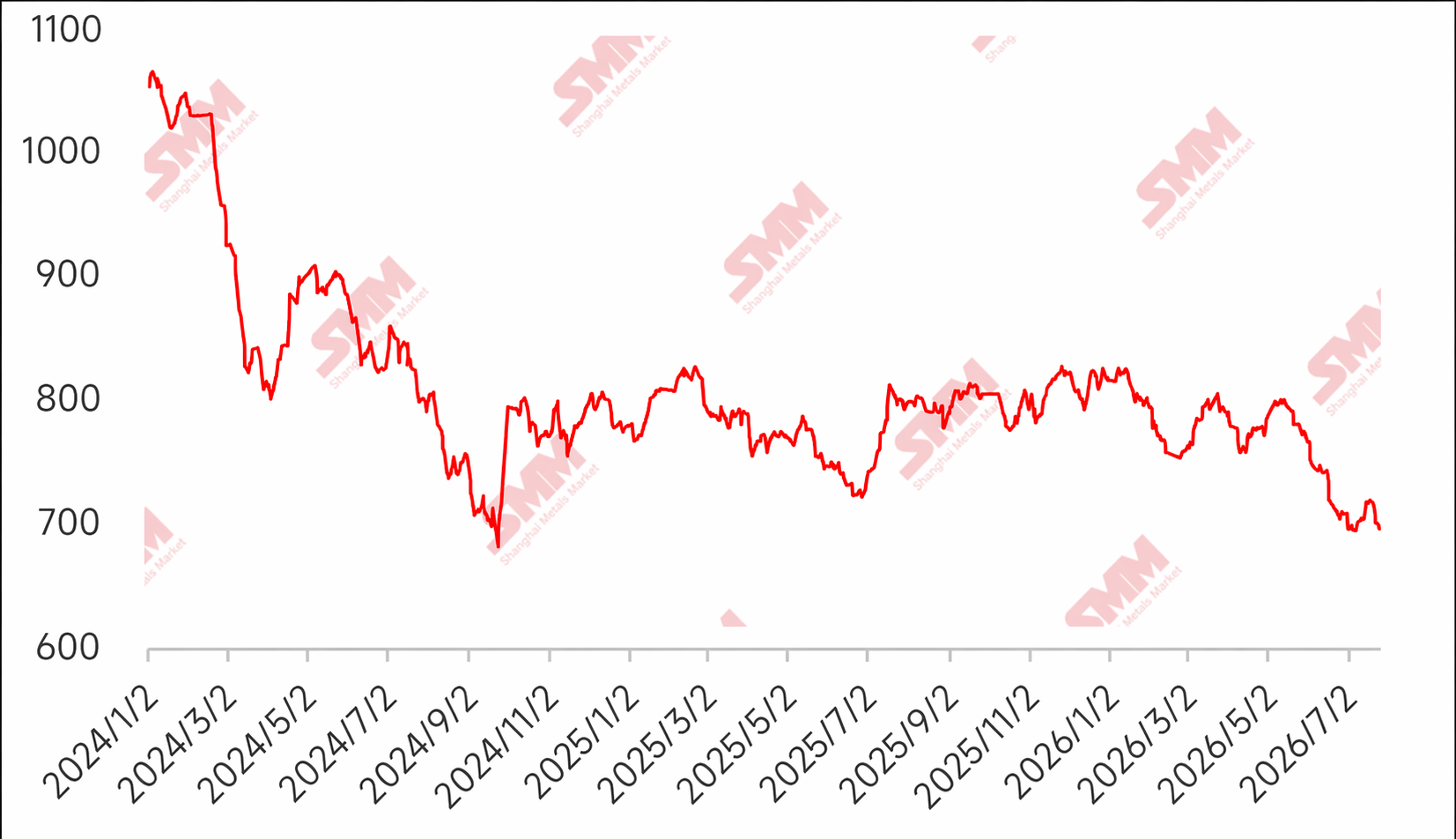
This week, iron ore futures consolidated on a subdued note, with fundamentals showing a supply-demand both weak pattern. Affected by typhoon weather, iron ore port arrivals dropped sharply by 21%, while hot metal output also pulled back slightly, and the destocking pace of port inventories narrowed. During the week, the US-Iran conflict once pushed up crude oil prices, but since shipments had already declined significantly since July, ocean freight rates only moved sideways, having limited impact on the iron ore cost side. Demand side, end-use demand remained persistently weak, steel mills' shipments were sluggish, and the pace of steel inventory buildup expanded, suppressing steel mills' raw material purchase willingness, with spot prices falling under pressure.
Chart: MMI 61% Port Spot Index
Source: SMM
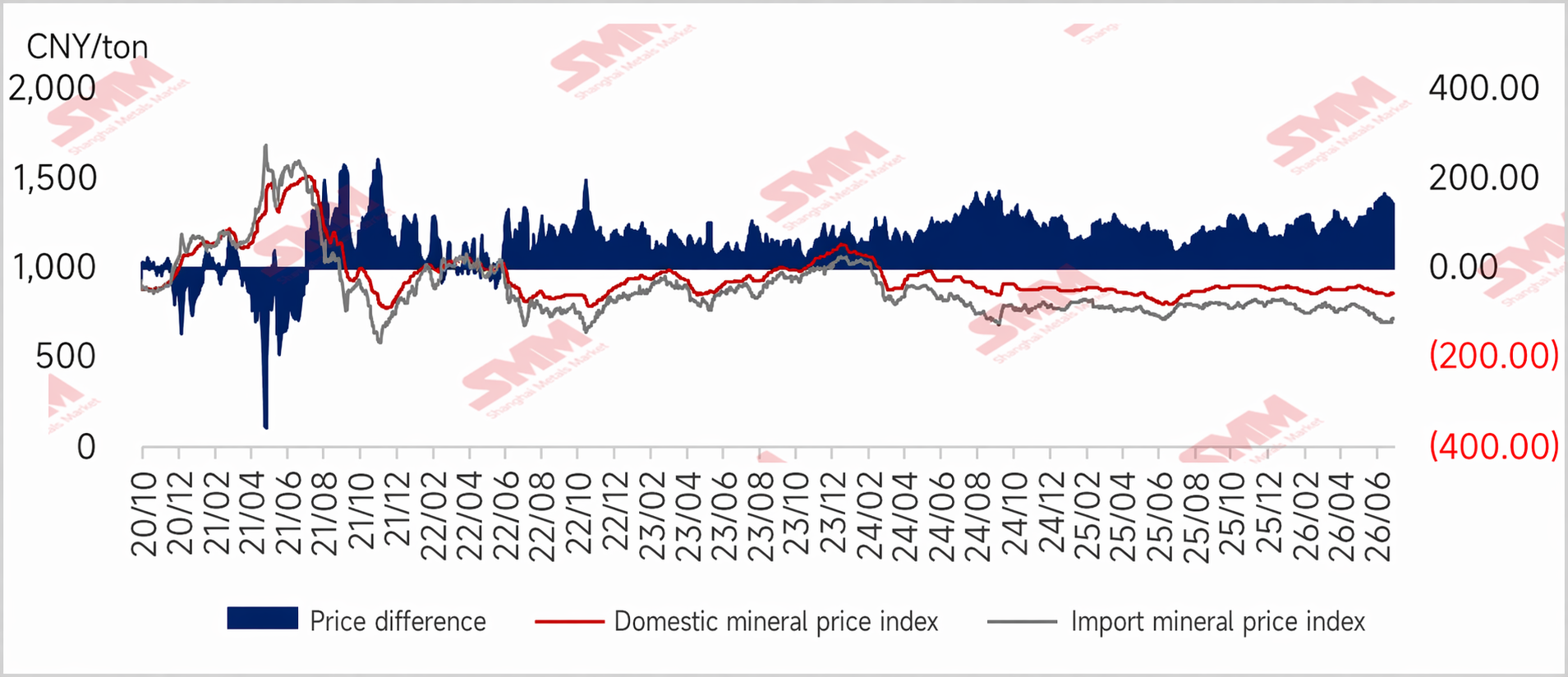
This week, domestic iron ore concentrates prices were largely stable. By region, prices in Tangshan, Qian'an, and Qianxi in Hebei edged down by 1-5 yuan/mt; prices in Chaoyang, Beipiao, and Jianping in western Liaoning were mostly stable; east China rose by 1-5 yuan/mt. The delivered price, tax included, for 66% grade iron ore concentrates in the Tangshan area closed at 980-985 yuan/mt, with mines and beneficiation plants mostly operating as planned. In the Chengde area, affected by previous heavy rainfall, open-pit iron mines have mostly resumed production recently, but underground mines and beneficiation plants and some large open-pit mines remain in a shutdown state; other areas also experienced short-term production halts, keeping China's overall resource supply still tight. Demand side, local steel mills had some maintenance expectations, and hot metal output may gradually decline, weakening support for iron ore demand. Currently, sellers and buyers are locked in a game, keeping iron ore concentrates prices generally stable.
Chart: Imported Ore Prices Strengthened, Price Spread Between Imported and Domestic Ore Narrowed Slightly
Outlook for Next Week
Imported ore: Looking ahead to next week, the Tangshan area will initiate a new round of environmental protection-related controls during key periods. Under the shutdown and production restriction requirements for regional steel mills, the decline in hot metal output may exceed expectations, and iron ore demand will decline further. The supply side is expected to rebound: there is room for growth in overseas shipments, and port arrivals will rebound after the typhoon impact fades, port inventories are likely to shift to inventory buildup, with supply pressure gradually rising.
However, considering the Politburo meeting is about to be held, the market's expectations for more bullish economic policies in H2 have heated up, and sentiment may boost ore prices, with a possibility of a short-term slight rebound. Overall, with fundamentals under pressure and macro expectations heating up interacting, iron ore prices are expected to remain mainly in a consolidate pattern next week.
Domestic ore: Looking ahead to next week, some regions have expectations for domestic ore production resumptions, and domestic concentrates output may rebound slightly, but overall resources remain tight; demand side, environmental protection inspections are intensifying, maintenance expectations are rising for some steel mills in North China, and hot metal output is expected to continue its downward trend. The short-term market is in a weak supply-demand pattern, and China's iron ore concentrate prices are expected to consolidate on a subdued note next week.
![[SMM Sheets & Plates Daily Comment] HRC futures surged alongside costs, with production still expected to edge down](https://imgqn.smm.cn/usercenter/ntiFA20251217171719.jpg)
![Fundamentals Remain Under Pressure, Upside Room for Iron Ore Expected to Be Limited [SMM Daily Iron Ore Briefing]](https://imgqn.smm.cn/usercenter/bkAyC20251217171720.jpg)
![Tangshan Qian'an Raises Steel Billet Price by 10 to 3,000 Yuan/mt on August 24 [SMM Steel]](https://imgqn.smm.cn/usercenter/zLhJl20251217171720.jpg)