Low-Priced Supplies Dwindle, Prices Rise Slightly; Supply-Demand Imbalance in Stainless Steel Market Awaits Resolution [[SMM Daily Review of Stainless Steel Spot Cargo]]

Telah Terbit: Apr 30, 2025 16:08
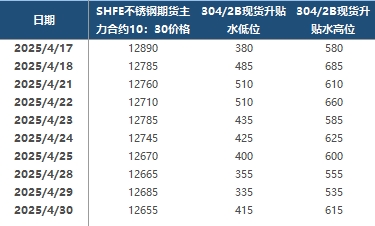
[SMM Daily Review of Stainless Steel Spot Market: Prices Edge Up as Low-Priced Supplies Dwindle, Supply-Demand Imbalance in Stainless Steel Market Awaits Resolution] SMM reported on April 30 that today, SS futures continued their previous fluctuating trend in the doldrums. As the Labour Day holiday approaches, the market did not witness the expected pre-holiday stockpiling frenzy, with all parties maintaining a cautious wait-and-see attitude. Currently, transactions are mainly concentrated on low-priced warrant cargoes, with most other purchases driven by rigid demand. Notably, as stainless steel prices hit a relatively low level, further downward resistance has significantly increased. Coupled with the gradual depletion of low-priced supplies, market prices have shown signs of a slight rebound. In the futures market, the most-traded contract 2506 is operating in a fluctuating trend in the doldrums. At 10:30 a.m., SS2506 was quoted at 12,655 yuan/mt. In the spot market, the cold-rolled 201/2B coils in Wuxi and Foshan were both quoted at 8,100 yuan/mt; the cold-rolled trimmed 304/2B coils had an average price of 13,000 yuan/mt in Wuxi and 13,000 yuan/mt in Foshan. From the perspective of market fundamentals, the current stainless steel prices have led to significant losses in the stainless steel sector. Additionally, the prices of furnace charges such as nickel and chromium have remained relatively firm, highlighting the prominent cost-supporting effect. However, the overall production cuts in the industry have been insufficient, with production being maintained more through adjustments in steel grade structures, resulting in an insignificant contraction effect on the supply side. On the demand side, impacted by the US tariff policies, downstream enterprises hold a pessimistic outlook, leading to increasingly cautious purchasing behavior. Despite prices being at a low level, market transactions have not significantly improved, with weak demand remaining the core contradiction constraining the recovery of the stainless steel market.

SMM reported on April 30 that today, SS futures continued their previous fluctuating trend in the doldrums. As the Labour Day holiday approached, the market did not witness the expected pre-holiday stockpiling frenzy, with all parties maintaining a cautious wait-and-see attitude. Currently, transactions are mainly concentrated on low-priced warrant cargoes, with most other purchases driven by rigid demand. It is worth noting that as stainless steel prices reached relatively low levels, the resistance to further declines significantly increased. Coupled with the gradual depletion of low-priced cargoes, market prices have shown signs of a slight rebound.

In the futures market, the most-traded 2506 contract was trading in a weak and fluctuating manner. At 10:30 a.m., SS2506 was quoted at 12,655 yuan/mt, down 30 yuan/mt from the previous trading day. In the Wuxi region, the spot premiums/discounts for 304/2B stainless steel ranged from 415 to 615 yuan/mt. In the spot market, cold-rolled 201/2B coils in both Wuxi and Foshan were quoted at 8,100 yuan/mt. For cold-rolled trimmed 304/2B coils, the average price in Wuxi was 13,000 yuan/mt, and the same in Foshan. Cold-rolled 316L/2B coils were priced at 23,750 yuan/mt in Wuxi and 23,750 yuan/mt in Foshan. Hot-rolled 316L/NO.1 coils were quoted at 22,975 yuan/mt in both regions. Cold-rolled 430/2B coils were priced at 7,500 yuan/mt in both Wuxi and Foshan.

From the perspective of market fundamentals, the current stainless steel prices have led to significant losses in the stainless steel sector. Additionally, the prices of furnace charges such as nickel and chromium have remained relatively firm, highlighting the prominent cost-supporting effect. However, the overall production cuts in the industry have been insufficient, with production being maintained more through adjustments in steel grade structures, resulting in an insignificant contraction effect on the supply side. On the demand side, impacted by the US tariff policies, downstream enterprises hold pessimistic expectations and are increasingly cautious in their procurement behaviors. Despite prices being at low levels, market transactions have not significantly improved, with weak demand remaining the core imbalance constraining the recovery of the stainless steel market.
Pernyataan Sumber Data: Kecuali informasi yang tersedia untuk publik, semua data lainnya diproses oleh SMM berdasarkan informasi publik, komunikasi pasar, dan mengandalkan model database internal SMM. Hanya untuk referensi dan tidak menjadi rekomendasi pengambilan keputusan.

Untuk pertanyaan atau informasi lebih lanjut, silakan hubungi: lemonzhao@smm.cn
Untuk informasi lebih lanjut tentang cara mengakses laporan penelitian kami, hubungi:service.en@smm.cn
Berita Terkait
[Kilas | Imacec Juli Chili Turun 1,5% YoY, Penurunan Bulanan Terdalam Sejak 2022 karena Pertambangan Anjlok 9,3%]
3 jam yang lalu
[Kilas | Imacec Juli Chili Turun 1,5% YoY, Penurunan Bulanan Terdalam Sejak 2022 karena Pertambangan Anjlok 9,3%]
Baca Selengkapnya
[Kilas | Imacec Juli Chili Turun 1,5% YoY, Penurunan Bulanan Terdalam Sejak 2022 karena Pertambangan Anjlok 9,3%]
[Kilas | Imacec Juli Chili Turun 1,5% YoY, Penurunan Bulanan Terdalam Sejak 2022 karena Pertambangan Anjlok 9,3%]
Bank sentral Chili melaporkan pada 1 September bahwa indeks aktivitas ekonomi Imacec Juli turun 1,5% secara tahunan tanpa penyesuaian. Secara tahunan dengan penyesuaian musiman, indeks turun 2,1% dan turun 1,7% secara bulanan, menandai penurunan bulanan terbesar sejak 2022. Bank tersebut mengaitkan penurunan ini terutama pada sektor pertambangan, yang turun signifikan sebesar 9,3%, terutama karena kondisi cuaca, diikuti oleh kadar bijih yang lebih rendah dan pemeliharaan peralatan yang mengganggu operasi produksi normal. Banyak tambang yang terdampak merupakan deposit terkait tembaga-molibdenum. Karena konsentrat molibdenum diperoleh sebagai produk sampingan dari proses flotasi yang digunakan untuk mengolah bijih tembaga sulfida, gangguan pada pabrik pengolahan juga mengurangi produksi molibdenum.
3 jam yang lalu
Kendala Pasokan yang Kaku Memperketat Tarik‑Menarik Pasar Molibdenum pada Awal September 【Analisis Molibdenum SMM】
19 jam yang lalu
Kendala Pasokan yang Kaku Memperketat Tarik‑Menarik Pasar Molibdenum pada Awal September 【Analisis Molibdenum SMM】
Baca Selengkapnya
Kendala Pasokan yang Kaku Memperketat Tarik‑Menarik Pasar Molibdenum pada Awal September 【Analisis Molibdenum SMM】
【Analisis Molibdenum SMM】 Berita SMM 3 September: Pada Agustus, pasar molibdenum Tiongkok mempertahankan keseimbangan ketat yang ditandai dengan pasokan yang relatif ketat dan dukungan dari permintaan kaku. Secara keseluruhan harga naik terlebih dahulu kemudian stabil, menguat di level tinggi. Konsentrat molibdenum 45% melonjak hingga 5.455 yuan/mtu selama 19–25 Agustus, tetap kokoh di kisaran tertinggi tiga tahun; hal ini secara bersamaan mendorong ferromolibdenum spot 60% naik, mencapai level tertinggi bertahap 344.000 yuan/mt pada 24–25 Agustus.
19 jam yang lalu
[Kilas | Indeks Produksi Pertambangan Chili Turun 7,2% YoY pada Juli; Pertambangan Logam Turun 10,7%]
3 Sep 2026 10:06
[Kilas | Indeks Produksi Pertambangan Chili Turun 7,2% YoY pada Juli; Pertambangan Logam Turun 10,7%]
Baca Selengkapnya
[Kilas | Indeks Produksi Pertambangan Chili Turun 7,2% YoY pada Juli; Pertambangan Logam Turun 10,7%]
[Kilas | Indeks Produksi Pertambangan Chili Turun 7,2% YoY pada Juli; Pertambangan Logam Turun 10,7%]
Pada 31 Agustus, Institut Statistik Nasional Chili (INE) melaporkan bahwa indeks produksi industri negara itu turun 5,1% secara tahunan pada bulan Juli. Di dalamnya, indeks produksi pertambangan (IPMin) menurun 7,2%, dengan pertambangan logam turun 10,7%, mengurangi 9,301 poin persentase dari indeks tersebut, terutama karena ekstraksi dan pengolahan tembaga yang lebih rendah. Data USGS menunjukkan Chili menyumbang sekitar 16% dari produksi molibdenum global pada tahun 2025. Kehilangan produksi baru-baru ini di tambang tembaga-molibdenum Chili terkonsentrasi pada tahap benefisiasi, yang berdampak lebih besar pada molibdenum produk sampingan daripada tembaga; oleh karena itu, pasokan molibdenum global diperkirakan akan merasakan dampaknya pada tahun 2026.
3 Sep 2026 10:06