China's Copper Cathode & Secondary Copper Rods Both Weak: What's Happening in the Market?

Publicado: Oct 25, 2024 09:41 (GMT+8)
Fuente: SMM
The "September-October peak season," traditionally a peak season for copper rods, has shown weak consumption this year. The peak season is not as strong as expected, with new orders hard to sustain. This lack of significant consumption recovery is not only seen in the copper cathode rod industry but also in the secondary copper rod industry. Recently, the market has shown weakness in both copper cathode rods and secondary copper rods. What are the reasons behind this? Below is a detailed analysis of the recent market situation:
The "September-October peak season," traditionally a peak season for copper rods, has shown weak consumption this year. The peak season is not as strong as expected, with new orders hard to sustain. This lack of significant consumption recovery is not only seen in the copper cathode rod industry but also in the secondary copper rod industry. Recently, the market has shown weakness in both copper cathode rods and secondary copper rods. What are the reasons behind this? Below is a detailed analysis of the recent market situation:

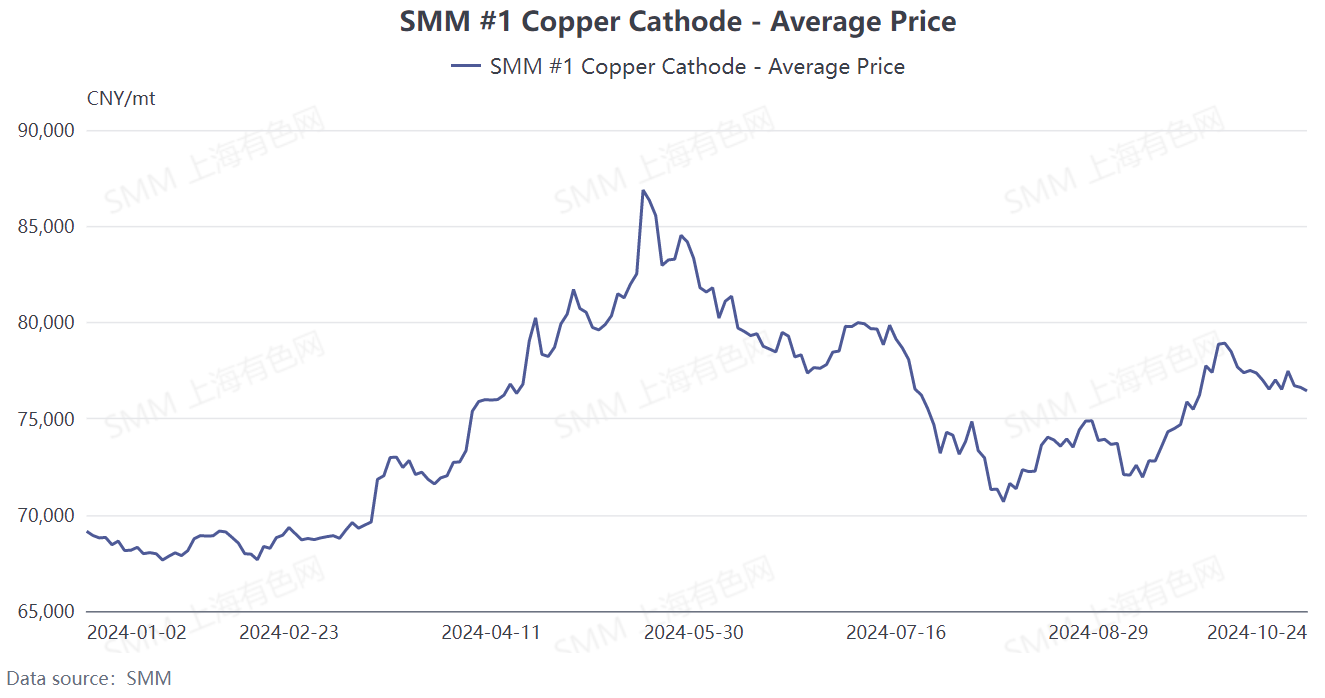
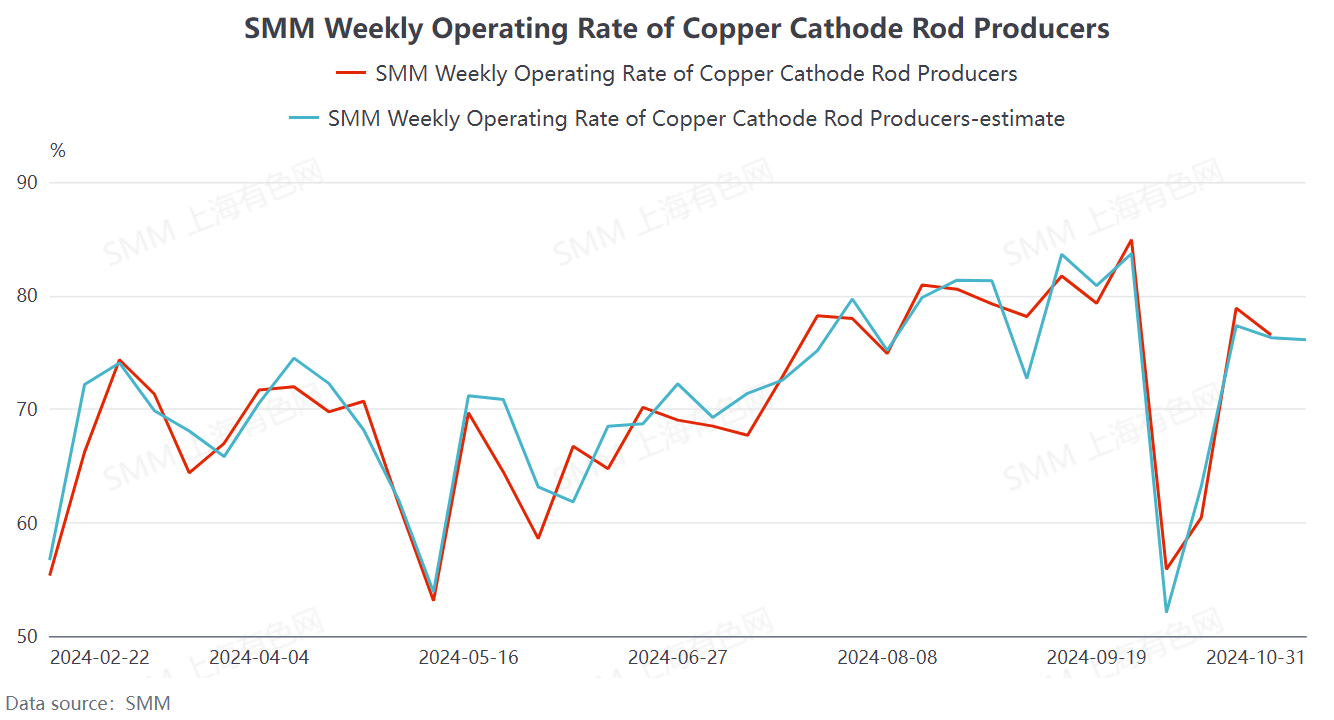
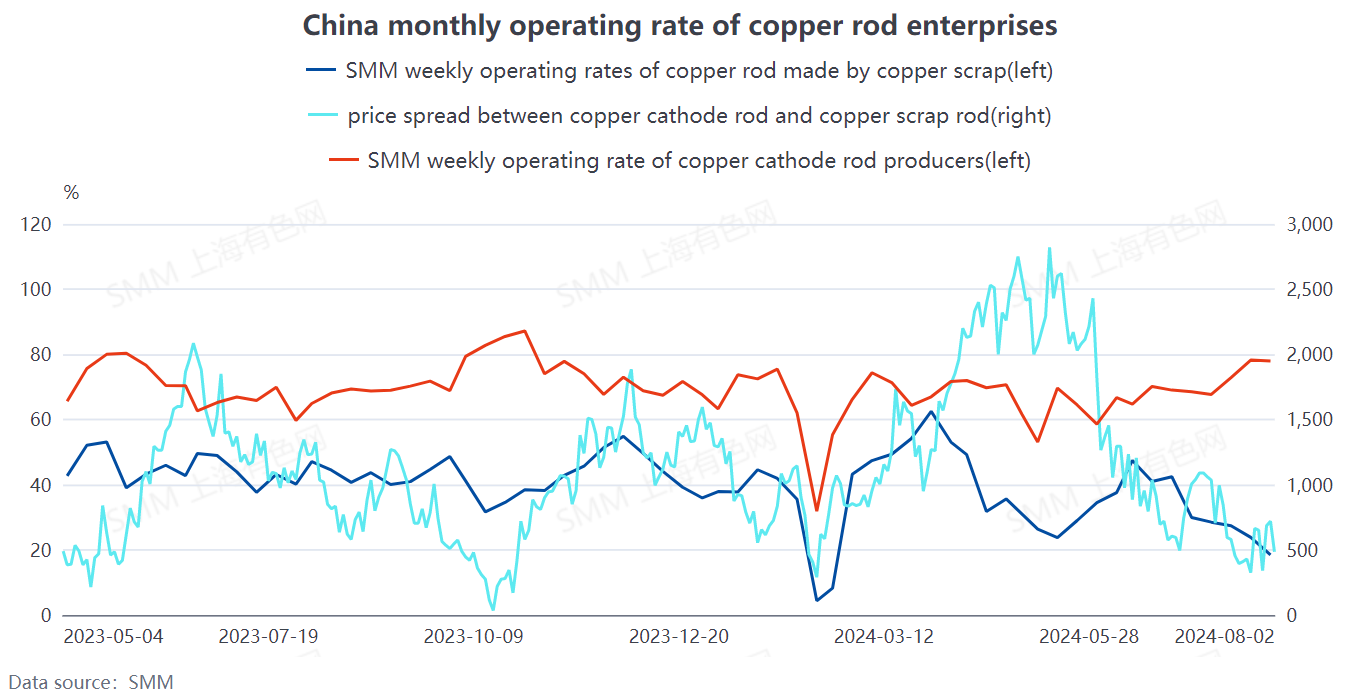
From the above chart, it can be seen that although copper prices have declined since October, they are still significantly higher than the lows seen in early August and early September. The absolute prices remain beyond the acceptable range for downstream enterprises, and most downstream enterprises are still adopting a wait-and-see attitude. New orders for copper cathode rod makers are generally under pressure, and downstream consumption has not been significantly released since the holiday. As of now, the weekly operating rate of copper cathode rod production has not yet returned to the normal pre-holiday level and shows a downward trend (see the chart below).
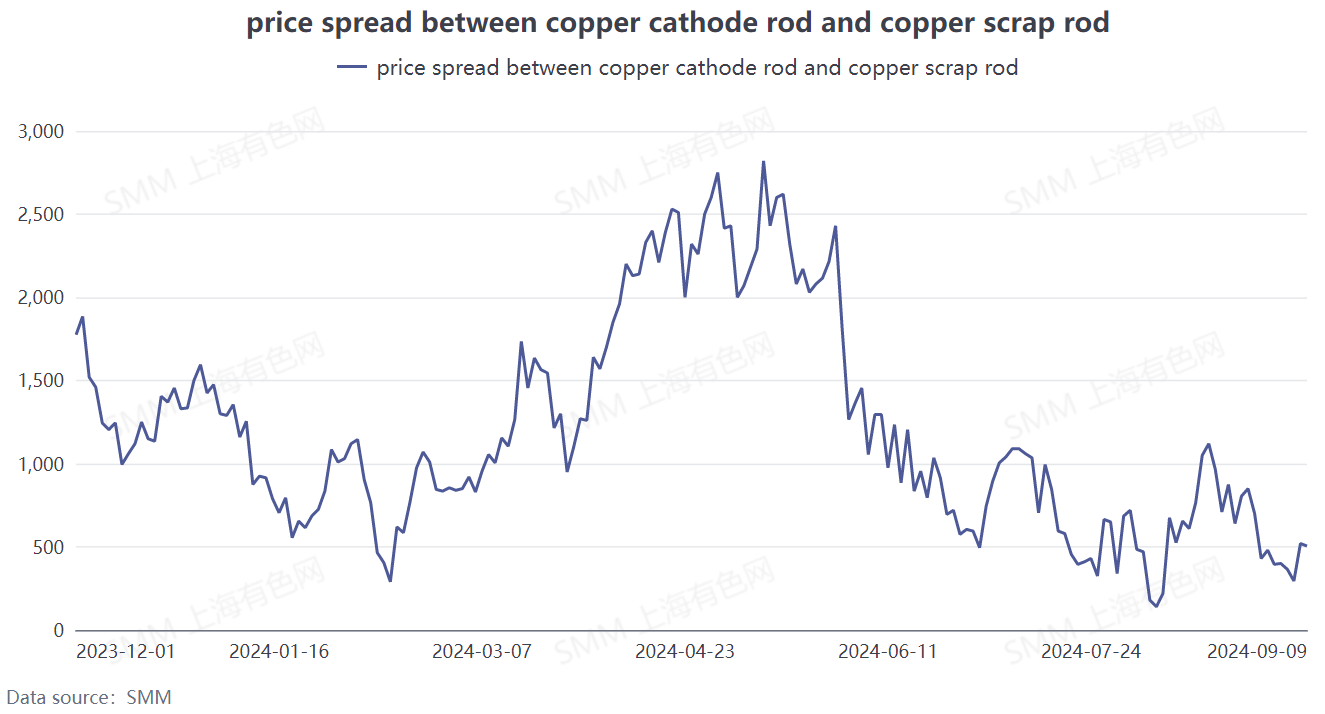
Although copper prices remain high, the price difference between primary metal and scrap has not brought a price advantage to the secondary copper rod industry as expected. Since the National Day holiday, the price difference between primary metal and scrap reached a peak of 1,205 yuan/mt on October 8, but mostly stayed below 1,000 yuan/mt thereafter. There are two main reasons for this: first, copper prices have maintained a fluctuating trend at this level, and most copper scrap holders are holding back cargoes. At the same time, the policy for the recycling industry has not been fully implemented, leading to an unclear outlook, and the dismantling volume of copper scrap has also declined to some extent, dragging down supply. These two factors have caused the current secondary copper prices to remain high without following the market trend, making it difficult to procure materials, and secondary copper rod makers are struggling to maintain their operating rates. Additionally, according to some secondary copper rod makers, the current weak end-use demand combined with the small price difference between primary metal and scrap has resulted in sluggish consumption, making it difficult to raise secondary copper rod prices. Based on the current secondary copper prices and secondary copper rod quotations, the processing fee for the secondary copper rod industry is nearly zero.
In summary, the current overall copper rod market is not performing as expected during the peak season, with weak end-use demand and overall lower-than-expected results. According to the survey results, copper rod consumption has been consistently dragged down by the real estate sector this year. Additionally, since the beginning of the year, the operating rate of infrastructure projects has been suppressed after debt restructuring. As the year-end approaches and the northern market may be affected by weather and pollution during the autumn and winter, end-use operating rates will be further impacted, making it difficult to find support for consumption.
It is worth noting that the previous central meeting mentioned addressing existing projects within the year through ultra-long-term government bonds, which would drive actual workload. If existing projects receive support and real estate development resumes, sustainable consumption recovery may be seen within the year. SMM will continue to keep you updated on the latest market conditions.

If you have any questions, you can contact via email: zhangtongxu@smm.cn

Declaración de Fuente de Datos: Excepto la información disponible públicamente, todos los demás datos son procesados por SMM basándose en información pública, comunicación de mercado y confiando en el modelo de base de datos interna de SMM. Son solo para referencia y no constituyen recomendaciones para la toma de decisiones.

Para cualquier consulta o para obtener más información, por favor contacte: lemonzhao@smm.cn
Para más información sobre cómo acceder a nuestros informes de investigación, contacte con:service.en@smm.cn
Noticias relacionadas
Perú prevé un aumento de 1 millón de toneladas anuales en la producción de cobre en un plazo de cinco a seis años
hace 6 horas
Perú prevé un aumento de 1 millón de toneladas anuales en la producción de cobre en un plazo de cinco a seis años
Leer más
Perú prevé un aumento de 1 millón de toneladas anuales en la producción de cobre en un plazo de cinco a seis años
El ministro de Energía y Minas de Perú, Guillermo Shinno, afirmó que el país espera sumar alrededor de 1 millón de toneladas de producción anual de cobre en un plazo de cinco a seis años mediante nuevos proyectos mineros. El tercer mayor productor de cobre del mundo prevé una producción de 2,5 a 2,7 millones de toneladas en 2026, prácticamente sin cambios respecto a 2023, ya que la caída de las leyes del mineral y los recurrentes conflictos sociales pesan sobre la oferta. El gobierno recién elegido busca revertir ese estancamiento reduciendo la burocracia; en los dos meses transcurridos desde que asumió el cargo, las empresas mineras han intensificado su interlocución con el ministerio. Shinno señaló que los funcionarios han identificado 27 permisos que podrían eliminarse de aproximadamente 100 requisitos del sector minero, sin reducir la protección ambiental.
hace 6 horas
Los productores de cobre de la India piden una reducción del GST ante el aumento de la carga de capital circulante por los precios récord
hace 11 horas
Los productores de cobre de la India piden una reducción del GST ante el aumento de la carga de capital circulante por los precios récord
Leer más
Los productores de cobre de la India piden una reducción del GST ante el aumento de la carga de capital circulante por los precios récord
Los productores indios de cobre buscan una reducción del GST al 5 % desde el 18 %, citando el aumento de los requisitos de capital de trabajo en medio de precios récord del cobre.
hace 11 horas
La escasez de ácido sulfúrico surge como una limitación para el crecimiento del cobre en Zambia
hace 15 horas
La escasez de ácido sulfúrico surge como una limitación para el crecimiento del cobre en Zambia
Leer más
La escasez de ácido sulfúrico surge como una limitación para el crecimiento del cobre en Zambia
La escasez de ácido sulfúrico en Zambia se está convirtiendo en una limitación creciente para la producción y refinación de cobre. Jubilee Metals informó que los costos del ácido aumentaron más del 200 % en el cuarto trimestre del año fiscal 2026, mientras que la producción de cátodos de Sable cayó a 250 toneladas desde las 361 toneladas del tercer trimestre. Los datos gubernamentales también mostraron una caída interanual del 35,2 % en la producción de cobre a pequeña escala en el primer semestre de 2026, lo que evidencia la exposición del sector a la escasa disponibilidad de ácido y a los mayores costos de procesamiento.
hace 15 horas