Lithium Carbonate Prices: In July, lithium carbonate prices showed a fluctuating downward trend. Supply side, domestic lithium carbonate production remained high, while imports declined. Demand side, due to the off-season, market demand did not show a significant recovery, leading to an obvious oversupply throughout the month. Additionally, downstream battery makers had sufficient supply, further compressing the spot order demand for cathode materials.
According to the latest market data, the SMM battery-grade lithium carbonate index reached 84,709 yuan/mt, up 118 yuan/mt from the previous working day. The quotation range for battery-grade lithium carbonate was 82,900-86,800 yuan/mt, with an average price of 84,850 yuan/mt. The quotation range for industrial-grade lithium carbonate was 79,200-80,600 yuan/mt, with an average price of 79,900 yuan/mt. Currently, low-price lithium carbonate supply is not tight in the market, and downstream material plants and traders are actively inquiring, making small purchases at low prices. Some lithium salt plants are also reducing their inventories, and transaction prices are expected to decline. Overall, despite a slight recovery in market trading sentiment, lithium carbonate prices will remain under pressure due to the oversupply situation.
Analysis of Profit Margins for Producers Sourcing Different Types of Raw Materials:
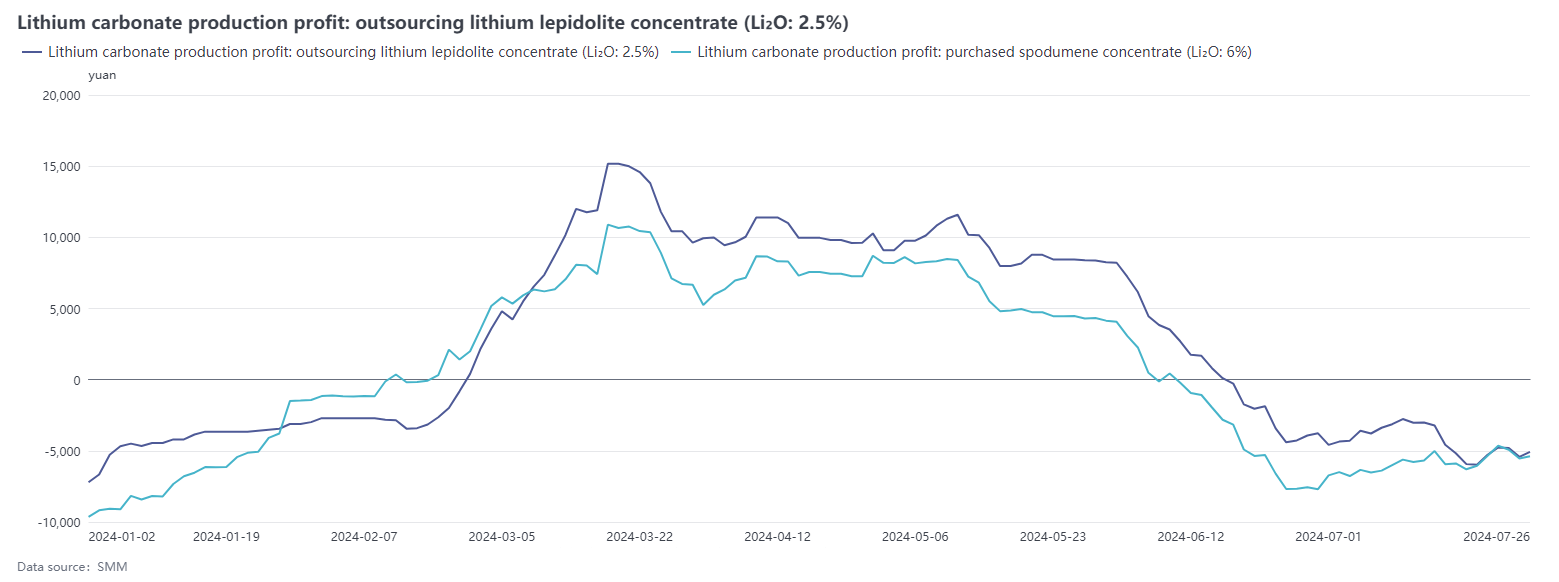
- For outsourcing primary raw materials to produce lithium carbonate: The decline in lithium carbonate prices has put pressure on iron ore prices. However, driven by the profit margins from hedging in May and June, mining companies were reluctant to sell, causing the price decline to be slower than that of lithium salts. In the short term, this led to a sharp reduction in profit margins or even losses for companies producing lithium carbonate from spodumene and lepidolite. After entering July, the willingness of mining companies to hold their offers firm weakened, narrowing the price gap between ore and salt, improving the loss situation for companies sourcing raw materials to produce lithium carbonate.
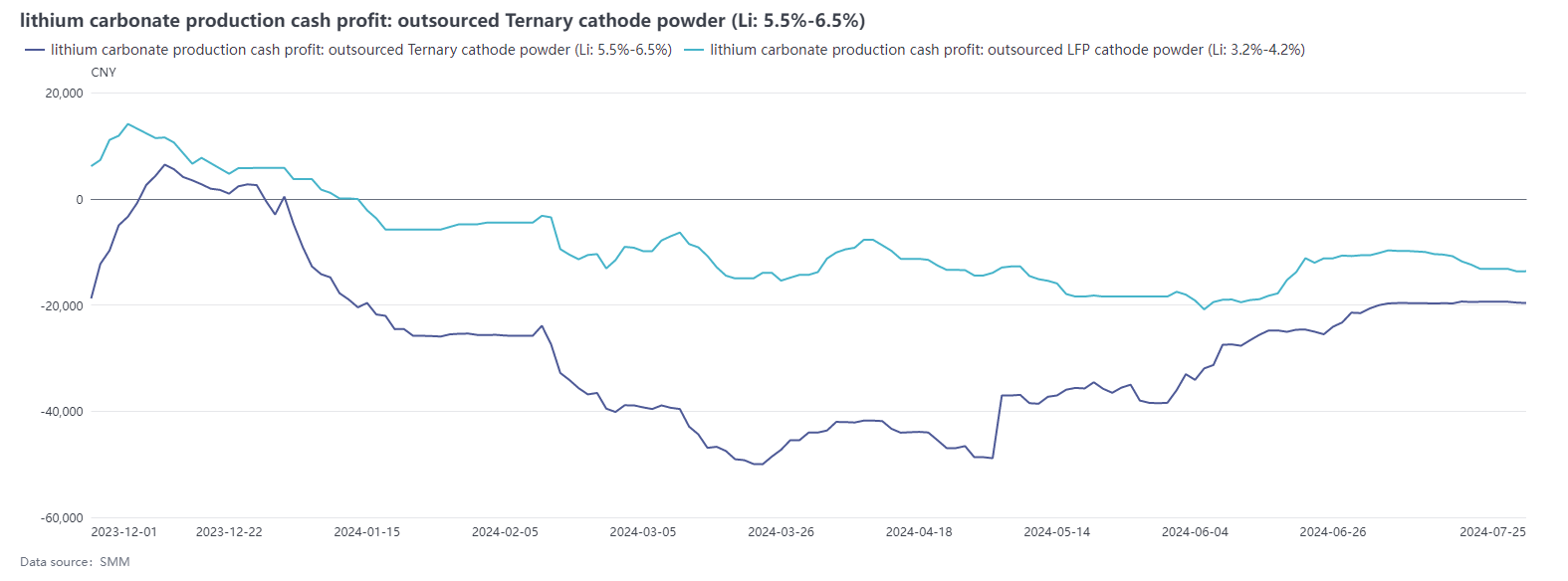
- For outsourcing recycled materials to produce lithium carbonate: Due to the tight supply and demand for recycled materials, even though nickel, cobalt and lithium salt prices fell, black mass prices and their coefficients did not decline synchronously, resulting in continued losses in the hydrometallurgy process. Long-term losses prompted hydrometallurgy companies relying on external sourcing to gradually shut down or reduce production, leading to a continuous decline in the industry's operating rate. Entering Q2, as the operating rate of hydrometallurgy companies sourcing recycled materials continued to decline, coupled with the synchronous decline in nickel, cobalt and lithium prices, black mass prices and their coefficients eased, gradually alleviating the losses for hydrometallurgy plants.
![[SMM Analysis] China Sulphur and Sulphuric Acid Import and Export Data for August](https://imgqn.smm.cn/usercenter/XBbTq20251217171709.jpg)
![[SMM Analysis] China Sulphur and Sulphuric Acid Import and Export Data for August](https://imgqn.smm.cn/usercenter/OsOmo20251217171709.jpg)
![[SMM Analysis] LiPF6 exports in August 2026 fell about 14.6% MoM](https://imgqn.smm.cn/usercenter/GVVKq20251217171728.jpg)