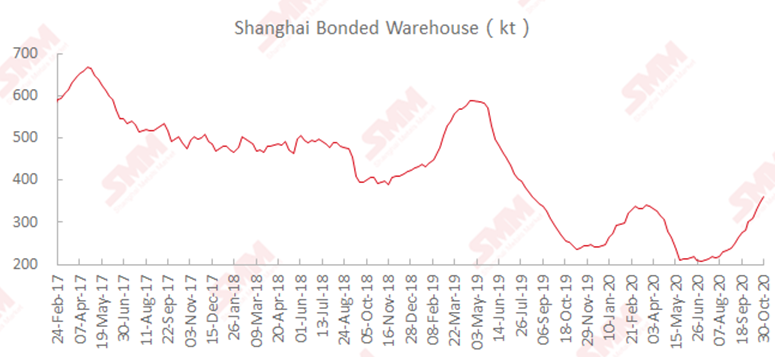
SHANGHAI, Oct 30 (SMM) — Stocks of copper in Shanghai bonded areas increased for the thirteenth consecutive week, as overseas arrivals increased.
SMM data showed that the stocks expanded 14,500 mt from the prior week to 360,500 mt as of Friday October 30.
The import loss remained around 300-400 yuan/mt with no import chance and sluggish demand for customs declaration. Few transactions have been made in the overseas trade market. The traders shipped their cargoes to bonded warehouses. This also accounted for the continuous increase of bonded inventories.
![Chênh lệch giá giữa các hợp đồng tương lai từng vượt 800 nhân dân tệ; hoạt động mua vào ở hạ nguồn trầm lắng, phí bảo hiểm giao ngay giảm mạnh [SMM đồng giao ngay Hoa Nam]](https://imgqn.smm.cn/usercenter/AbRbz20251217171711.jpg)
![Chênh lệch giá rộng hơn giữa các hợp đồng tương lai kéo giảm lượng mua; chiết khấu giao ngay tại Bắc Trung Quốc mở rộng [Đồng giao ngay Bắc Trung Quốc của SMM]](https://imgqn.smm.cn/usercenter/FERSF20251217171712.jpg)