Tin Prices Hit a 5-month Low, Good Opportunity to Buy?

Published: Feb 9, 2017 18:17
Tin prices plunged 9% since the year started, hitting a five-month low.

by Raul de Frutos on FEBRUARY 9, 2017

Tin prices plunged 9% since the year started, hitting a five-month low. There are two factors driving this decline:

  • Profit taking: Prices rallied near 70% in 2016 and prices need to digest those gains.
  • Speculation that China has removed it’s 10% export duty on refined tin exports.

After this decline, we believe buyers can now take advantage to time some purchases.

Prices Near Support
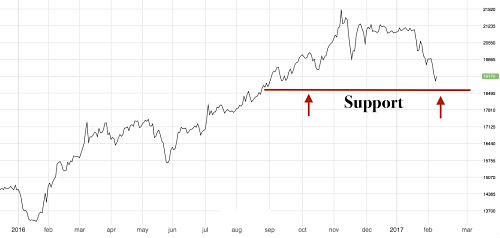
Tin prices are trading near key support levels. Source: MetalMiner analysis of FastMarkets.com data. 

Technically, the recent price decline seems normal within the context of a bull market. In bull markets, buyers can find good opportunities to buy metal after prices pull back.

Tin prices are now nearing a support area where traders will likely lift prices, especially given the ongoing bullish sentiment across the metals complex.

The Removal of an Export Duty is Not That Bearish

Some say that China’s removal of its export duty could have a significant impact but we don’t necessarily agree. If China was a net exporter of tin, and prices in China were lower than in the rest of the world (as is the case with steel), then the removal of the export duties would have a significant impact on the market balance. However, that’s not the case.
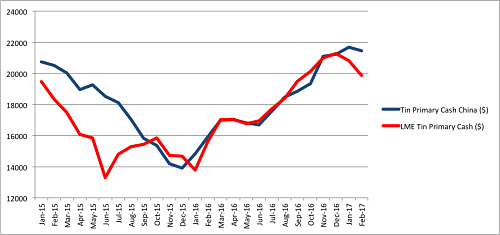
Tin primary cash China vs LME. Source: MetalMinerIndX.

China is a net importer of tin. In 2015 China produced 146,600 metric tons while it consumed 175,842 mt. In addition, prices in China are lower than those on the London Metal Exchange. Moreover, China is trying to curb local output of metal, including tin, to fight pollution.

For these reasons, we can’t see why removing the duty would result in a flood of metal coming out of China. In anything, it will just encourage more refining.
Data Source Statement: Except for publicly available information, all other data are processed by SMM based on publicly available information, market communication, and relying on SMM‘s internal database model. They are for reference only and do not constitute decision-making recommendations.

For any inquiries or to learn more information, please contact: lemonzhao@smm.cn
For more information on how to access our research reports, please contact:service.en@smm.cn
Related News
Lack of Clear Guidance on the Geopolitical Situation, Repeated Swings in Macro Sentiment Put Futures Under Pressure Again [SMM Tin Midday Commentary]
2 hours ago
Lack of Clear Guidance on the Geopolitical Situation, Repeated Swings in Macro Sentiment Put Futures Under Pressure Again [SMM Tin Midday Commentary]
Read More
Lack of Clear Guidance on the Geopolitical Situation, Repeated Swings in Macro Sentiment Put Futures Under Pressure Again [SMM Tin Midday Commentary]
[SMM Tin Midday Commentary: The Geopolitical Situation Lacks Clear Guidance, and Repeated Swings in Macro Sentiment Put Futures Under Pressure Again]
2 hours ago
Xidian University Team Unveils Low-Cost SPAD Chip for Short-Wave Infrared Detection
3 hours ago
Xidian University Team Unveils Low-Cost SPAD Chip for Short-Wave Infrared Detection
Read More
Xidian University Team Unveils Low-Cost SPAD Chip for Short-Wave Infrared Detection
It was learned from Xidian University that the team led by Professor Hu Huiyong at the university successfully developed a single-photon avalanche diode (SPAD) chip based on silicon-germanium technology, significantly reducing the manufacturing cost of short-wave infrared detection technology. This breakthrough is expected to enable high-end chips that originally cost thousands of dollars per unit to enter fields such as smartphones and automotive LiDAR at just one percent of the cost.
3 hours ago
[SMM Tin Flash News: Nomura: The Upcycle in the Chip Industry Has Yet to Peak, South Korea’s Trade Surplus Is Expected to Double]
3 hours ago
[SMM Tin Flash News: Nomura: The Upcycle in the Chip Industry Has Yet to Peak, South Korea’s Trade Surplus Is Expected to Double]
Read More
[SMM Tin Flash News: Nomura: The Upcycle in the Chip Industry Has Yet to Peak, South Korea’s Trade Surplus Is Expected to Double]
[SMM Tin Flash News: Nomura: The Upcycle in the Chip Industry Has Yet to Peak, South Korea’s Trade Surplus Is Expected to Double]
Nomura Securities economist Jeong Woo Park said that, driven by strong semiconductor exports, South Korea’s trade surplus this year could widen from $77 billion in 2025 to around $200 billion. After South Korea’s export growth in March surged to 48% from 29% in February, affected by robust chip demand, Park wrote in a report: “There is no sign whatsoever that the chip upcycle is peaking, and strong pricing effects and artificial intelligence demand will continue to support double-digit growth.” He also downplayed concerns that the conflict in the Middle East could disrupt supplies of helium and other critical inputs needed for chip manufacturing. He noted that chip companies held three to six months of inventory of key inputs, and that the conflict was unlikely to disrupt exports.
3 hours ago
Tin Prices Hit a 5-month Low, Good Opportunity to Buy? - Shanghai Metals Market (SMM)