SMM April 6 News,
Key Points: US imports of Chinese stainless steel accounted for 5.8% of China's stainless steel exports (2024 customs data), which has an impact but is limited. The impact of tariff events, large domestic stainless steel capacity, high dependence on imported raw materials, and the domestic demand window not fully opening... stainless steel prices may decline, and the stainless steel industry is entering a tough and protracted battle.
Introduction: In the global trade landscape, tariff policies are one of the key factors affecting the import and export of goods. In recent years, the US has frequently adjusted its tariff policies, impacting the exports of multiple industries in China. The stainless steel industry, as an important manufacturing sector in China, is also not immune. However, according to 2024 customs data, US imports of Chinese stainless steel (including stainless steel products and stainless steel goods, the same hereinafter) accounted for 5.8% of China's stainless steel exports. This proportion reflects that although the US tariff increase has an impact on China's stainless steel exports, the overall impact is relatively limited.
1. Current Status of China's Stainless Steel Exports to the US: 1/17 Share, Small Direct Impact, Large Indirect Impact!
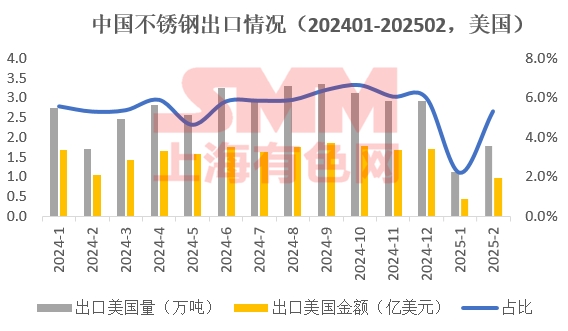
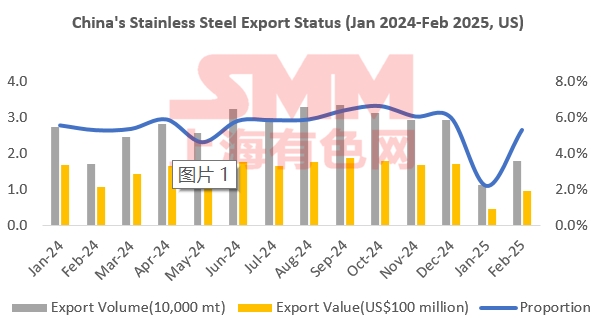
In 2024, China's stainless steel exports to the US totaled 342,000 mt, with an export value of $1.97 billion. Monthly data shows significant fluctuations in export volume and value. Among them, June 2024 saw exports of 33,000 mt, with an export value of $180 million; September 2024 saw exports of 34,000 mt, with an export value of $190 million, these two months being relatively high. In contrast, February 2024 had exports of only 17,000 mt, with an export value of $110 million, at a lower level. These fluctuations are related to seasonal changes in US market demand, adjustments in trade policies, and the competitive landscape of the global stainless steel market. However, overall, the 5.8% share indicates that the US market does not dominate China's stainless steel export landscape, providing some buffer space for the Chinese stainless steel industry to cope with US tariff impacts. Additionally, downstream products such as home appliances and mechanical components may be significantly affected.
II. Review of US Tariff Policies: Tariffs Are a Double-Edged Sword, with Both Advantages and Disadvantages!
Since 2024, the US tariff policies on Chinese stainless steel imports have undergone multiple adjustments.
In May 2024, the US announced tariff hikes on certain Chinese goods, increasing the tariff on most stainless steel imports from 7.5% to 25%, effective August 1 of that year. However, this adjustment did not yet involve stainless steel products.
On February 1, 2025, the US further imposed an additional 10% tariff on Chinese imports, raising the tariff on Chinese stainless steel imports to 35%.
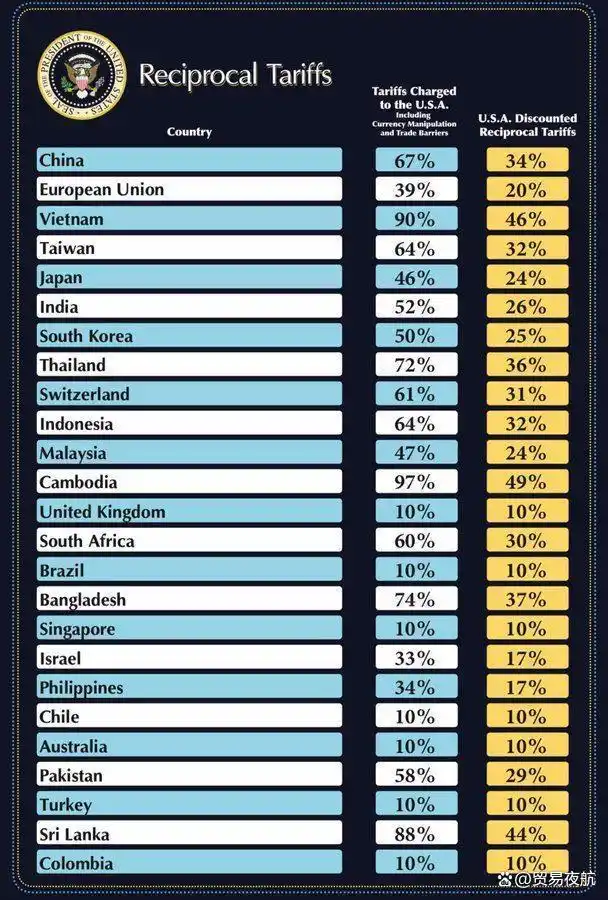
The final tariff rate for products exported to the US = the base tariff rate of the product + 25% (imposed during Trump's first term, applicable to listed goods) + anti-dumping and countervailing duties (if any) + tariff hikes during Biden's term (applicable to listed goods) + 20% (comprehensive tariff during Trump's second term) + 34% (reciprocal tariff).
The minimum tariff rate is: 54% + the base tariff rate of the product.
The US imposed tariff hikes on Chinese stainless steel, resulting in a cumulative rate of 60%. Direct export orders became unprofitable, and indirect exports (machinery, auto parts) were also affected, leading to a decline in the industry's total export volume.
III. Impact of Tariff Increases on China's Stainless Steel Exports: Rising Export Costs, Declining Competitiveness, and Shrinking Profits
Direct impact on export costs and price competitiveness: The most immediate effect of the US tariff increase is the rise in costs for Chinese stainless steel exports to the US. The comprehensive tariff on stainless steel exports is as high as 60%, and it is difficult for enterprises to fully absorb this additional cost. To maintain a certain level of profit, export enterprises have to raise export prices. However, the price increase weakens the price competitiveness of Chinese stainless steel products in the US market. US importers, when making purchases, may turn to alternative products from other countries or regions, such as Japan, South Korea, or some Southeast Asian countries, due to price considerations.
Impact on export enterprises' order volume and profits: As the price competitiveness of Chinese stainless steel products in the US market declines, the order volume received by export enterprises also decreases. For some small and medium-sized enterprises that originally relied on the US market, the sharp decline in order volume may lead to excess capacity, idle equipment, and operational difficulties. From a profit perspective, on one hand, the reduction in order volume directly decreases the sales revenue of enterprises; on the other hand, the increase in tariff costs further compresses profit margins. Some enterprises have even experienced losses.
Prompting export enterprises to adjust market strategies: Facing the pressure of US tariff increases, Chinese stainless steel export enterprises have adjusted their market strategies. On one hand, some enterprises have intensified their efforts to explore other overseas markets, such as Europe, Southeast Asia, and countries and regions along the "Belt and Road" initiative. These markets have rapidly growing demand for stainless steel and relatively stable trade policies.
Conclusion: Decline in export volume, affecting inventory and prices
Although US imports of Chinese stainless steel account for 5.8% of China's stainless steel exports, the impact of US tariff increases on China's stainless steel exports is limited in terms of proportion, but the impact cannot be ignored. The frequent adjustments in US tariff policies have increased the costs for Chinese stainless steel export enterprises, weakened the price competitiveness of products, and affected order volume and profits. However, through a series of coping strategies such as technological innovation and product upgrading, diversified market exploration, and strengthened industry collaboration and policy communication, the Chinese stainless steel industry is expected to mitigate the risks brought by US tariff increases to a certain extent and achieve sustainable development.
In addition, the country has also responded to such tariff policies.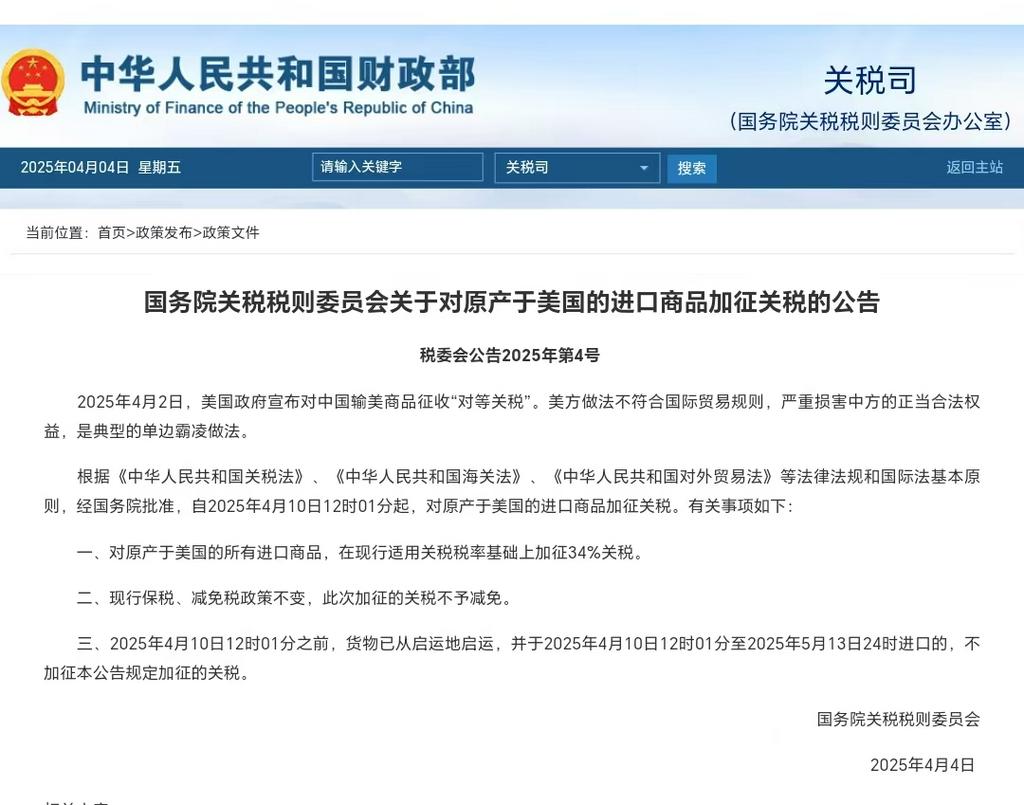

![[속보 | 칠레 광업생산지수, 7월 전년 대비 7.2% 하락… 금속광업 10.7% 감소]](https://imgqn.smm.cn/usercenter/bFzkj20251217171724.jpg)
![[SMM 스테인리스 일일 리뷰] SHFE 니켈 상승에 힘입은 SS 선물 반등 실패, 스테인리스 현물 거래 여전히 부진](https://imgqn.smm.cn/usercenter/VhIgs20251217171719.jpg)