On March 24, 2025, the Ministry of Finance released the “Report on the Implementation of China's Fiscal Policy in 2024”. The report explicitly states that in 2025, fiscal policy will implement a more forceful “green shift.” Under the framework of the “dual carbon” goals, the development of renewable energy and the promotion of new energy vehicles (NEVs) will be used as strategic fulcrums. This policy orientation not only reflects the intrinsic needs of China's high-quality economic development but also provides a Chinese solution for the global energy transition.
The report shows that China's policy layout in the fields of new energy vehicles and renewable energy has a “dual-wheel drive” characteristic. In 2024, the annual sales volume of new energy vehicles reached 12.866 million units, a year-on-year increase of 35.5%, with a market penetration rate exceeding 40% for the first time. The penetration rate in county-level markets exceeded 53.7%, demonstrating the effectiveness of policy implementation at the grassroots level. Behind this growth is the precise targeting of structural policy tools: 1 trillion yuan of ultra-long-term special treasury bonds were focused on charging facilities and smart grids. The first batch of pilot projects for charging and swapping facility improvements in counties covered 67 counties, directly addressing the “last mile” charging bottleneck in rural markets. Notably, the purchase tax exemption policy adopted a phased design of “full exemption for the first two years and a 50% reduction for the following two years,” which not only stabilizes consumer expectations but also provides a buffer period for industrial chain technology upgrades.
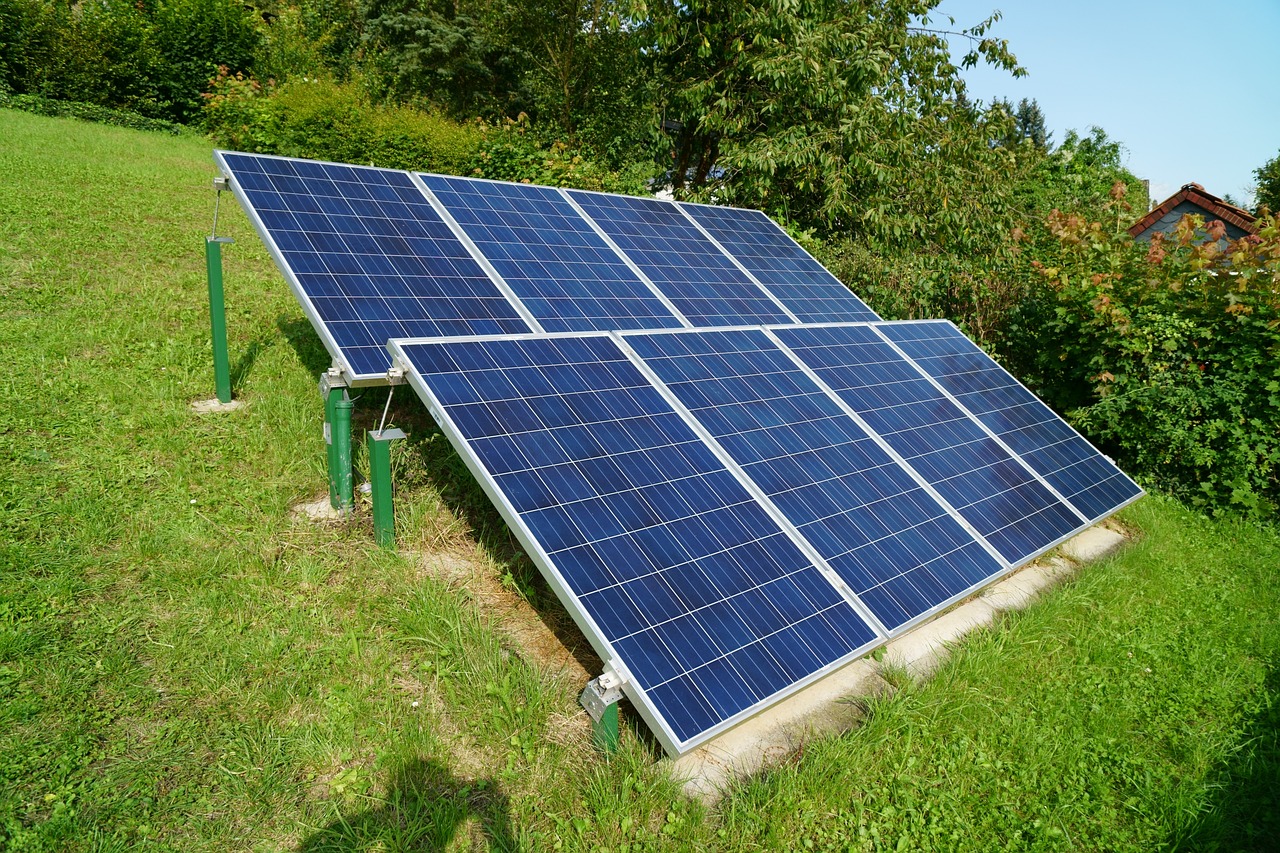
The renewable energy sector has shown expansion at a speed beyond expectations. In 2024, China added 278 million kilowatts of photovoltaic (PV) installations, with a cumulative installed capacity of 887 million kilowatts, achieving its 2030 wind and PV installation target six years ahead of schedule. This leapfrog development is attributed to the targeted allocation of fiscal resources: 47.56 billion green certificates were issued, with a trading volume of 4.39 billion, establishing a market-based consumption mechanism. Among the 5.4 billion yuan of local renewable energy subsidies, over 70% were allocated to PV poverty alleviation projects, reflecting the policy tilt towards the livelihood sector. However, the dramatic price drop of 35% to 80% in the industrial chain within the year, coupled with the US imposing a 50% tariff on Chinese PV products, has exposed the fragility of the existing capacity layout and calls for a policy shift from mere scale expansion to the construction of technological barriers.
The synergistic effects of the two strategies are beginning to emerge. The cascaded use of new energy vehicle batteries and energy storage for renewable energy form a closed loop. Leading companies such as BYD have increased the thermal efficiency of their fifth-generation DM hybrid technology to 46% through significant R&D investment, with an R&D intensity of 6.97%, far exceeding the industry average. This high level of technical investment is reshaping the industrial competition landscape. The surge in PV installations provides green electricity, supporting the full life cycle carbon reduction of new energy vehicles. This “green electricity - green vehicle” coupling model may reshape the global automotive industry value chain.
The current policy system still has areas that need improvement. Although the promotion of new energy vehicles in rural areas has achieved remarkable results, the coverage of charging facilities is only at the township level, with gaps remaining at the village level. The battery recycling system has not yet achieved scaled operation, posing potential environmental risks. In the renewable energy sector, despite leading in installed capacity, insufficient energy storage facilities has led to a rebound in the abandonment rate of PV power in the northwest region to 4.2%, exposing the shortcomings of the existing power system's flexible regulation capabilities. These structural issues require fiscal tools to shift from “flood irrigation” to “precision drip irrigation,” for example, by directing more special bonds towards new infrastructure such as distributed energy storage and smart microgrids.
The policy direction for 2025 may see three shifts: First, from consumption subsidies to the formulation of technical standards, using carbon footprint accounting to force the low-carbon transformation of the industrial chain. Second, from support at the production end to the construction of market mechanisms, expanding the linkage between green electricity trading and the carbon market. Third, from a domestic cycle to participation in international rules. This shift will test the wisdom of policymakers in balancing short-term growth stabilization and long-term competitiveness, especially in the context of rising global trade protectionism. How to maintain the global competitiveness of China's green industries through fiscal policy innovation will be a key measure of policy effectiveness.
SMM New Energy Industry Research Department
Cong Wang 021-51666838
Xiaodan Yu 021-20707870
Rui Ma 021-51595780
Disheng Feng 021-51666714
Yujun Liu 021-20707895
Yanlin Lü 021-20707875
Zhicheng Zhou 021-51666711
Haohan Zhang 021-51666752
Zihan Wang 021-51666914
Xiaoxuan Ren 021-20707866
Jie Wang 021-51595902
Yang Xu 021-51666760
Boling Chen 021-51666836

![[SMM 코발트-리튬 조간 회의 요약] 리튬 화학 제품 보합 속 차별화, 산업 체인 수급 줄다리기 심화](https://imgqn.smm.cn/usercenter/tKgKv20251217171725.png)
![[SMM 코발트 조간 회의 요약] 성수기 수요 기대 미달, 산업 체인 경쟁 심화 지속](https://imgqn.smm.cn/usercenter/eGQFu20251217171723.jpeg)