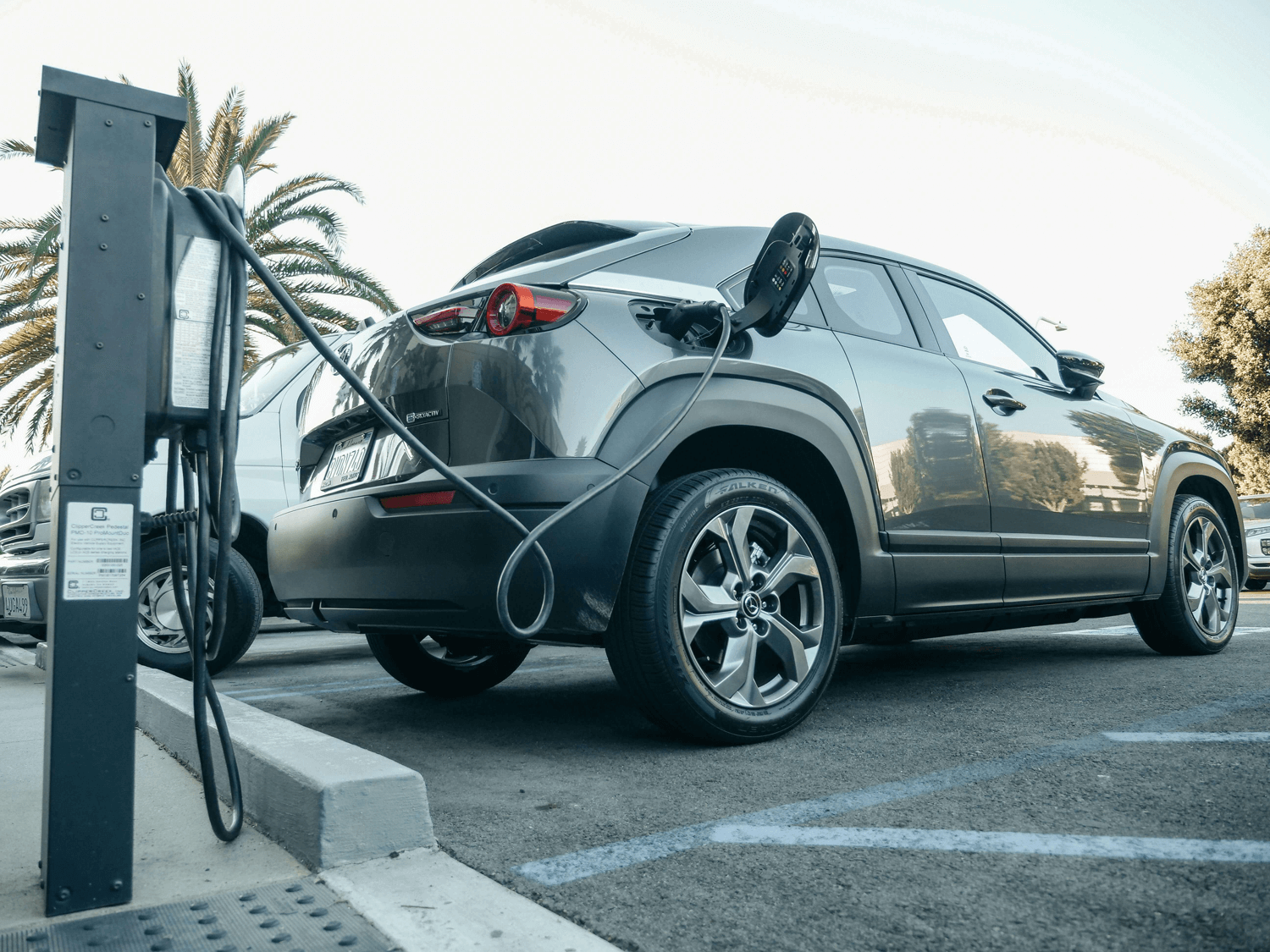
SMM News: although the actions of Chinese companies in the United States are relatively calm, Chinese companies eager to enter the global market may compete in the currently hot European market, the next target is the North American market.
At present, the most popular electric vehicle in the world is Tesla. Under the leadership of Tesla Electric vehicle, car companies around the world are promoting electrification. China, on the other hand, is supported by government policy, and the market is growing rapidly, and now it is now the largest electric vehicle market in the world; the electrification in Europe has accelerated significantly this year. Volkswagen, Daimler, BMW, Jaguar Land Rover and other car companies have also accelerated the layout of the electric vehicle industry chain this year.
In contrast, in the United States, the birthplace of Tesla, the leading brand of electric cars, seems to be relatively quiet in the tide of electrification, with neither the full support of the Chinese government nor the momentum of electrification in Europe this year, except for Tesla. GM, Ford and even foreign "monks" are also relatively small.
So, in the United States and even the entire North American market, what is the layout of the electric vehicle industry? The layout of the whole industry also needs to study a series of actions of automobile enterprises and the government. We might as well spy on the electrification tide of the North American market from a link in the electric vehicle industry chain, which is also a very important link-power battery.
Panasonic has a strong position. LG Chemical / SKI actively set up camp.
At present, the direction and focus of Chinese battery enterprises are still in the domestic market, and the international market is mainly aimed at the European continent, which is the hinterland of automobile manufacturing in the world. For the United States and North American markets, it is still in the stage of planning or opening offices (offices). But international battery giants such as Panasonic, LG Chemical and SKI have infiltrated the American market.
Recently, it is reported that South Korean lithium battery giant SKI has signed a $940 million (6.643 billion yuan) investment agreement to build a second battery factory in the United States, with an annual capacity of 11.7 GWh,. The new plant is still in Georgia.
SKI's first power battery plant in the United States, also in Georgia, began construction in March 2019 with an investment of $1.67 billion (about 11.802 billion yuan) and a planned annual production capacity of 9.8 GWh.It is expected to be completed and put into production in 2022.
It can be seen that with the first investment to pave the way, the construction of SKI's second plant in the United States will be much smoother, with less investment, but the scale of production capacity has increased. It is worth noting that after two investments, SKI's investment in power batteries in the United States has exceeded 18.4 billion yuan, and it has also reached 21.5GWh in terms of battery capacity.
According to previous news, SKI set up its first battery plant in Georgia, mainly to provide support for Volkswagen's electric vehicle production base in Tennessee. It is not clear whether the second battery factory is still for Volkswagen or whether there are new mainframe factory customers. But in any case, SKI's power battery capacity in the United States is expected to exceed 21.5 GWH in 2023, when it can steadily supply customers of American mainframe factories.
In terms of LG chemistry, its investment and construction in the United States is also increasing. In 2012, LG Chemical invested $304 million to build its first battery factory in Michigan, which then provided battery packages for models such as the Chevrolet Volt, with a capacity of 5GWh.
Seven years later, LG Chemical launched the construction of its second power battery plant in the United States. In December 2019, GM announced a partnership with LG Chemical to invest $2.3 billion to set up an electric vehicle battery joint venture in the United States, in which Ultium Cells, and Ultium Cells, each own 50% of the battery. the batteries will be used in GM's future electric vehicle products, and the new plant is planned to have a capacity of 30GWh.
The new joint venture will build a cell manufacturing plant in the (Lordstown) area of Lauderston in northeastern Ohio and plans to break ground in the middle of this year. According to Business Korea, LG Chemical injected US $35.29 million into Ultium Cells in April, hoping to start construction of the plant as soon as possible.
Although Panasonic Battery entered the US electric car market later than LG Chemical, and only built its first power battery factory in 2014, its binding customer is Tesla, the global leader in electric vehicle sales, which is undoubtedly the "number one" of power battery in the United States and the "second brother" of power battery in the world.
In 2014, Panasonic announced a partnership with Tesla to build the first power battery plant, Gigafactory 1, in Nevada, USA, with a planned capacity of 35GWH, of which Panasonic Battery invested US $1.6 billion. It is reported that at present, the actual production capacity of Gigafactory 1 is 32GWhh, which is the largest single lithium-ion battery factory in the world.
Although the relationship between Panasonic and Tesla has been like a couple, and it has been rumored to be at odds with each other several times, Panasonic still does not want to leave the "big tree" and hopes to continue to bind deeply. In May, Panasonic revealed in its 2019 fiscal year (April 1, 2019 to March 31, 2020) that Nevada Gigafactory 1 had made a profit for the second consecutive quarter. "Panasonic is currently considering continuing to expand the plant's capacity, hoping to increase the plant's capacity from 35GWh to 54GWh."
In addition, Tesla signed a 2020 pricing agreement with Panasonic on June 10, involving the production and supply of power batteries at Panasonic's Nevada superplant, according to a filing by Tesla with the Securities and Exchange Commission (SEC) (SEC) in June. "the new agreement also sets out specific terms for pricing, planned investment and new technology, as well as Panasonic's capacity and Tesla's purchases in the first two years of the agreement." Industry analysts believe that Panasonic or through this agreement, continue to deepen the relationship with Tesla, at least consolidate the special relationship in the North American market.
Obviously, although the North American electric vehicle market is not as hot as China and Europe, Panasonic Battery, LG Chemical and SKI have all been laid out in North America, while domestic battery companies are still looking at the Chinese or European market and have not officially entered the North American market.
Deep binding of American car companies is already in action.
It is worth noting that in the United States and even the North American market, the bundling of car companies and battery companies has begun. LG Chemical has teamed up with General Motors, Panasonic Tesla, Toyota and Panasonic to form a joint venture, while Volkswagen has also tied up SKI.
Although Ford doesn't seem to be bundled with a battery company yet, SKI may be one of its options.
Last month, Ford Motor Company and Volkswagen Group formally signed a strategic alliance agreement. For the strategic alliance, Volkswagen Group Dr. CEO Dis (Dr. Herbert Diess) said: "this cooperation will effectively reduce product research and development costs, accelerate the wider promotion of electric vehicles and commercial models around the world, and help both sides further enhance and consolidate the position of the industry." It can be guessed that Ford is engaged in deep cooperation with Volkswagen to electrify the layout. Volkswagen's battery partner in North America is SKI, so we have reason to speculate that Ford may adopt SKI in battery selection in the future.
In the American market, there are not many most popular car companies themselves, such as Ford, General Motors, Tesla and Toyota mentioned earlier, as well as Honda, Nissan, Hyundai, Kia and so on. Therefore, binding these car companies is basically equivalent to controlling the power battery market in the United States. At present, Panasonic Battery, LG Chemistry and SKI are also taking action one after another.
The entry of Chinese enterprises is inevitable.
Of course, if you stand in the current market pattern to judge the future market is obviously not accurate, in the trend of increasing electrified infiltration, the future of the United States and even North America market for power battery demand will continue to increase, Panasonic battery, LG Chemical, SKI these companies may not be able to meet its demand.
It is worth noting that contacts between Chinese companies and local car companies have been carried out outside the US market. For example, the Tesla (Shanghai) plant has added the Ningde era to its supply chain, BYD's batteries have begun to match Changan Ford, and GM is also interested in working with the Ningde era in the Chinese market.
In opening up the North American market, domestic battery companies have also taken action one after another.
AESC, which was acquired by China Vision Group last year, already has a power battery base in Tennessee, and its current production capacity is about 3GWh. The company should be a "vanguard" for Chinese companies to compete with Japanese and South Korean companies in the United States.
In 2018, Ningde Times established a subsidiary in Detroit as its first office in the United States. This is the fourth subsidiary established in the global market in Ningde era after Germany, France and Japan. Wang Jian, head of the US subsidiary of Ningde Times, said that its US subsidiary would strengthen its ties with local automakers and, based on the new cooperation, develop products and services adapted to their needs and provide more localized services for customers.
Recently, Funeng Technology and Daimler Greater China signed a comprehensive commercial cooperation agreement to provide batteries for Mercedes-Benz's global lineup of new electric vehicles in the next decade. Under the agreement, Funeng Technology plans to build battery production plants in the European Union and the United States, and will be designed as a carbon-neutral plant from the beginning of its construction.
Guoxuan Hi-Tech and Honeycomb Energy have also set up R & D centers in the United States.
While Chinese companies are relatively calm in the US, Chinese companies eager to move into the global market may end up in the hot European market and the next target is the North American market. However, if Panasonic Battery, LG Chemical and SKI have a "very strong" relationship with the early cooperation of local car companies, there will certainly be no small resistance for Chinese companies to enter.
Click to register: "2020 (Fifth) China International Nickel, Cobalt and Lithium Summit Forum"

Scan the code to sign up for the Ni-Co-Li Summit or apply to join the SMM industry exchange group:
![[SMM 뉴스] Lithium Africa, Agboville의 Kanien 트렌드에서 1.98% 산화리튬 샘플 확보](https://imgqn.smm.cn/usercenter/jZvMC20251217171729.jpg)
![[SMM 뉴스] Surge Evolution Nevada North 합작사, 배터리급 탄산리튬 생산](https://imgqn.smm.cn/usercenter/WyqWW20251217171729.jpg)
![[SMM 뉴스] American Lithium, 페루 팔차니 파일럿 플랜트에서 예상보다 높은 회수율 달성](https://imgqn.smm.cn/usercenter/wZUBk20251217171729.jpg)