I. Inventory Overview: 850,000 mt Arrives as Expected; Destocking Pace Slows Marginally
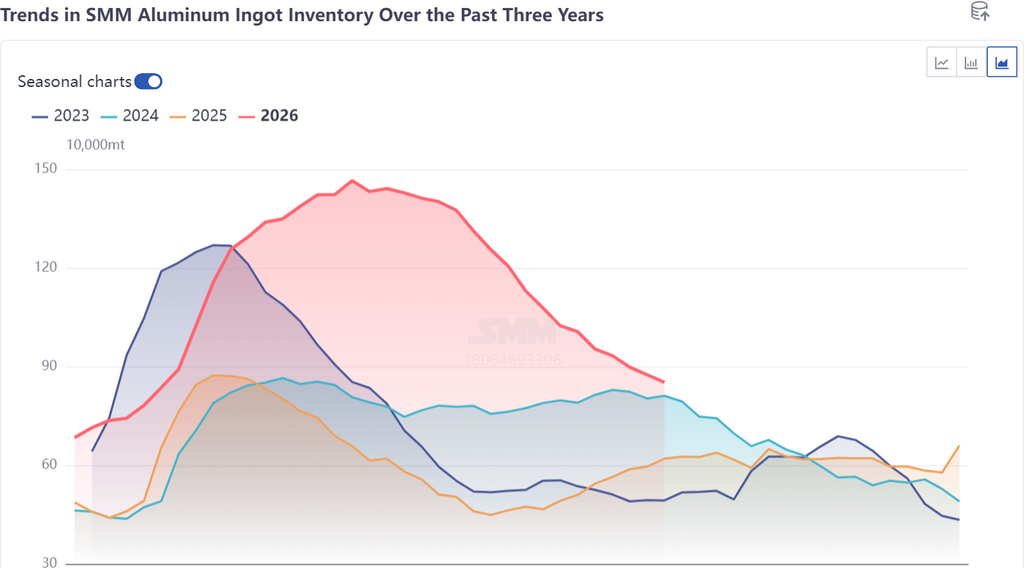
China’s aluminum ingot social inventory fell steadily from a phase high of 1.13 million mt in early July, with destocking of more than 170,000 mt in July alone. In August, the pace of destocking slowed marginally, with cumulative destocking of 106,000 mt for the full month. As of August 27, aluminum ingot inventory in major consuming regions stood at 852,000 mt, down 8,000 mt from Monday and down 23,000 mt WoW from the previous Thursday. Cumulative destocking since July reached 278,000 mt, bringing the absolute volume down to around 850,000 mt, in line with earlier market consensus expectations, but it still remained at a high level for the same period in nearly four years...
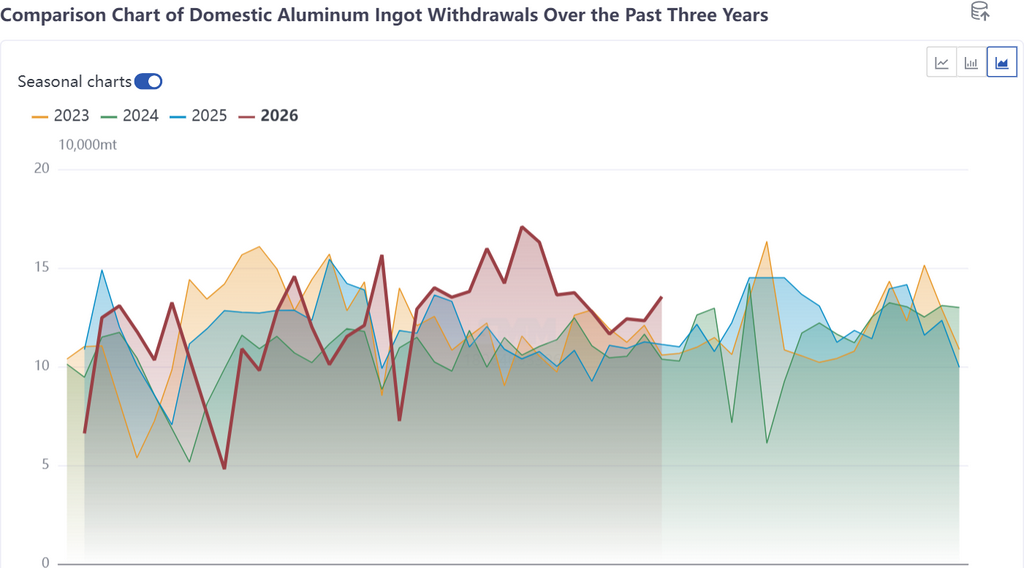
Evidence from the outflow side is equally clear: over the past week, domestic aluminum ingot warehouse withdrawals increased by 12,200 mt WoW to 135,400 mt, returning to a high level for the same period in nearly four years. The main reason was that after aluminum prices fell below the monthly average, downstream purchase willingness recovered and outflows rebounded noticeably. In the previous week, withdrawals had pulled back slightly to 123,200 mt, and short-term concentrated arrivals in Wuxi mid-week briefly caused an inventory buildup disruption. This week, as aluminum prices rebound, domestic warehouse withdrawals are expected to edge lower.
II. Destocking Drivers: Limited Supply Growth and Price-Drop-Stimulated Withdrawals Converge
The continued decline in inventories in the second half of August was mainly driven by a mismatch in the pace of supply and demand.
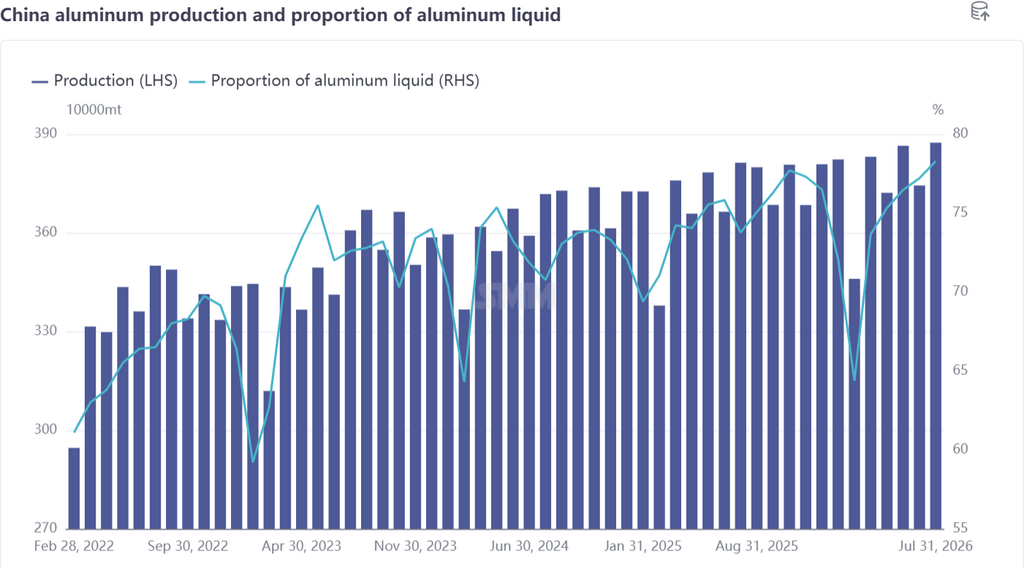
On the supply side, incremental supply was actually limited in the second half of August. Although some northern aluminum smelters increased ingot casting volumes, the domestic proportion of liquid aluminum in late August again showed signs of a slight rebound, and the higher direct-supply ratio of liquid aluminum squeezed output at the ingot-casting stage. Meanwhile, upstream enterprises as a whole slowed their shipment pace this week, so arrival pressure on social inventory did not increase in tandem with the rise in ingot casting.
On the demand side, the price-drop window activated purchasing flexibility. In mid-August, aluminum prices retreated from a high of 24,285 yuan/mt, briefly fell below the monthly average, and dipped to around 23,585 yuan/mt. This effectively released downstream restocking demand at the critical period of the seasonal transition—withdrawals jumped from 123,200 mt to 135,400 mt, directly reflecting the "price decline–restocking" chain. However, demand is still in the seasonal transition stage, and the sharp contraction in the export window continued to weigh on demand elasticity, making it difficult for withdrawals to surge past the previous high again. In addition, China's aluminum billet social inventory has already taken the lead with consecutive inventory builds, and the risk of billet-side pressure transmitting to ingot-side inventory warrants tracking.
III. Regional Divergence: Foshan Stands Out, Wuxi Is Mixed, Gongyi Is Weak
This round of destocking presented a highly uneven pattern, and regional "temperature differences" are key to understanding the path ahead.
Foshan in South China was the absolute main driver: its inventory fell steadily from 219,000 mt on July 20 to 153,000 mt on August 27, a cumulative destocking of 66,000 mt over five weeks and a decline of about 30%. "Tight arrivals + healthy local consumption" reinforced each other, directly pushing Foshan spot premiums against the SHFE aluminum 2609 contract to widen by 125 yuan/mt in the week of August 27 to a premium of 220 yuan/mt, making it the strongest spot market in the country.
Wuxi in East China, by contrast, shifted repeatedly between destocking and inventory buildup: after its inventory fell from 385,000 mt to 332,000 mt by August 17, it briefly rebounded to 335,000 mt as northern ingot casting increased and upstream shipments accelerated, before falling back to 326,000 mt. Under pressure from concentrated arrivals, A00 spot premiums/discounts hovered between a discount of 20 yuan/mt and parity against the September contract, forming a sharp contrast with the high premiums in South China.
Gongyi in central China destocked at a relatively moderate pace, drawing down 35,000 mt over five weeks to 209,000 mt. However, local spot trading remained sluggish and downstream buying sentiment was subdued, with traded discounts widening to 80-130 yuan/mt against the September contract, leaving weak regional fundamentals coexisting with slow destocking.
IV. September Outlook: Destocking Direction Unchanged, Structure Shifts Toward Rebalancing
Looking ahead to September, the main theme for China's aluminum ingot inventory will remain destocking, but the structure will be significantly different from August.
At the aggregate level, the increase in ingot casting continues to be offset by the recovery in the liquid aluminum ratio and slower shipment pace. Under expectations for the "September peak season," downstream operating rates are expected to recover marginally; if the export window sees a marginal recovery, it will further unlock demand elasticity. SMM expects China's aluminum ingot destocking trend to continue in the first half of September, though short-term fluctuations during the process will be hard to avoid.
At the structural level, cross-regional cargo movements will promote regional rebalancing of inventories and premiums/discounts. In South China, arrival pressure will increase and spot premiums will retreat from highs. In East China, after local cargo outflows, local pressure will ease at the margin and discounts are expected to narrow. Price spreads among the three regions will tend to converge, and the nationwide inventory drawdown will increasingly shift from a South China "solo act" to more balanced contributions across regions.
Market participants should closely track the actual arrival pace of in-transit cargoes in South China, the transmission to ingot-side inventory after aluminum billet social inventory enters an accumulation trend, and the degree to which realized peak-season demand strength validates the pace of destocking.
![Jendela Pengalihan Kargo Lintas Wilayah Terbuka? Premi Tiongkok Selatan Berpotensi Turun pada September [Analisis SMM]](https://imgqn.smm.cn/usercenter/ppauU20251217171651.jpg)