SHANGHAI, Sep 9 (SMM) - Stainless steel futures stopped falling and rebounded recently, exceeding the market expectations. The rally was partly boosted by the forced shutdown or production cuts by many steel mills in light of serious losses under the energy crisis, and overseas supplies also dropped palpably. At the same time, the structure of major exporting countries of Chinese stainless steel has gradually changed since the second half of this year. China’s stainless steel exports did not fall steeply though China's main export destination, Europe, has suffered hefty from energy crisis and inflation. Why is that?
The reasons are listed as follows:
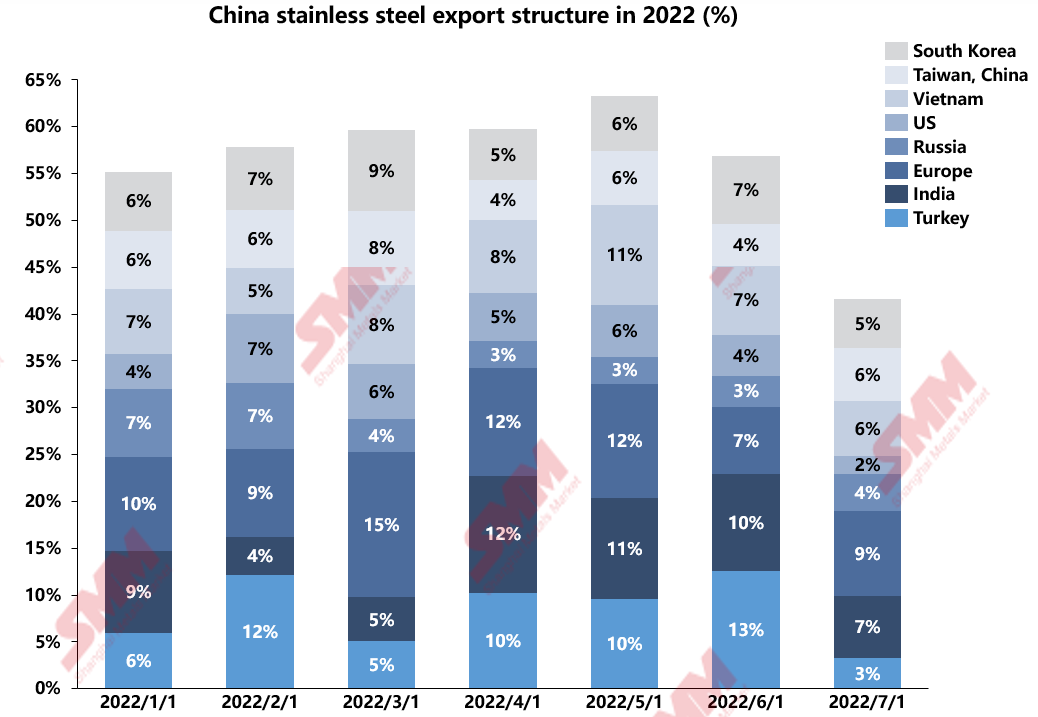
First of all, the total export volume to the Europe has indeed decreased since June and July from a proportion of over 10% in the early stage. On the contrary, the proportion of exports to India has boomed since this April. According to SMM research, India is now the second largest export market in addition to the European and American markets, and its development prospects are very promising. Therefore, it is evidenced by the actual export data that India has indeed become one of the main destinations for future exports.
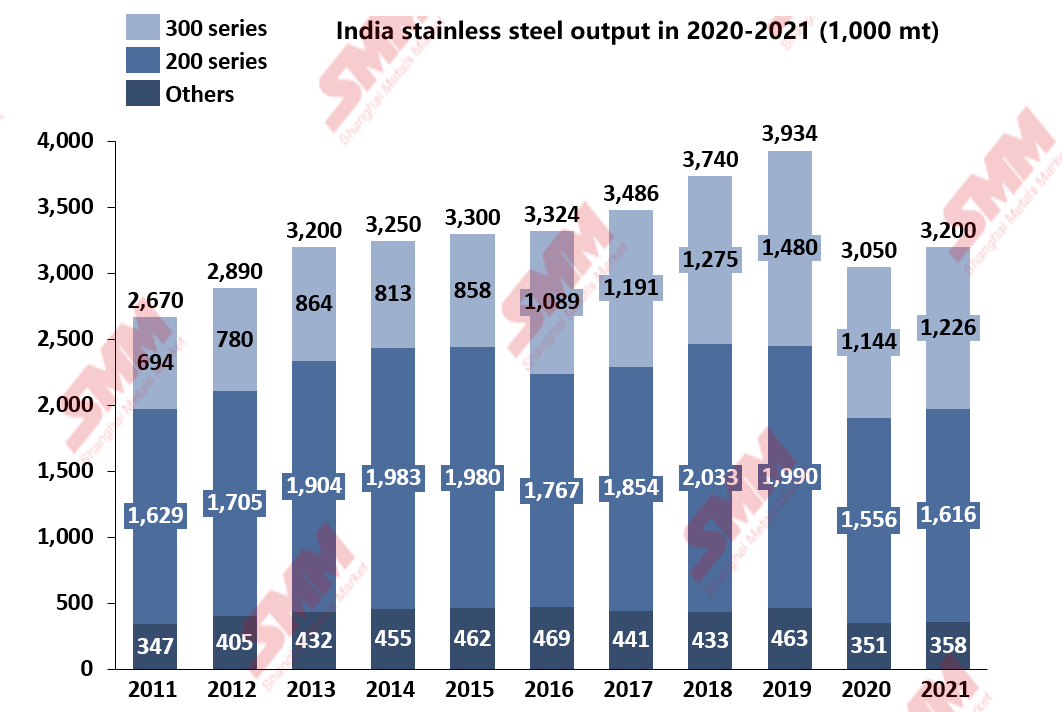
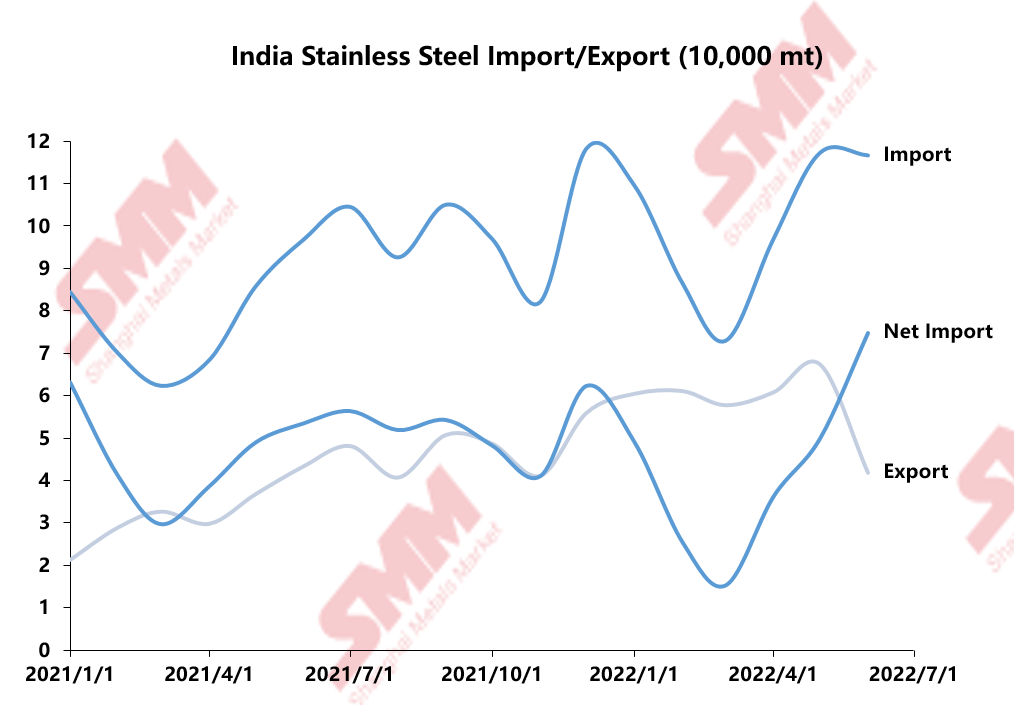
Secondly, from the perspective of India itself, if it only acts as an OEM, its demand may not be able to be maintained a high level. Then, it is nonsense that China's export growth could compensate for part of the contracting domestic demand. But it can be seen from the net import data of India that the country’s net import has been increasing since April, which shows that a large part of the stainless steel imported from China is indeed consumed domestically in India. As India's main exporter, China may continue to benefit from the rapid development of India's stainless steel consumption. On the other hand, India's total capacity has reached 5.87 million mt, accounting for about 7% of the global stainless steel capacity.
In addition, European orders have been weakening since June due to the energy crisis, high costs and serious losses. A number of large European stainless steel mills have recently stopped the production, while some have decided to further raise stainless steel prices. Under this background, the operating rates of fabricators in Europe are still likely to rise in August and September amid existing rigid demand, which will serve as an opportunity for Chinese export market. In addition, South Korean steel giant Posco was shut down due to unexpected conditions. As is mentioned earlier, it may affect the production when the typhoon hovers in the country. But according to the follow-up study of SMM, Posco may have power and production equipment damages caused by the typhoon, and the impact on its production may have been extended, and this will become one of the important factors that will benefit the Chinese stainless steel export market in the short term.
In addition, since the end of August, China's domestic demand has improved as well along with the export market. Although steel mills have been resuming the production in September, it will take time for the output to gradually enter the market. Therefore, SMM believes that the supply and demand mismatch will dominate the first half of September with supply tightening and demand growing strongly. On the whole, although the export demand has improved, it is not enough to fully compensate for the impact of the increase in steel production in the domestic market that is likely to lead to an oversupply. Furthermore, it remains to be seen whether the consumption is smoothly transmitted to the terminal and even the consumer end. As such, SMM believes that short-term stainless steel prices will remain rangebound.