State issues 2020 Photovoltaic Power Generation Power Price Policy to optimize Industrial Development

Publié: Apr 2, 2020 10:44
Source: SMM

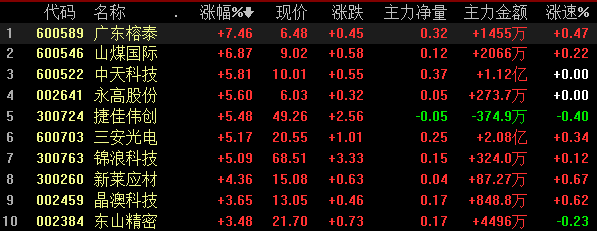
SMM4 1: a shares in the morning photovoltaic concept changes, Guangdong Rongtai, Yonggao shares, coal international rose 7%, Zhongtian science and technology, San an photoelectric rose.
Recently, the National Development and Reform Commission issued the Circular on matters related to the 2020 Photovoltaic Power Grid Price Policy (hereinafter referred to as the "Circular"), announcing the 2020 photovoltaic power grid tariff policy.

The circular proposes to continue to set guidance prices for centralized photovoltaic power generation. The guidance price of the new centralized photovoltaic power station in the I~III resource area, which will be included in the scope of state financial subsidy, is 0.35 yuan per kilowatt hour (including tax, the same below), 0.4 yuan and 0.49 yuan per kilowatt hour, respectively. In principle, the feed-in electricity price of the new centralized photovoltaic power station shall be determined by means of market competition and shall not exceed the guidance price in the resource area where it is located.

The Circular makes it clear that the industrial and commercial distributed photovoltaic power generation projects, which are included in the scale of financial subsidies in 2020, adopt the mode of "self-generating and surfing the Internet", and the subsidy standard for full power generation is adjusted to 0.05 yuan per kilowatt-hour; the industrial and commercial distributed photovoltaic power generation projects adopting the "full access to the Internet" model shall be implemented according to the guidance price of the centralized photovoltaic power stations in the resource area. For all industrial and commercial distributed projects uniformly allocated by the competent energy department in the form of market competition, the price formed by market competition shall not exceed the guiding price in the resource area, and the subsidy standard shall not exceed 0.05 yuan per kilowatt hour.

The notice stipulates that the subsidy standard for household distributed photovoltaic power generation, which will be included in the scale of financial subsidies in 2020, will be adjusted to 0.08 yuan per kilowatt hour. The grid electricity price of the village-level photovoltaic poverty alleviation power station (including Liancun power station), which conforms to the relevant management provisions of the national photovoltaic poverty alleviation project, remains unchanged.

China's renewable energy generation capacity will reach 794 million kilowatts by the end of 2019, an increase of 9 percent over the same period last year, according to public data. Renewable energy generation accounted for about 39.5% of all power installations, an increase of 1.1 percentage points over the same period last year. Photovoltaic power generation was installed at 204 million kilowatts, up 17.3 percent from the same period last year.

In 2019, China's renewable energy generation reached 2.04 trillion kilowatt hours, an increase of about 176.1 billion kilowatt hours over the same period last year, and renewable energy generation accounted for 27.9 percent of the total electricity generation, an increase of 1.2 percent over the same period last year. Among them, photovoltaic power generation increased by 26.3% year on year.

 

Déclaration sur la source des données : À l'exception des informations publiques, toutes les autres données sont traitées par SMM sur la base d'informations publiques, d'échanges avec le marché et en s'appuyant sur le modèle de base de données interne de SMM. Ils sont fournis à titre indicatif uniquement et ne constituent pas des recommandations décisionnelles.

Pour toute demande d'information ou pour en savoir plus, veuillez contacter : lemonzhao@smm.cn
Pour plus d'informations sur l'accès à nos rapports de recherche, veuillez contacter :service.en@smm.cn
Actualités Connexes
Le prix au comptant du silicium métal s'est légèrement raffermi puis stabilisé [Revue hebdomadaire de l'industrie du silicium SMM]
il y a 11 heures
Le prix au comptant du silicium métal s'est légèrement raffermi puis stabilisé [Revue hebdomadaire de l'industrie du silicium SMM]
Lire la suite
Le prix au comptant du silicium métal s'est légèrement raffermi puis stabilisé [Revue hebdomadaire de l'industrie du silicium SMM]
[Les prix au comptant du silicium métal progressent légèrement dans une fourchette étroite avant de se stabiliser] : Début août, la contraction de l’offre liée aux réductions de production chez les producteurs de silicium et les facteurs haussiers issus de la politique photovoltaïque s’étaient déjà matérialisés par étapes. Les contrats à terme sur le silicium métal sont passés à une consolidation dans une fourchette étroite après la hausse des prix. En août, les fondamentaux se sont améliorés, avec un support solide sous les prix limitant le potentiel de baisse. À la hausse, en l’absence de nouveaux catalyseurs positifs, l’élan haussier reste insuffisant pour générer une tendance haussière durable, et le bras de fer entre acheteurs et vendeurs pourrait ramener les prix vers une consolidation.
il y a 11 heures
Les commandes de demande rigide en aval ont suivi, les prix des produits de silicone sont restés fermes [Revue hebdomadaire SMM sur le silicone]
il y a 11 heures
Les commandes de demande rigide en aval ont suivi, les prix des produits de silicone sont restés fermes [Revue hebdomadaire SMM sur le silicone]
Lire la suite
Les commandes de demande rigide en aval ont suivi, les prix des produits de silicone sont restés fermes [Revue hebdomadaire SMM sur le silicone]
[Revue hebdomadaire SMM sur les silicones : les commandes de demande rigide en aval se concrétisent et les prix des produits silicones restent fermes] Cette semaine, le niveau des prix du DMC de silicone en Chine a progressé, avec des cotations comprises entre 13 000 et 13 500 yuans/tonne. Les anticipations de réduction conjointe de la production du secteur, associées à la concrétisation des commandes de demande rigide en aval, ont incité les producteurs de monomères de silicone à relever leurs cotations, et l’offre à bas prix sur le marché a diminué. Côté offre, le plan conjoint de réduction de production de 50 % fixé lors de la réunion sectorielle d’août a continué d’avancer, mais l’intensité de sa mise en œuvre a varié selon les entreprises, et le taux d’exploitation début août est resté supérieur à 60 %. En ce qui concerne les prises de commandes des producteurs de monomères, ils disposent actuellement de commandes en prévente suffisantes et ne subissent aucune pression de vente, quelques entreprises ayant déjà des commandes en prévente réservées jusqu’au début septembre ; les commandes en prévente du secteur s’échelonnent entre fin août et début septembre. Les stocks de siloxane des producteurs de monomères sont à des niveaux bas et les entreprises affichent un sentiment majoritairement haussier. Globalement, le niveau des prix à court terme du DMC en Chine devrait passer progressivement de 13 000 yuans/tonne à environ 13 500 yuans/tonne.
il y a 11 heures
[SMM Analysis] Futures Market Weakness Coupled with Sluggish Off-Season Demand, Limited Arrivals Saw Stainless Steel Inventory Post a Slight Buildup and Hold Steady
il y a 11 heures
[SMM Analysis] Futures Market Weakness Coupled with Sluggish Off-Season Demand, Limited Arrivals Saw Stainless Steel Inventory Post a Slight Buildup and Hold Steady
Lire la suite
[SMM Analysis] Futures Market Weakness Coupled with Sluggish Off-Season Demand, Limited Arrivals Saw Stainless Steel Inventory Post a Slight Buildup and Hold Steady
[SMM Analysis] Futures Market Weakness Coupled with Sluggish Off-Season Demand, Limited Arrivals Saw Stainless Steel Inventory Post a Slight Buildup and Hold Steady
[SMM Analysis] Futures Weakness and Sluggish Off-Season Demand; Stainless Steel Inventory Posts Slight Buildup and Remains Stable on Limited Arrivals SMM, August 13 – This week, stainless steel social inventory shifted from prior destocking to a slight buildup, with the overall inventory level basically stable and off-season inventory pressure rising at the margin. Total inventories in the two core markets of Wuxi and Foshan edged up from 915,200 mt on August 6, 2026, to 915,900 mt in the latest period, up 0.08% WoW. The buildup was modest, and overall inventory maintained a stable trend. This week, the stainless steel market continued to follow the traditional off-season pattern. Early recovery signals ahead of the September-October peak season had yet to emerge, and rigid demand from end-users remained weak. During the week, SS futures pulled back repeatedly. Wait-and-see sentiment strengthened among traders and downstream users, and most downstream end-users maintained a need-based, hand-to-mouth purchasing pattern. Spot transactions in the market were generally weak, and the destocking efficiency of cargoes was low, creating the core fundamental pressure behind the inventory buildup. On the supply and distribution side, there were temporary offsetting factors. At the beginning of this week, weather disruptions from Typhoon Dolphin constrained logistics shipments and the pace of spot arrivals in east China. The pace of market supply replenishment slowed, effectively offsetting the incremental buildup caused by weak demand, leaving social inventory only slightly higher this week and broadly stable overall. Overall, weak end-use demand in the off-season and weaker futures that dragged on market transactions were the core causes of this week's slight inventory buildup. Meanwhile, typhoon-related disruptions reduced arrivals and effectively curbed any sharp inventory accumulation, ultimately resulting in a slight buildup with overall stability. At this stage, the off-season fundamentals of stainless steel still dominate the market, and end-use demand shows no signs of recovery yet...
il y a 11 heures