Recently, several automotive companies have announced their sales figures for December 2023, with a surge in new energy vehicles.
In December 2024, BYD reported sales of new energy vehicles reaching 341,000 units, up 235,000 YoY. The total sales volume for BYD in 2023 amounted to 3.0244 million units, up 62.3% YoY. GAC Group disclosed that their December 2023 vehicle sales volume amounted to 259,100 units, up 25.79% YoY. The total sales volume for the year stood at 2.505 million units, up 2.92% YoY. Notably, the annual sales of new energy vehicles within this figure were 549,600 units, up 77.55% YoY. SAIC Motor Corporation announced a total vehicle sales figure of 5.02 million units for the year 2023. Of these, new energy vehicles accounted for an annual sale of 1.123 million units, up 4.6% YoY, securing the second position among domestic automotive companies in terms of sales volume.
Every achievement garnered by the Chinese automotive industry is the result of the diligent work of its automotive professionals.
As Lei Jun, has stated, "We pay tribute to BYD, Geely, Changan, Great Wall, GAC, SAIC, Dongfeng, and FAW. We salute Porsche, Mercedes-Benz, BMW, Audi, Jaguar Land Rover, Lincoln, Volkswagen, Toyota, Honda, Nissan, General Motors, and Ford. We extend our respects to Huawei, NIO, XPeng, Li Auto, Leapmotor, Nezha, as well as to emerging players like WM Motor, Skywell, and Aiways...“
Price War
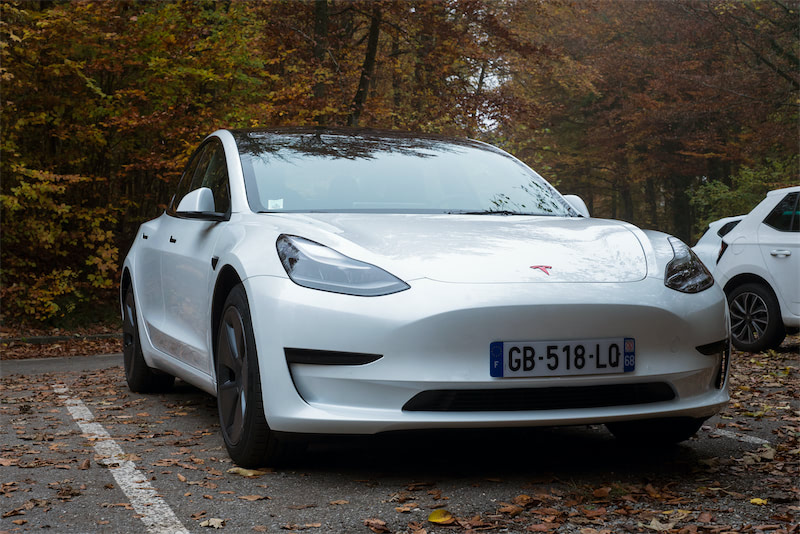
Tesla's significant price reductions on the Model 3 and Model Y have triggered a price competition within the automotive industry in 2023. Following suit, GAC Aion swiftly reacted by cutting prices to boost sales volume.
Subsequently, traditional gasoline vehicle brands also began to substantially slash their prices, bringing the industry's competition to a climax. Dongfeng Citroën was at the forefront, implementing significant time-limited discounts, which compelled other traditional gasoline car brands to enter the fray. With limited market share available, the competition became incredibly fierce.
As the price of lithium carbonate plummeted from nearly 600,000 yuan/mt to the recent 100,000 yuan/mt, the cost of batteries has significantly decreased, approaching an all-time low. This has substantially reduced the production costs of new energy vehicles and provided strong support for the price competition.
The Battle for Market Share between Pure Electric and Plug-in Hybrid Electric Vehicles
Following BYD's dominance in the sales of plug-in models, nearly every brand has introduced plug-in hybrid electric vehicles. According to SMM data, as of November 2023, PHEVs have captured a 32% share of the sales market, with the potential for further growth. There are three reasons for this trend:
1.The electric vehicle market is experiencing rapid changes in both pricing and technology. The significant fluctuations in the price of lithium carbonate are impacting cost structures and pricing strategies, while swift technological advancements hold the potential for substantial improvements in the performance of future electric vehicles.
2.Mainstream consumers continue to harbor concerns about the safety of electric vehicles due to the lack of clear safety standards and pricing for batteries, resulting in a wait-and-see attitude among potential buyers.
3.The electric vehicle market is overly reliant on government policies, lacking sufficient internal drive.
However, from the perspective of consumer psychology, consumers' expectations for price reductions tend to lag behind the automakers' pricing strategies. Typically, consumers are willing to fulfill their purchasing needs within their budgets, which tend to be quite definitive. In other words, as raw material costs continue to fall, the mainstream consumer spending range may gradually shift into a "comfort zone" for pure electric vehicles, potentially serving as a stimulus for this segment of the market.
The Key to Breaking the Deadlock
In today's fiercely competitive landscape, new energy vehicle companies are constantly seeking their own strategies to break through.
Technological innovation is undoubtedly the battleground that must be contested. This is exemplified by the comprehensive strategic cooperation agreement signed between Seres Group and Huawei Digital Energy. The two parties will engage in extensive strategic collaboration across various fields including the development of intelligent electric components for new energy vehicles, technological development, and application of new energy vehicle platforms, construction and operation of new energy vehicle charging networks, and the internationalization of new energy vehicles. Building on this foundation, they will join forces to create competitive products aimed at delivering the ultimate user experience, construct an industrial ecosystem together, and jointly promote the high-quality development of the new energy vehicle industry.
In 2024, the Chinese automotive industry will unite and collectively navigate through challenging times.
![Los precios del magnesio suben por tercera sesión consecutiva: el lado de los costos sigue "ardiendo" mientras la demanda lucha por tomar el relevo [Comentario de SMM]](https://imgqn.smm.cn/usercenter/EutUV20251217171724.jpeg)