SMM, October 19:
Zinc prices have been fluctuating recently. How is the die-casting zinc alloy market performing? Why did the industry operating rate in September fail to rebound significantly along with the traditional peak season? What impact have raw material price changes had on enterprise costs and profitability? The following analysis covers three aspects: industry operating rate, enterprise costs and profitability, and end-use demand.
1. September operating rate edged down MoM, "September peak season" performance fell short of expectations
According to SMM data, the operating rate of the new sample of die-casting zinc alloy enterprises in September was 37.45%, down 0.15 percentage points MoM and down 7.04 percentage points YoY. Overall, the industry operating rate in September edged down MoM, and the traditional "September peak season" provided relatively limited support to end-use demand.
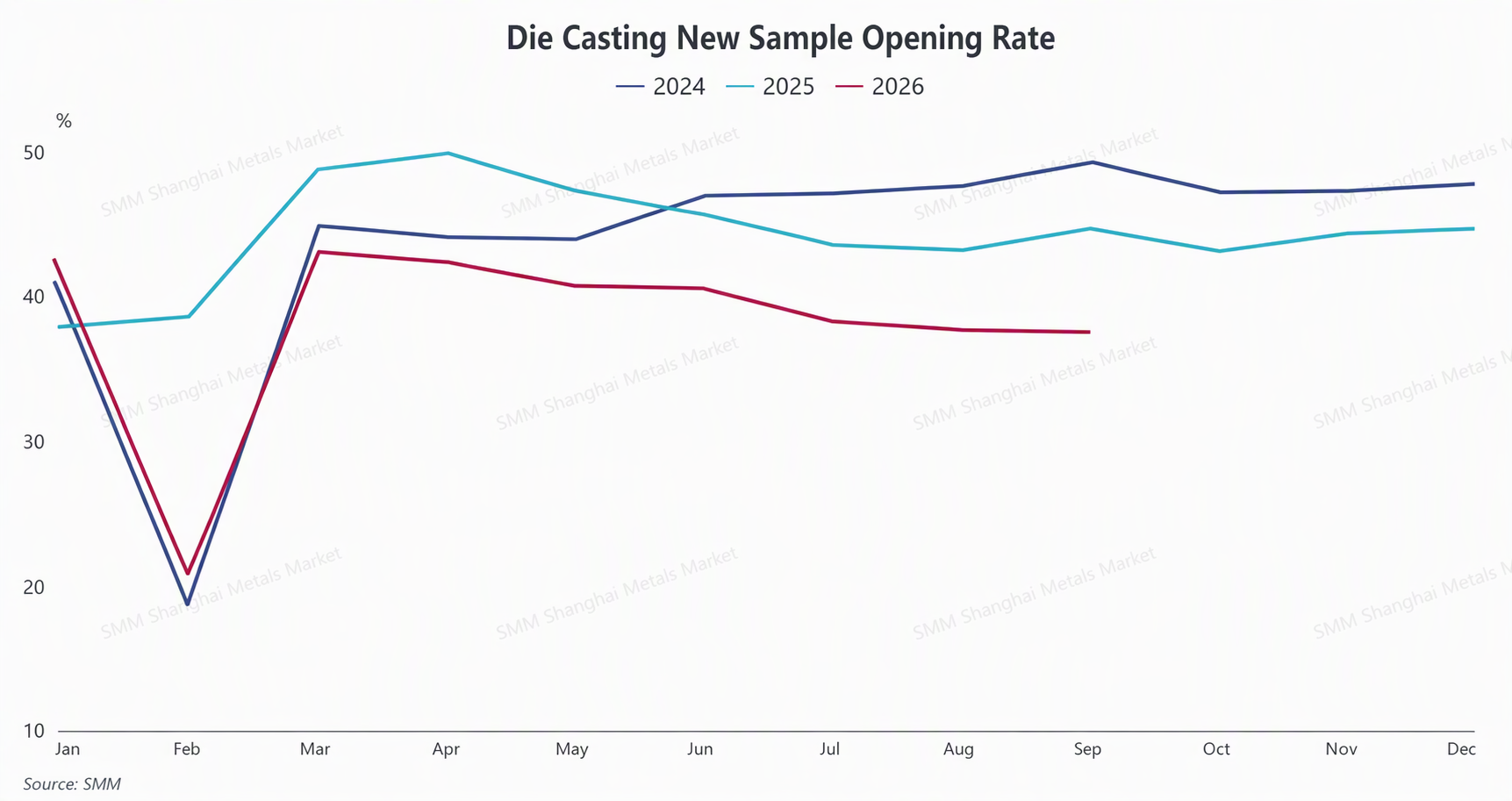
Specifically, in the first half of September, affected by high raw material prices, downstream enterprises' purchasing enthusiasm was suppressed, the die-casting zinc alloy market was generally weak, and the industry operating rate was under pressure. In the second half of the month, as zinc prices gradually pulled back, coupled with moderate restocking by some end-users before the Mid-Autumn Festival and National Day holidays, market demand recovered to some extent. However, as finished product inventories at some enterprises remained at relatively high levels, destocking pressure had not been fully alleviated, and enterprises' production enthusiasm was still constrained to a certain extent. As a result, the September operating rate edged down MoM.
2. Profitability of mainstream grades improved, but room for improvement remained limited
1. Zamak #3 zinc alloy
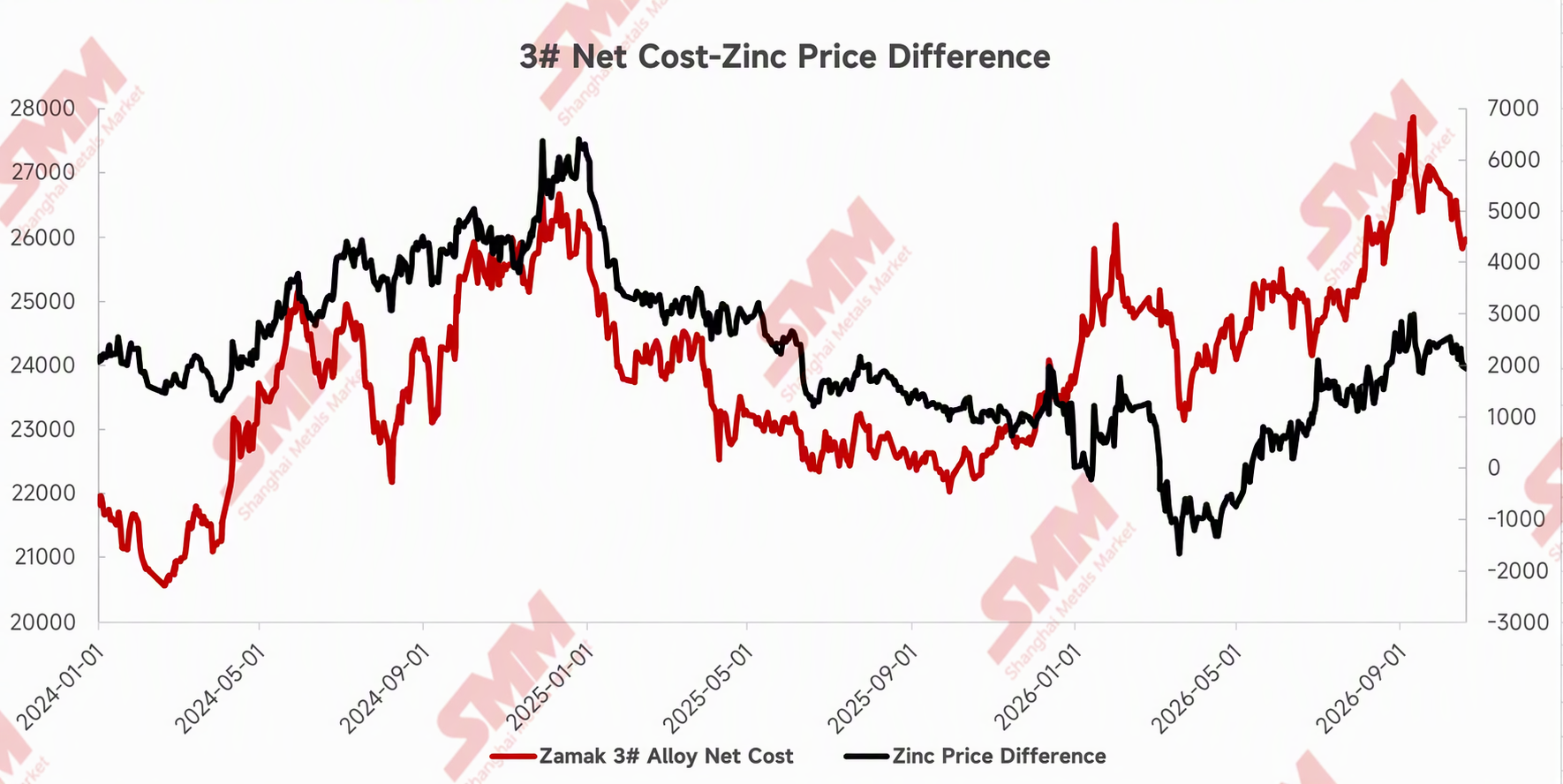
From the cost side, the full cost of Zamak #3 zinc alloy experienced a rise-then-fall process from 2024 to 2025, once pulling back to 22,000-23,000 yuan/mt in H2 2025. After entering 2026, as raw material prices rose again, full cost gradually climbed and is currently maintained at around 26,000-26,500 yuan/mt. In terms of the zinc-aluminum price spread, due to strong aluminum prices, the spread once narrowed to about -1,700 yuan/mt in Q1 2026. Since May, the spread has gradually recovered, and after entering October, it has been maintained at 1,900-2,600 yuan/mt. Combining the relevant price spread and profit changes, Zamak #3 zinc alloy profitability in H2 improved compared with H1, alleviating enterprises' operating pressure to a certain extent. However, the current full cost of the alloy remains at a relatively high level, end-use demand performance is mediocre, and the room for profit improvement remains constrained.
2. Zamak #5 zinc alloy
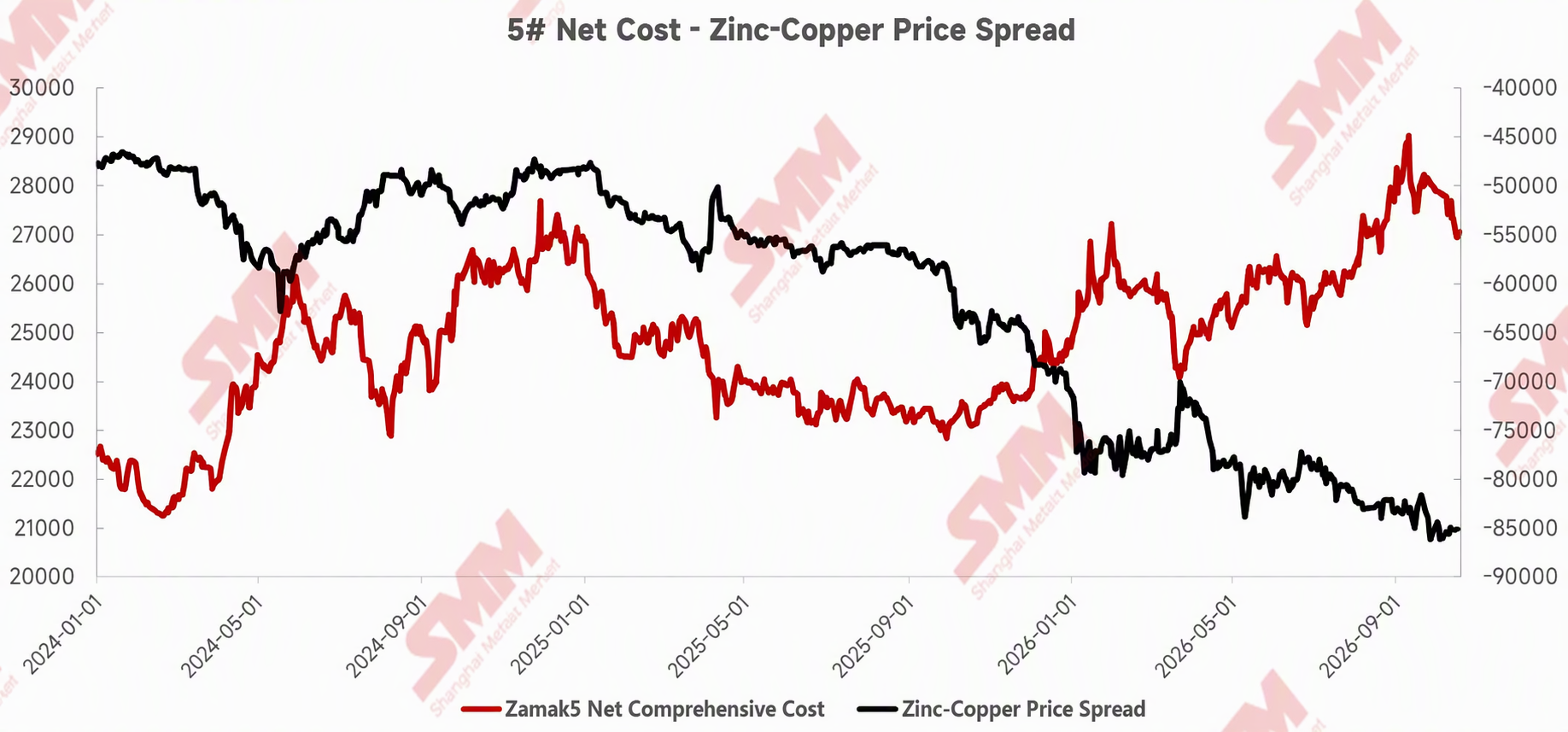
The full cost trend of Zamak #5 zinc alloy is basically consistent with that of the #3 alloy, but due to the difference in copper content, its cost level is relatively higher. Currently, the full cost of Zamak #5 zinc alloy is approximately 27,000-27,800 yuan/mt, more than 1,000 yuan/mt higher than that of the #3 alloy. From the zinc-copper price spread perspective, the spread has remained in negative territory, widening from approximately -48,000 yuan/mt in early 2024 to approximately -85,000 yuan/mt in September 2026. In terms of costs and profits, the profit margin for #5 alloy is relatively limited and more susceptible to copper price fluctuations. Similar to #3 alloy, whose profits recovered in H1, #5 alloy profits also recovered somewhat, but overall margins remain relatively thin at present.
III. Traditional hardware demand remains weak, with divergent performance across sub-sectors
On the end-use demand side, according to enterprise feedback, orders for traditional hardware accessories are currently weak, and overall market demand recovery remains limited. In contrast, demand in sub-sectors such as electronic hardware and medical device hardware is relatively moderate, with end-use consumption showing some divergence. On the export front, some enterprises reported that due to factors such as geopolitical uncertainties ex-China, export orders for end-use hardware have been mediocre, providing no significant boost to die-casting zinc alloy demand. Meanwhile, low-price competition in the die-casting zinc alloy market remains intense, with widely dispersed market quotes and limited bargaining power for enterprises.
IV. October operating rate expected to pull back slightly; demand improvement still needs monitoring
Looking ahead to October, SMM expects the operating rate of the new sample of die-casting zinc alloy enterprises to pull back to around 36.8%, down 0.65 percentage points MoM. In terms of influencing factors, during the National Day holiday, most die-casting zinc alloy enterprises have production suspensions and holiday arrangements, which will weigh on the overall October operating rate. In addition, orders for traditional hardware end-use products remain weak, market demand has yet to show significant improvement, and combined with finished product inventory pressure at some enterprises and low-price competition in the industry, there is a possibility of the industry operating rate edging down slightly in October.
(The above information is based on market collection and comprehensive assessment by the SMM research team. The information provided herein is for reference only. This document does not constitute direct investment research decision-making advice. Clients should make decisions prudently and should not use this as a substitute for their own independent judgment. Any decisions made by clients are not related to SMM.)