I. September Cold Rolled & Galvanized Market Review
In September, the average price of cold-rolled products in the market was 3,798.15 yuan/mt, up 14.96 yuan/mt from 3,783.19 yuan/mt in August.
In September, the average price of galvanized products in the market was 4,093.99 yuan/mt, up 13.49 yuan/mt from 4,080.5 yuan/mt in August.
In September, the cold rolled & galvanized market overall showed a consolidation pattern of rising first and then falling, with costs providing a floor and demand acting as a cap. The market dynamics centered on the tug-of-war between raw materials and end-use demand. In early September, the pace of production resumptions at Shanxi coking coal mines fell short of expectations. Mines held back from selling, auctions closed at high premiums, and the fourth round of coke price hikes took effect. Iron ore rose on news of mine suspensions, and multiple bullish factors on the cost side converged to drive ferrous metals broadly higher, with cold rolled & galvanized prices following raw materials upward. Cost support continued to build as the fifth round of coke price hikes took effect, lifting the cost center step by step. Market expectations for the "September peak season" remained intact, and cold rolled & galvanized prices consolidated on a strong note. However, sheets & plates inventory continued to accumulate, end-use demand during the peak season had yet to materialize effectively, and downstream acceptance of high-priced resources was weak, limiting the upside for prices. In mid-September, news emerged about railway construction at the China-Mongolia border port, raising market concerns about a recovery in Mongolian coal supply. Coking coal and coke faced resistance on the upside, ferrous metals futures began to pull back, and iron ore weakened under pressure from long-term contract negotiation rumors and a rebound in port inventories. Cost support loosened at the margin, and cold rolled & galvanized prices retreated after a rapid rise. In late September, multiple rounds of coke price hikes continued to squeeze steel mill profits, widening losses across the sector. Hot metal production gradually pulled back, the scope of maintenance and production suspensions expanded, and expectations for raw material demand declined. Additionally, the anticipated policy impact of the three ministries' coal supply stabilization and production guarantee measures weighed on coking coal and coke, further weakening cost support. Although downstream restocking before the holiday brought some speculative demand, the release of sheets & plates end-use demand was limited, the peak season fell short of expectations, and the supply-demand imbalance persisted. Cold rolled & galvanized prices consolidated within a narrowing range, moving sideways at month-end amid the tug-of-war between loosening costs and weak demand.
SMM Nationwide Average Price of Cold Rolled Products
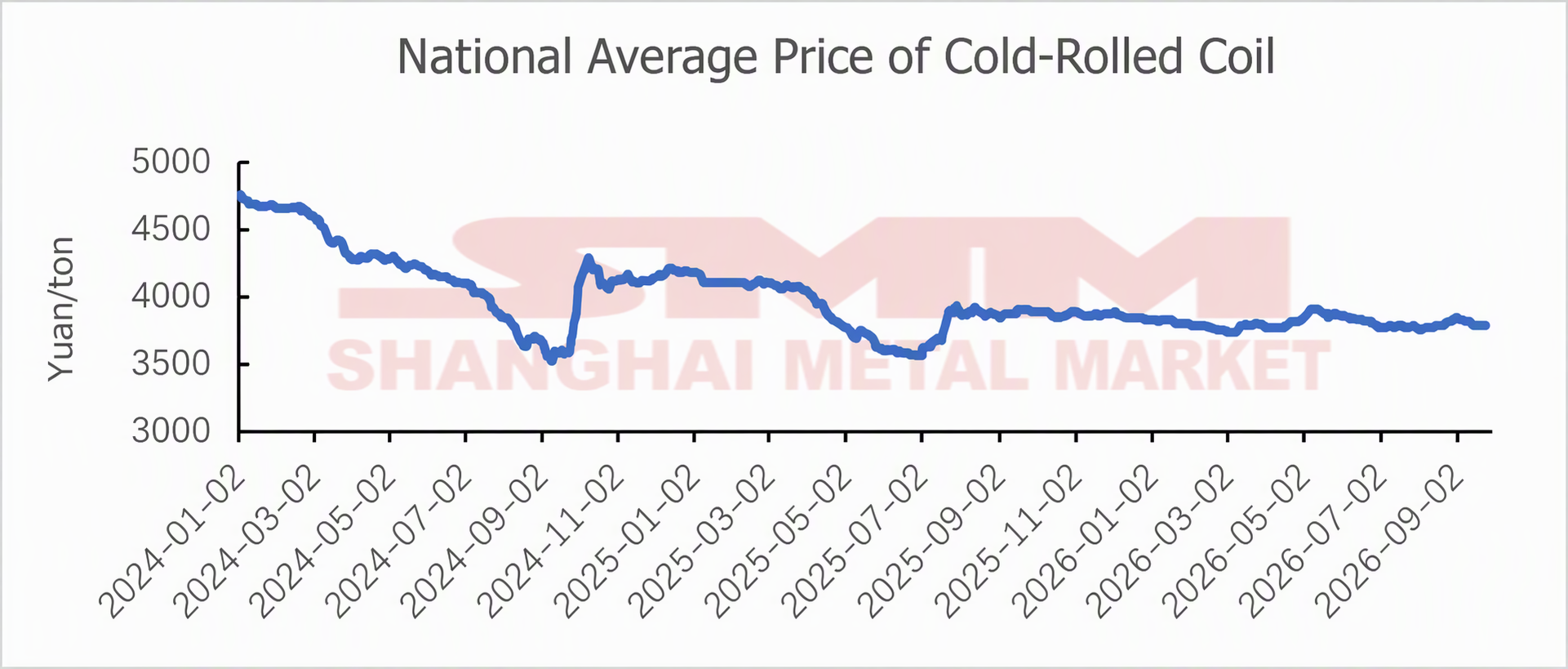
Source: SMM
SMM Nationwide Average Price of Galvanized Products
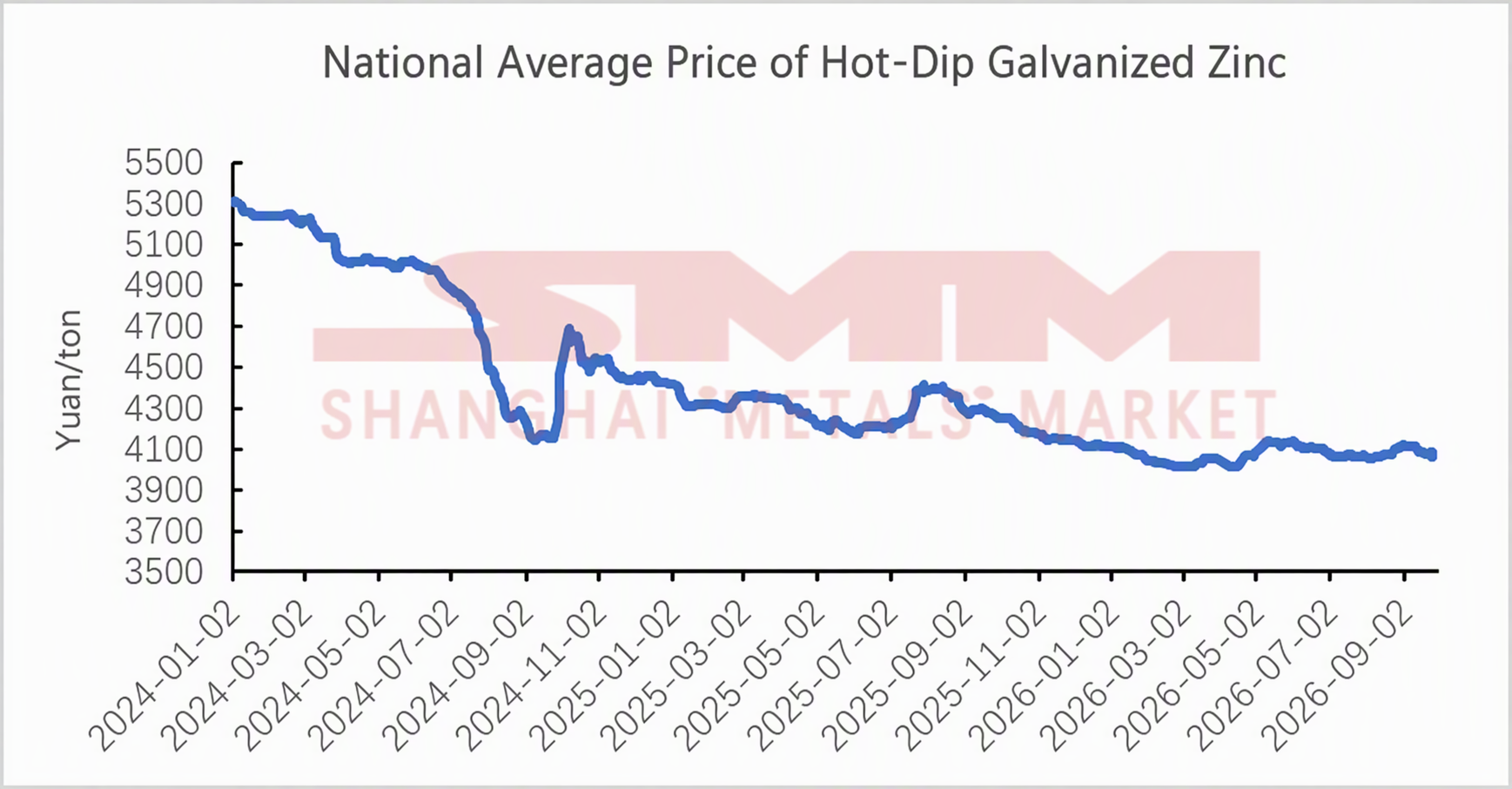
Source: SMM
II. September Cold Rolled & Galvanized Market Fundamentals Review
From a fundamentals perspective, steel mill orders in September improved from August as the peak season arrived. However, this year's peak season demand was far below the levels seen in the same period of previous years. Market demand only improved relative to the off-season of the preceding months, and overall demand conditions were not satisfactory. In September, both cold-rolled and galvanized inventories showed an inventory buildup trend. This was mainly because traders in the market stocked up in a planned manner in September to guard against stronger-than-expected peak season demand and to prepare for the Mid-Autumn Festival and National Day holidays at the end of September. However, downstream demand recovery has so far fallen short of expectations. Although there was some stockpiling before the holiday, the quantities were relatively cautious, and the less-than-optimistic demand outlook dragged inventories into an accumulation trend.
SMM Total Cold Rolled Inventory
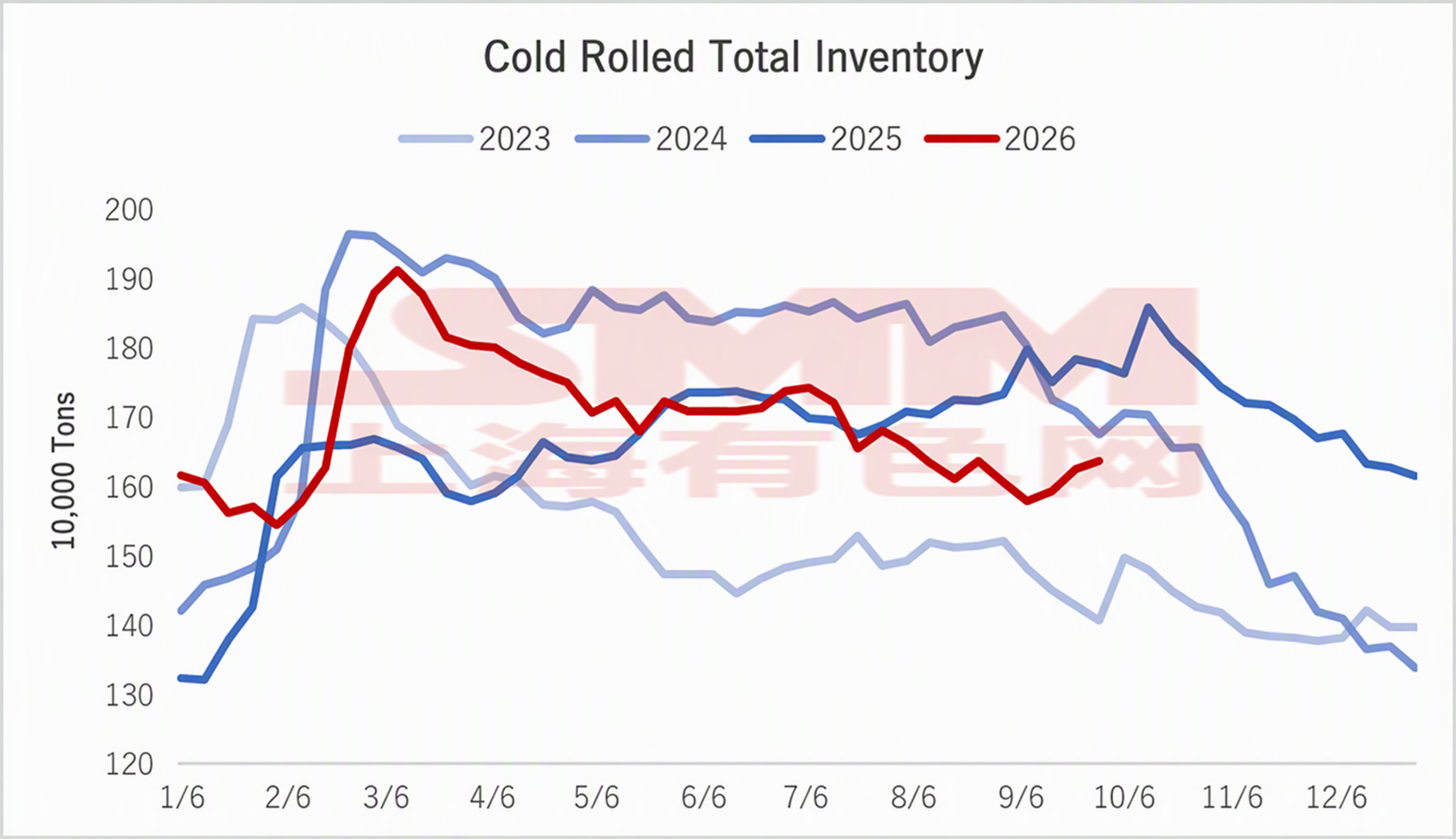
Source: SMM
SMM Total Galvanized Inventory
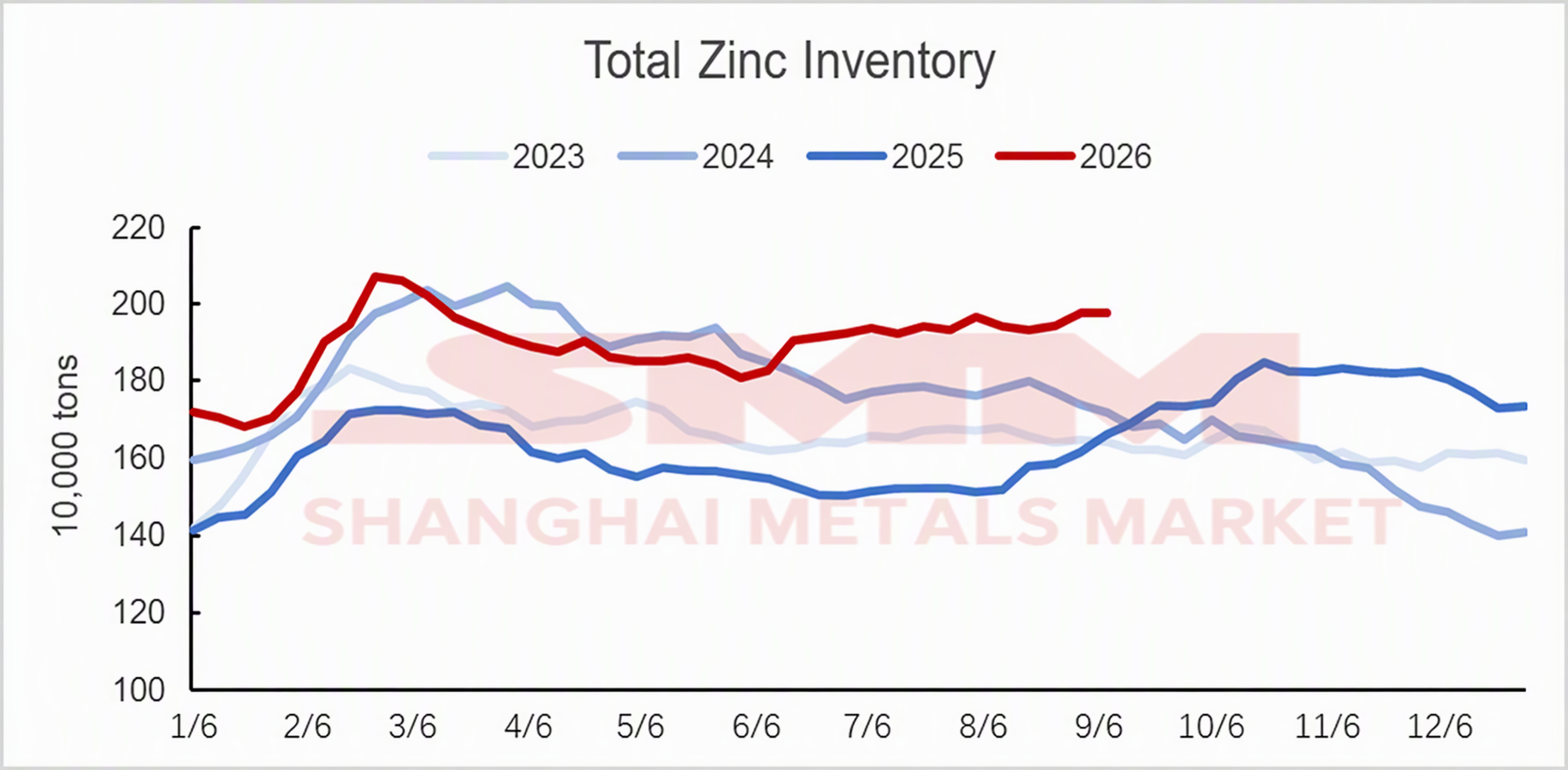
Source: SMM
III. October Cold Rolled & Galvanized Market Outlook
Looking ahead to October, cold rolled & galvanized prices are expected to consolidate on a subdued note. Cost side, according to SMM statistics, steel mill losses continued to widen in September, hot metal production gradually pulled back, and expectations for raw material demand declined. Iron ore price support weakened under pressure from steel mills pushing for lower prices and a rebound in port inventories. Coking coal and coke faced resistance on the upside under the weight of supply stabilization and production guarantee policy expectations. After multiple rounds of coke price hikes, the tug-of-war between coke producers and steel mills intensified, and cost support loosened somewhat. However, expectations for production cuts stemming from steel mill losses still provide a certain floor for finished steel prices. Demand side, October marks the tail end of the traditional "October peak season," compounded by the National Day holiday disruption. End-use demand growth for sheets & plates from downstream sectors such as automobiles and home appliances is limited. The pre-holiday stockpiling wave is receding, speculative demand in the market is weakening, and inventory accumulation pressure on sheets & plates persists. End users show low acceptance of high-priced resources, and overall demand in October is unlikely to see significant volume growth. Overall, cold rolled & galvanized prices in October are expected to consolidate amid a pattern where costs still provide a floor but peak season demand gradually weakens. The upside is capped by demand pressure, while the risk of a deep decline is constrained by expectations for steel mill production cuts. However, attention should still be paid to orders and inventory destocking pace in downstream sectors such as automobiles and home appliances in October. If end-use demand recovers beyond expectations, there is a possibility of a phased price rebound.
Data Source Statement:
(Except for publicly available information, all other data in this report are derived from public information (including but not limited to industry news, seminars, exhibitions, corporate financial reports, broker reports, National Bureau of Statistics data, customs import and export data, and various data published by major associations and institutions), market communication, and SMM's internal database models. They are obtained through comprehensive analysis and reasonable inference by the research team, and are for reference only and do not constitute decision-making advice.
Shanghai Metals Market reserves the right of final interpretation of this statement and reserves the right to adjust and modify the content of the statement based on actual circumstances.
![[SMM Malaysia Weekly Review] HRC Steady; Long Steel Offers Diverge, Semi-Finished Supply Tightens](https://imgqn.smm.cn/usercenter/fljuJ20251217171715.jpg)
![[Weekly Review and Outlook of China Export Prices]](https://imgqn.smm.cn/usercenter/zbJUC20251217171718.jpg)
![[SMM Analysis] September Cold Rolled and Galvanized Market: Cost Support Amid Weak Demand; October Outlook](https://imgqn.smm.cn/usercenter/JdqON20251217171718.png)