I. Contraction on Both Supply and Demand Sides Pushes Coal Prices to New Phase Highs
a.Temporary Production Suspension and Cuts at Liulin Coal Mines In early August, continuous rainfall triggered substation line failures in Liulin, Lüliang, forcing seven coal mines to halt production temporarily, with a combined capacity of 10.35 million metric tons. The suspension lasted roughly four days. By August 8, apart from one mine that resumed operation early, the remaining six mines restarted production successively, adding around 30,000 metric tons of raw coal daily. This production halt was a short‑term disruption caused by power malfunctions, rather than long‑term capacity withdrawal from routine safety supervision, exerting limited actual impact on coking coal supply.
Overall supply of coking coal in Shanxi remains tight as of now. On September 2, 46 coking coal mines in Shanxi were still out of operation, involving 49.30 million metric tons of capacity. Nevertheless, the figure is down by 73 mines from the May peak, indicating marginal supply improvement. The resumption pace and full‑capacity restoration of Liulin mines remain key variables for coking coal supply.
b.Insufficient Mongolian Coal Imports via Gants Mod Port Gants Mod Port serves as a major gateway for Mongolian coal imports. Starting August 14, Mongolia faced tight diesel supply. Mongolian diesel is mostly imported from Russia, whose diesel export ban is extended until the end of September. Short‑haul transportation capacity at mining sites became insufficient, cutting port clearance truck volumes by nearly half. As of early September, daily truck throughput stayed low at 600‑700 vehicles. Combined with shrinking domestic production, reduced Mongolian coal imports are the primary driver behind the phase‑tight domestic coal market.
II. Coal Price Hikes Pass Through to Crude Calcium, with Energy Cost as a Core Factor
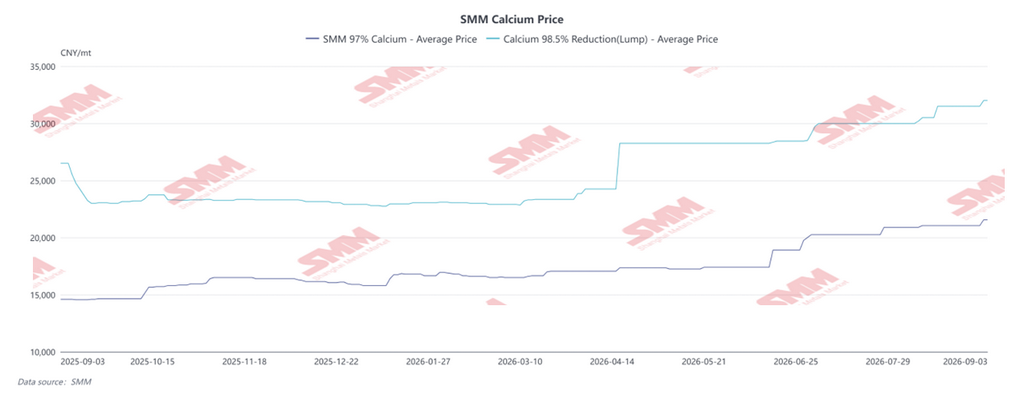 The vacuum aluminothermic reduction process dominates metallic calcium production. Using aluminium powder as the reducing agent, calcium oxide is reduced into metallic calcium under vacuum conditions at approximately 1200 °C. Limestone and aluminium powder constitute core raw materials. Coal, used for heating reduction furnaces, together with electricity, accounts for major energy costs. Some calcium producers reported tight coal supply and surging coal prices have forced raw crude calcium prices to rise. Spot market data shows crude calcium prices have gone up by 2.38%.
In the short run, slow production recovery in Liulin and sluggish port clearance will keep coal prices elevated. Cost support for reduced calcium will persist, rendering prices prone to rising yet resistant to falling. Spot prices may edge higher moderately. However, downstream purchasing stays steady amid prevalent wait‑and‑see sentiment, which caps upside potential.
![[SMM Analysis] Coal Price Shot Up, Driving Up Cost of Crude Calcium](https://imgqn.smm.cn/usercenter/pAOxy20251217171725.jpg)
![Futures market breaks through, lifting the center, ADC12 quotes raised, upward momentum still awaits demand verification [ADC12 Price Daily Review]](https://imgqn.smm.cn/usercenter/cgspx20251217171725.jpg)