

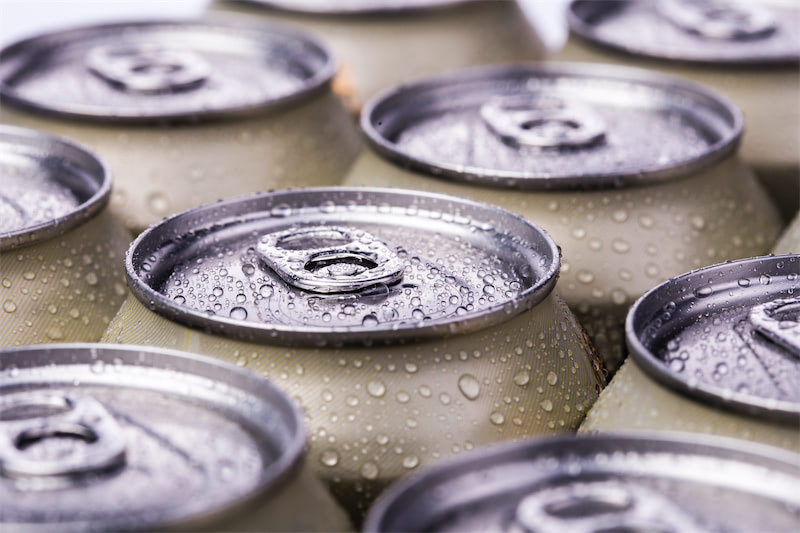
After the outbreak of COVID-19, countries around the world represented by the United States are facing various shortages. There has been a local shortage of many foods, including canned food, in the United States. One of the main reasons for the shortage of canned food is the lack of aluminum cans. What is the reason for the shortage of aluminum? Will it get better soon? It is reported that supply chain problems have plagued the world for months. As a result of this chaos, the cost of transporting commodities such as aluminium and copper has risen. Currently, the cost of transporting aluminium accounts for 20% of the total price of aluminum. * unmet aluminum demand aggravates the plight of aluminum shortage * The demand for aluminum cans has been growing at a very rapid rate. In order to reduce costs and simplify the packaging process, many breweries have begun to distribute products with aluminum cans instead of glass bottles. Because of its light weight, aluminum cans are easy to stack. Novel coronavirus epidemic further boost aluminum demand. People begin to enjoy beer and other cold drinks at home instead of in bars and restaurants. For many companies, it makes sense to switch from glass bottles to aluminum cans. Demand for aluminum has increased significantly in recent months and has been on the rise for many years. The growing popularity of canned hard sodas has also exacerbated the tension in aluminum supplies in recent years. This shortage has a particularly serious impact on small businesses. Big companies such as Coca-Cola, (Pepsi) and (Molson Coors) have signed long-term contracts with distributors to ensure a steady supply of aluminum cans. * Aluminum supply is still tight * For various reasons, demand remains strong and supply remains tight. London aluminum futures have recently hit more than 13-year highs, and concerns about supply shortages are the main reason for the surge in aluminium prices. In an environment of high energy prices, the cost of raw materials for aluminum is rising. Alumina prices rose sharply in the second half of 2021 due to rising production costs and reduced production in some parts of China. Prices are expected to rise further in 2022 due to limited supply and high production costs. China's decarbonization policy has also hit supply hard. As the world's largest producer and consumer of aluminium, China has become an importer of aluminium. This shift is affecting supply and inventory in other parts of the world. * Aluminum prices are currently at their highest level since 2008 * Although aluminium prices are high, they may not fall sharply in the short term. Goldman Sachs (Goldman Sachs) raised its aluminium price forecast, setting a 12-month target price of $4000 a tonne and an average price of $3450 in 2022. Most other analysts also predict that aluminum prices will rise by an average of 5% and 10% in 2022. As supply chain problems and high demand are not expected to be resolved soon, aluminum shortages are expected to continue.
Aluminum shortage "has no end"
[aluminum shortage has no end in sight] there has been a local shortage of many foods in the United States, including canned food. One of the main reasons for the shortage of canned food is the lack of aluminum cans. It is reported that supply chain problems have plagued the world for months. As a result of this chaos, the cost of transporting commodities such as aluminium and copper has risen. Currently, the cost of transporting aluminium accounts for 20% of the total price of aluminum. The demand for aluminum cans has been growing at a very rapid rate. For various reasons, demand remains strong and supply remains tight. As supply chain problems and high demand are not expected to be resolved soon, aluminum shortages are expected to continue.
Data Source Statement: Except for publicly available information, all other data are processed by SMM based on publicly available information, market communication, and relying on SMM‘s internal database model. They are for reference only and do not constitute decision-making recommendations.
For any inquiries or to learn more information, please contact: lemonzhao@smm.cn
For more information on how to access our research reports, please contact:service.en@smm.cn
Related News

31 mins ago
US Inflation Rises 0.3% in February, Matching Expectations; Fed Rate Cut Timing Unclear Amid Iran Oil Crisis
Read More
US Inflation Rises 0.3% in February, Matching Expectations; Fed Rate Cut Timing Unclear Amid Iran Oil Crisis
The latest US inflation data has been released, showing that seasonally adjusted CPI in February rose 0.3% MoM and was up 2.4% YoY; core CPI increased 0.2% MoM and rose 2.5% YoY, with all figures in line with market expectations. However, the prevailing market view is that the February data has not yet reflected the impact of the sharp rise in oil prices caused by the situation in Iran. Therefore, further data is still needed to support judgment on when the US Fed will cut interest rates again.
31 mins ago
33 mins ago
China's Auto Sales Slump 15.2% in February, Exports Surge 52.4% YoY
Read More
China's Auto Sales Slump 15.2% in February, Exports Surge 52.4% YoY
According to data released by CAAM, China’s auto market showed the following trends in February: overall auto sales reached 1.805 million units, but fell 15.2% YoY from the same period last year. By segment, NEV sales were 765,000 units, also down 14.2% YoY. However, on the export side, auto exports reached 672,000 units in February, up 52.4% YoY.
33 mins ago
34 mins ago
China's Passenger Vehicle Sales Drop 25.4% YoY in February, NEV Sales Down 32%
Read More
China's Passenger Vehicle Sales Drop 25.4% YoY in February, NEV Sales Down 32%
According to data released by the CPCA, retail sales in China’s passenger vehicle market totaled 1.034 million units in February, representing a 25.4 YoY decline. Specifically, in the passenger NEV market, retail sales reached 464,000 units, down 32 YoY.
34 mins ago
Related News
US Inflation Rises 0.3% in February, Matching Expectations; Fed Rate Cut Timing Unclear Amid Iran Oil Crisis
Mar 14, 2026 15:06
China's Auto Sales Slump 15.2% in February, Exports Surge 52.4% YoY
Mar 14, 2026 15:04
China's Passenger Vehicle Sales Drop 25.4% YoY in February, NEV Sales Down 32%
Mar 14, 2026 15:02
Iran's New Leader Vows Retaliatory Actions, Threatens Strait of Hormuz Blockade
Mar 14, 2026 15:01