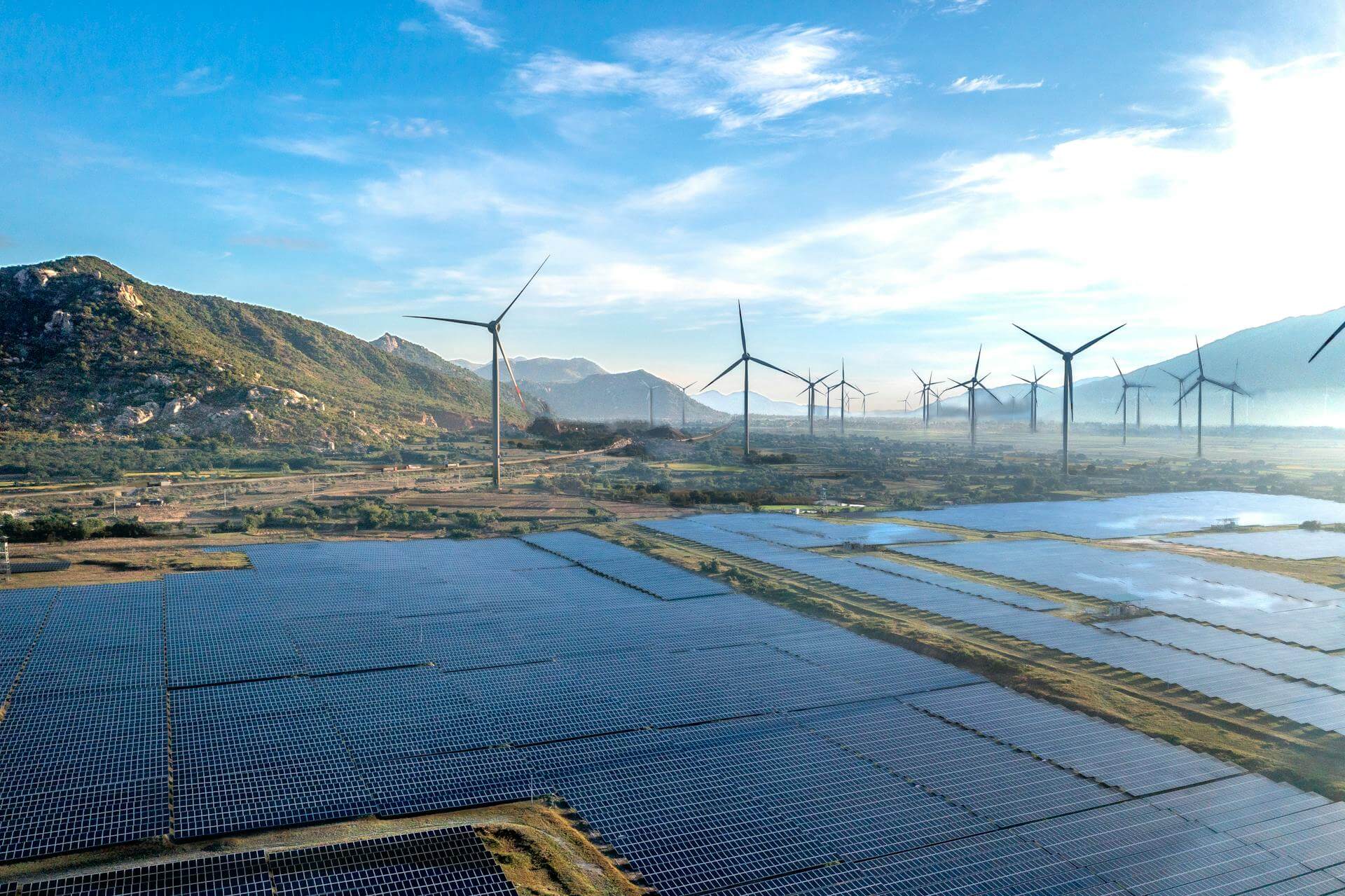
The Necessity of Developing the Solar PV Industry:
Diversification of Energy Structure
Green Transition in the Middle East and North Africa Region: Abundant Wind and Solar Resources, Policy Enhancements Driving Structural Transformation, Clean Energy Share Expected to Continue Rising
For a long time, the Middle East and North Africa (MENA) region has been rich in abundant and inexpensive oil and gas resources, leading to a singular energy structure dominated by traditional energy sources for power generation. Renewable energy sources such as wind, hydro, and solar power account for a relatively low proportion. Renewable energy generation (excluding hydro) accounts for less than 1.5% of the total electricity generated, far below the global average of 10%.
As the urgency of global climate action increases and slogans like net zero emissions and energy security rise, urbanization in the MENA region accelerates, populations expand, and the pressure to reduce emissions grows. MENA countries are beginning to pay attention to adjusting their energy structures, rolling out new energy development plans to accelerate energy transition, promote economic diversification, and foster sustainable development. The continuous maturity and cost reduction of clean energy generation technologies enable them to compete more effectively with traditional fossil fuel projects.
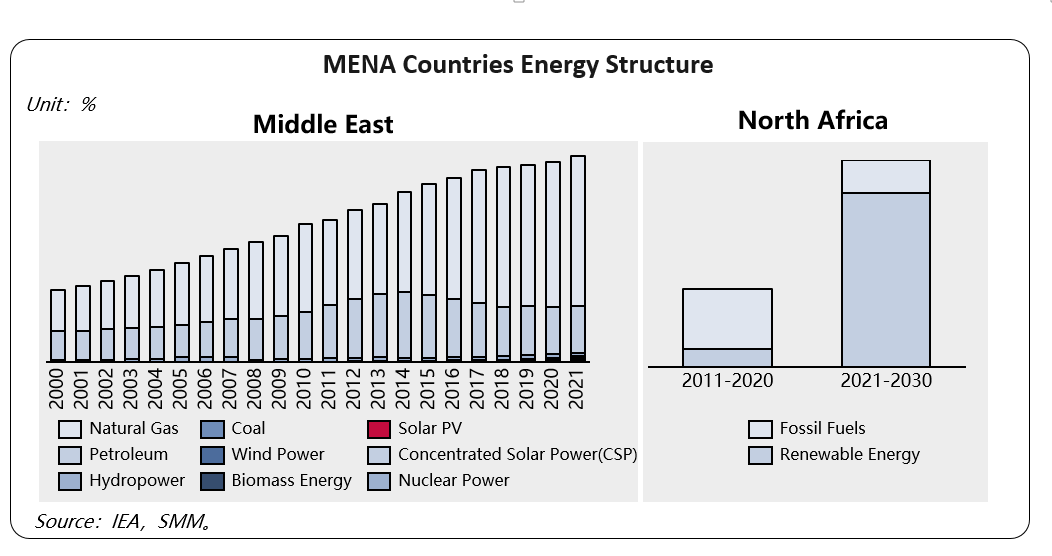
The Feasibility of Developing the Photovoltaic Industry: Favorable Sunlight Conditions and Policy Support
Abundant sunlight and land resources, accounting for over 20% of the world's solar energy, providing conditions for the installation of concentrated solar power plants.
The MENA region boasts over 20% of the world's solar energy resources, with predominantly flat terrain, mainly desert plains, providing favorable conditions for large-scale concentrated solar power (CSP) projects. Countries such as Saudi Arabia, the United Arab Emirates, Oman, as well as North African nations like Egypt, Algeria, Tunisia, and Morocco, are actively constructing or planning large-scale photovoltaic projects.
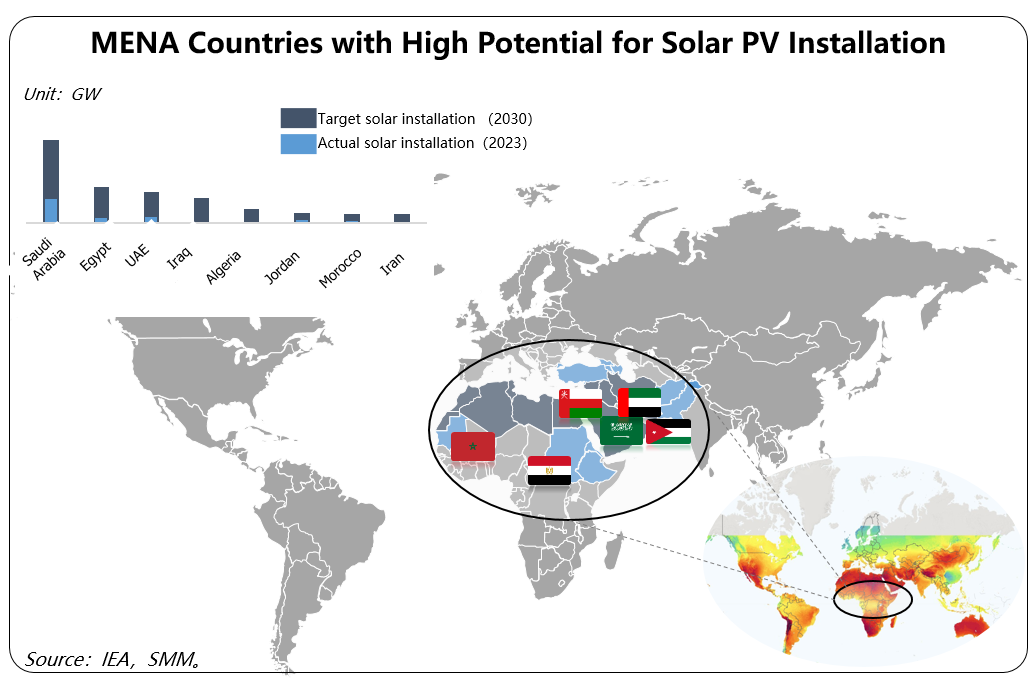
MENA countries prioritize renewable energy electricity systems and provide strong financial support
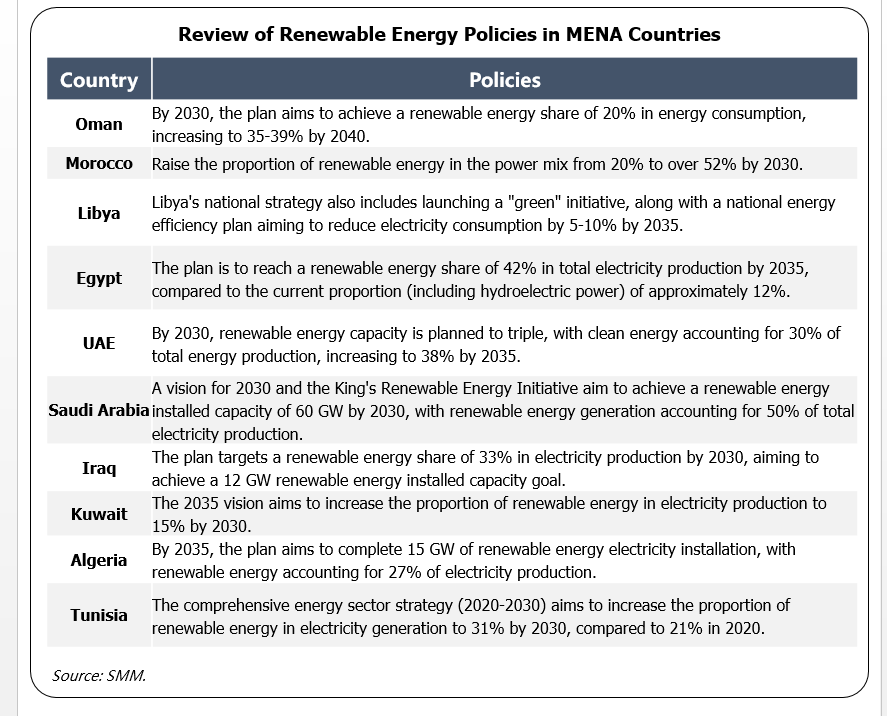
Currently, there is still a significant gap between the photovoltaic installation targets and the actual installations in MENA countries (as shown in the top left chart). However, it can be confirmed that renewable energy electricity projects will continue to improve in terms of their share of new capacity compared to traditional electricity projects.
On one hand, the addition of renewable energy capacity surpasses the approved capacity of traditional energy sources, making it a hotspot for energy electricity project investments. Total renewable energy investments in the Middle East region from 2019 to 2023 are expected to reach $71.4 billion, accounting for 34% of total investments in the power sector, with solar power projects attracting investments of around $10 to $12.5 billion. In North Africa, countries such as Morocco, Algeria, and Egypt have planned or committed power investments exceeding $20 billion, with a high proportion dedicated to renewable energy investments.
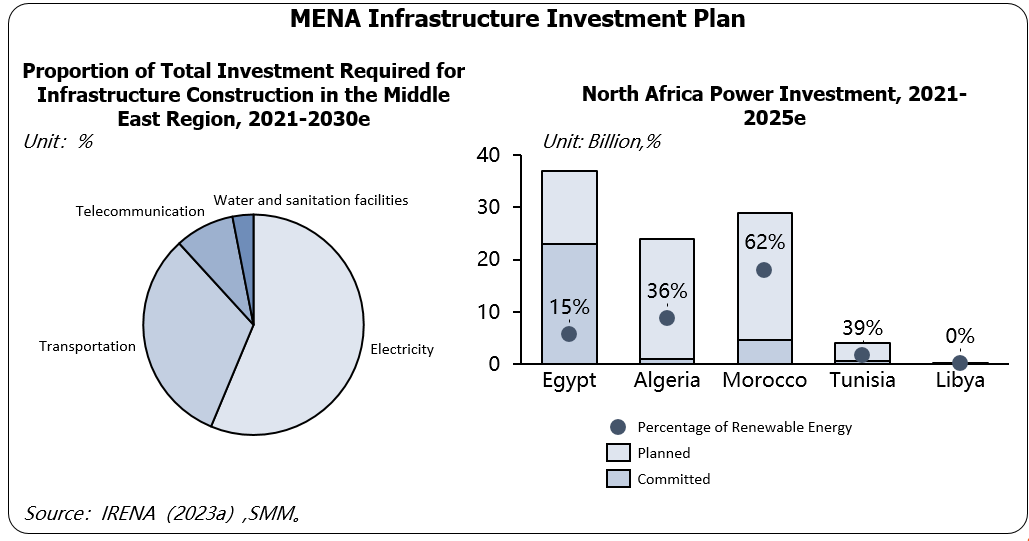
On the other hand, MENA countries have established targets for the proportion of renewable energy electricity generation by 2030 and 2035.
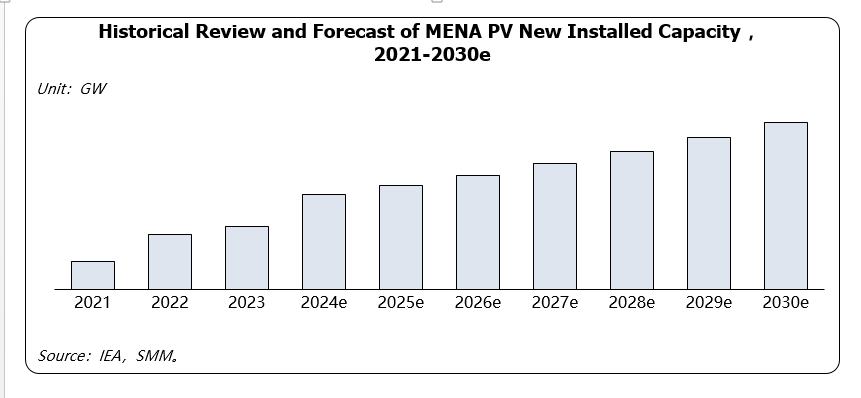
According to the IRENA report and market dynamics tracked by SMM, as of the end of 2023, the cumulative installed capacity in MENA countries reached 27GW, with an additional 8GW installed in 2023. It is anticipated that there will be an additional 12GW installed in 2024, with an expected growth rate exceeding 50%.
PV Tracking Installation Projects in the Middle East and North Africa: Market Space of 70GW
Operational Status of Photovoltaic Trackers in the MENA Region: Late Start but High Growth Potential, Extremely High Market Concentration
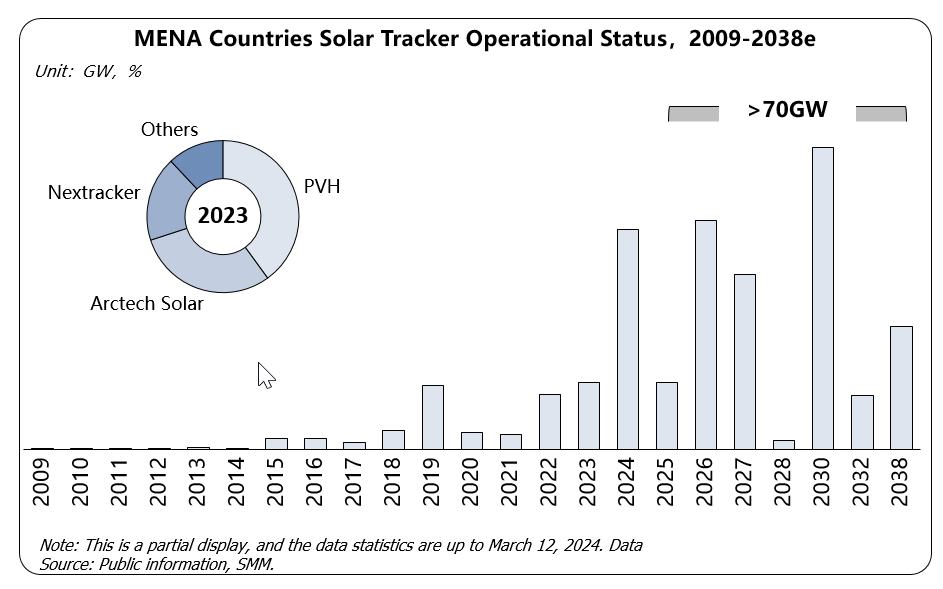
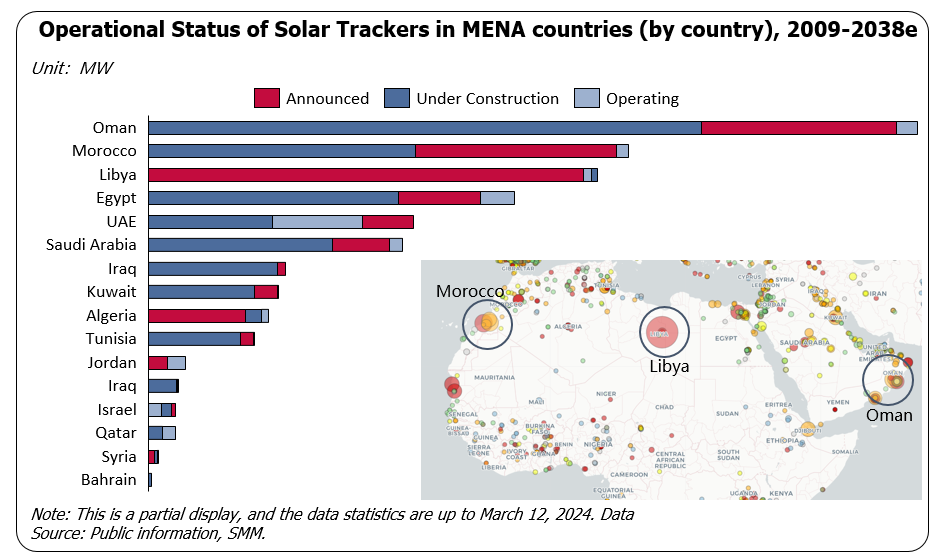
In the MENA region, large-scale centralized photovoltaic installations are predominant, with high acceptance of solar tracker. As of 2023, the cumulative installed capacity of solar tracker reached 16GW, accounting for over 60% of the total installations. Combining planned projects and transition objectives, SMM estimates that the solar tracker installation potential in the MENA region will exceed 70GW from 2024 to 2038. In terms of project progress, 45% of the installations are currently in the preliminary construction stage, with 36% of projects already announced. Looking at individual countries, Oman has the most ongoing projects, while Libya has the most announced projects.
The solar tracker market in the MENA region is highly concentrated, with PV Hardware, Arctech solar, Nextracker and other leading solar tracker companies occupying over 50% of the market share.
Investment model and Potential Risks
Overall, with the accelerating economic development and increasing demand for electricity, MENA countries are placing greater emphasis on the development and construction of renewable energy in the power sector. Some countries have introduced relevant plans and incentive policies for renewable energy development. However, risks always accompany rewards. In the Middle East and North Africa region where infrastructure construction is relatively lagging, every player is like a "gold miner" who needs to break down information barriers and mitigate risks while prospecting for opportunities.
ØPolicy risks for target enterprises: Resistance from traditional energy industries and stakeholders due to the much lower cost of traditional fossil fuel power plants compared to solar power plants; geopolitical risks arising from widespread political instability in many countries.
ØWeak infrastructure: The infrastructure in the Middle East and North Africa region is fragile, particularly in North Africa, with relatively low overall industrial manufacturing capacity. The construction and operation of solar power plants face challenges such as high costs and difficulty in building supply chains. There is also a shortage of professional talents in the construction and operation of solar power plants.
ØDifficulty in financing photovoltaic projects
ØTrade barriers for enterprises
ØOthers

![Tỷ lệ vận hành khung PV ổn định, kỳ vọng suy yếu; Giải phóng tồn kho nhôm ingot tăng tốc, trung tâm giá nhôm dịch chuyển lên [Phân tích SMM]](https://imgqn.smm.cn/usercenter/chMqV20251217171743.jpg)
![[SMM PV Flash]](https://imgqn.smm.cn/usercenter/xAoMy20251217171743.jpg)
![[SMM Tin tức Điện mặt trời] Dự án điện mặt trời 100 MW Thần Mộc, Thiểm Tây của Hoa Năng đạt kết nối lưới toàn bộ công suất](https://imgqn.smm.cn/usercenter/HKFoG20251217171742.jpg)