Australia is at the forefront of global solar adoption, boasting over 3.3 million households equipped with rooftop solar panels. However, the initial wave of installations is now ageing, and the first set of panels is approaching the end of their operational life. This has led to projections by researchers at the University of New South Wales (UNSW), indicating that the country could face a significant challenge in managing solar panel waste. According to conservative estimates, Australia's cumulative photovoltaic (PV) waste might reach 2 to 3 million tonnes by 2050. If ambitious installation targets are met, the waste could double.
Researchers suggest end-of-life solar panels can be recycled as future resources
The researchers have projected a forecast up to seven times greater than previous literature and one to two times higher than the waste forecast provided by the federal government's Department of Climate Change, Energy, the Environment, and Water. Initially, over 80 per cent of end-of-life panels are anticipated to originate from small-scale systems, but this percentage is expected to decrease to 60 per cent by the year 2050.
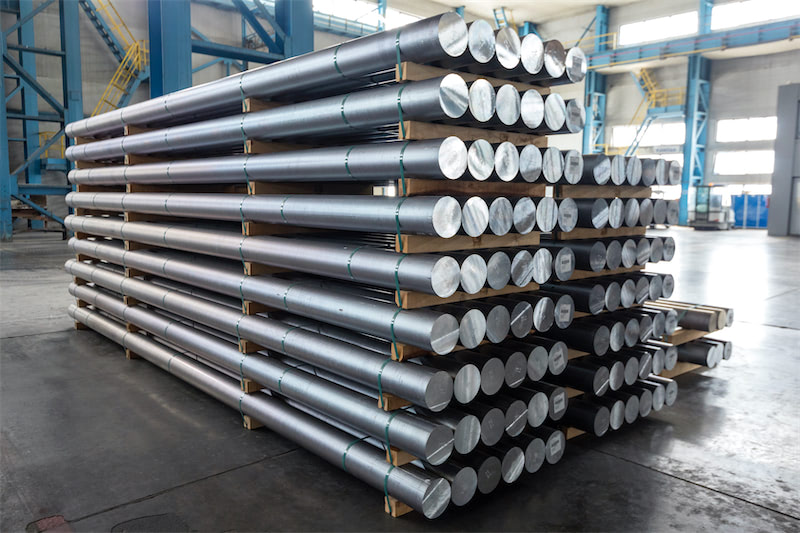
Instead of being perceived as a looming waste mountain, UNSW's School of Photovoltaics and Renewable Energy Engineering researchers highlight that end-of-life solar panels contain valuable materials like aluminium, silver, copper, high-purity silicon, and glass. These materials can be effectively utilised in the production of new solar modules
Researchers suggest end-of-life solar panels can be recycled as future resources
Rong Deng, the co-author of the research paper alongside Renate Egan and Verity Tan, emphasised numerous potential market and application opportunities for end-of-life solar technologies.
She said, “End-of-life PV panels are not waste. They are valuable material reservoirs for the manufacturing of new panels. In five years, end-of-life silver and aluminium from PV panels could supply 30 per cent of future PV demand and 50 per cent in 15 years, escalating to 100 per cent in 25 years, considering realistic forecast installations. Imagining meeting all future demands by reusing and recycling, not mining – a truly inspiring prospect.”
In their publication titled "Solar Photovoltaic Waste and Resource Potential Projections in Australia, 2022–2050," the researchers have extended their analysis beyond predicting the magnitude of the waste generated by solar photovoltaic systems. Instead, they have also assessed the potential of waste PV material to serve as a resource for manufacturing new modules.
Researchers suggest end-of-life solar panels can be recycled as future resources
Source: Assessment of the percentage of silicon PV demand that can be met by end-of-life silicon supply, 2022–2050.
Examining the potential for reusing secondary materials in producing new modules is expected to yield substantial advantages in enhancing material supply security within the industry.
What the researchers are saying
The researchers said, “Understanding waste streams can assist in predicting the availability of these recycled resources and to what extent they can contribute to the manufacturing of the required cumulative demand. This will be increasingly important as the demand for manufacturing of new modules grows, thereby placing stress on critical resource reserves.”
The study indicates that considering all scenarios and variations throughout the lifespan, decommissioned panels could meet over 30 per cent of the aluminium and silver demand for photovoltaic (PV) systems within five years.
The researchers added, “Moving 10 years ahead, as the amount of waste surpasses 1 million tonnes, in 2038, there will still be ample demand for PV circularity if we install ambitiously or realistically. An average of around 50 per cent of future PV silver and aluminium demand could be supplied by end-of-life PV.”
By the year 2045, the potential supply of silver and aluminium stabilises at around 100 per cent, enabling complete circularity of up to 100 per cent within the photovoltaic (PV) industry for these materials.
According to the researchers, several potential markets and applications are likely to exist for end-of-life PV material, including batteries, ceramic tiles, cosmetics, paints, construction, and bricks. “This means there will be clear demand within the PV industry for end-of-life supply if panels are properly recycled.”
Highlighting the prospective advantages that end-of-life solar systems could bring to material supply security in the industry, researchers are emphasising the need to plan for the management of photovoltaic (PV) end-of-life, highlighting the potential benefits that end-of-life solar systems could bring to material supply security in the industry. It is urgent to prepare to handle 1 million tonnes of PV waste, as just over a decade is available.
“We know the locations where PV waste will first arise, allowing logistics planning. We know the PV waste will primarily comprise silicon-based technologies so that we can investigate appropriate recycling methods, and we know that the majority of PV waste will come from residential and small commercial users, enabling the development of consumer-appropriate policy,” the researchers concluded.
source:https://www.alcircle.com/news/researchers-suggest-end-of-life-solar-panels-can-be-recycled-as-future-resources-105810
![Giảm tồn kho nhôm thỏi nhanh trong mùa cao điểm hỗ trợ giá nhôm giữ vững trong ngắn hạn [Tóm tắt cuộc họp buổi sáng về nhôm của SMM]](https://imgqn.smm.cn/usercenter/zjiqN20251217171650.jpg)