SHANGHAI, Sep 29 (SMM) - Semi-solid-state and all-solid-state batteries are no longer a new topic. As one of the important reserve technical routes for the development of lithium batteries, they are always popular, and related industrialisation news can be frequently seen. Recently, Talent New Energy signed a framework cooperation agreement with Xinqiao International Industrial Park in Shou County, Huainan City, Anhui Province on September 26. The two parties will invest in the construction of Talent New Energy's 10GWh semi-solid-state battery industrial base in Shou County, which is divided into two phases. The first phase of the project has an investment of 2 billion yuan and a planned capacity of 3GWh, which will be applied and launched in the high-end new energy electric vehicle market. The second phase will construct a planned capacity of 7GWh. The project is Talent New Energy's second-largest lithium battery industrial park after the Chongqing manufacturing base.
It is not the first industrialisation of semi-solid-state batteries, so what is the semi-solid-state battery?
Literally speaking, a semi-solid-state battery is a kind of battery between liquid and solid-state, but 90% of the materials and packaging technology are close to the current liquid battery system.
The liquid lithium-ion battery system is mainly composed of cathode materials, anode materials, separators and electrolytes. The cathode materials include ternary, LFP, LCO, LMO, etc., and the anode materials are mainly graphite and silicon carbon. The separator mainly includes single-layer PP, single-layer PE, PP+ceramic coating, PE+ceramic coating, double-layer PP/PE, double-layer PP/PP and three-layer PP/PE/PP, etc. The electrolyte is mainly composed of LiPF6 dissolved in carbonate solvent and supplemented by additives to form a mixed liquid.
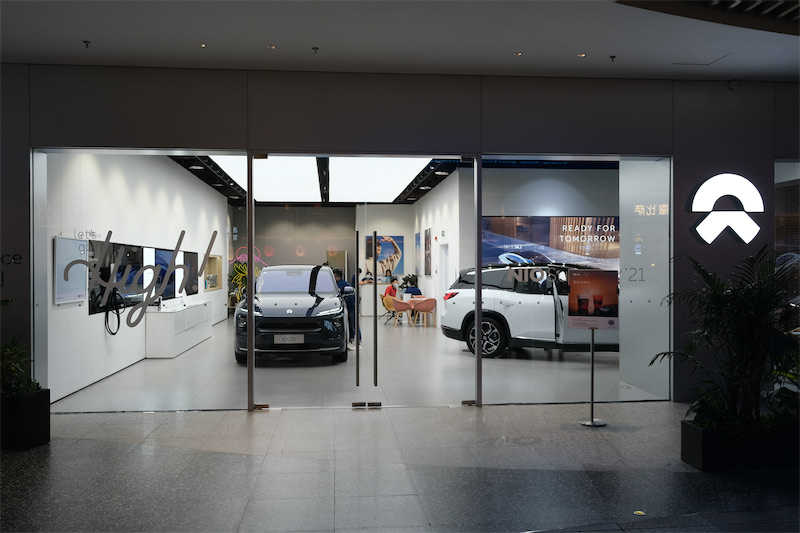
The all-solid-state battery consists of cathode materials, anode materials, and a solid electrolyte. All-solid-state battery is subversive to the current liquid battery system. The ultimate form of the anode materials of all-solid-state batteries is lithium metal, not the currently used graphite or silicon carbon. The electrolyte is an oxide (such as LLZO, NASICON, etc.), solid-state sulphide (such as LiPSX (X=Cl, Br, I), etc.), polymer electrolyte (such as LiPF6 doped into PEO), which is different from the current liquid batteries. There are no lithium dendrites, so there is no need to use a separator. The selection of cathode materials is compatible with the actual situation, and ternary materials are generally used. Since NIO released a solid-state battery with an energy density of 360Wh/kg on January 9, 2021, on Nio Day, Volkswagen also indicated on its battery day that its ultimate goal in the future is solid-state batteries. SVOLT Energy, Ganfeng, Farasis Energy and other companies have also announced their layouts of solid-state batteries. Among them, Ganfeng firstly put semi-solid-state batteries on Dongfeng Fengshen and launched the modal in Xinyu, Jiangxi on January 22, 2022. Gotion High-tech said in May this year that the semi-solid-state battery developed by the company will be produced by the end of 2022.
According to SMM survey, the current semi-solid-state battery generally composes high-nickel ternary cathode materials, silicon carbon anode materials, separators, oxide electrolytes coated on the separator, and a small amount of liquid electrolyte. The ternary cathode materials do not need to be specially modified. The anode materials should be pre-lithiation by rolling the ultra-thin lithium strip and the anode pole pieces. The separator is coated with solid-state electrolyte slurry, and a small amount of liquid electrolyte is injected. Liquid electrolyte is temporarily adopted to solve the interface contact problem of all-solid-state batteries. The cathode and anode materials as well as the separator are infiltrated with liquid electrolytes to enhance lithium-ion conduction. If the injected liquid electrolyte is too small, the process needs to be slightly adjusted, and part of the solid-state electrolyte needs to be mixed into the cathode and anode pole pieces to strengthen the lithium-ion transport.
The semi-solid-state battery can be packaged in a steel case or a soft package. The all-solid-state battery usually uses a soft package since there will be no flatulence problem, and the energy density is more competitive.
The ultimate problem to be solved by solid-state batteries is the migration of lithium-ion during the charging and discharging process. The technological upgrade takes time, and the technology of solid-state batteries supporting industrial chain must also keep up. At present, the technology and industrial chain of solid-state batteries are relatively vulnerable, while semi-solid-state batteries are developed before all-solid-state batteries because the selection of materials and processes are close to the current liquid battery system. Therefore, before the advent of all-solid-state batteries, some manufacturers choose semi-solid-state batteries instead.