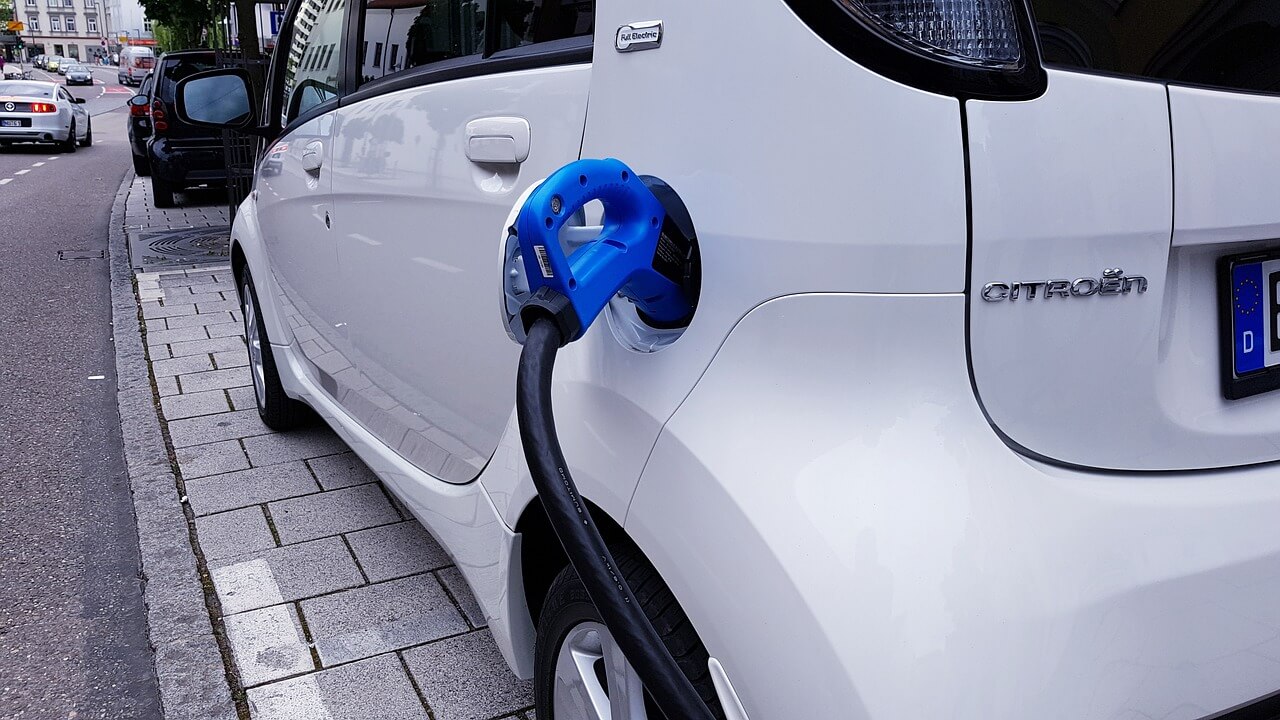
Lithium iron phosphate batteries are in increasing demand in automotive applications.
Hyundai Motor started developing an electric vehicle with lithium iron phosphate (LFP) battery in the first half of this year and launched it outside China, according to South Korean media reports.
It is understood that Hyundai currently only produces and sells lithium iron phosphate battery cars in China, while vehicles sold in other areas use ternary batteries.
Hyundai is the fourth largest car company in the world.
Hyundai Motor, founded in 1947, is a Korean car brand, mainly producing SUV and ordinary family cars.
In March 2020, British Brand Financial (Brand Finance) released the list of the top 500 most valuable brands in the world in 2020, with Hyundai ranking 82nd.
On July 28th, Forbes officially released the top 2020 global brands, with Hyundai ranked 81st.
Hyundai ranks fourth in the global auto sales rankings in 2020, with a total sales of 6.52 million vehicles. Due to the impact of the novel coronavirus epidemic that year, sales of the top 10 car companies in the world declined compared with 2019. Hyundai Motor declined by only 10.4%, making it the automobile group with the smallest decline.
The top 10 sales rankings of global automobile groups in 2020 are as follows:
Volkswagen, 9.31 million (decline 14.5%);
Toyota, 8.9 million (down 12%);
Renault Nissan Mitsubishi Alliance, 7.95 million (decline 20.5%);
Modern, 6.52 million (decline 10.4%, rise in ranking);
GM, 6.26 million (down 13.2%);
Honda, 4.5 million (14.4% decline, rising ranking);
Ford Ford, 4.15 million (down 18.3%);
FCA, 3.9 million (decline 16.8 per cent);
PSA, 2.91 million (22% decline);
Mercedes-Dailmer, 2.55 million (12.2% decline).
The "bitter battery" of modern cars has been around for a long time.
Hyundai has suffered enough in terms of batteries: from 2020 to 2021, Hyundai made headlines in a number of fire accidents caused by battery problems.
The reason for this is that Hyundai's Kona EV store fire risk: Kona EV went on sale in April 2018, a month after Hyundai's first factory in Ulsan caught fire on May 19, 2018.
Up to October 2020, according to incomplete statistics, there have been more than 13 fire accidents in, Kona EV.
Based on this, South Korea's Ministry of Land and Transport issued a notice on October 8, 2020, ordering Hyundai to recall a total of 25564 Kona EV vehicles.
Hyundai then announced that it would recall 25564 Kona EV vehicles from the South Korean market from October 16, 2020. Not only that, a week later, Hyundai expanded the scope of recalls from South Korea to the world, and the number of recalls doubled. Hyundai is reported to have recalled about 51000 more vehicles in North America, Europe, China and other markets.
So far, Hyundai has recalled as many as 77000 Kona EV.
It is understood that the cause of the modern Kona EV fire is that some high-voltage battery system components are defective, which may cause a short circuit, thus causing the vehicle to catch fire.
The company that provides batteries for Hyundai's recalled Kona EV models is LG New Energy. As the cells produced by LG new energy are all ternary batteries, the spearhead of the accident is also directed at ternary batteries.
On March 8, 2021, according to foreign media reports, Hyundai and LG New Energy agreed on the sharing of Kona EV recall costs: Hyundai will bear 30% of the recall costs, while LG New Energy will pay the remaining 70%.
The total cost of the Kona EV recall is 1.4 trillion won (about 8 billion yuan), Hyundai will lose 2.4 billion yuan, LG new energy will lose 5.6 billion yuan.
Modern cars are in urgent need of safer batteries. At one point, there was news that Hyundai would be equipped with BYD blade batteries in the market, but the result is unknown so far.
Now, Hyundai has made it clear that lithium iron phosphate batteries will be used in cars around the world, which must be one of the factors based on safety considerations. What's more, lithium iron phosphate batteries have the advantages of lower cost and longer life.
Head car companies have equipped lithium iron phosphate batteries one after another.
Hyundai's announcement of the worldwide launch of lithium iron phosphate battery models is just one example of many car companies.
Volkswagen, which ranks first in global auto sales, revealed at its first Power Day on batteries this year that lithium iron phosphate batteries will be one of the main battery routes for its platform models in the future.
Apple, the technology giant that plans to launch electric cars in 2024, will also use lithium iron phosphate batteries, saying it is for safety reasons.
Tesla, the leading company of new energy vehicles, its CEO Musk has said publicly that Tesla 2Universe 3 will choose lithium iron phosphate battery in the future. In addition, Tesla also issued an email to American users, announcing that American users can choose models with lithium iron phosphate batteries from China.
Summary
Compared with ternary battery, lithium iron phosphate battery has the advantages of safer, lower cost and longer life. From the point of view of bus, special purpose vehicle market and ship electrification, lithium iron phosphate battery is the first choice.
If you look at the energy storage market, lithium iron phosphate battery is also the first choice.
Now, lithium iron phosphate batteries are infiltrating the new energy passenger car market at a faster speed!

![Phân tích sản lượng lithium sulfide cấp pin tháng 8: Quý 4 có bùng nổ không? [Phân tích SMM]](https://imgqn.smm.cn/usercenter/mpqgn20251217171727.jpg)