With low cost, good safety and long cycle life, lithium iron phosphate battery is "recovering the lost ground".
According to data from the Power Battery Application Branch, in the first half of this year, the installed capacity of power batteries for new energy vehicles in China was about 53.67 GWH, of which the installed capacity of lithium iron phosphate batteries rose to 42%, compared with 27.42% in the same period last year. For comparison, the installed capacity of ternary batteries in the first half of this year was 31.03GWH, accounting for 57.8%, compared with 72.2% in the same period last year.
In terms of growth rate, the installed capacity of lithium iron phosphate batteries in the Chinese market from January to June last year was about 4.8 GWH, while this year it has increased by 369.7%.
It is worth mentioning that the installed capacity of lithium iron phosphate batteries this year is mainly contributed by the passenger car market. Data show that in the first half of this year, the installed capacity of lithium iron phosphate batteries in new energy passenger vehicles in the Chinese market was about 16.76 GWH, accounting for 74.42% of the total installed capacity of lithium iron phosphate.
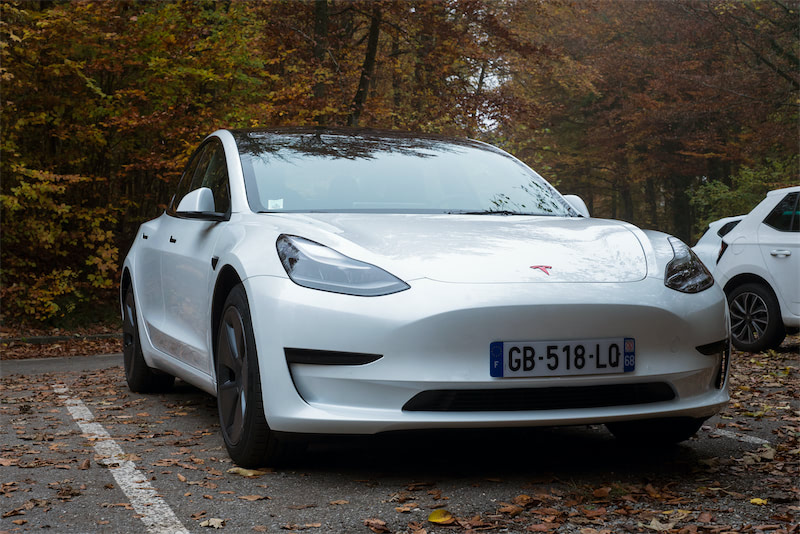
Among the supporting models, a total of 61 passenger cars were equipped with lithium iron phosphate batteries in the first half of the year, including the very popular Model 3, BYD Han, Hongguang MINI EV, Red Flag E-QM5, Ola good Cat and so on.
The growth in the first half of the year was mainly contributed by passenger cars.
In the first half of this year, the TOP10 battery companies in the Chinese market are Ningde Times, Fudi Battery, Guoxuan Hi-Tech, Penghui Energy, Yiwei Lithium Energy, Ripu Energy, Weihong Power, Lishen Battery, Wanxiang 123 and Anchi New Energy.
Among them, the installed capacity of lithium iron phosphate battery in Ningde era was about 11.43 GWH, an increase of 282.6% over the same period last year, ranking first, with a market share of 50.8%. It is worth noting that the passenger car market has made a very obvious contribution to lithium iron phosphate batteries in Ningde era, driving a total installed capacity of 7822.15MWH, accounting for 68.41%.
The main supporting models of lithium iron phosphate in Ningde era in the first half of the year are Model 3 (6058.36MWh), Hongguang MINI EV (349.62MWh), Euler good cat (249.65MWh), Fengshen E70 (247.47MWh), Roewe Ei5 (230.93MWh) and other models. Among them, only Tesla (Shanghai) Model 3 model, after switching to lithium iron phosphate version, the contribution to the installed capacity of Ningde era is more than 6GWh.
As for Fudi batteries, it is mainly due to the fact that BYD's dynasty series models and rental models have all been switched to lithium iron phosphate "blade batteries", resulting in a substantial increase in the installed capacity of lithium iron phosphate batteries by 1234.9% to 6709.65MWh. Among them, BYD Han contributed the installed capacity of lithium iron phosphate battery 2967.01MWh.
In addition, Fudi battery production of lithium iron phosphate blade battery, also began to provide external supply in the first half of the year, supporting the red flag E-QM5 new car. In the first half of the year, the new car drove the installed capacity of Freddy's battery to 209.93MWh.
As the most loyal "believer" of lithium iron phosphate, Guoxuan Hi-Tech has been recognized and rewarded by the market for its perennial persistence in the field of lithium iron phosphate. In the first half of the year, Guoxuan Hi-Tech Lithium Iron Phosphate batteries installed about 2720.63MWH, an increase of 343.4% over the same period last year.
It is understood that in the first half of the year, the installed capacity of lithium iron phosphate batteries for Hongguang MINI EV is about 1618.43MWh. the battery suppliers are Guoxuan Hi-Tech, Ningde Times, Penghui Energy and Ruipu Energy. China Xuan Tech kits 966.86MWhs, accounting for 59.74%, making it the largest battery supplier of Hongguang MINI EV.
In addition, in the first half of the year, Guoxuan Hi-Tech also equipped lithium iron phosphate batteries for 17 passenger cars, such as Baojun E300P, Zero running T03, Chery eQ1, Sihao E10X and so on.
The customers of Penghui Energy's lithium iron phosphate battery passenger cars in the first half of the year are mainly SAIC GM Wuling, mainly supporting Hongguang MINI EV, Wuling Rongguang and Baojun series models, as well as some lithium iron phosphate batteries for Lingbao BOX models.
The lithium iron phosphate battery of Yiwei Lithium Energy in the first half of the year is mainly used for commercial vehicles. However, so far this year, Yiwei Lithium Energy has invested nearly 8 billion yuan in passenger car lithium iron phosphate battery projects. According to Yiwei Lithium Energy, the lithium iron phosphate battery project for passenger cars has won long-term orders from the new forces of car building. Taking into account its current deep cooperation with Xiaopeng Motor, as well as Xiaopeng's G3, P7 and other models have also launched the version of lithium iron phosphate, it is speculated that it should be locked in Xiaopeng's long-term order. On July 22nd, Yiwei Lithium Energy announced that the company's 3GWh square lithium iron phosphate battery production line will start construction.
Like Penghui Energy, the main customer of Ruipu Energy Lithium Iron Phosphate Battery is SAIC GM Wuling. From January to June this year, Ruipu Energy installed about 306.56MWH lithium iron phosphate batteries, an increase of 36590.7% over the same period last year, mainly for SAIC GM Wuling's Baojun E100, E200 and Hongguang MINI EV.
Breaking into the supply chain of SAIC, Weihong Power also had an eye-catching performance in the passenger car market in the first half of the year. From January to June this year, Weihong Power Lithium Iron Phosphate installed capacity of about 138.86MWH, supporting models are Roewe eRX5, Roewe ei6 MAX, Roewe ei6, MG6 and other models. This also shows that after lithium titanate, micro-macro power lithium iron phosphate battery has begun to match on a large scale.
Wanxiang one, two, three lithium iron phosphate battery customers and supporting models are basically the same as Weihong Power, which are also the above models of SAIC.
In the passenger car market, Anchi new energy lithium iron phosphate battery is equipped with a model of Changan Auchan in the first half of the year, with a matching capacity of 27.94MWh. the rest are mainly commercial vehicles.
The proportion of lithium iron phosphate battery will continue to increase in the second half of the year.
It is expected to be close to 50% for the whole year
Affected by the decline of financial subsidies for new energy vehicles, the demand of car companies to reduce costs in the battery link is becoming more and more intense; at the same time, thanks to CTP, blade battery structure design, and material end innovation, models equipped with lithium iron phosphate battery system can easily achieve more than 500km, which can meet the daily travel needs of consumers.
In this context, car companies have launched lithium iron phosphate version of the modified hot models. The most obvious is that Tesla (Shanghai) switched all the batteries of the standard Model 3 battery to lithium iron phosphate batteries, and recently launched the standard battery version Model Y, which costs 70, 000 yuan less than the ternary battery version.
In addition, Xiaopeng Automobile, the new force of car building, has also launched lithium iron phosphate version P7 and G3 models one after another, and the lithium iron phosphate version has gradually become its main model. According to China's understanding of the battery, Xiaopeng lithium iron phosphate version of the P7 model began to be delivered in May, pushing the overall monthly delivery of the P7 to break a record in the first month, up 27% from April. Lithium iron phosphate battery has become a "sharp weapon" of Xiaopeng P7.
A few days ago, it was reported that zero-running cars plan to replace all their models with lithium iron phosphate batteries this year to further reduce costs and enhance competitiveness.
In addition, it is reported that Xilai also plans to launch a version of lithium iron phosphate.
Driven by cost, it is believed that there will be more and more popular models to launch the version of lithium iron phosphate in the future. China International Capital Corporation's latest research report points out that popular models such as Tesla Model 3/Model Y, BYD Han and Wuling MINI EVi have led to the rapid warming of lithium iron phosphate passenger cars, and the proportion of lithium iron phosphate batteries installed is expected to increase to 45-50% in 2021.
China International Capital Corporation also said, "We are optimistic that the demand for lithium iron phosphate under parity and supply will continue to rise, raising the domestic installed permeability of lithium iron phosphate to 54% by 2025."
In fact, battery companies are also increasing the layout of lithium iron phosphate projects for passenger cars. In addition to the above-mentioned Yiwei lithium can invest nearly 8 billion yuan in passenger car lithium iron phosphate project, including Ningde era, Guoxuan Hi-Tech, Fudi Battery, AVIC Lithium, Honeycomb Energy, Ruipu Energy, Lishen Battery, Penghui Energy and other battery manufacturers are also increasing relevant capacity investment.
In addition, in April this year, Zeng Yuqun, chairman of Ningde Times, publicly expressed his optimism about the market prospect of lithium iron phosphate battery. "with more and more charging pile facilities for new energy vehicles, the growth rate of lithium iron phosphate power battery will be very fast. In the power battery market, the market share of lithium iron phosphate will gradually increase."
![[SMM Analysis] Nhu cầu niken trung bình của Trung Quốc dự kiến giảm, giá tiền chất giảm](https://imgqn.smm.cn/usercenter/olwlF20251217171731.jpg)