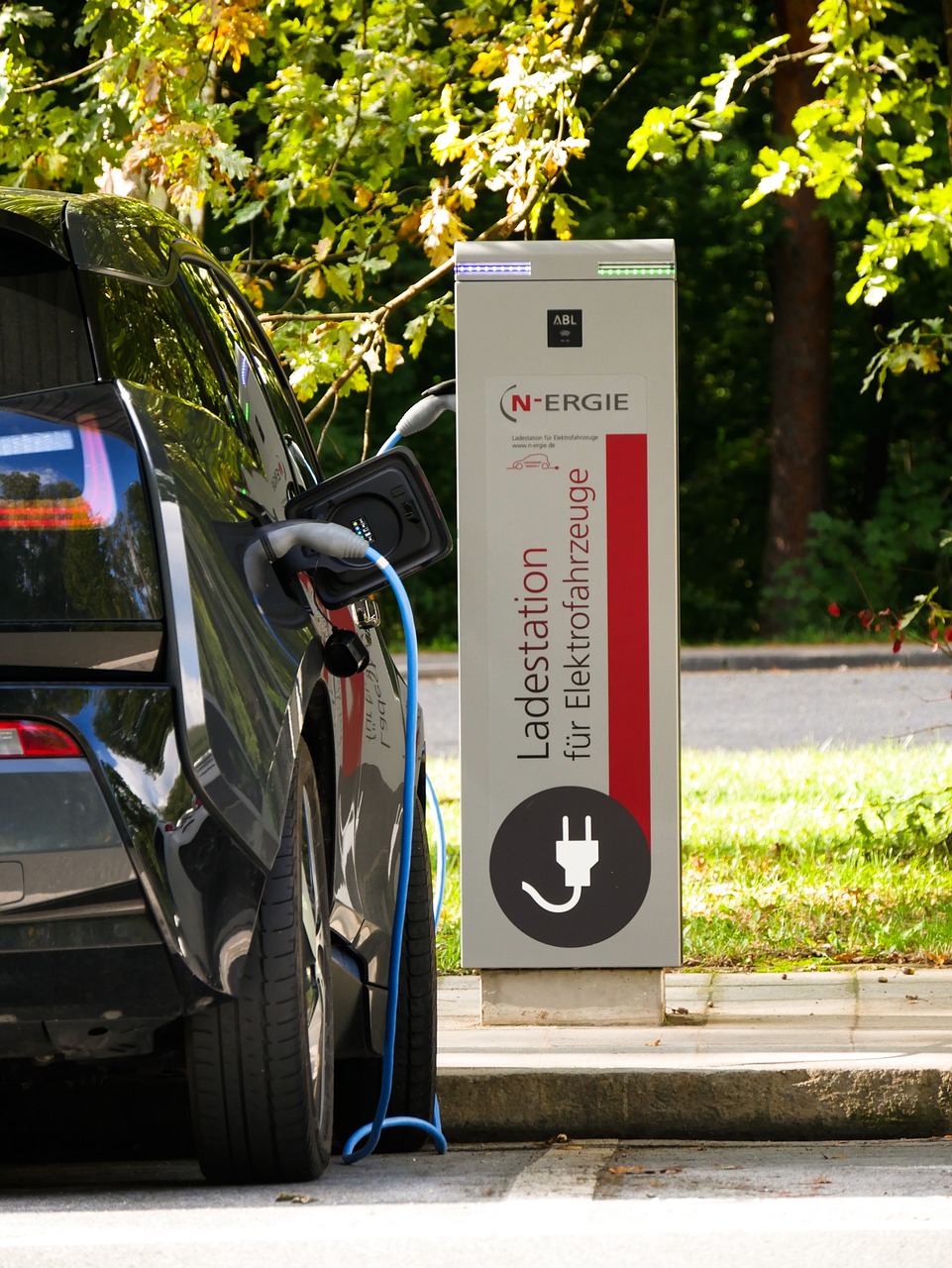
In 2021, Hon Hai Group sprint electric cars non-stop.
According to local media reports, after the MIH platform, mechanism parts and aluminum alloy stamping technology have been put in place one after another, Hon Hai Group has started the research and development of power batteries. Within the group, it has made clear plans to be led by its anode material factory Rongtan, and to reserve and develop popular solid-state battery technology. It is expected to launch 100% independently developed commercial solid-state batteries in 2024.
Within the group, Yisheng has shipped structural parts to Tesla, Hongzun is responsible for the lightweight of electric vehicles, and Guangyu, the connection line and PCB factory, has also put into vehicle wiring harness. The layout of Hon Hai Group in the field of electric vehicles is ready.

There are far-reaching considerations behind the determination of solid-state battery commercial negative electrode factory to take the lead within 3 years.
Hon Hai's increase in power batteries is not surprising. Liu Yangwei, chairman of Hon Hai, pointed out in the first Science and Technology Day held by Hon Hai in October last year that the cost of power batteries accounted for about 30% to 35% of the overall cost of electric vehicles. In the future, electric vehicles "get the three-electricity system", and the battery is one of the three-electricity systems, and the other two are motors and electronic control systems.
Against this background, it is only natural that Hon Hai chose solid-state batteries as one of its leading star products. With the launch of Weilai "solid-state battery", this battery route, which is expected to be the trend of the times, has once again gained market focus, and its value and status in the field of power battery research have also been reconfirmed. The layout of solid-state batteries by major battery manufacturers has also been repeatedly excavated, and the potential can be seen.
What really excites the industry is the commercial solid-state battery target of 2024. Although Weilai uses the name "solid-state battery", its new battery is actually a semi-solid battery, which is more of a solution, and will not be mass-produced until the first quarter of 2022. Since then, a large number of organizations have "poured cold water", believing that solid-state batteries are still a long way from commercialization.
Zheng Dandan, an analyst at Dongxing Securities, reported on January 11 that there are still many problems that remain unsolved in theory for all-solid and semi-solid batteries. One is the low lithium ion conductivity of solid electrolytes at room temperature, and the other is the high solid-phase interface impedance between solid electrolytes and electrode materials.
According to the analysis of Lu Rixin, an analyst at Oriental Securities on the 12th, the problem of high solid interface impedance is a theoretical problem rather than a technological problem, which still needs a very long time and high R & D investment to be solved.
In addition, according to a report by Everbright Securities analyst Ma Ruishan on the 10th, solid-state batteries still have technical difficulties to tackle and high costs, and it will take time for large-scale mass production (estimated at 5-10 years). Lu Rixin also judged that the real all-solid-state batteries are still far away from commercialization, and it takes a process to improve the post-natal permeability, and the liquid battery system will still be the mainstream route in the next 5-10 years.
Xiong Baiqing, chairman of Guolian Automotive Power Battery Research Institute, also said earlier that all-solid-state batteries are still far from being commercialized. "it's even difficult to make a demonstration right now," Xiong Baiqing said. It is very difficult to completely conquer the all-solid state in 10 years, but at least it won't happen in the next five years. "
Hon Hai directly raised its solid-state battery business plan to 2024, demonstrating its ambition and confidence in the battery sector. It should be pointed out that the strength of the "moments" represented by Hon Hai Group's MIH electric vehicle platform should not be underestimated, which has doubled to more than 400 in recent month, and is planning to hold a developer conference to further expand the open platform ecosystem of electric vehicles.
In addition, Hon Hai also has its own considerations for choosing Rong carbon, which is mainly engaged in negative materials, to lead the research and development of solid-state batteries. It is understood that Rong carbon has become a Nissan (Nissan) hot-selling electric vehicle model Leaf supplier through Osaka Gas Chemical (OGC), in Japan, and has obtained the order of Tianfeng Power supply, a major electric vehicle battery manufacturer in the mainland.
It should be noted that the biggest change in the material of solid-state battery lies not only in the change of electrolyte from liquid to solid state, but also in the change of anode material. current research shows that pure solid-state battery can only realize the application of lithium metal negative electrode. in order to surpass the mass energy density of the current battery system, otherwise the mass energy density is even lower.
According to the analysis of China International Capital Corporation analyst Zeng Tao on the 10th, the iterative route of negative electrode is graphite-> silicon-> lithium metal. Because the solid electrolyte itself is heavier than the electrolyte + diaphragm, and the positive electrode system has not changed, the transcendence of mass energy density can only be achieved through the use of lithium metal negative electrode.
On this level, Hon Hai's choice is more intriguing.
![[Pin thể rắn: Tianneng Co., Ltd. đạt quy mô giao hàng pin bán thể rắn 314Ah, với các đột phá theo từng cấp độ trên nhiều hệ thống công nghệ]](https://imgqn.smm.cn/usercenter/JmyWy20251217171729.png)
![[Pin thể rắn: EcoPro BM xây dựng đội ngũ pin thể rắn bao phủ toàn bộ chuỗi “Nguyên liệu thô – Vật liệu – Tế bào pin,” mục tiêu thương mại hóa vào năm 2027]](https://imgqn.smm.cn/usercenter/JMINH20251217171728.jpg)