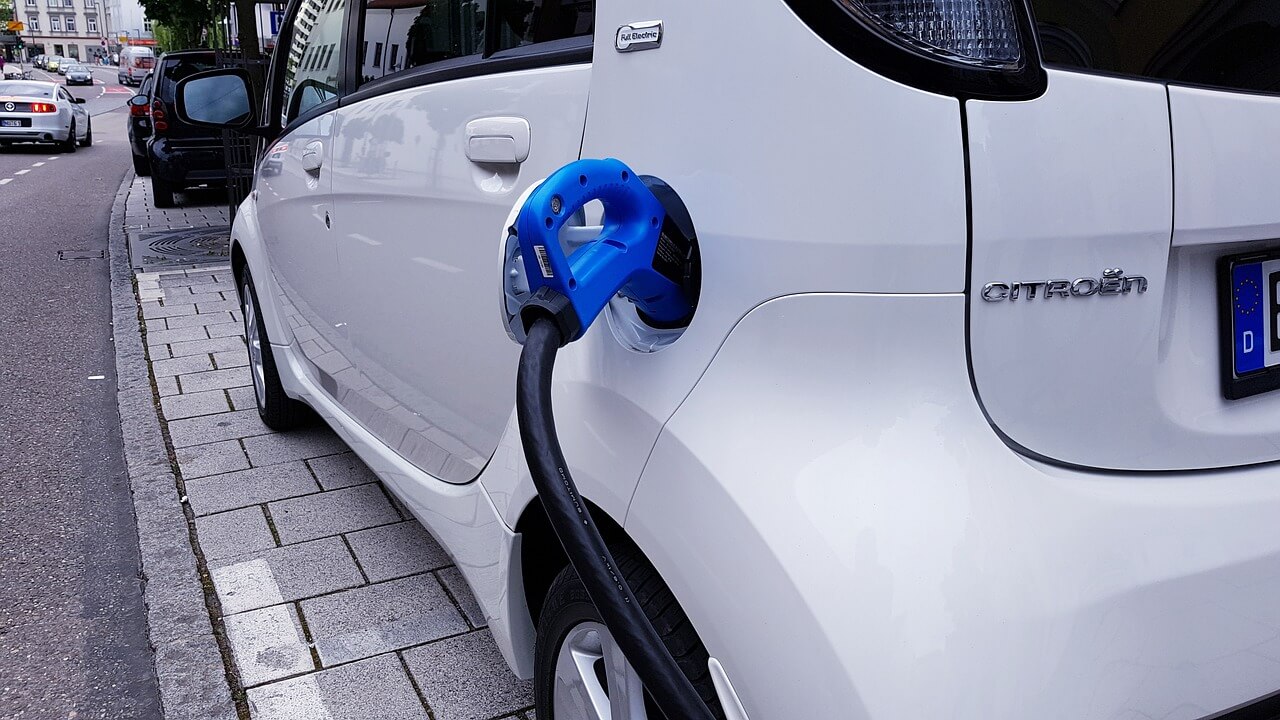
SMM: in order to improve the energy density of the power battery system and solve the mileage anxiety pain points of electric vehicles, many enterprises, including Ningde era and BYD, are carrying out battery system integration innovation. In the past two years, technologies such as CTP, blade battery, JTM, and even CTC have emerged one after another, which can be described as the eight Immortals crossing the sea.
"in fact, as early as 2018, Xinwanda began to cooperate with foreign first-line parts companies to carry out MTC (Module to Chassis) technology innovation, directly integrating modules into the car chassis, helping customers to develop commercial solutions." At the 2020 China International Lithium Technology Development Summit held a few days ago, Liang Rui, vice president of Xinwanda, said.
In Liang Rui's view, the current battery industry has entered a stage of comprehensive innovation. He said that the traditional battery system integration is a cell-module-pack structure. To a large extent, this is due to the consideration of strengthening the battery safety control, and the modular and sub-regional battery management mode is adopted. Although the safety is improved, the battery system integration is inefficient and the structure is bloated. Nowadays, the management ability and cell quality of BMS have been greatly improved, which makes it possible for applications such as large modules or even non-modules.
However, Liang Rui also stressed that no matter what kind of system integration technology is adopted, the most important thing is to ensure the safety of the battery, which can only be applied in the automobile after full verification. At the same time, any technological innovation should meet the standards of the vehicle specification level.
Layout high nickel 811, optimistic about lithium iron phosphate
Of course, the improvement of the energy density of the system at the battery pack level must be based on the cell itself. It is understood that at present, the energy density of the BEV power cell that Xinwanda has mass-produced has reached 244Whhand kg, the energy density of the power cell developed by the company's laboratory can reach up to 300Whamp kg, and the energy density of the system has reached 180Wh/kg. According to Liang Rui, Xinwanda is also engaged in the research and development of high-nickel 811 high-energy batteries, adhering to the principle of commercial mass production after full verification.
At the same time, Liang Rui also expressed his optimism about the prospect of lithium iron phosphate battery. He believes that after its energy density is increased to 200Wh/kg, then 80% of the application scenarios can be used, and the battery also has the advantages of long cycle life, good safety and low cost.
Liang Rui also revealed that Xinwanda also has a layout in the next generation of solid-state batteries and lithium-sulfur batteries with higher energy density. Although some enterprises claim that they will mass-produce solid-state batteries, Liang Rui believes that commercialization is actually a very complex project, which will involve many factors, such as manufacturing process, production cost, supply chain, and so on. The lack of any link will restrict mass production.
HEV takes advantage of the "east wind", the high-end strategy is stable and far away.
It is worth noting that Xinwanda is most praised for its HEV battery products. Among the many power battery manufacturers, Xinwanda HEV battery technology can be said to be on the wrong side of the line, and the industry was amazed as soon as it was shot.
From the point of view of orders and cooperative projects. Xinwanda received a fixed point letter from the supplier of the Renault-Nissan alliance in April 2019. The demand for related models is expected to reach 1.157 million in the next seven years, and the order value is conservatively expected to exceed 10 billion yuan. In June, Nissan announced that it would work with Xin Wanda to develop the next generation of car batteries for the e-POWER system.
As for why Xinwanda regards HEV battery as an important main direction, Liang Rui revealed that Xinwanda makes HEV battery based on three considerations. First of all, through the research and judgment of the development trend of automobile electrification, Xinwanda realized that the HEV hybrid model is a very good transitional product from several years ago. And this year's latest national policy also focuses on energy-efficient cars, and HEV will play an important role in achieving the goal of carbon neutralization.
Second, from the point of view of the path choice of business development and the cultivation of competitiveness, the competition in the pure electric vehicle battery market is extremely fierce, and the choice of HEV route can form a differentiated competitive advantage.
Third, HEV batteries can practice "internal power". Liang Rui said that as a power battery, hybrid battery is more difficult to manufacture than pure electric battery, which has high requirements in terms of manufacturing process, quality management, cost control and so on.
Liang Rui said that with the gradual implementation of the double points policy of carbon neutralization in Europe and China, the demand for HEV and PHEV batteries will continue to increase in the next five years. At present, Xinwanda HEV battery technology is ahead of its domestic counterparts, and this year's new national industrial policy encourages hybrid vehicles, which is a great encouragement to Xinwanda.
It is worth mentioning that in addition to reaching strategic cooperation with Renault and Nissan, Xinwanda announced in October that Xinwanda Electric vehicle Battery Co., Ltd., a wholly owned subsidiary of the company, had been notified by Volvo's Asia-Pacific headquarters. Xinwanda Electric vehicle has passed the qualification examination of Volvo.
In this regard, Liang Rui said that Xinwanda adheres to the high-end positioning strategy in the field of power batteries, and cooperation with international car companies is an established goal. Volvo is another phased achievement in the development of Xinwanda's high-end customers, which is as significant as cooperation with Renault and Nissan, further strengthening the foundation for the development of Xinwangda's power battery. Overseas car companies surpass their peers in terms of technical requirements and quality management, and their counterparts with "giants" can really make Xinwanda stable and far away.
The "three complete strategies" to integrate into the global competition
In the interview, Liang Rui explained Xin Wanda's overall strategy. Xinwanda formulated a "three-round strategy" for the development of power batteries in 2017, he said. First of all, the whole industry chain is deeply involved to cultivate comprehensive competitiveness. Xinwanda has a wide range of layout from upstream mineral raw materials, to positive, negative, diaphragm and other materials, and then to the later echelon utilization, recycling and disassembly.
"Xinwanda's strategy is very clear, and core resources such as cells, modules, pack, BMS and so on must be controlled." Liang Rui said.
Second, the strategic layout of the whole region, training strategy *. For example, the base built by Xin Wanda in Nanjing is facing East China. In short, it is close to the end customer and integrated into the supply channel. Third, the whole life cycle quality management, tamp the foundation of sustainable development. Provide safety solutions from raw materials, design, manufacturing, application to echelon utilization. Using the battery cloud platform, big data and OTA dynamic management strategy, the essential safety, active security and passive security are fully guaranteed.
In addition, Liang Rui also studied and judged the global pattern of the power battery industry in the future. He said that the leading enterprises of China, Japan and South Korea will compete in the global market in an all-round way. According to the current competitive market situation, most enterprises may face elimination, and the situation of "top five + multi-level" may become the trend in the future.
In Liang Rui's view, power battery as the heart of electric vehicles, manufacturers must enter the global market; to participate in international business, they must build factories nearby according to customer needs to reduce operation, materials and other costs to better provide localized services. If Chinese enterprises want to cooperate with international car companies, they have to face the global competition with Japanese and Korean enterprises.
From the perspective of technological development, Liang Rui believes that the overall level of China, Japan and South Korea is about the same, and after the development in recent years, the technological capability of Chinese battery enterprises has been enough to compete with Japanese and South Korean enterprises. However, what Chinese enterprises lack is the basic research on mechanism and materials, and there is also a gap between China and Japan and South Korea in intelligent manufacturing. Lean production should be further strengthened in terms of production environment control, process management, material utilization, yield, product consistency and so on.
![Phân tích sản lượng lithium sulfide cấp pin tháng 8: Quý 4 có bùng nổ không? [Phân tích SMM]](https://imgqn.smm.cn/usercenter/mpqgn20251217171727.jpg)