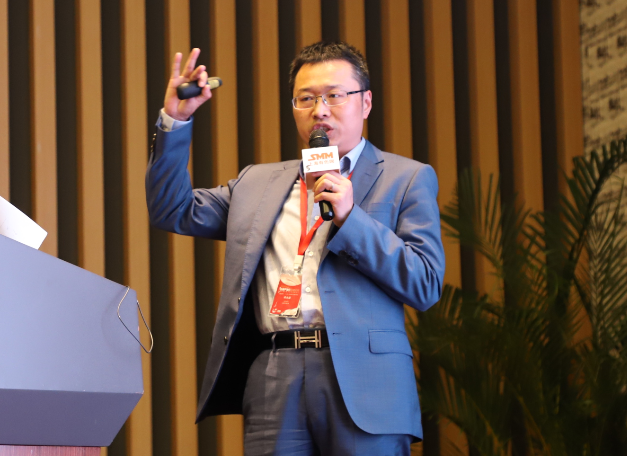
At the 2020 China International Silver Industry chain Summit Forum and China Silver Market Application Symposium, Deng Yongkang, chief analyst of new energy at Anxin Securities Research Center, delivered a keynote speech on "welcoming the era of Photovoltaic parity-Industry Research and Prospect of Silver paste Industry".
The boom is upward, and the demand for internal and external resonance is highly deterministic.
Deng Yongkang pointed out that the dependence on subsidies has been reduced, and China has entered a countdown to parity. In 2020, the state subsidized bidding for photovoltaic projects totaled 25.96GW, an increase of 14% over the same period last year. On June 28, 2020, the National Energy Administration announced the results of the 2020 photovoltaic bidding project, the total bidding scale reached 25.96GW, an increase of 14% over the same period last year, and the bidding scale exceeded market expectations. From the perspective of kilowatt-hour subsidies, the weighted average kilowatt-hour subsidy intensity of bidding projects this year is about 0.033 yuan / kWh, which is significantly lower than the 0.065 yuan / kWh in 2019, and the minimum subsidy intensity for a single project is only 0.0001 yuan / kWh. Photovoltaic dependence on subsidies has been greatly reduced.
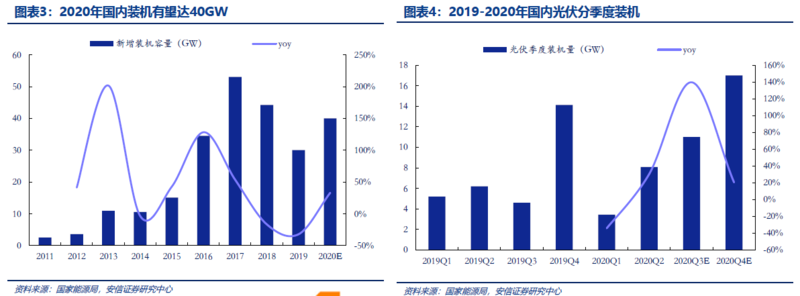
Deng Yongkang believes that domestic installed capacity is expected to reach 40GW in 2020, an increase of 33% over the same period last year. In addition to bidding projects and parity projects, household use this year and bidding projects carried forward to this year's grid connection in 2019 are expected to support the annual installed capacity of about 40GW. Estimated bidding project 13GW according to 50% bid completion, estimated household 7GW according to subsidy scale, parity 5GW, leader incentive indicator 1.5GW, demonstration project and UHV matching 5GW, 2019 carry-over project 8GW.
In terms of rhythm, the proportion of domestic photovoltaic installations in the second half of the year is close to 75%, of which Q3 is not weak in the off-season and Q4 is in strong demand. Affected by the domestic epidemic, the domestic photovoltaic installed capacity in the first half of 2020 was only 11.52GW, an increase of 0.88% over the same period last year. After the bidding target is landed in 2020, the project is expected to be officially launched in Q3, which will make Q3 demand not weak in the off-season and Q4 demand strong. It is expected that Q3 will be installed 10-12GW and Q4 will be installed 16-18GW.
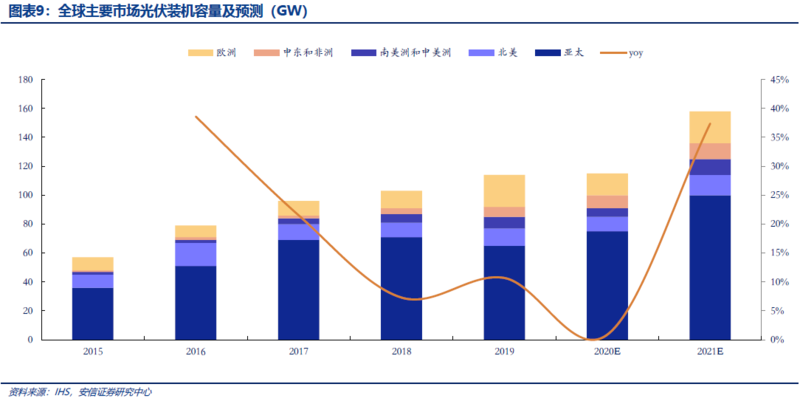
The impact of the overseas epidemic has passed, and the medium-and long-term trend is improving. Judging from the component shipments / exports in the first three quarters of 2020 and the installed capacity of major countries, we expect the global photovoltaic installed capacity to reach 120GW in 2020, an increase of 4.3% over the same period last year, of which domestic installed capacity is about 40GW and overseas installed capacity is about 80GW. In 2021, the scale of global photovoltaic installation is expected to reach 160GW (40-50GW in China and 100-120GW overseas), an increase of 33% over the same period last year.
Led by technology, the photovoltaic industry welcomes the era of parity.
Deng Yongkang said that the permeability of double glass components is expected to increase rapidly. Compared with the traditional single glass module, the double-sided double-glass module can generate electricity under the sunlight directly illuminated by the front and the reflected light from the back. The warranty period of the double glass module is as long as 30 years, and the ordinary component is 25 years old. in the whole life cycle, the power generation of the double glass module is about 25% higher than that of the ordinary assembly, which is more cost-effective from the point of view of LCOE.
In the past, there are two main reasons for the slow improvement of permeability of double glass components: 1) higher cost and 2) heavier quality. However, with the introduction of 2.0mm glass, we estimate that the mass of 72 double glass components is 26.5kg, which is only 15% heavier than conventional single glass, and the cost of a set of component glass + backplane is only 3.5% higher than that of conventional single glass. With the prominence of the advantage of performance-to-price ratio, the permeability of double glass components is expected to accelerate this year, from 15% last year to 30% this year, and to more than 60% in the next 3-5 years.
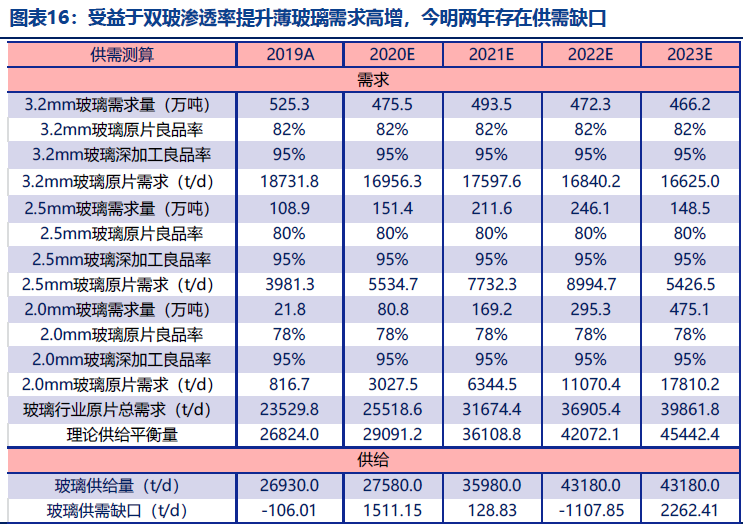
At the same time, large-scale acceleration, components into the 600W + era. The expansion of silicon wafer size can directly achieve the effect of reducing cost and improving module power. According to the current new products released by component enterprises, the corresponding component power of 18x size silicon wafer can reach about 540W, and the corresponding component power of 210 size silicon wafer can reach 600W. The promotion progress of large-size silicon wafer is much higher than expected.
The battery has the impetus for a new round of technical iteration. At present, the conversion efficiency of the mainstream PERC battery is close to the bottleneck, and there is a new round of technical iteration in the battery link. Since the theoretical value of PERC battery conversion efficiency is only 24%, it is expected that the market share of new high-efficiency batteries such as N-type HJT, which has higher conversion efficiency, will gradually increase after 2021.
Industrial change, concentration and valuation are expected to increase
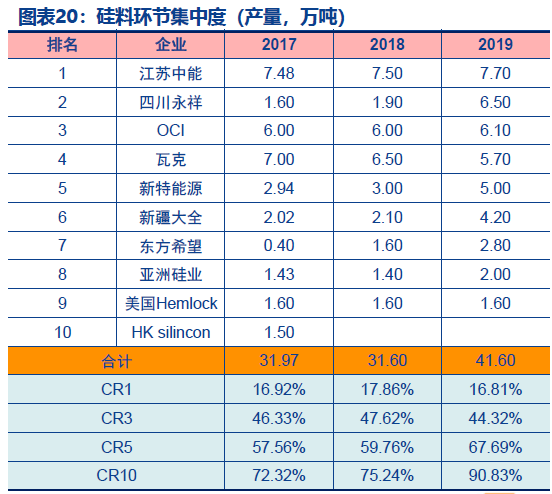
At present, the degree of industry concentration is increasing rapidly, and the degree of dependence on silicon imports is decreasing year by year. In February 2020, South Korea's Hanhua announced that the Qunshan base would be closed, and South Korea's local silicon production would return to zero; OCI South Korea's factory would only focus on semiconductor-grade polysilicon, while the Malay plant would enter the cold repair stage; in April 2020, Germany's Wacker announced that it would gradually withdraw from solar-grade photovoltaic silicon. With the rise of domestic polysilicon materials, the degree of import dependence has gradually dropped to less than 30%.
The silicon market is concentrated to the top five domestic enterprises. From the current quality and cost of silicon in domestic and overseas enterprises, the silicon market is mainly concentrated in the five major domestic silicon factories GCL, Tongwei, Special change, Daquan and Oriental Hope. From the perspective of cost control and financial strength, Tongwei has the strongest development momentum and is expected to become a global silicon leader in the future.
In the silicon chip link, the duopoly pattern remains the same. With the continuous improvement of the cost and efficiency of monocrystalline silicon, polysilicon wafers have been gradually cleared from the market. On the other hand, in the single crystal silicon wafer link, the duopoly pattern of Longji Central Ring is still the same. In 2019, Longji shipped 35GW, Central 28GW, single crystal market size 90GW, the combined market share of the two companies is still around 70%.
The polycrystalline battery is basically out, and the single crystal battery is concentrated to the head. The market share of single crystal components reached 65% in 2019, up 20% from the same period last year and exceeding the market share of polycrystal components. With the further reduction of cost and efficiency of single crystal superimposed PERC and large size, polycrystalline batteries will be completely out of business in 2020.
Photovoltaic silver paste, home-made to replace the last piece of jigsaw puzzle
Brief introduction of photovoltaic cell silver paste: there are three kinds of thick film conductor paste used in solar cells: the front silver paste on the bright surface, the silver paste on the back of the backlit surface and the aluminum paste on the back. Three kinds of conductor pastes are printed on both sides of the silicon wafer after screen printing, dried and co-sintered to form the electrodes at both ends of the silicon solar cell. The front silver paste is used to form the photovoltaic cell photovoltaic surface electrode, which is an important material in the "silicon wafer" link. It forms a conductive path after screen printing and sintering, which has a great influence on the photoelectric conversion efficiency, and then directly affects the battery.
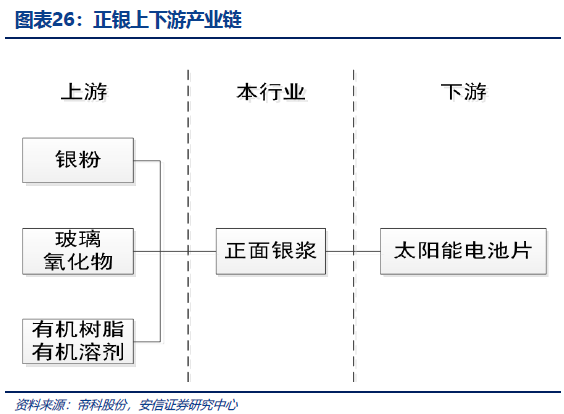
The last piece of jigsaw puzzle for domestic replacement of auxiliary materials. The process of localization of Zhengyin Bank has been accelerated. Positive silver paste is a typical technology-intensive and capital-intensive industry with high technology content and high industry concentration. DuPont, Heraeus, Samsung SDI and Taiwan Shuohe have grabbed the vast majority of the global market share of positive silver paste by virtue of their first-mover advantage. The paste accounts for about 10% of the total cost of PERC battery chips and more than 30% of the non-silicon cost, which is an important means to reduce the cost of photovoltaic cells, so the localization of Zhengyin is imperative. In 2016, domestic Zhengyin enterprises began to have the capacity to supply goods in bulk; in 2017, the market share of domestic Zhengyin quickly increased to about 20%, in 2018, to about 35%, 40%, and in 2019, the market share reached about 50%, and will continue to increase.
HJT brings photovoltaic silver paste to counterattack. At present, there are two kinds of silver paste on the front of photovoltaic cells: high temperature silver paste and low temperature silver paste. P-type batteries and N-PERT/TOPCon batteries use high-temperature silver paste, while HJT batteries use low-temperature silver paste.
Deng Yongkang pointed out that low-temperature silver paste is a key link in the commercialization of HJT: on the one hand, HJT batteries have a huge demand for low-temperature silver paste. On the other hand, low-temperature silver paste is expensive. At present, the industrialization technology of HJT battery low-temperature silver paste is almost monopolized by Kyoto Electronics KEM of Japan, the price is about 6500-6800 yuan / kg, while the positive silver price of high-temperature silver paste is about 4500-4800 yuan / kg. The low-temperature silver paste accounts for more than 20% of the battery cost and more than 50% of the non-silicon cost of the battery. He thinks that the market space of low-temperature silver paste is more than 15 billion yuan, and the market space of positive silver is more than 20 billion yuan in the future.