SMM9: today, at the 2020 (2nd) China Industrial Expo New Materials Forum-China Automotive New Materials Application Summit, and China (2nd) Copper processing Industry chain supply and demand Trading Summit, Xiao Zhu, Associate Professor / doctoral Supervisor of the School of Materials Science and Engineering of Central South University, shared the practical information on the research and development of copper alloys for automotive electronic and electrical systems on the spot.
The present situation of the Development of Copper Industry
The global annual output of copper is increasing on the whole, and the annual output has increased rapidly since 1995. Copper is the second largest non-ferrous metal and the basic material of national economy and national security. The annual output of copper processing materials in China has reached 18.16 million tons. On the premise of ensuring the high conductivity of copper, how to greatly improve its strength, wear resistance and corrosion resistance, optimize its quality and reduce its production cost is the focus of contemporary copper alloy research.
Classification and Application of High performance Copper Alloys
There are about 250 kinds of alloys and nearly 1000 varieties of copper processed materials in China, which is one of the countries with the richest variety of products in the world, among which the series of copper alloys with high strength and high conductivity mainly include:
Wire, cable, air conditioning tube, super long condensing tube, high heat dissipation pipe, lead frame belt, high speed train contact wire, plug element belt, welding belt, transformer belt, cable belt, photovoltaic copper belt, long hollow core wire, environmental protection copper, functional materials, alloy wire, single crystal copper, high fidelity wire and so on.
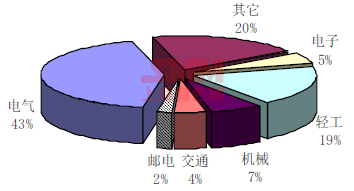
The demand for copper in China's transportation sector is close to 2 million tons, about half of which is used in the manufacture of auto parts. Copper for hybrid vehicles: 60 kg / vehicle; copper for pure electric vehicles: 83 kg / vehicle; copper for electric buses: 224-369 kg / vehicle. According to the Development Plan of New Energy vehicle Industry of the Ministry of Industry and Information Technology (2021-2035), the output of new energy vehicles in 2025 is 7 million (20% of production and sales). Domestic automotive copper consumption is about 710000 tons in 2017 and is expected to increase to 1.32 million tons in 2025.
The application of copper in automobile: copper wire, wire harness and connector of electric drive, electric control and electronic communication system; packaging and bonding of microelectronic system; copper strip of air conditioner, radiator and water tank; gear ring of gearbox synchronizer; brake, supercharger, oil line pipe, valve nozzle.
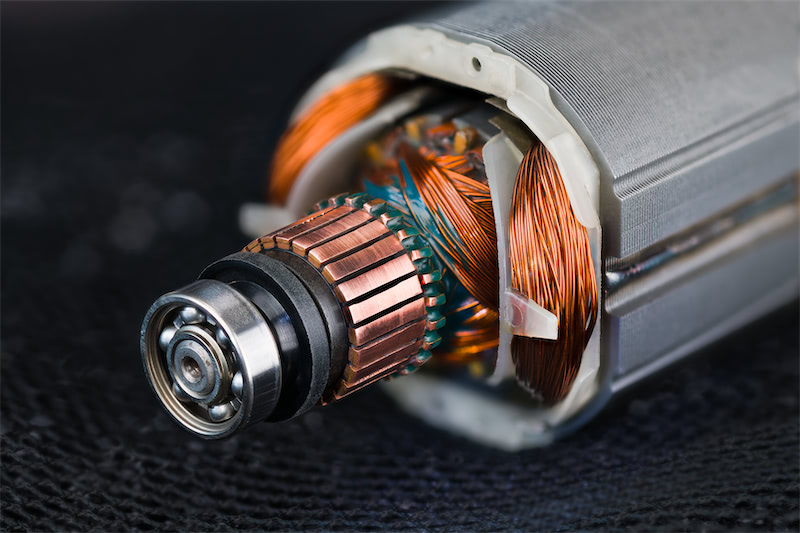
High conductivity copper alloy: high purity Cu, Cu-Mg, Cu-Ag, Cu-Sn, Cu-Fe-P, Cu-Ni-Si, Cu-Cr-Zr, can be used for electronic devices, wire harness, motor winding, wire clamp, lead frame, electronic packaging; copper tube is mainly used for vehicle air conditioning tube, inner threaded tube, waterway pipe, heat exchanger tube, communication cable tube, magnetron tube, electronic heat pipe, dry transformer and so on. Small size, light weight, energy saving, clean; air conditioner copper tube 2kg per car; brass, tin bronze, white copper can be used for coaxial cable connectors, connectors and elastic conductive components.
Wear-resistant copper alloys: complex brass, tin bronze (QSn10-1, QSn6-3-3), tin-lead bronze (QPb17-6), aluminum bronze, CuNiSn, etc., used for automotive bearings and bushings, bearing bushings, supercharger floating bearings, synchronizer tooth rings, hydraulic systems, wear-resistant parts, etc.
High-strength and corrosion-resistant copper alloys: brass, white copper, CuNiSn, art copper, etc., used in oil and gas pipelines, heat exchange pipelines, decorations, etc.
Copper matrix composites: dispersion copper, CuFe, CuCr, Cu-C, etc., used for reversing radar, resistance welding electrode, high voltage conductive pole, brush, IGBT substrate, heavy-duty vehicle braking system, etc.; CuAl composite wire and composite row are used for current-carrying transmission system.
Copper foil, copper target: copper foil is used for circuit boards, lithium-ion power batteries, packaging, etc., including automobile power transmission system (current converter, inverter), body control system ( Electric power steering system, electronic stability control system, ABS, LED lamps, etc.), the use of high current, high voltage, strong heat dissipation of thick copper foil; ultra-high purity copper target for flat panel displays, storage media (giant magnetoresistive film), integrated circuits, new energy (semiconductors and solar cells) and other fields.
Copper cables, foil, connectors for electronic control, signal and data transmission: electric control system circuit board, insulated gate bipolar transistor (IGBT) module; autopilot assistance: sensor, radar, camera module; computer data transmission and Internet connection; vehicle multimedia audio system; mobile phone data transmission and charging connection; vehicle video entertainment equipment; vehicle navigation system; vehicle antenna communication
Commonly used automotive copper wire harness: pure copper, CuMg, CuSn, CuAg, etc.; automotive copper wire and foil develop in the direction of ultra-thin, ultra-fine, ultra-light and good bending properties. The weight of the car is reduced by 10%, the 100-kilometer trumpet is reduced by 0.3-0.6 liters, and the carbon dioxide emission is reduced by 5g.
High-performance car line, foil requirements: power harness: high current, high voltage work, thermal stability, bending performance; signal transmission harness: high conductivity, high fidelity; control unit: temperature requirements, hybrid, electric vehicle power control system module high power expected operating temperature up to 250C, PCB to meet the requirements of 5-7A/mm2 standard.
Commonly used copper for automotive connectors: H65, QSn6.5-0.1, etc.; connectors are developed in the direction of ultra-thin, high strength, high elasticity and good bending performance. Sn bronze connectors are developed in the direction of high tin (7-13%).
High-performance automotive connectors require: high strength (high contact force); high modulus of elasticity (anti-deformation); fatigue and bending properties (long life); high conductivity / thermal (high electrical, thermal efficiency); temperature resistance and high stress relaxation resistance (high stability).
Research and development of high conductivity copper alloy for power transmission
High conductivity copper alloy wire (solid solution strengthening)
Suitable for continuous production (high conductive wire "Cu-Ag,Cu-Mg,Cu-Sn"); solid solution strengthening effect + processing hardening rate + resistivity effect; Mg, Ag, Ca, Sn combination addition.
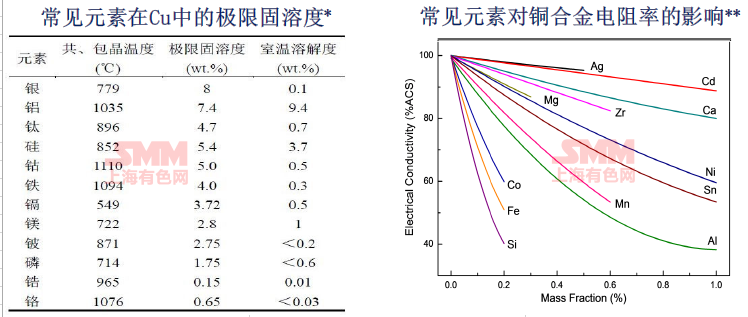
High conductivity copper alloy wire
Cu-0.1Ag σ b ≥ 360MPa g ≥ 95%IACS
Cu-0.3Sn σ b ≥ 400MPa g ≥ 70%IACS
Cu-0.4Mg σ b ≥ 540MPa g ≥ 70%IACS
Cu-4.0Ag σ b ≥ 650MPa g ≥ 90%IACS
Cu-Ag, Cu-Sn and Cu-Mg have been produced and applied in China, and the above three have limited room for strength improvement, low resistance to high temperature softening, uneven stress distribution and high off-line rate in the machining process.
Research and Development of High Elastic Copper Alloy for signal Transmission
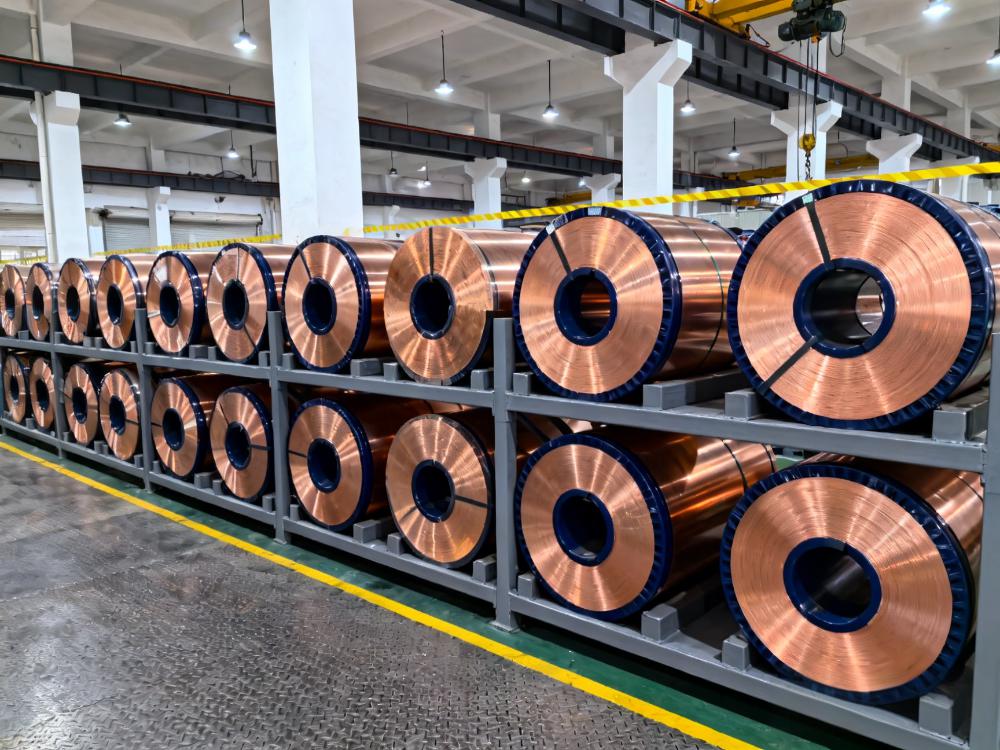
Copper and copper alloy strip: oxygen-free copper plate strip foil: transformer Cu strip (ultra-wide 1250 mm); Calendering foil (ultra-thin 4'6 μ m); cable strip (ultra-long 8000 m); brass strip, zinc white copper strip, tin-phosphorus bronze strip: connector; elastic material; frame strip
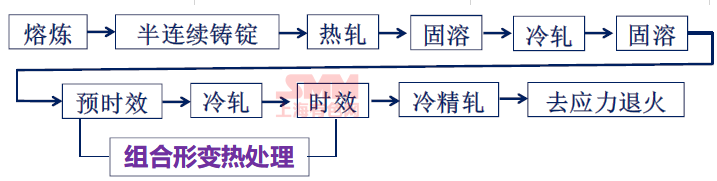
The phase transformation sequence of CuNiSi alloy at 450C is as follows: solid solution "G.P region" L12 ordering (Ni3Si phase), Ni3Si phase and Ni3Si phase + Ni2Si phase, the early strengthening phase is mainly β-Ni3Si phase, and the peak aging state is the co-strengthening of Ni3Si phase and Ni2Si phase, and the strengthening effect of Ni2Si phase is dominant, and Ni3Si still exists in the matrix in the late aging period.
Industrialization of CuNiSi series alloys:
Special functional copper matrix composites
The deformed Cu-Fe in-situ composite is strengthened by Fe fiber strengthening. According to the Cu-Fe equilibrium phase diagram, Fe first precipitates in the form of γ-Fe during solidification. With the decrease of temperature, the solubility of Fe in liquid Cu becomes smaller and smaller. When the temperature drops to 1096 ℃, the peritectic reaction occurs between γ-Fe and the remaining liquid Cu, that is, γ-Fe+L peritectic Cu. When the temperature drops to 850 ℃, the remaining γ-Fe undergoes eutectoid transformation to form α-Fe and Cu-rich solid solution, that is, γ-Fe Cu+ α-Fe. The α-Fe phase is the dendritic second phase in the diagram, and the solid solution rich in Cu phase is the matrix structure.
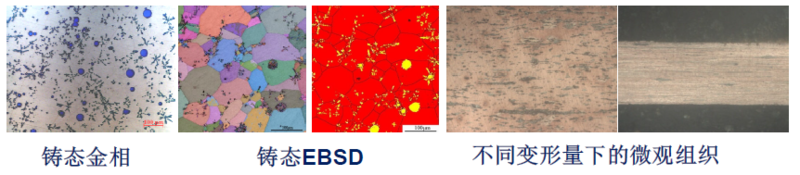
Design principles of High performance Copper Alloy
Adjust the composition of the material, that is, to add alloy elements to copper to improve the performance of the material, that is, to research and develop a new type of copper alloy material;
Application of plastic deformation: plastic deformation is applied to copper and copper alloy materials to improve the mechanical properties of high performance copper alloy design materials (plain design, and through processing rather than adding. Gold element);
Heat treatment to adjust the structure: carry out reasonable heat treatment, adjust the structure of the material, and improve the properties of the material.

Scan the code and apply to join the exchange group of SMM copper alloy and automobile industry.