SMM5 March 27: the new crown epidemic raided the world in 2020, and the economic activities of many countries around the world suffered from production restrictions and shutdowns. However, the economic situation in different parts of the world is slightly different. China is the earliest to be affected and the economy is recovering the fastest. Europe and other countries have also restarted their economies, and manufacturing has begun to rebound. The United States has the largest number of confirmed cases of the epidemic and has not yet returned to work nationally. Economic activity is still not satisfactory. The PMI index is a collection of data collected from a monthly survey of purchasing managers to reflect the changing trend of the economy:
China
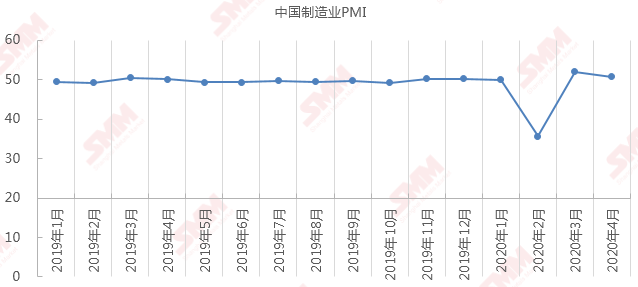
In April 2020, China's manufacturing purchasing manager index and non-manufacturing business activity index are above the rise and fall line. The situation of epidemic prevention and control in China has been further consolidated, the order of production and life has been accelerated, and the production and operation activities of manufacturing and non-manufacturing industries have continued to improve. However, the Bureau of Statistics said that manufacturing production and operation continued to improve in April compared with the previous month, but the expansion has weakened. Among the 21 industries surveyed, the PMI index of 9 industries, such as food and beverage refined tea, automobile manufacturing and oil processing, was higher than that of the previous month, while the PMI index of 12 industries, such as textiles, chemical raw materials, paper printing and so on, was lower than that of the previous month. The production index was 53.7%, down from 0.4% last month, and manufacturing production activity continued to recover. In terms of labor demand, the employment index is 50.2%, and the amount of labor used by enterprises has increased for two consecutive months. As of April 25, among the enterprises surveyed by purchasing managers in the national manufacturing industry, 77.3% of the enterprises had returned to work, with a recovery rate of more than 80% of the normal level, up from 9.4 percentage points last month.
In addition, demand recovery was weaker than production in April. The index of new orders is 50.2%, which is lower than the production index. Among the 21 industries surveyed, the index of new orders in 15 industries, such as textiles, textiles and clothing, and chemical raw materials, is lower than the production index, and the recovery of industry demand lags behind production. Finally, the increase in uncertainty in the import and export market has led to a sharp decline in the number of newly signed export orders reflected by some manufacturing enterprises. It is believed that domestic production and manufacturing activities will recover further in May.
The United States
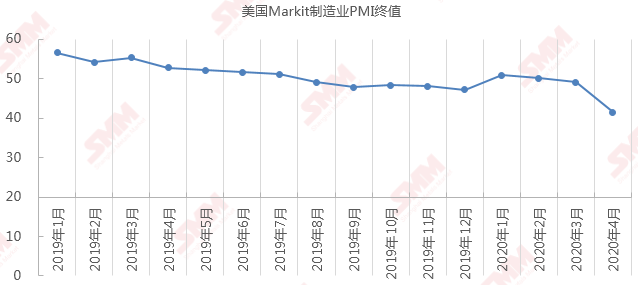
Markit chief economist Williamson said business activity also fell sharply in May, following a record economic downturn in April, adding to the unprecedented decline in GDP in the second quarter. Encouragingly, the survey shows that the rate of economic collapse appears to have peaked in April. In the absence of a second wave of outbreaks, the decline in economic activity is expected to slow further in the coming months as the blockade is lifted. The annualized quarterly rate of GDP in the United States is expected to shrink by 37% in the second quarter, and it will take two years for the economy to return to its pre-epidemic peak, which will actually depend on the prevention and control measures of the epidemic in the United States. However, given the current economic downturn and the scale of unemployment, given that some restrictions are still needed before a cure or vaccine is found, a full economic recovery is unlikely to be rapid.
The sharp decline in manufacturing activity in April was mainly caused by the outbreak of the epidemic in the United States, under which "home orders" were generally implemented in various states in the United States, shutting down non-essential operations, and manufacturing enterprises suffered huge losses.
Euro zone
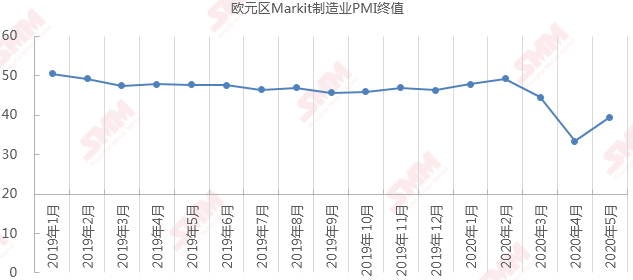
Manufacturing PMI in the eurozone stabilised and rebounded in May, with business activity falling further, but the survey data at least provided reassuring signs that the economic downturn could bottom out in April. GDP is still likely to decline at an unprecedented rate in the second quarter, falling by about 10 per cent compared with the first quarter, but the rise in PMI and its forward-looking indicators have increased expectations that the economic downturn will continue to moderate as the locking restrictions are further lifted and into the summer. In May, all eurozone countries relaxed their containment of COVID-19 to some extent, which helped to ease the overall rate of economic decline. However, while further easing of restrictions is expected in the coming months, restrictions may still be in place and economic activity cannot be fully implemented until an effective treatment or vaccine is found.
The United Kingdom
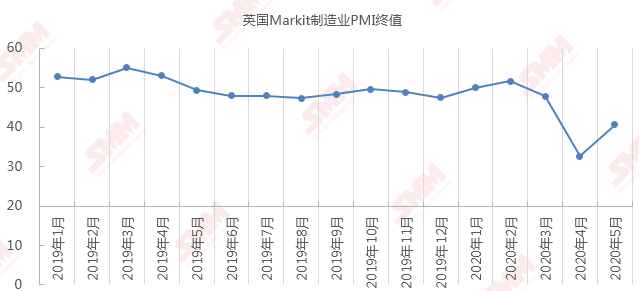
The UK economy this month has flattened slightly from the sharp decline in April, but is still in severe contraction. Companies reported a severe shortage of new business, and while they expected improvements for the second month in a row, many said they feared it would take a long time to recover. In addition to concerns about the epidemic and economic prospects, investors are more concerned about the continued lack of progress in the Brexit process and the Bank of England's expectations of enhanced easing. Against this backdrop, although the initial PMI data for May in the UK performed slightly better than expected, the grim economic situation remained the same. The economic situation in Britain is still not optimistic.
SMM "combination of period and present" training course

Registration contact: Lu Qingping, Iron and Steel Division of SMM
Tel: 021mur51595781 / 187MUE 1777MUE 4590

![โลหะมีค่ายังคงเคลื่อนไหวในกรอบ ขณะที่ปัจจัยมหภาคเข้าสู่ช่วงยืนยันสำคัญ [บทวิเคราะห์มหภาคโลหะมีค่า SMM]](https://imgqn.smm.cn/usercenter/yhuhG20251217171735.jpg)