According to combined data from the General Administration of Customs and SMM, China's total imports of lithium raw materials (spodumene + lithium sulfate) approached 80,000 tonnes in lithium carbonate equivalent (LCE) in June 2026, remaining at elevated levels and providing a solid feedstock base for the continued rise in domestic lithium salt production.
Spodumene: Import Volumes Continue to Climb, Australian Year‑End Shipment Surge Contributes Significantly
In June, China's spodumene imports reached 768,000 physical tonnes, up 13% month‑on‑month and 33% year‑on‑year, equivalent to approximately 72,000 tonnes LCE. The import scale has maintained a high growth trajectory for several consecutive months, reflecting robust end‑user demand from domestic lithium salt producers for upstream ore feed.
A clear divergence in supply sources emerged:
-
Australia remained the dominant supplier, with the year‑end fiscal push by mines fully materialising in June. Arrivals exceeded 370,000 tonnes, up 12% month‑on‑month, broadly in line with market expectations for quarter‑end shipment concentration. As the anchor of China's spodumene supply, Australia's stable shipments set the tone for the month's total imports.
-
Mali saw arrivals rise significantly month‑on‑month to 60,000 tonnes, providing a phased incremental supply for related smelters' production needs.
-
South Africa and Nigeria both maintained steady performance, with arrivals from each exceeding 110,000 tonnes. Notably, the share of high‑grade concentrate in Nigerian ore continued to rise, exceeding 65%, extending the trend of grade structure optimisation.
-
Zimbabwe, affected by earlier export restrictions and cross‑border transport inefficiencies, saw arrivals fall back to 42,000 tonnes in June, a month‑on‑month decline, indicating persistent short‑term supply volatility.
In terms of grade composition, SMM data show that the share of lithium concentrate in total arrivals fell to 72% month‑on‑month. The main drag came from Brazil – its 65,000 tonnes of arrivals were mostly previously booked lithium raw ore fines, the concentration of which pulled down the overall concentrate ratio.
Lithium Sulfate: Imports Accelerate Month‑on‑Month, Zimbabwe Makes Its First Supply Breakthrough
In addition to spodumene, lithium sulfate imports also deserve attention. In June, China's lithium sulfate imports reached 13,500 tonnes, up 12% month‑on‑month, equivalent to over 7,700 tonnes LCE. By source, Chile continued to dominate the supply landscape with 13,400 tonnes. Meanwhile, imports from Zimbabwe quietly exceeded the 100‑tonne level for the first time – although still small in absolute terms, this marks the country's first bulk shipment of lithium sulfate to China, heralding the potential for future normalised supply from Zimbabwe.
Overall Assessment: June Feedstock Support Solid, but Tightening Spot Availability in July Raises Concerns
In aggregate, combined spodumene and lithium sulfate imports in June reached nearly 80,000 tonnes LCE. Together with domestic lithium concentrate production of over 30,000 tonnes, total domestic lithium raw material supply exceeded 110,000 tonnes LCE for the month, providing ample and relatively stable feedstock support for the high operating rates of lithium salt production in June.
However, beneath the seemingly upbeat headline figures, a key variable warrants attention: the majority of June's arriving cargoes had been pre‑locked via contracts weeks or even months in advance, leaving only a small share available for free‑trading spot circulation. The persistence of this pre‑locked structure implies that spot market availability of lithium ore will remain tight in July. If downstream rigid‑demand procurement paces hold steady, the tightening of available spot supply will constrain lithium salt producers' flexibility in raw material sourcing to some extent, thereby limiting the further upside room for lithium carbonate output in July – a transmission effect that has already been reflected in recent SMM weekly lithium carbonate production data.
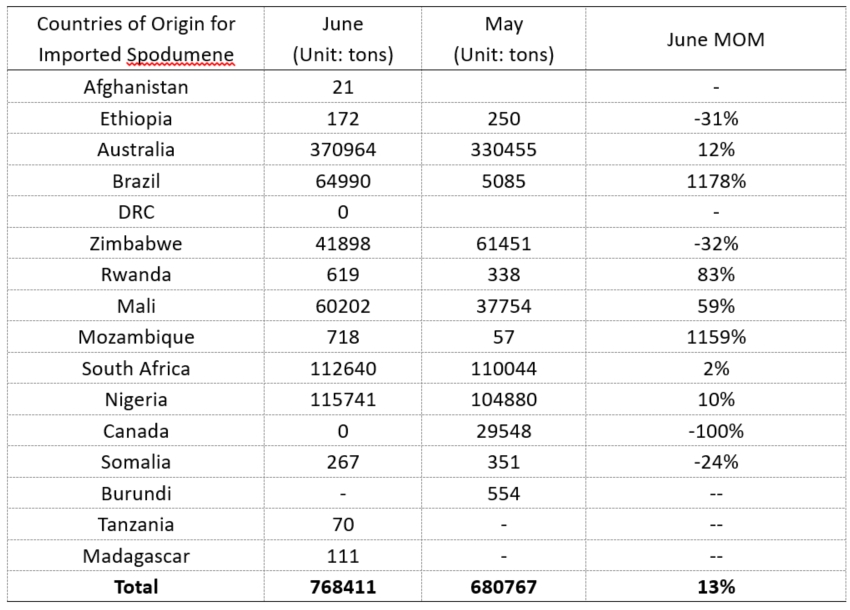
Source: General Administration of Customs of China, SMM
![[Lithium Battery: Furih Group Plans To Acquire Former US Subsidiary To Boost Silicon-Based Anode Materials]](https://imgqn.smm.cn/usercenter/AmiJU20251217171730.jpg)
![[Lithium Battery: Zhiliang New Materials' 30,000-Ton Lithium Iron Manganese Phosphate Project]](https://imgqn.smm.cn/usercenter/QXufg20251217171730.jpg)