Ниже на основе данных SMM и рыночной динамики представлен подробный обзор показателей рынка электролита и аккумуляторных ячеек в апреле, сравнение с тенденциями катодных и анодных материалов, обобщение текущей ситуации и прогноз будущих тенденций.
I. Электролит для натрий-ионных аккумуляторов: стабильные отгрузки демонстрируют устойчивость, дефицит мощностей становится потенциальным ограничением
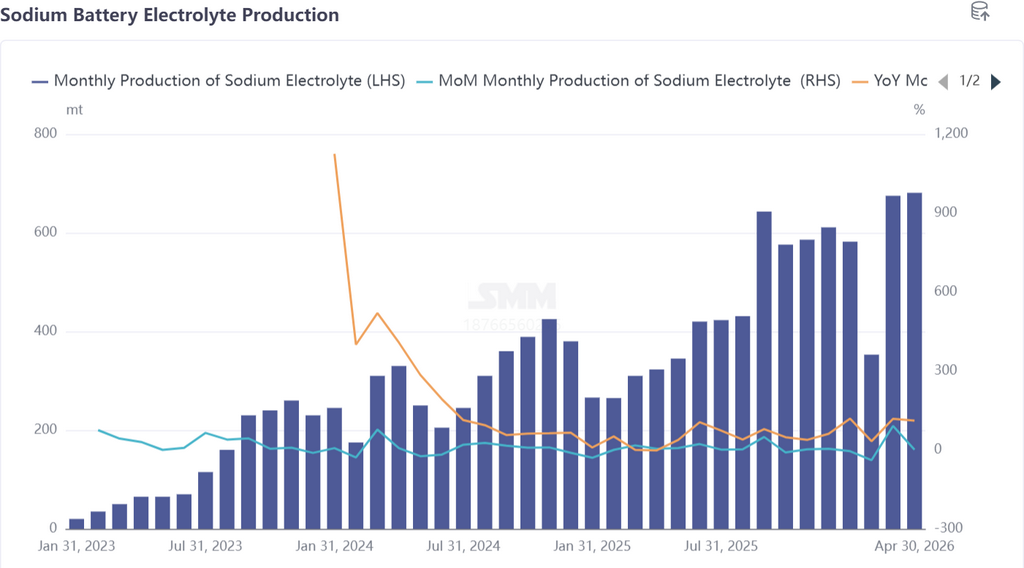
Согласно данным SMM, производство электролита для натрий-ионных аккумуляторов в апреле выросло на 1% м/м и на 111% г/г, при этом рынок в целом функционировал стабильно, без резких колебаний.
Текущий рынок электролита для натрий-ионных аккумуляторов по-прежнему доминируется ведущими игроками: ключевые предприятия поддерживают отгрузки и стабилизируют поставки, полностью обеспечивая стабильность цепочки поставок для нижестоящих производителей аккумуляторных ячеек и выступая основной опорой устойчивой работы отрасли.
Однако в то же время нижестоящие производители аккумуляторных ячеек, движимые необходимостью контроля затрат, продолжали оказывать давление на закупочные цены электролита, дополнительно сжимая маржу прибыли электролитных предприятий, при этом отрасль демонстрирует тенденцию «стабильных объёмов при ценовом давлении».
В резком контрасте с ускоряющимся высвобождением мощностей катодных и анодных материалов, текущие возможности поставок электролита для натрий-ионных аккумуляторов всё ещё имеют заметные недостатки. По оценке SMM, исходя из текущих масштабов производства натрий-ионных аккумуляторных ячеек и средне- и долгосрочных планов расширения, дефицит предложения электролита уже существует, и этот разрыв, вероятно, будет увеличиваться по мере расширения мощностей по производству ячеек. Основная причина заключается в том, что текущие мощности по производству электролита для натрий-ионных аккумуляторов в значительной степени опираются на избыточные мощности существующего производства электролита для литиевых аккумуляторов, при этом большинство электролитных предприятий уделяют недостаточное внимание сегменту натрий-ионных аккумуляторов и не развёртывают выделенные мощности, в результате чего вспомогательные мощности не могут соответствовать будущему спросу при расширении производства ячеек. С точки зрения развития отрасли, электролит постепенно становится ещё одним значительным узким местом, ограничивающим масштабное продвижение индустрии натрий-ионных аккумуляторов, вслед за анодными материалами из твёрдого углерода. В перспективе мая, по мере высвобождения мощностей нижестоящих производителей ячеек и роста спроса, ожидается соответствующий рост производства электролита для натрий-ионных аккумуляторов.
Согласно прогнозу SMM, производство электролита для натрий-ионных аккумуляторов в мае, как ожидается, вырастет на 12% м/м и на 120% г/г. Однако проблема дефицита мощностей вряд ли будет кардинально решена в краткосрочной перспективе, а цены, как ожидается, останутся стабильными.
II. Аккумуляторные ячейки и конечные потребители: консолидация перед прорывом, наращивание объёмов ожидается во II квартале
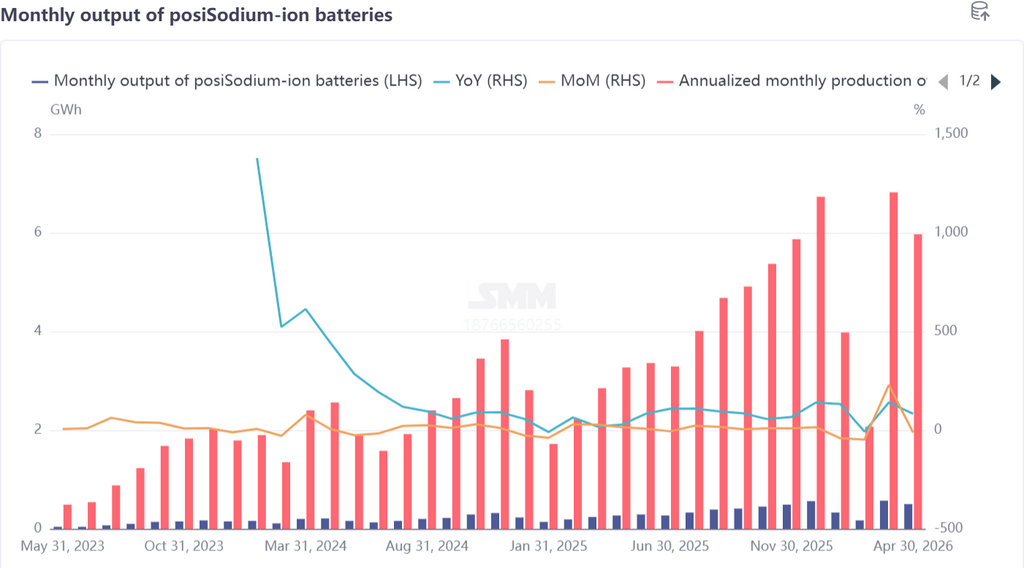
В апреле рынок натрий-ионных аккумуляторных ячеек продемонстрировал тенденцию «краткосрочной корректировки при долгосрочном позитивном прогнозе». Согласно данным SMM, производство натрий-ионных аккумуляторных ячеек за месяц снизилось на 12% м/м при росте на 83% г/г.
Незначительное снижение производства в месячном исчислении было обусловлено не слабым спросом, а перераспределением и корректировкой предприятиями имеющихся мощностей и заказов — большинство предприятий, готовясь к вводу новых мощностей во II квартале и последующим поставкам для проектов накопления энергии, использовали апрель как период консолидации для оптимизации производственных процессов, согласования поставок материалов и подготовки к последующему наращиванию объёмов.
Обзор рынка электролита и аккумуляторных ячеек для натрий-ионных аккумуляторов за апрель: устойчивый набор импульса перед прорывом, узкие места и возможности сосуществуют
От ускоряющегося наращивания мощностей катодных и анодных материалов и восстановления спроса до устойчивого набора импульса в сегментах электролита и аккумуляторных ячеек — цепочка поставок натрий-ионных аккумуляторов в апреле продемонстрировала отчётливые характеристики «координации верхних и нижних звеньев при дифференцированных показателях». Согласно данным SMM, по сравнению с быстрым ростом катодных и анодных материалов, рынки электролита и аккумуляторных ячеек сохранили высокий рост в годовом исчислении, однако в краткосрочной перспективе испытали влияние таких факторов, как контроль затрат, согласование мощностей и темпы высвобождения конечного спроса, демонстрируя операционную картину «стабильности с корректировками». Как ключевые вспомогательные и конечные звенья поставок в цепочке натрий-ионных аккумуляторов, развитие обоих сегментов напрямую связано с прогрессом коммерциализации отрасли. Ниже на основе данных SMM и рыночной динамики представлен подробный обзор показателей рынка электролита и аккумуляторных ячеек в апреле, сравнение с тенденциями катодных и анодных материалов, обобщение текущей ситуации и прогноз будущих тенденций.