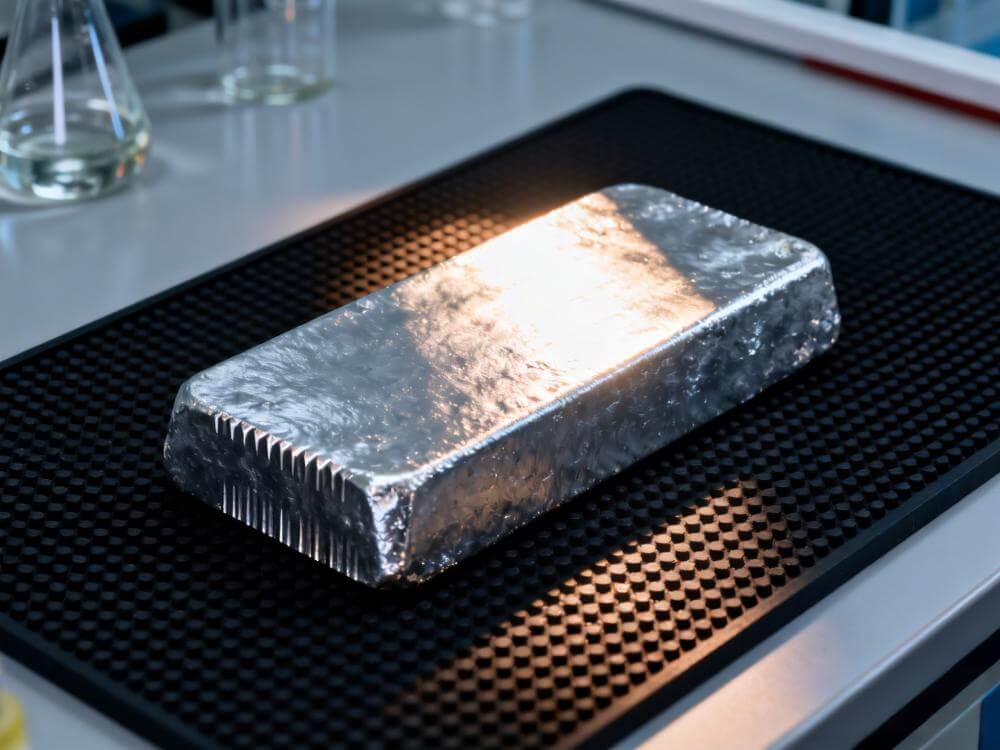
Magnesium alloy is a high-performance lightweight structural material with magnesium as raw material, with a specific gravity similar to that of plastic, stiffness and strength no less than aluminum, strong anti-seismic, anti-electromagnetic, thermal conductivity, electrical conductivity and other excellent properties, and can be fully recycled and pollution-free. Magnesium alloy is light in weight, its density is only 1.7mm kg/m3, its density is 2x3 of aluminum and steel, its strength is higher than that of aluminum alloy and steel, its specific stiffness is close to that of aluminum alloy and steel, it can withstand a certain load, has good castability and dimensional stability, is easy to process, has low scrap rate, has good damping coefficient, and its vibration damping is larger than that of aluminum alloy and cast iron, so it is very suitable for automobile production. At the same time, it has a wide range of applications in aerospace, portable computers, mobile phones, electrical appliances, sports equipment and other fields.
Advantages of magnesium alloy
Magnesium alloy has low density but high strength and good rigidity. Among the existing engineering metals, the density of magnesium is the lowest, which is 1max 5 of steel, 1max 4 of zinc and 2max 3 of aluminum. The stiffness of common cast magnesium alloy is the same as that of cast aluminum alloy, so its specific strength is obviously higher than that of aluminum alloy. The stiffness of magnesium alloy increases with the increase of thickness, so the performance of magnesium alloy with good rigidity is very beneficial to the design of the whole component.
Magnesium alloy has good toughness and strong shock absorption. Magnesium alloy is easy to produce large deformation under the action of external force. However, when subjected to impact load, the energy absorbed is 1.5 times that of aluminum, so it is very suitable for the impact parts-wheels. Magnesium alloy has high damping capacity and is an ideal material to avoid workers' fatigue caused by vibration and noise.
Magnesium alloy has low heat capacity, fast solidification rate and good die-casting performance. Magnesium alloy is a good die-casting material, which has good fluidity and fast solidification rate, can produce parts with fine surface and clear edges, and can prevent excessive shrinkage to ensure dimensional tolerance. Due to the low heat capacity of magnesium alloy, compared with the production of the same aluminum alloy castings, the production efficiency is 40% to 50% higher, and the casting size is stable, the precision is high, and the surface finish is good.
Magnesium alloy has excellent machinability. Magnesium alloy is one of the most easily machined materials in all commonly used metals. Higher cutting speed and cheap cutting tools can be used in machining, and the tool consumption is low. And without grinding and polishing, a very smooth surface can be obtained with cutting fluid.
Rich in resources. China is a large country of magnesium resources, and the reserves of high-quality magnesium smelting raw materials such as magnesite, dolomite and salt lake magnesium resources are very abundant in China, which provides a material guarantee for the vigorous development and continuous progress of China's primary magnesium industry and "downstream" industry. Since the 1990s, with the reform and opening up and the in-depth development of market economy, China's magnesium industry has also developed by leaps and bounds. In 2000, the output of magnesium in China was about 200kt, accounting for almost 40% of the world's magnesium output, ranking first in the world. In 2005, the original magnesium output reached 354 kt, and the original magnesium production capacity was close to 600kt. Compared with 2004, the original magnesium production capacity increased by 100kt, an increase of 32.1% over the same period last year, accounting for 2x3 of the global magnesium output, making it the fifth largest non-ferrous metal in China after aluminum, copper, lead and zinc.
Second, the shortcomings of magnesium alloys.
Flammability. Magnesium has a great affinity with oxygen, and when it is even in a solid state at high temperature, it is easy to react with oxygen in the air, releasing a lot of heat, and the resulting magnesium oxide has poor thermal conductivity and heat can not be dissipated in time, which promotes the further oxidation reaction, forming a vicious circle, and magnesia is loose and porous, which can not effectively block the invasion of oxygen in the air.
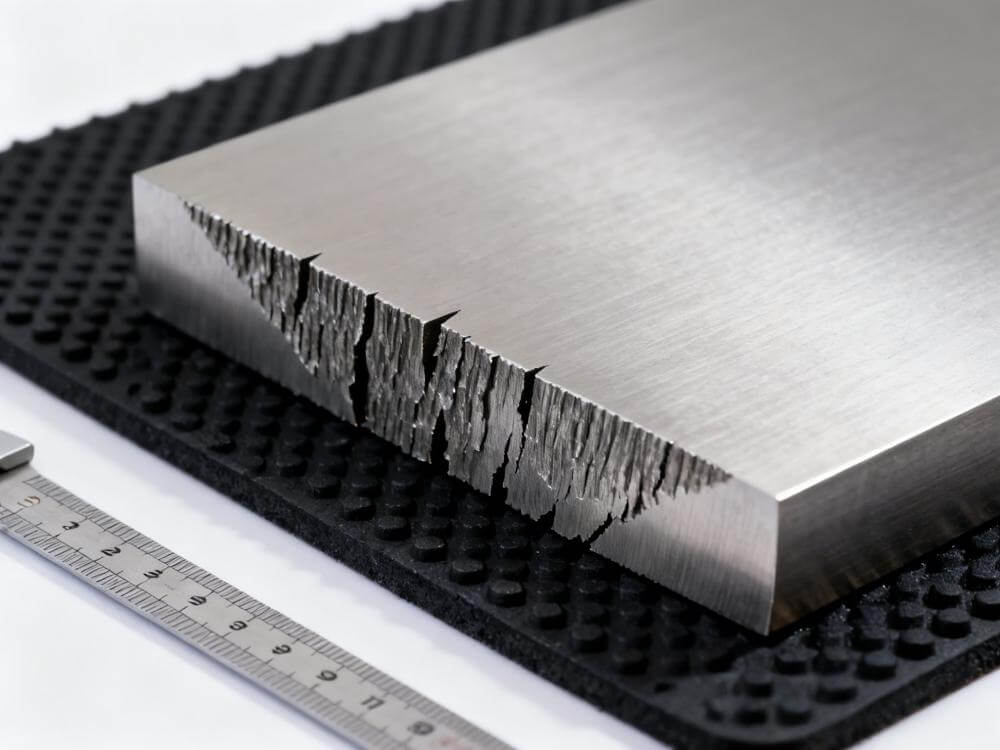
Poor plasticity at room temperature. Magnesium belongs to closely packed hexagonal crystal structure, which has only one slip plane and three slip systems at room temperature, so its plastic deformation mainly depends on the coordinated action of slip and twining. however, the slip in magnesium crystals only occurs in some crystals where the slip plane is inclined to the tension direction, so the process of slip will be greatly limited, and twinning is difficult to occur in this orientation, so brittle fracture will occur soon. When the temperature exceeds 250 ℃, the additional slip surface in the magnesium crystal begins to play a role, and the plastic deformation ability becomes stronger.
Poor corrosion resistance. Magnesium has high chemical activity and its equilibrium potential is very low. It is prone to galvanic corrosion when it comes into contact with different kinds of metals and acts as an anode. At room temperature, the surface of magnesium reacts with oxygen in air to form magnesia thin film, but because the magnesia film is relatively loose, its density coefficient is only 0.79, that is, the volume of magnesia formed after magnesium oxidation is reduced, so the corrosion resistance is very poor.
Conquer the worldwide problem of magnesium
The three "inferiority" of magnesium: easy to burn, low strength and easy to corrosion have seriously restricted the development of magnesium alloy technology and products in our country in the past. The research team of Academician Ding Wenjiang carried out the research on flame retardant magnesium alloy earlier in the world, which greatly increased the ignition point of magnesium alloy from 520 ℃ to above 935 ℃. The ignition point is greatly increased, which makes the melting and production of unprotected magnesium alloys in the atmosphere possible. at present, this technology has been applied to the mass production of electronic product housings and automobile gearboxes. Conventional magnesium alloy is relatively soft and poor in bearing capacity. Academician Ding Wenjiang proposed to combine rare earth and magnesium, the dominant resource of China, to develop high performance magnesium alloys with Chinese characteristics. Using heavy rare earth elements such as Gd and Y for alloying, combined with solid solution strengthening, aging strengthening and fine grain strengthening, a high strength wrought magnesium alloy (JDM2) with high tensile strength at room temperature and 250C was invented, which has become the highest industrial application strength magnesium alloy in the world. It has been successfully applied to the key load-bearing parts in aerospace and other fields. The worldwide problem of high activity of magnesium, easy reaction and producing a large amount of oxidation slag has been overcome in the research and development and exploration of academician Ding Wenjiang for decades. Academician Ding Wenjiang's team invented new purification methods and equipment, such as large-size square hole multi-stage electromagnetic purification method and multi-stage multi-medium continuous deep purification method, which solved a series of worldwide problems and provided a solid material guarantee for the mass production of high-quality light alloy products.
![Рост цен на уголь разжигает рынок магния: двухмесячная консолидация наконец прорвана, сокращение производства и снижение запасов сигнализируют о следующем ралли [Анализ SMM]](https://imgqn.smm.cn/usercenter/mLwgx20251217171723.jpeg)
![[SMM еженедельный обзор рынка магния: рост цен на магний, обусловленный издержками, неустойчив из-за слабого спроса]](https://imgqn.smm.cn/usercenter/rUQIB20251217171723.jpeg)