Science and Technology Innovation Board IPO of Hubei Wanrun New Energy Technology Co., Ltd. (hereinafter referred to as: Hubei Wanrun) was recently accepted by the Shanghai Stock Exchange to raise 1.262 billion yuan.
Hubei Wanrun was established in December 2010, mainly engaged in lithium battery cathode material research and development, production, sales and service, its main products include: iron phosphate, lithium iron phosphate, lithium manganate and so on. These materials are the core materials for the manufacture of new energy vehicle power batteries, energy storage batteries and other products.
According to the China Chemical and physical Power Industry Association, Hubei Wanrun's market share of domestic lithium iron phosphate cathode materials was 13.5% in 2020, and lithium iron phosphate shipments ranked third. According to the prospectus, Hubei Wanrun customers include: Ningde Times, BYD, AVIC Lithium, Yiwei Lithium Energy, Wanxiang 1233 and other battery manufacturers.
At present, the listed companies related to lithium battery cathode materials are: Keheng shares, Binbin shares, Dangsheng Technology, Rongbai Technology, CITIC Guoan, Golden Eagle shares, Greenmei, Tuobang shares, Fulin Seiko, Xiamen Tungsten Industry and so on. If Hubei Wanrun succeeds in IPO, it means that there will be another member in the ranks of listed companies of lithium battery cathode materials.
The scale of revenue has declined for three years in a row, or the processing risk of foreign trade cooperation.
According to the prospectus, Hubei Wanrun's revenue in 2018, 2019 and 2020 was 939 million yuan, 766 million yuan and 688 million yuan respectively, with revenue declining for three consecutive years; net profit was 2.7301 million yuan,-73.138 million yuan and-43.0397 million yuan respectively; net profit after deduction was 5.5567 million yuan,-79.7357 million yuan and-50.6902 million yuan respectively.
Benefiting from the influence of the terminal demand of downstream new energy vehicles, from January to September 2021, Hubei Wanrun's operating income was 1.145 billion yuan, net profit was 184 million yuan, and non-net profit was 179 million yuan.
In terms of gross profit, during the reporting period, Hubei Wanrun gross profit margin was 22.17%, 20.73%, 17.25% and 29.81%, respectively. Among them, the company's gross profit margin decreased year by year from 2018 to 2020.
From the perspective of income composition, lithium iron phosphate is the main source of income for Hubei Wanrun's main business. During the reporting period, the proportion of income of lithium iron phosphate was 91.72%, 92.67%, 91.85% and 98.57%, respectively.
With the rapid development of new energy vehicle industry, the demand of downstream power battery manufacturers for cathode materials has increased significantly, which increases the pressure on Hubei Wanrun to expand production. "Science and Technology Innovation Board Daily" reporter noted that due to the existing production capacity can not meet customer demand, Hubei Wanrun will be part of lithium iron phosphate, iron phosphate products in the form of outsourcing processing.
According to the prospectus, from January to September in 2018, 2019, 2020 and 2021, the processing fees of Hubei Wanrun contract were 21.3545 million yuan, 15.2844 million yuan, 13.6826 million yuan and 68.7671 million yuan respectively, accounting for 3.02%, 2.58%, 2.45% and 8.73% of the main business costs of the year, respectively.
Among them, the proportion of Hubei Wanrun outsourcing processing increased greatly in the first half of 2021. The company explained: "mainly because of strong downstream demand, the company's production capacity pressure."
Hubei Wanrun also said frankly in the prospectus: "if the production capacity of the outsourcing processing plant is saturated and the processing capacity is declining, it will not be able to complete the delivery of products on schedule, resulting in the loss of customers." In addition, if there are major quality problems in the products of the contracted manufacturers, it will lead to litigation risks, which will adversely affect the company's reputation and future business development. "
At the same time, in order to accelerate the expansion of existing production capacity, Hubei Wanrun raised its own funds to speed up investment in plants such as Anqing Derun and Hubei Yuhao; at the same time, through this fund-raising investment project construction, the company's production capacity will be further enhanced.
Specifically, the IPO, Hubei Wanrun intends to raise 1.262 billion yuan. Of this amount, 800 million yuan is used for Hongmai Hi-Tech high-performance lithium-ion battery material project, 62.088 million yuan for Hubei Wanrun New Energy Lithium Battery cathode material Research and Development Center, and 400 million yuan for supplementary liquidity.
A reporter from Science and Technology Innovation Board Daily learned that the Hongmai Hi-Tech high-performance lithium-ion battery material project is divided into two phases: the first phase is to produce 30,000 tons of lithium iron phosphate, and the second phase is to produce 20,000 tons of lithium iron phosphate, with a planning and construction period of two years. According to the forecast, the project will reach production in the third year after the completion of the project, the annual sales income of the project will be 2.157 billion yuan, and the annual net profit will be 167 million yuan.
The concentration of suppliers is high, and the downstream customers are relatively concentrated.
Hubei Wanrun, as a manufacturer of lithium iron phosphate cathode materials, is in the middle link of the new energy industry chain. This means that, on the one hand, the company needs to face pressure to control the price of raw materials such as upstream lithium carbonate; on the other hand, it needs to increase its bargaining power to downstream power battery manufacturers.
"the rapid rise in the price of raw materials in the market and the lower ex-factory prices of downstream battery manufacturers will have a greater negative impact on the profitability of the company." Hubei Wanrun said frankly in the prospectus.
According to the prospectus, the main raw materials purchased by Hubei Wanrun include lithium carbonate, ammonium dihydrogen phosphate / diammonium hydrogen phosphate and phosphoric acid. Among them, in terms of lithium carbonate, Hubei Wanrun has established business relations with suppliers such as Si Qiman, Ganfeng Lithium Industry and Tianqi Lithium Industry; in terms of iron phosphate, Hubei Wanrun has adopted the mode of self-built production capacity of its subsidiary Hubei Hongrun, so as to ensure the supply of core raw materials.
Judging from the raw material market, the price of lithium carbonate continues to rise. Lithium carbonate rose 5000 yuan / ton to 313000 yuan / ton, according to SMM data.
Looking back at Wanrun, Hubei Province, during the reporting period, the proportion of the top five raw material suppliers to the total amount of raw materials purchased in the current period was 75.93%, 64.58%, 57.08% and 63.54%, respectively. "as demand for new energy vehicles continues to improve, there is a risk that the procurement concentration of the top five suppliers will further increase," the company said. "
For downstream customers, during the reporting period, the sales amount of the top five customers accounted for 94.10%, 88.87%, 84.56% and 91.75% of the current operating income respectively, with a high degree of concentration. It is worth noting that during the reporting period, Ningde Times was the largest customer of Wanrun in Hubei Province, accounting for 52.43%, 63.16%, 59.43% and 43.79% of revenue respectively. This means that Hubei Wanrun's revenue is highly dependent on the Ningde era.
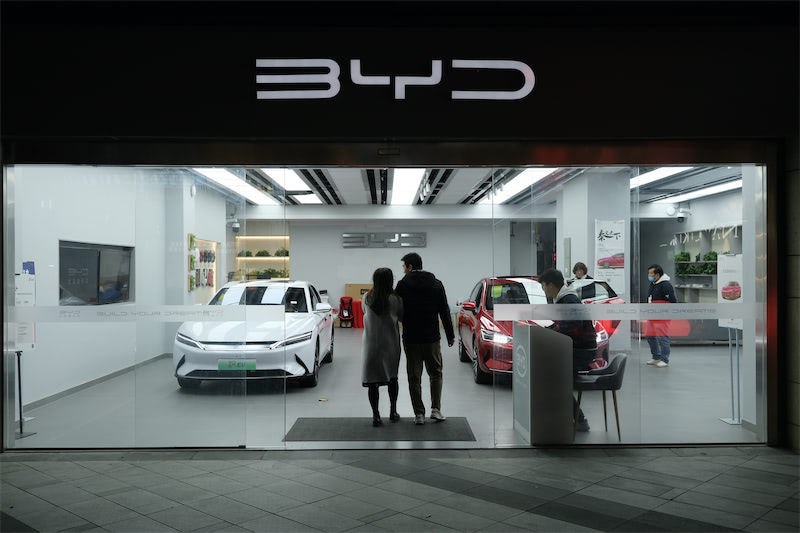
At the same time, a reporter from Science and Technology Innovation Board Daily found that from January to September 2021, Ningde era and BYD accounted for 43.79% and 33.33% of revenue respectively. In other words, from January to September in 2021, Ningde Times, the top two major customers of Hubei Wanrun, and BYD contributed 74.12% of revenue.
In addition, during the reporting period, there were both procurement and sales in the era of Hubei Wanrun and Ningde. Among them, due to the layout of lithium carbonate raw materials market in Ningde era, Hubei Wanrun purchased lithium carbonate raw materials from Ningde era for its own production.
"if, in the future, major customers reduce their purchases from the company due to unfavorable operation or adjusting the scope of suppliers, or there is fierce competition, the production capacity can not meet the downstream demand, resulting in the loss of major customers, will have a negative impact on the company's continued growth and profitability." Hubei Wanrun said.
From the perspective of the company's equity structure, Liu Shiqi and Li Fei together hold 43.90% of the shares of the company, and they are the controlling shareholders and joint actual controllers of the company. In addition, the prospectus shows that Gao Wenjing, secretary of the board of directors, earns 612800 yuan in pre-tax salary in 2020, which is higher than that of chairman Liu Shiqi (439200 yuan) and director Li Fei (563800 yuan).
![[Сводка утреннего совещания SMM по кобальту и литию] Литиевые химикаты консолидируются и расходятся, борьба спроса и предложения в производственной цепочке обостряется](https://imgqn.smm.cn/usercenter/tKgKv20251217171725.png)
![[SMM Обзор утреннего совещания по кобальту] Спрос в пиковый сезон не оправдывает ожиданий, конкуренция в производственной цепочке продолжает усиливаться](https://imgqn.smm.cn/usercenter/eGQFu20251217171723.jpeg)