SMM News: recently, the Ministry of Industry and Information Technology in the official website released the 324th batch of "Road Motor vehicle production Enterprises and products notice." The catalogue of recommended models for the Promotion and Application of New Energy vehicles (the ninth batch of 2019) was released in this announcement, including 240 models from 86 enterprises.
Among them, there are 193 models of pure electric products in 77 enterprises, 21 models in 11 enterprises with plug-in hybrid power products, and 26 models in 11 enterprises in fuel cell products.
According to the interpretation of the subsidy policy issued by the Ministry of Finance in 2019, in view of the fact that some places link non-subsidy measures such as unlimited traffic restrictions, free purchases and licensing facilities to the recommended catalogue, starting from 2019, the new policy stipulates that products that meet the requirements of the automobile product announcement but do not meet the technical threshold for subsidies shall be included in the recommended catalogue.
In the ninth batch of recommended catalogues, 191 models meet the technical requirements of products subsidized by the State in 2019, 30 models meet the technical requirements of products subsidized by the State in 2018, and a total of 19 new energy models are available.
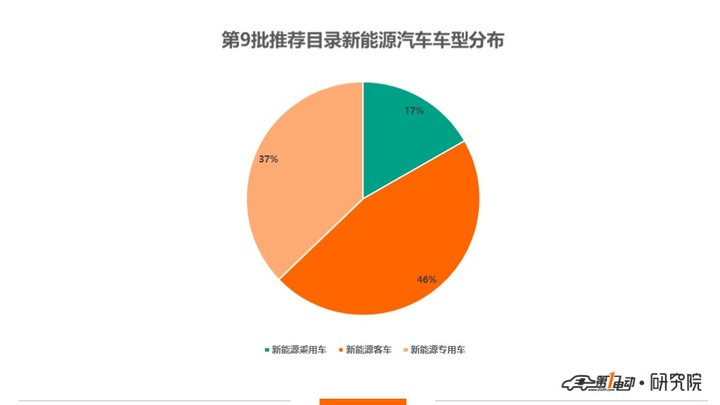
In order to count the subsidies enjoyed by this batch of new energy buses, this paper only analyzes the models that meet the technical requirements of state subsidies in 2019.
Among the 191 models that meet the technical requirements of subsidies in 2019, 89 new energy buses, 70 new energy special vehicles and 32 new energy passenger vehicles are selected. According to the selected number, the number of new energy buses is basically the same as that of the previous batch.
In terms of power type, 89 new energy buses are all pure electric models, and there are still no plug-in hybrid buses and fuel cell buses.
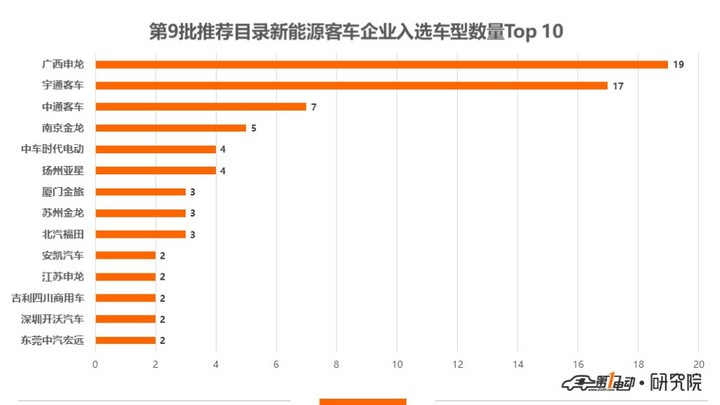
According to the number of selected models, 89 new energy bus models come from 28 bus manufacturers, which is less than the number of enterprises participating in the above batch.
Guangxi Shenlong is firmly at the top of the list, with 19 models declared in this batch; the number of Yutong passenger cars declared is also as high as 17, ranking second; except for Guangxi Shenlong and Yutong buses, the number of other selected models is less than 10.
Overall, in addition to the list of enterprises, the other 14 new energy bus enterprises selected only one model.
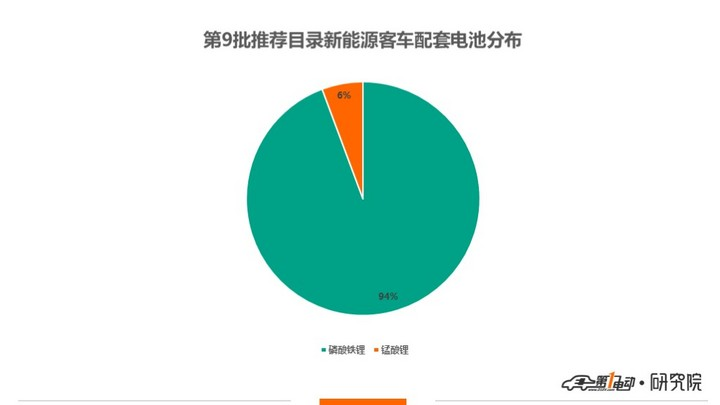
According to the type of power battery, lithium iron phosphate battery still occupies the mainstream in the field of new energy bus. In this batch recommended catalogue, the number of bus models with lithium iron phosphate battery accounts for 94%, and the rest are equipped with lithium manganate battery, from Guangxi Shenlong and BAIC Futian.
From the point of view of the type of motor, there is no dispute that this batch of new energy bus models are equipped with permanent magnet synchronous motor (PMSM). Among them, six models from Guangxi Shenlong and Jiangsu Shenlong are equipped with three-phase permanent magnet synchronous motor.
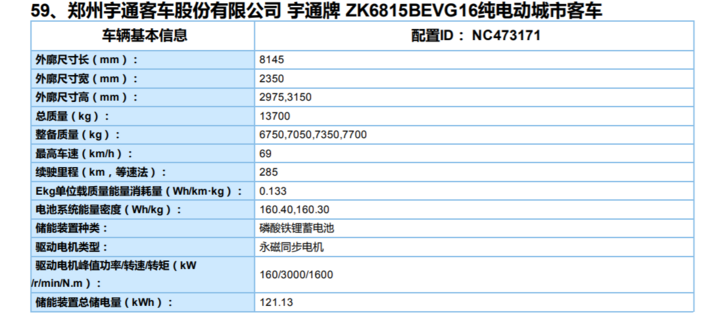
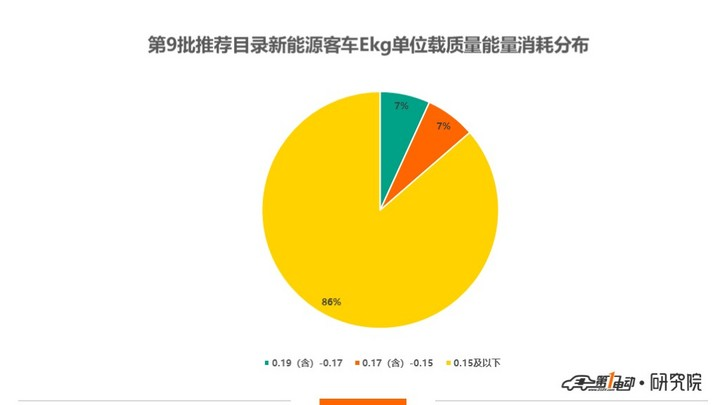
On 25 June, the subsidy transition period ended, and the 2019 subsidy policy, which was more than 50% retreating in 2018, was formally implemented. In terms of new energy buses, the 2019 subsidy policy mainly focuses on unit mass energy consumption (Ekg level), fast filling rate, fuel saving rate and captain range.
All 89 pure electric buses in this batch are non-fast charging buses. From the point of view of its unit load mass energy consumption, that is, the Ekg level, 85% of the model Ekg level is below 0.15Wh/ km kg, the subsidy coefficient can be doubled; the Ekg level of 6 passenger cars is between 0.15-0.17 (inclusive), the subsidy coefficient can be 0.9 times; the other seven models can get 0.8 times subsidy coefficient. The overall level has improved.
In this batch, one model of Yutong bus is ZK6815BEVG16 pure electric city bus Ekg is only 0.133Wh/ km kg.
For non-fast-charging pure electric buses, the subsidy policy and technology in 2019 requires a continuous driving mileage of not less than 200 km (constant speed method).
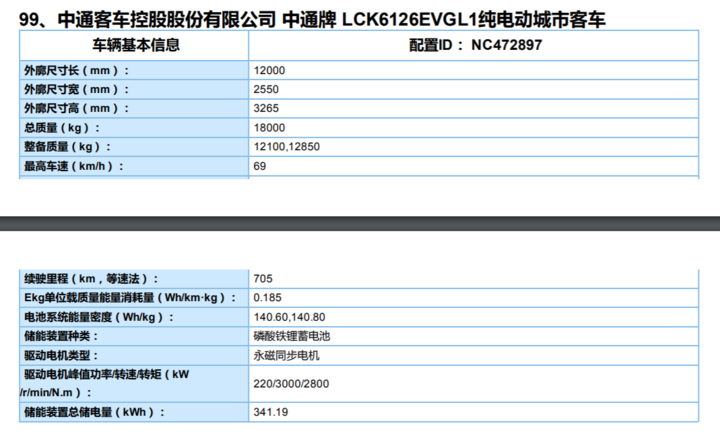
This batch of 89 non-fast charging pure electric bus models, can meet this standard. Among them, one model of Tong bus is LCK6126EVGL1 pure electric city bus, which has the highest mileage by constant speed method, up to 705km.
In addition to the Ekg level and range, the 2019 subsidy policy also mentions that the energy density of the battery system for non-fast charging electric buses is not lower than 135Wh/kg.
The energy density of the battery system of 89 non-fast charging electric buses in this batch is up to the standard. Among them, the battery system of four models from Yutong bus has the highest energy density, all of which are 161.29Wh/kg.
To sum up, of the 89 pure electric buses that meet the technical requirements for subsidies in 2019, 76 can get a double adjustment coefficient, and 85 can get the maximum financial subsidy limit for bicycles in the driver's range.
"Click to sign up for the Lithium Power Industry chain Summit
Scan QR code and apply to join SMM metal exchange group, please indicate company + name + main business
![Сокращение объёма: вольфрамитовые концентраты подешевели почти на 5% менее чем за месяц. Что дальше после падения ниже отметки в 400 000 юаней? [Комментарий SMM]](https://imgqn.smm.cn/usercenter/NPpAM20251217171723.jpeg)
![Цены на магниевые слитки стабильны и консолидируются; предпраздничное пополнение запасов завершается, торги ослабевают [Спотовый отчёт SMM по магниевым слиткам]](https://imgqn.smm.cn/usercenter/LYGyd20251217171725.jpg)