[SMM analysis] the physical volume of scrap copper imports has dropped sharply, but whether the subsequent consumption can be improved after the increase in the amount of metal is the key.

Опубликовано: Jun 24, 2019 16:34 (GMT+8)
Imports of scrap copper in the January-May period were 680000 tons, down 27.9 per cent from 943000 tons in the same period last year. Behind the sharp decline in physical volume is the rise in the amount of metal brought about by the rise in the taste of imported scrap copper. According to rough estimates, imports of scrap copper rose about 20 per cent in May from a year earlier. The cumulative amount of copper scrap imported from January to May increased by about 50,000 tons over the same period last year. From July 1, scrap copper will only be imported by enterprises with import approval. Due to the import effect of snatching imports in April and May, the import volume of scrap copper is relatively sufficient, and the better import price in the past two months has also given a certain opportunity to import scrap copper.

SMM6, 24 Feb: China's scrap metal imports rose 8.6 per cent to 380000 tons in May from a month earlier, according to data released by the General Administration of Customs on Sunday. But China's imports of scrap metal from January to May were 1.46 million tons, down 40.7 per cent from a year earlier.

China imported 170000 tons of scrap copper in May, the same as in April, but fell 16.7 per cent from a year earlier.

Overall, imports of scrap copper from January to May were 680000 tons, down 27.9 per cent from 943000 tons in the same period last year.
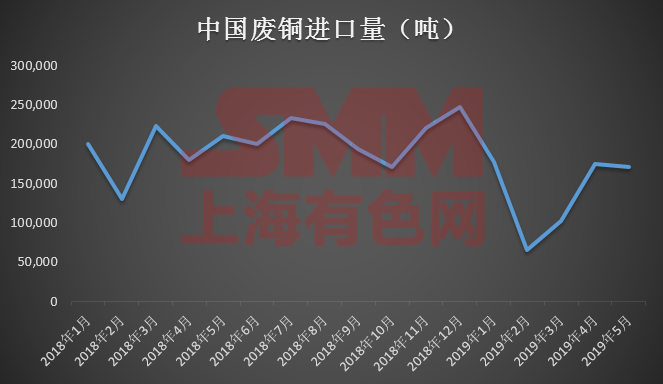
"look at the historical data of China's scrap copper imports from SMM.

Behind the sharp decline in physical volume is the rise in the amount of metal brought about by the rise in the taste of imported scrap copper. According to rough estimates, imports of scrap copper rose about 20 per cent in May from a year earlier. The cumulative amount of copper scrap imported from January to May increased by about 50,000 tons over the same period last year. From July 1, scrap copper will only be imported by enterprises with import approval. Due to the import effect of snatching imports in April and May, the import volume of scrap copper is relatively sufficient, and the better import price in the past two months has also given a certain opportunity to import scrap copper. At present, the judgment of the stability of imported scrap copper in the first half of the year can be basically confirmed, and there may even be a slight increase.

The market's biggest focus on scrap copper is on the copper-to-scrap policy, which will be implemented on July 1. With the approach of July 1, the relevant approval information is also gradually released to the market.

On June 20, the website of the solid waste Center published the ninth batch of restricted public notice forms in 2019, which included a list of six categories of scrap copper import approval documents, involving a total of 240429 tons of imported scrap copper approval documents. SMM calculated that the total amount of the approval did not have a great impact on the six categories of scrap copper, and the decline in scrap copper imports was mainly due to the decline in seven categories of scrap copper imports. From this, it is inferred that in the second half of the year, only seven categories of reduction in China will be seen, with a reduction of 60, 000 tons in the third quarter and 131000 tons in the whole year. "correlation Analysis-[SMM interpretation] the first batch of restricted import scrap copper involved a total of 240400 tons

At present, in order to ensure that the relevant waste enterprises can gradually adapt to the operation of the approval system, the amount of copper scrap metal involved in the approval document in the third quarter can still ensure the normal production of the enterprise. However, because the approval documents are issued on a quarterly basis, it is not known what will happen in the fourth quarter, and whether the volume of scrap copper imports will continue to narrow due to the restrictions imposed by the approval documents.

Due to the continuous low price difference of refined copper, the profits of copper scrap enterprises are thin, the amount of copper scrap is reduced, and the consumption of refined copper is supported to a certain extent. There is an adequate supply of imported scrap copper, so at present, more contradictions in the scrap copper market is due to poor consumption, there is no shortage in supply, and more is due to the reduction in the outflow of scrap copper caused by shipowners holding goods and cherishing sales after the fall in prices. The prospect of demand depends on the issuance of subsequent domestic approvals.

Scan QR code and apply to join SMM metal exchange group, please indicate company + name + main business

 

Заявление об источниках данных: За исключением общедоступной информации, все остальные данные обрабатываются SMM на основе общедоступной информации, рыночного общения и с опорой на внутреннюю базу данных и модели SMM. Они приведены только для справки и не являются рекомендациями для принятия решений.

По любым вопросам или для получения дополнительной информации, пожалуйста, свяжитесь: lemonzhao@smm.cn
Для получения дополнительной информации о доступе к нашим исследовательским отчётам обращайтесь:service.en@smm.cn
Связанные новости
Перу ожидает рост производства меди на 1 млн тонн в год в течение пяти-шести лет
50 минут назад
Перу ожидает рост производства меди на 1 млн тонн в год в течение пяти-шести лет
Читать далее
Перу ожидает рост производства меди на 1 млн тонн в год в течение пяти-шести лет
Министр энергетики и горнорудной промышленности Перу Гильермо Шинно заявил, что страна рассчитывает увеличить годовое производство меди примерно на 1 млн тонн в течение пяти-шести лет за счет новых горнодобывающих проектов. Третий по величине производитель меди в мире ожидает, что в 2026 году добыча составит 2,5–2,7 млн тонн, что практически не изменится по сравнению с 2023 годом, поскольку снижение содержания руды и повторяющиеся социальные конфликты оказывают давление на предложение. Недавно избранное правительство стремится преодолеть эту стагнацию за счет сокращения бюрократических барьеров; за два месяца с момента вступления в должность горнодобывающие компании активизировали взаимодействие с министерством. Шинно сообщил, что чиновники выявили 27 разрешений, которые можно упразднить из примерно 100 требований в горнодобывающем секторе, не снижая экологических стандартов.
50 минут назад
Индийские производители меди добиваются снижения налога на товары и услуги, поскольку рекордные цены увеличивают нагрузку на оборотный капитал
6 часов назад
Индийские производители меди добиваются снижения налога на товары и услуги, поскольку рекордные цены увеличивают нагрузку на оборотный капитал
Читать далее
Индийские производители меди добиваются снижения налога на товары и услуги, поскольку рекордные цены увеличивают нагрузку на оборотный капитал
Индийские производители меди добиваются снижения НДС с 18% до 5%, ссылаясь на рост потребности в оборотном капитале на фоне рекордно высоких цен на медь.
6 часов назад
Дефицит серной кислоты становится сдерживающим фактором для роста производства меди в Замбии
9 часов назад
Дефицит серной кислоты становится сдерживающим фактором для роста производства меди в Замбии
Читать далее
Дефицит серной кислоты становится сдерживающим фактором для роста производства меди в Замбии
Дефицит серной кислоты в Замбии становится всё более серьёзным ограничением для производства и рафинирования меди. Jubilee Metals сообщила о росте затрат на кислоту более чем на 200% в четвёртом квартале 2026 финансового года, при этом выпуск катодов на Sable снизился до 250 тонн с 361 тонны в третьем квартале. Правительственные данные также показали, что мелкомасштабное производство меди сократилось на 35,2% в годовом исчислении в первом полугодии 2026 года, что подчёркивает уязвимость сектора перед ограниченной доступностью кислоты и ростом затрат на переработку.
9 часов назад