SHANGHAI, Jul 8 (SMM) - This is a roundup of China's metals weekly inventory as of July 8.
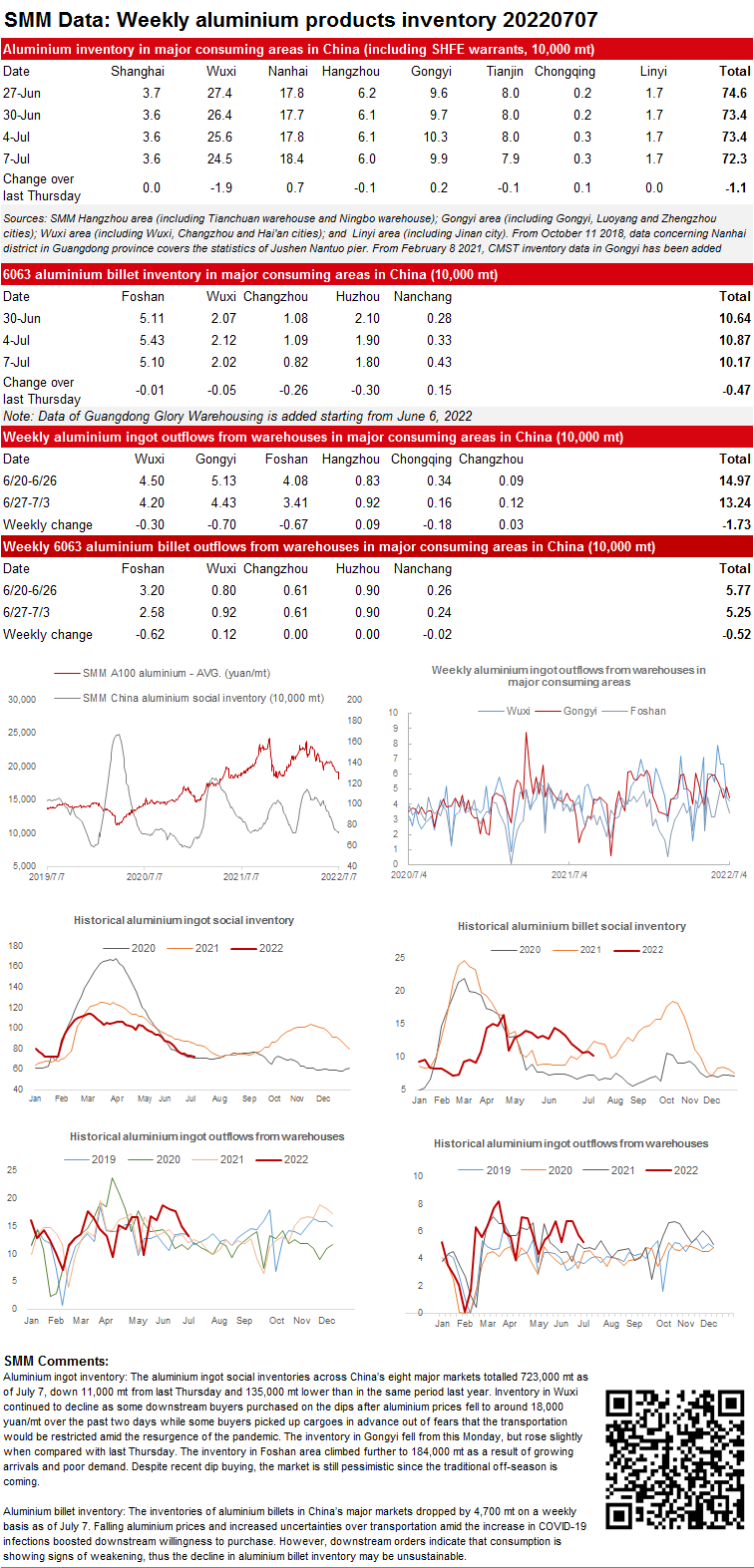
SMM Aluminium Ingot and Billet Inventory Data as of July 7
Aluminium ingot inventory: The aluminium ingot social inventories across China’s eight major markets totalled 723,000 mt as of July 7, down 11,000 mt from last Thursday and 135,000 mt lower than in the same period last year. Inventory in Wuxi continued to decline as some downstream buyers purchased on the dips after aluminium prices fell to around 18,000 yuan/mt over the past two days while some buyers picked up cargoes in advance out of fears that the transportation would be restricted amid the resurgence of the pandemic. The inventory in Gongyi fell from this Monday, but rose slightly when compared with last Thursday. The inventory in Foshan area climbed further to 184,000 mt as a result of growing arrivals and poor demand. Despite recent dip buying, the market is still pessimistic since the traditional off-season is coming.
Aluminium billet inventory: The inventories of aluminium billets in China’s major markets dropped by 4,700 mt on a weekly basis as of July 7. Falling aluminium prices and increased uncertainties over transportation amid the increase in COVID-19 infections boosted downstream willingness to purchase. However, downstream orders indicate that consumption is showing signs of weakening, thus the decline in aluminium billet inventory may be unsustainable.
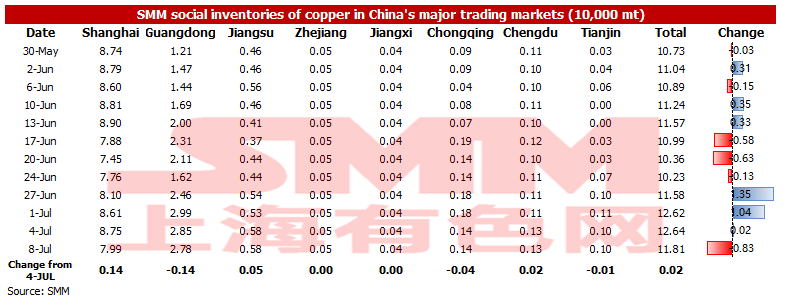
Copper Inventory in Major Chinese Markets Decreased by 8,300 mt from Monday
As of Friday July 8, SMM copper inventory across major Chinese markets decreased by 8,300 mt from Monday to 118,100 mt, down by 8,100 mt from last Friday. Compared with Monday's data, the inventories in most regions of China remained almost unchanged, only the inventory in Shanghai and Guangdong decreased. The total inventory dropped by 84,400 mt compared with the same period last year when the inventory was recorded at 202,500 mt. Among them, the inventory in Guangdong dropped by 56,000 mt, the inventory in Jiangsu dipped by 11,900 mt, and the inventory in Shanghai fell by 11,500 mt. There are several reasons for the decrease in inventory this week. 1. Before the mid-year, smelters actively shipped goods to clear their inventory. In early July, the inventory was not high and the shipments decreased. This week, the arrival in Shanghai and Guangdong fell sharply. 2. Downstream restocked properly after copper prices dropped sharply.
In detail, the inventory in Shanghai decreased by7,600 mt to 79,900 mt, and the inventory in Guangdong fell by 700 mt to 27,800 mt.
Looking forward, shipments from smelters may increase before the delivery, but the customs clearance of imported copper will decrease when the import window is closed, so the total supply will rise slightly next week. Whether copper prices can stand firm next week is of utmost concern. Downstream is willing to restock substantially only when the fluctuation of copper prices decreases. It is expected that the weekly inventory next week will increase slightly.
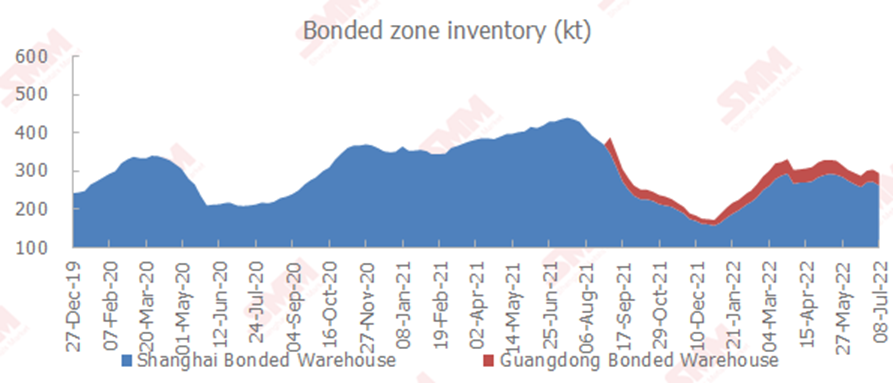
Copper Inventory in China Bonded Zone Dropped by 7,600 mt on Week
Copper inventories in domestic bonded zones decreased by 7,600 mt from last Friday July 1 to 286,400 mt as of July 8, according to SMM survey. The inventory in Shanghai bonded zone decreased by 6,000 mt to 256,000 mt, while that in Guangdong fell by 1,600 mt to 30,400 mt. When the import window opened in the past two weeks, copper cathode stored in the bonded warehouses was moved to the customs one after another, while the arrival in bonded warehouses was few, resulting in the decline in inventory. However, this week, the import window was closed, and the imported copper trading became slack. It is expected that the bonded zone inventory will rise soon.
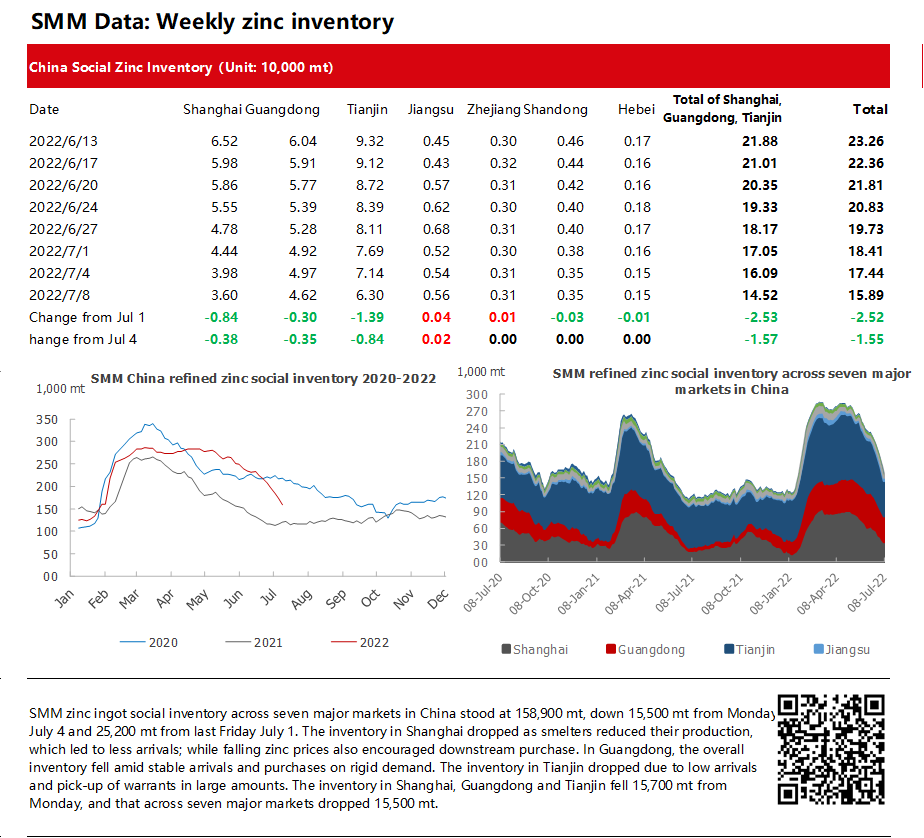
SMM Zinc Ingot Social Inventory down 15,500 mt from Monday
SMM zinc ingot social inventory across seven major markets in China stood at 158,900 mt, down 15,500 mt from Monday July 4 and 25,200 mt from last Friday July 1. The inventory in Shanghai dropped as smelters reduced their production, which led to less arrivals; while falling zinc prices also encouraged downstream purchase. In Guangdong, the overall inventory fell amid stable arrivals and purchases on rigid demand. The inventory in Tianjin dropped due to low arrivals and pick-up of warrants in large amounts. The inventory in Shanghai, Guangdong and Tianjin fell 15,700 mt from Monday, and that across seven major markets dropped 15,500 mt.
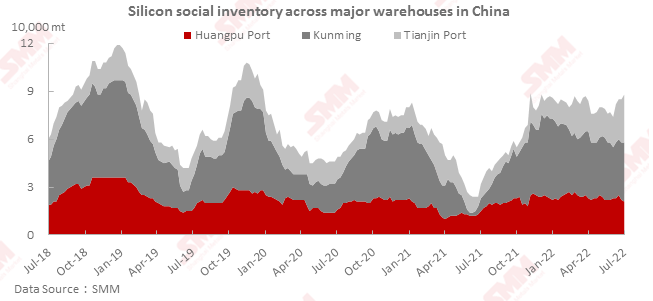
Silicon Metal Social Inventory Added 3,000 mt on Week
SMM silicon metal inventory across three markets in China totalled 88,000 mt this Friday July 8, up 3,000 mt from a week ago. The inventory at Huangpu Port fell slightly amid concentrated delivery of contracts. In Kunming, the inventory rose amid more arrivals than shipments leaving the social warehouses. The inventory at Tianjin port rose as whole with traders being the main goods holders.
The social inventory is likely to remain high next week as silicon metal operating rates are high in the wet season.

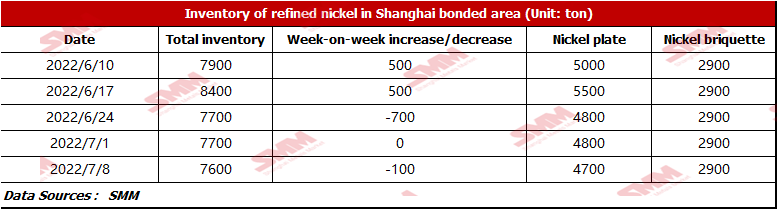
Bonded Zone Inventory of Nickel Decreased Slightly as the Price Ratio Narrowed
The price ratio has been narrowed recently due to the falling overseas nickel prices and the rising premiums of US dollars. According to SMM research, the bonded zone inventory stood at 7,600 mt this week. The inventory of nickel briquette was 2,900 mt, and that of nickel plate was 4,700 mt, 100 mt lower than last week. The slight decrease in inventory was contributed by the poor downstream demand and purchases. Besides, the arrivals at ports were less than expected because of the poor price ratio.
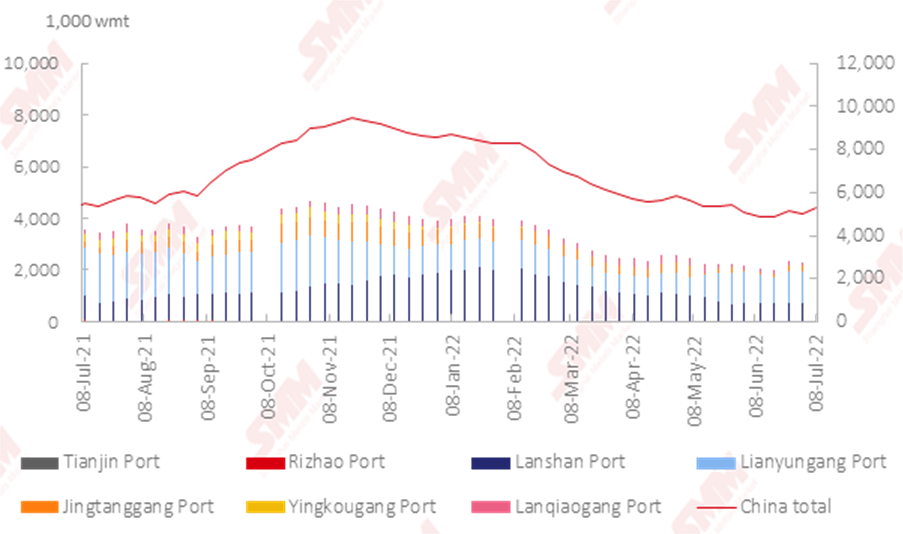
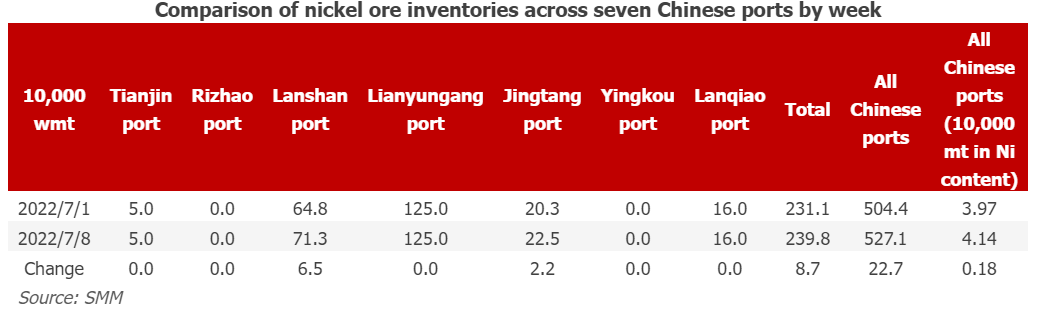
Nickel Ore Inventories at Chinese Ports Rose by 227,000 wmt WoW
As of July 8, port inventories of nickel ore in China increased by 227,000 wmt to 5.271 million wmt compared with the previous week. Total Ni content stood at 41,000 mt. The total inventory at seven major ports across China stood at 2.398 million wmt, 87,000 wmt higher than last week. Poor demand from stainless steel and the increase in arrivals of Indonesian NPI forced more NPI plants to cut their production in June and July, which further led to a decline in nickel ore demand. However, the poor weather condition earlier delayed the shipments of imported nickel ore, and the arrival has not increased significantly for now. NPI output may decline further with the implementation of the stainless steel production cut in July, and the inventory of nickel ore will begin to rise slowly.