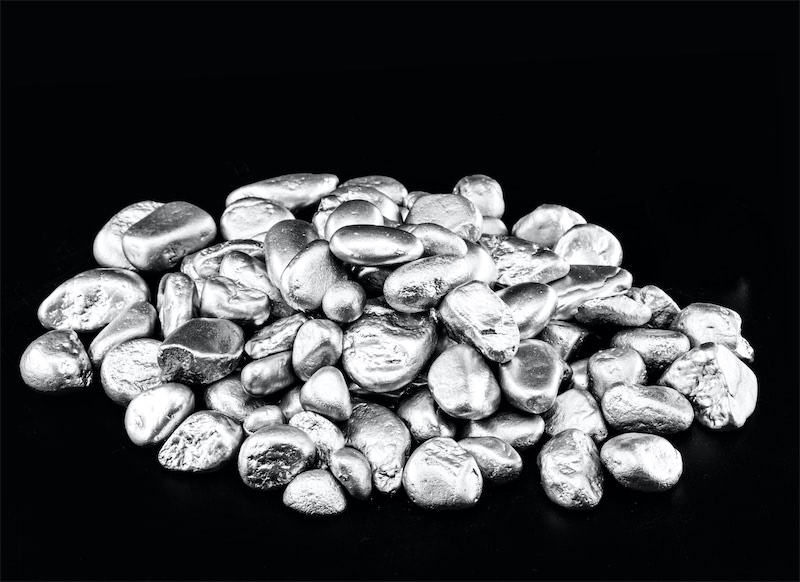
Three months ago, honeycomb energy cobalt-free materials were officially mass-produced, attracting global attention. As of early July, Honeycomb has mass-produced about 150 tons of cobalt-free materials, of which nearly 50 tons have been used in the company's cobalt-free battery manufacturing. In August this year, the honeycomb cobalt-free battery will be loaded with one of the models of domestic customers to make its global debut, and is expected to go on sale in the fourth quarter of this year.
A few days ago, at the "2021 China International Lithium Industry Conference" held in Shanghai, Wang Zhikun, executive vice president of Honeycomb Energy, and Li Zikun, general manager of the materials department, disclosed the latest information about the mass production of cobalt-free honeycomb batteries; at the same time, they extensively communicated with the media on the topics of honeycomb energy battery external supply, capacity layout, equity opening, industry pattern and so on.
1. The cobalt-free energy density is better than that of 811.
According to Li Zixing, the Changzhou plant of Honeycomb Energy has planned an annual production capacity of 20, 000 tons of cobalt-free materials. at present, the first phase of the 5000-ton production line has been completed and put into production, and the second phase of the 5000-ton production line will be completed by the end of this year. The third phase of the 10000-ton production capacity is scheduled to be completed in July 2022.
The first generation of cobalt-free material products introduced by the company is nickel 75 material, which is layered binary lithium nickel manganate, and the current ternary lithium manganate is a kind of structure, but without cobalt, it has changed from ternary to binary. The cobalt-free material uses single crystallization and high voltage technology, and the scene is 4.3V platform, so the capacity will be higher. Li Zixing said, for example, that the energy density of the company's 1.5x MEB battery can reach 245Whhand kg, which is very close to the energy density of NCM811 batteries 250Wh/kg and 260Wh/kg.
Not only that, the safety performance of the cobalt-free material is much better than that of NCM811 batteries. "We also fully passed the 150C hot box, as well as overcharge, acupuncture, short circuit and other tests, which can meet national standards," Li explained.
Li Zixing pointed out that manganese actually plays an important role in the stability of batteries, especially the structure of tetravalent manganese is very stable and the valence state remains unchanged during charge and discharge. Honeycomb energy to do cobalt-free battery, in fact, manganese is used to replace cobalt, so that even in the high-voltage platform, its performance will be very stable.
In addition, the cobalt-free materials of honeycomb further enhance the structural stability of the materials by means of doping and coating. The single crystal technology can achieve 3-5 micron single crystal particles, contact less electrolyte than polycrystals, thus reducing the negative reaction of the electrolyte.
In terms of life, this cobalt-free material is much better than 1500 cycles at room temperature. "our B sample can charge and discharge 2500 times at 1C, which may be higher in practical use. At the same time, it also shows that our structure is very stable, otherwise we would not have supported such a long number of cycles. " Li Ziqi added.
It has been revealed that the next generation of cobalt-free materials of Honeycomb Energy will have an energy density of 250 Whhand kg, an increase of at least 5% over the current capacity. The capacity of the material will be increased to 190mAh/g from the current 180m Ahram g. If the energy density increases further in the future, it will be made into high nickel, ultra-high nickel, 8 series, 9 series and so on.
Li Ziyi said that the company's first generation of cobalt-free batteries are mainly aimed at the 500-800 km passenger car market, including A-class cars and B-class cars. At present, many mainstream automobile manufacturers in the world are discussing the cooperation of cobalt-free batteries with Honeycomb. Especially European customers, "they especially like to use cobalt-free batteries because they are environmentally friendly in the battery production process."
two。 It has taken 25 fixed points, and the production capacity planning has exceeded the 200GWh.
At present, the development of the global new energy vehicle industry continues to be high, and the whole industry is full of confidence in the future. Wang Zhikun said that since the second half of last year, the demand for cars for consumers has increased rapidly, and automakers have big plans for future sales. According to Great Wall's 2025 plan, the target is to sell 4 million vehicles a year, 80 per cent of which are new energy vehicles.
From the perspective of power batteries, Wang Zhikun believes that the industry will enter the TWh era by 2024, and the demand for power batteries is expected to reach 7000GWh by 2030 under stringent carbon emission policies. He pointed out that for the beehive, the current contradiction is the contradiction between the continuous increase in customer orders and the company's lack of effective production capacity.
"in addition to Great Wall Motor, such as PSA, Geely, Dongfeng, Zero run, Hechong and so on, we have got 25 sales targets for car companies. As of July this year, 10 vehicles loaded with honeycomb energy batteries have been successfully announced, and under the support of orders, we have arranged to expand production capacity in an orderly manner. " Wang Zhikun further explained.
It has been revealed that Honeycomb plans to surpass 200GWh in global production capacity by 2025. Among them, domestic production capacity is mainly distributed in three regions, according to the "one, three, two" strategy, focusing on the three major economic circles on the front line of the Yangtze River, including the Yangtze River Delta, the middle reaches of the Yangtze River and the Chengdu-Chongqing region, which will form about 200GWh domestic production capacity by 2025.
Among them, the largest base is in the Yangtze River Delta, with more than 109GWhs planned in Jiangsu, Zhejiang and Anhui, and 60GWhs in the middle reaches of the Yangtze River. Considering that there is a large amount of green power in the Chengdu-Chongqing economic circle, 40GWh will be arranged there. These bases and beehives will be released in an orderly manner according to the needs of customers.
According to reports, part of the base in Maanshan has been built, and the company has acquired a battery factory there, on which a new plant will be built. Nanjing base also acquired a battery factory, which is similar to the model of Maanshan. Construction of the newly built factory in Suining, Sichuan Province, started in March this year, and the plant in Huzhou is scheduled to start construction in August this year, and these factories can be completed and put into production in the second half of next year.
"at present, power batteries are very scarce, and the whole industry is in short supply. As long as they can be made, they can be sold." Wang Zhikun said excitedly.
3. The external supply of the battery is accelerated and the equity is further opened up.
At the same time of capacity expansion, Honeycomb Energy is also speeding up the process of battery external supply and equity opening.
In the past, Honeycomb's orders mainly came from Great Wall cars, but the proportion of orders outside the Great Wall will continue to rise in the future. We strive to reduce the order of Great Wall to less than 70% this year and 50% next year, so that Honeycomb will become an independent third-party battery company facing the society in the future. " Wang Zhikun said.
The gradual opening up of equity also makes Honeycomb Energy go faster and more stable. According to Wang Zhikun, Honeycomb Energy has completed two rounds of financing since April last year in less than two years, raising 1 billion yuan in the first round and 3.5 billion yuan in the second round.
In the past, Great Wall Holdings was 100%. If the three rounds of financing are completed, the shareholding proportion of Great Wall will drop to less than 50%, and shareholders from more than 40 societies will come in, of which five or six shareholders will have a state-owned background. in this way, the beehive will become a private + state-owned enterprise. In the future, with more financing and IPO listing, Great Wall's stake will continue to decline. " Wang Zhikun said.
4. The industry pattern of "one super and many strong"
There is no doubt that under the background of the global "double carbon goal" put forward in an all-round way, the electrification of cars will certainly be accelerated in the future. In Wang Zhikun's view, starting from this year, new energy vehicles have really entered a stage of competition, and the former head enterprises and the new enterprises are probably at the same starting line. In the current power battery industry, "the small tender lotus has just revealed the tightly wrapped tip of the leaf", which has a good opportunity for all enterprises.
Wang Zhikun pointed out that the biggest risk faced by power battery enterprises is actually the technical route they have chosen. Honeycomb energy has a comprehensive layout in lithium iron phosphate, ternary, cobalt-free and solid-state batteries, among which cobalt-free batteries are the characteristics of the company. it is also a key development direction of the company in the future.
"if the price of cobalt remains high in the future, the cost advantage of cobalt-free batteries will undoubtedly be revealed. We are mainly affected by the price of nickel, and the cost of manganese can be ignored. In the long run, nickel is very abundant in the world and is not as scarce as cobalt and lithium. " Li Ziqi added.
In terms of manufacturing process, Wang Zhikun said that the honeycomb focuses on the layout of high-speed lamination, the future CTP will become the mainstream, the cell will become bigger and bigger, lamination process is very consistent with this technology trend, will also become the mainstream process in the future. This will ensure that all the company's production lines and equipment will continue to be competitive in the future.
"in the future, the power battery industry will have a" one-super, multi-strong "pattern, which depends on the enterprise's technological leadership, lean customization capability, major customer order support, determination to expand production capacity, and the degree of effective capacity release. Several factors determine the position of the enterprise in the industry." Wang Zhikun made a prediction.
![[SMM Nickel Market Flash] World Bank Says Indonesia’s New Nickel Capacity May Be Curbed by Tight Ore Supply](https://imgqn.smm.cn/usercenter/OjGlE20251217171734.jpg)
![[SMM Nickel Market Flash] World Bank Sees Nickel Prices Rising 12% in 2026 on Tight Supply](https://imgqn.smm.cn/usercenter/PFIti20251217171734.jpg)