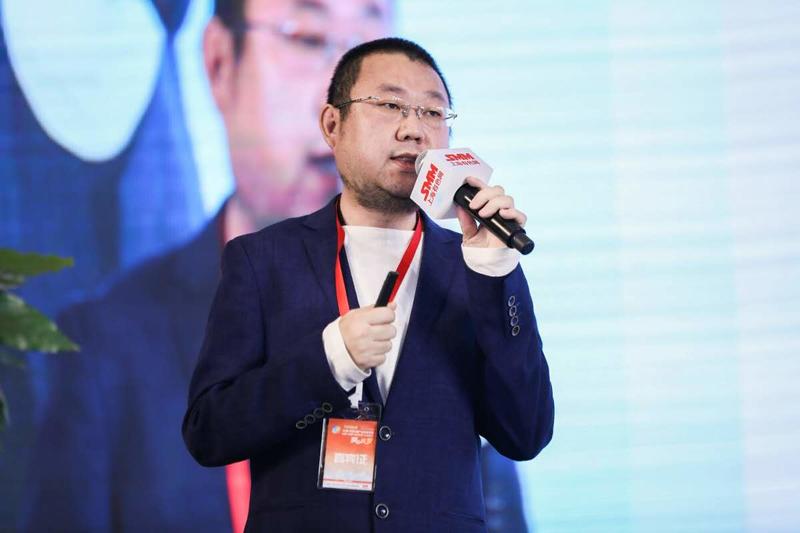
SMM7: at the 2020 China (Yingtan) Copper Industry Summit Forum and the 15th China International Copper Industry chain Summit, Li Xue, chief engineer of Wuxi Youfang Electric Co., Ltd., a member of the China Technical Committee for Wire and Cable Standardization, delivered a speech on the theme "applications and requirements in the field of copper conductor materials and electromagnetic wires". The speech mainly focused on the following four aspects: the amount of copper used in electromagnetic wires, the power planning during the 14th five-year Plan, the requirements for copper used in electromagnetic wires, and the direction of conductors in electromagnetic wires.
Copper for electromagnetic wire
In recent years, electric power construction has entered a new normal of steady growth, and the total annual output of electromagnetic lines is basically maintained at about 3.3 million tons. There are about 300 large-scale enterprises in the country, and 80 enterprises with more than 10,000 tons, with a total output of 2.6 million tons.
East China accounts for 62% of the country's output.
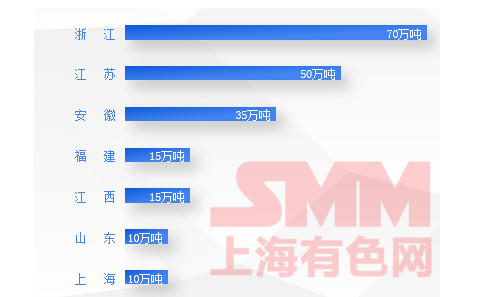
The total output of East China is 2.05 million tons, accounting for 62% of the country's 3.3 million tons. Of these, Zhejiang 700000 tons; Jiangsu 500000 tons; Anhui 350000 tons; Fujian 150000 tons; Jiangxi 150000 tons; Shanghai 100000 tons; Shandong 100000 tons.
South China accounts for 21% of the country's output.
The total output of South China is 700000 tons, accounting for 21 percent of the country's 3.3 million tons.
Central China accounts for 8% of the country's output.
The total output of central China is 250000 tons, accounting for 8% of the country's 3.3 million tons.
Other regions account for 9% of the country's output.
Other regions include: 100000 tons in North China, 60, 000 tons in the northeast, 50, 000 tons in the southwest, 40, 000 tons in the northwest, and 50, 000 tons in total.
Effects of aluminum conductor, alloy conductor and copper-clad aluminum conductor on copper
With the impact of the cost orientation of white goods, the original use of copper materials to use aluminum, such as the representative air-conditioning industry is greatly promoting aluminum tubes instead of copper tubes. At present, aluminum electromagnetic wires have been widely used in distribution transformers and office transformers, while the newly developed wind industry has been affected by cost reduction and has begun to try to use aluminum conductors.
Pure copper conductor is still an irreplaceable main material.
Pure copper conductor is still irreplaceable in electrical industrial products, especially in generators, power transformers, industrial motors and other application fields. Pure copper not only has low resistance, low heating and excellent thermal conductivity, but also its mechanical strength is much higher than that of aluminum, and it is easy to be treated with hardness. In the large power grid system, the anti-short-circuit ability of the power transformer affects the safety of the whole power grid, and the copper conductor is irreplaceable in mechanical properties.
Circular line
Conductor cross-section is round, mainly used in white goods, low-voltage electrical appliances, low-voltage motors, and distribution transformers. Wire specifications are mainly concentrated in the diameter 0.5mm~2.0mm, the temperature level covers 120,130,155,180,200 grades, the product is relatively low-end, large consumption and low added value belongs to the national restricted development industry.
Flat wire (rectangular conductor or special wire)
The conductor has a rectangular cross section and is used in electrical devices with high power density and current density. It mainly applies large-scale power generation equipment such as water power generation, steam power generation (including nuclear power), wind power, photovoltaic inverter system, power transformer, new energy vehicle and so on. Wire insulation structure complex conductor processing of high requirements for materials, relatively high-end products, medium consumption and high added value, not in the national restrictions on the development of the industry.
Output of electromagnetic wire in East China
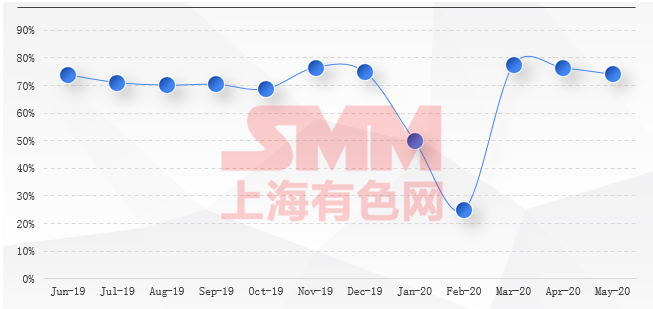
Impact of epidemic situation on operating rate: operating rate of electromagnetic wire enterprises from June 2019 to May 2020
What is the impact of the 14th five-year Plan on electromagnetic lines?
Power balance
There are reverse distribution and structural contradictions between the distribution and demand of energy resources in China. The demand for electricity in the east is larger, but the energy resources are relatively scarce; in the west, the demand for electricity is small, but the energy resources are relatively rich. Geographically, South and East China are the areas with the strongest power demand in China, but their power resources are quite scarce, while the southwest, Xinjiang, Shaanxi, Shanxi, Inner Mongolia, Gansu and other provinces face difficulties in power transmission. In order to solve the problem of "power shortage in the east and electricity in the west", it is necessary to increase the construction of large UHV and UHV power grids, and its supporting large-capacity power generation facilities and UHV transformers have a great pulling effect on the demand for special electromagnetic wires. promote the structural reform and industrial upgrading of China's electromagnetic wire industry as a whole.
New energy consumption
In 2019, the national average utilization rate of wind power is 96.2%, and that of photovoltaic power generation is 97.8%. The utilization rate of water energy in the whole country is 95%. The basic safety and guarantee consumption of nuclear power throughout the country. The demand-side reform has imposed a rigid requirement on the proportion of clean energy in power-consuming enterprises. From the original periodic subsidy policy state of clean energy, it has entered the new normal of market-end demand reform.
Coal power positioning
To reduce the use of fossil fuels, according to the target of developed countries in the world, the proportion of thermal power will be reduced to 50% or less of the total installed capacity. Increase the proportion of large-capacity and high-parameter thermal power units, speed up the construction and transformation of cogeneration units, increase the development of clean coal power generation technology, and increase the proportion of clean power generation units, to achieve varying degrees of application of clean power generation technology in the vast majority of thermal power units, constantly improve the utilization efficiency of thermal power units, reduce pollutants, and achieve standard or ultra-low emissions.
Requirements for copper in production process and application of electromagnetic wire industry
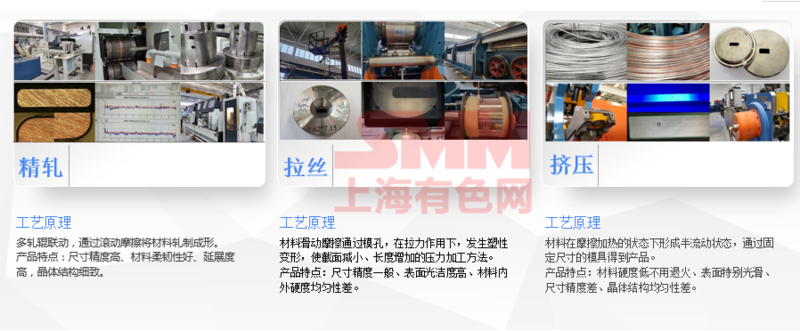
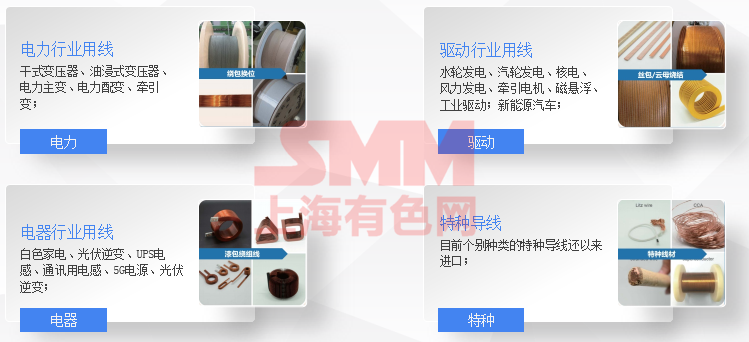
Development trend of conductor Materials in electromagnetic Wire Industry
Replace copper with aluminum
It is a general trend to gradually replace copper in some areas with lower-cost aluminum. It has been widely used in the field of power distribution in Japan. Siemens, ABB of the established power enterprises are the aluminum electromagnetic wire of the power transformer grade to 400kV. At present, the wind power generation of new energy is also doing the leading research and development of aluminum electromagnetic wire due to the impact of cost.
High conductivity
The improvement of high electrical conductivity of copper can not only bring material savings, but also reduce heating and reduce the heat load of electrical products.
High strength copper
With the safety construction of the State Grid and the increasing load of electrical equipment, the anti-short-circuit ability of the equipment and the anti-electromagnetic stress ability of the electromagnetic wire are constantly improving. At present, the current density of power equipment is about 2.0, copper provides the role of bones to resist the electromagnetic stress caused by short circuit. If the yield strength of copper is increased to 350 MPA, the material consumption of the whole electric equipment will be greatly reduced.
High wear resistance of surface
China's high-speed railway is in the forefront of the world, and the sliding contact line used on the high-speed railway puts forward higher requirements for the high-speed wear resistance of the copper surface.
Scan the code to apply to join the SMM industry communication group: