SMM, October 22:
1. October rally loses steam
Driven by earlier industry self-discipline production cuts and some enterprises holding prices firm, PV glass prices ended their low-level run and began to recover. SMM data shows that the mainstream 3.2mm double-layer coating average price gradually rose from 16.6 yuan/m² in early August, stabilized at 17.3 yuan/m² in September, and further climbed to 17.5 yuan/m² in mid-October, a cumulative increase of about 5.4%, or roughly 0.9 yuan/m², from early August. Over the same period, the 2.0mm double-layer coating average price rose from 10.15 yuan/m² to 11.4 yuan/m², a cumulative gain of about 12.3%, or roughly 1.25 yuan/m². However, after entering October, the upward momentum for both specifications slowed, with single-month gains narrowing to just over 1%, and prices gradually entered a phase of consolidation at highs.
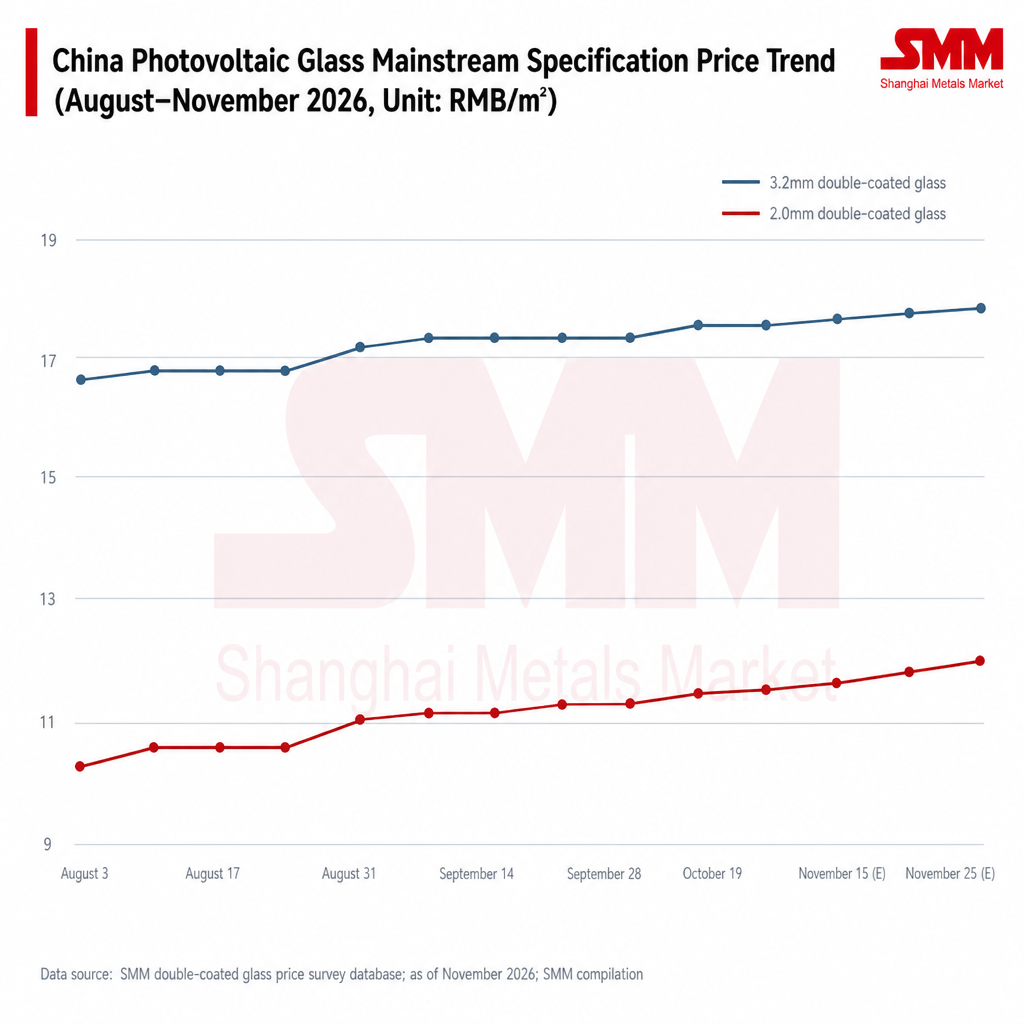
It is worth noting that although glass prices have recovered significantly, most enterprises have yet to fully reach their own all-in cost lines, and downside is equally limited. Prices are exhibiting a narrow-range pattern characterized by "supply providing the floor, demand setting the ceiling."
2. Inventories decline for consecutive months, but levels remain high
The sustainability of the price increase is directly tied to inventory-side performance.
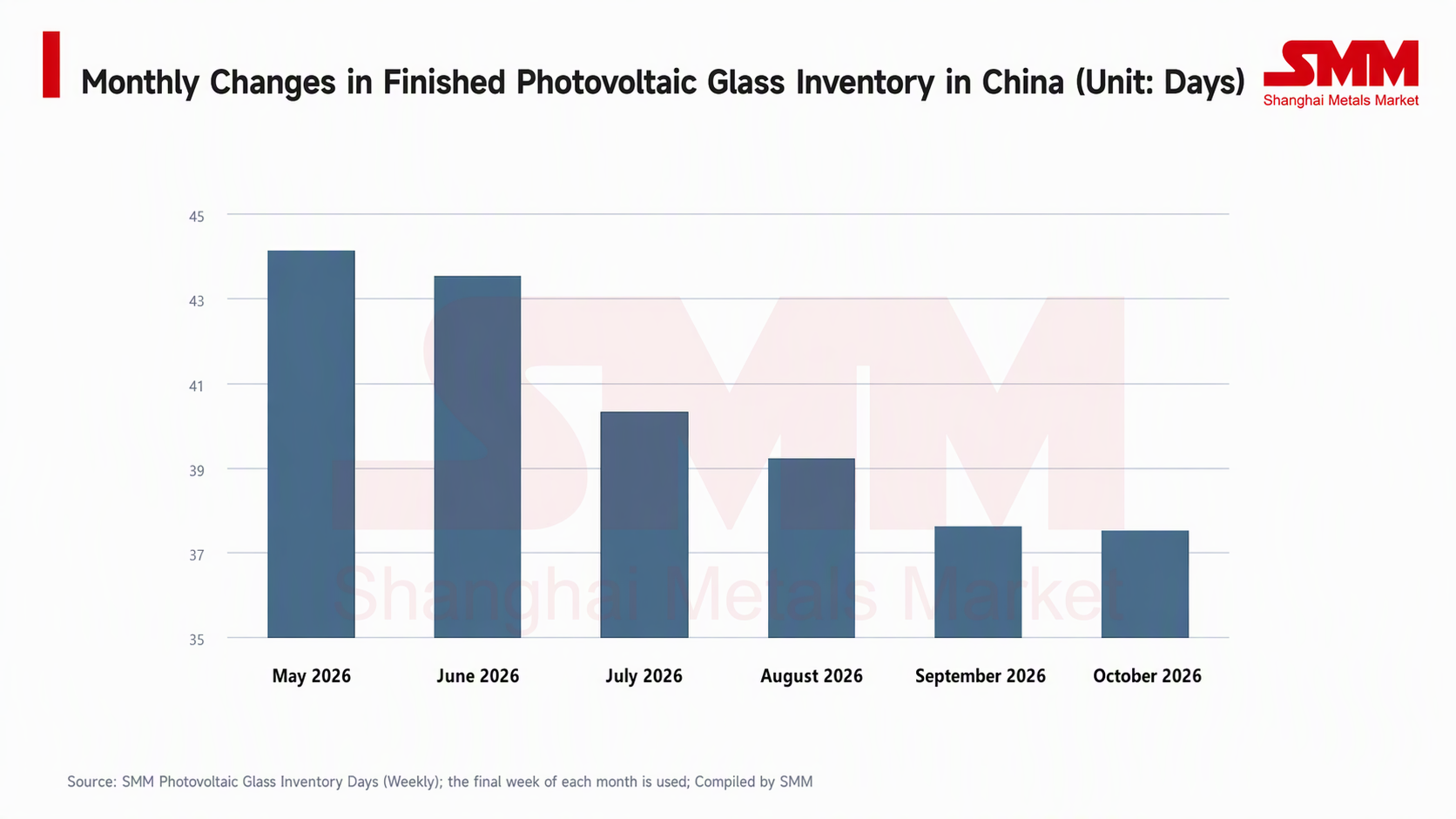
Since the mid-year highs, PV glass finished product inventories have been on an overall downward trajectory, with a clear destocking trend. However, the destocking process has not been smooth: inventories recently saw weekly replenishment at one point, indicating that the matching between downstream absorption and production schedule pace remains volatile. At the same time, while the absolute inventory level has clearly moved down from the year's high, it remains significantly above the historical low range, and the reservoir effect has yet to be eliminated. This means that once demand weakens at the margin, inventory pressure on prices will re-emerge, limiting the upward slope of prices.
3. Supply: production cuts advance further, supply side contracts proactively
The fundamental support for this round of price recovery lies in the substantial contraction on the supply side.
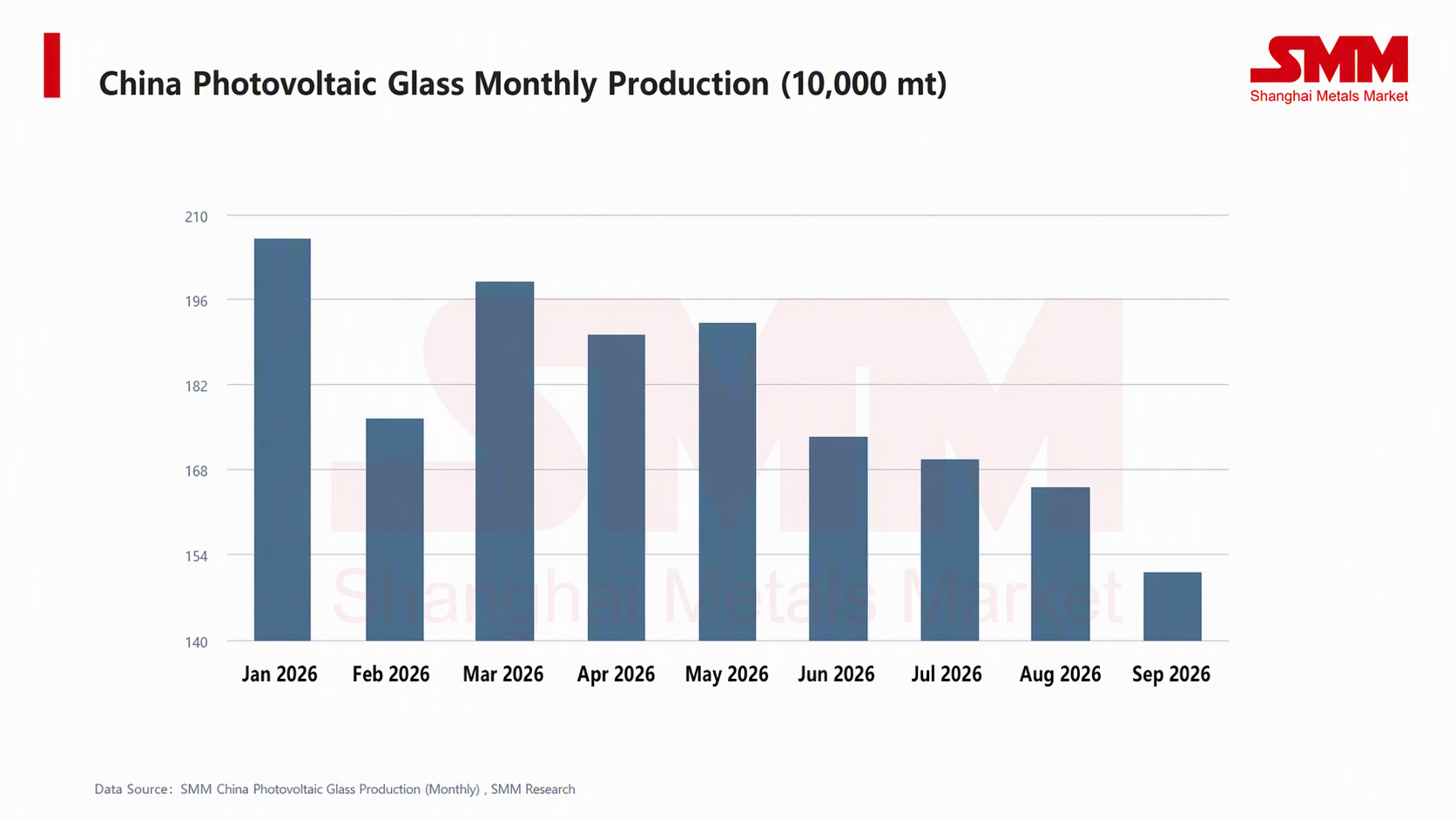
Under the combined pressure of industry self-discipline and losses, PV glass operating capacity and monthly production have continued to decline since the spring highs, with some production lines proactively reducing supply through cold repairs and kiln blockages. Monthly production has fallen MoM for multiple consecutive months, dropping to a year-to-date low in September, while operating capacity contracted in tandem. The supply glut has improved markedly compared with H1. In the absence of an unexpected demand surge, the supply gap created by proactive production cuts is the key factor enabling current prices to hold within the recovery range. In October, top-tier players in China proactively contracted operating capacity again, with production expected to decline further, and SMM understands there are still expectations for continued production cuts ahead.
4. Cost support: soda ash stabilizes at highs, natural gas strengthens notably, glass cost floor rises
The cost structure of PV glass is centered on raw materials (soda ash) and fuel (natural gas/fuel oil), which together account for the bulk of total costs. The recent divergence in raw material and fuel price trends has provided differentiated cost support for glass prices.
On the soda ash front, as the primary alkaline raw material for glass melting, its price has been running steadily at a relatively high level overall since August. SMM data shows that the east China light soda ash average price was around 1,170 yuan/mt in early August, briefly rose to 1,190 yuan/mt in early September, then pulled back and stabilized near 1,175 yuan/mt (late October), with limited range fluctuations and a stable center. Heavy soda ash actually used in glass furnaces is highly correlated with light soda ash, so alkali consumption costs have remained broadly stable overall, neither dragging on glass costs nor providing a relatively stable cost floor.
On the natural gas front, prices have been on a sustained upward trend since August, with the slope steepening notably after entering October, making it the most prominent upward driver on the glass cost side recently. Taking the Hebei LNG market average price as an example, it was around 5,605 yuan/mt in early August, rose to 6,418 yuan/mt at end-September, and climbed further above 7,200 yuan/mt in late October (7,217.5 yuan/mt on October 21), a cumulative increase of about 28.8% from early August, with the October single-month gain alone approaching 12%. Although Hebei LNG largely reflects spot peak-shaving gas prices and differs from the long-term contracted pipeline gas signed by glass enterprises, its trajectory clearly points to tightening gas supply and a rising fuel cost center as the heating season approaches.
Taken together, the stability of soda ash and the strength of natural gas have pushed the cash cost center of PV glass notably higher compared with August: driven by the sharp rise in fuel prices, some enterprises have seen their unit profit elasticity eroded by fuel costs even as production cuts helped repair prices. This also explains from the cost side why glass prices have "equally limited downside" after recovering above the cash cost line—once quotes approach the cost line, the willingness to conduct kiln cold repairs and hold prices firm will strengthen again, with the cost floor in turn propping up the price bottom.
5. Outlook: November prices still expected to push higher, but demand-side constraints warrant caution
Taking both supply and demand into account, SMM believes that PV glass prices in November do not yet have the foundation for a trend-like surge, but there is still room for mild rises or stabilization at highs. The core judgments are as follows:
Supportive factors:First, production cuts continue. Operating capacity and production remain on a downward trajectory, and the supply contraction continues to underpin prices. Second, inventory destocking. Despite the uneven pace, the overall inventory direction remains downward, and if destocking continues, it will ease the ceiling constraint on prices. Third, cost support. Raw material and fuel costs form a clear floor for glass prices.
November price forecast (SMM estimates):The mainstream 3.2mm double-layer coating average price is expected to reach 17.5–18.0 yuan/m², and the 2.0mm double-layer coating average price is expected to reach 11.5–12.0 yuan/m², with enterprise quotes expected to approach 12.5 yuan/m².
Disturbances to watch:On one hand, as prices recover above the cash cost line, the willingness of previously cold-repaired production lines to resume production will strengthen. If production cut execution loosens and operating capacity rebounds, upward momentum will be directly weakened. On the other hand, if module scheduled production falls short of expectations or inventories build up again, price gains will be limited or even face a retreat from highs. In addition, changes in downstream module segment profits and production schedules will also feed back to glass quotes through the demand side.