Africa supplied an estimated 2,133 tonnes of mined Tantalum in 2025, about 85% of the rounded global total published by the US Geological Survey (USGS). The Democratic Republic of Congo (DRC), Rwanda and Nigeria accounted for almost all of that African figure. Yet the continent’s much wider collection of coltan occurrences and Niobium projects has not translated into comparable commercial output. For buyers and investors, the immediate question is how much metal can be traced to an active mine and which proposed developments can actually reach production. [1,15]
Where African Tantalum is mined
The USGS lists six African countries in its 2025 Tantalum mine production estimates. The DRC leads at 1,300 tonnes of contained Tantalum, followed by Rwanda at 400 tonnes and Nigeria at 390 tonnes. Ethiopia, Burundi and Mozambique account for much smaller entries. These country estimates refer to Tantalum contained in mined material. They are not the physical weight of concentrate leaving a mine or buying centre. Namibia sits outside that particular country table, although Andrada Mining reports Tantalum concentrate from its operating Uis mine. [1,6]
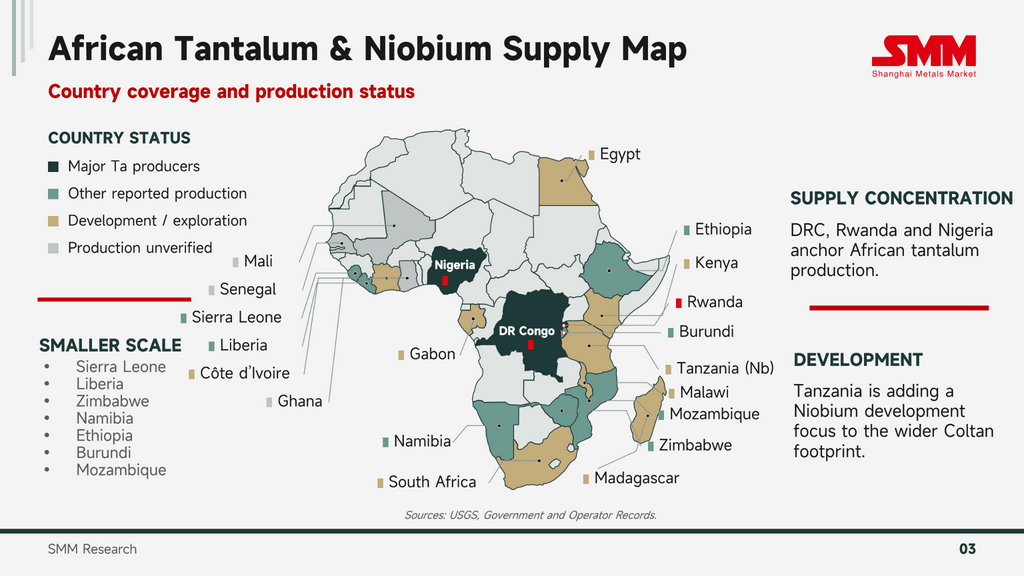
Figure 1. African Tantalum production and Tantalum and Niobium development activity.
Beyond the three largest producers, Tantalum is also reported in smaller quantities across parts of eastern, western and southern Africa. That wider footprint matters because some production passes through small-scale mining and trading networks with limited public mine-level disclosure. Other countries have mineralised ground but no verified 2025 commercial output. Egypt, Madagascar and South Africa are associated with development or exploration, while evidence for current production in Mali, Senegal and Ghana remains unverified. [1,2]
Several of the prospective countries nevertheless have identifiable projects. Malawi’s Kanyika is being developed for Niobium and Tantalum oxides, Tanzania’s Panda Hill is a Niobium project and Kenya has invited expressions of interest for Mrima Hill. In Gabon, Maboumine has returned to feasibility work. Côte d’Ivoire’s Issia is advancing a Tantalum resource and drilling programme. Their place on the same continental map says little about when, or whether, each can deliver saleable material; their technical and commercial stages are different. [9–13]
Production is concentrated but not fully measured
The DRC, Rwanda and Nigeria supplied an estimated 2,090 tonnes of contained Tantalum in 2025, or about 84% of the USGS rounded world total of 2,500 tonnes. The equivalent three-country sum was 2,034 tonnes for 2024. Congo is the largest part of the change, but the USGS says its 2024 DRC figure was revised substantially after a government report. [1]
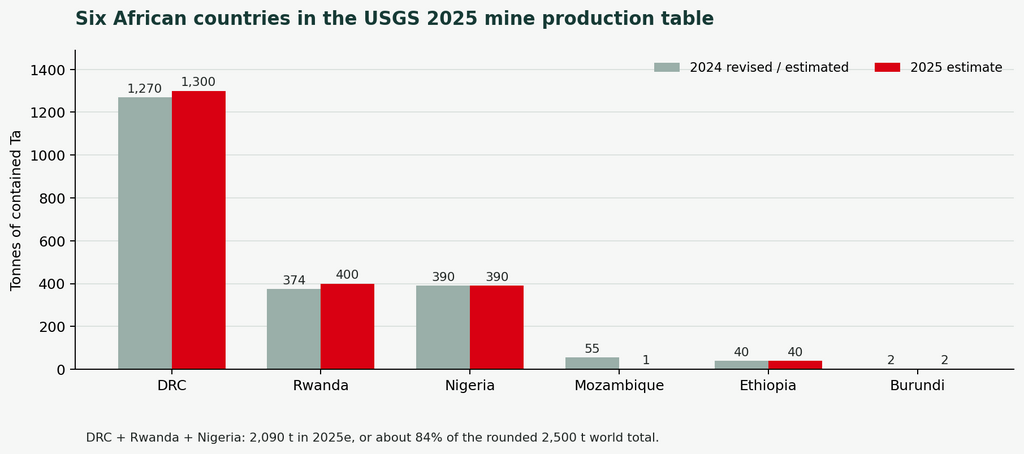
Figure 2. Tantalum mine production in six African countries, 2024 and 2025 estimate.
The smaller-country series also needs care. The USGS lists Mozambique at 55 tonnes in 2024 and one tonne in 2025. That sharp change appears in the published estimate, but the table does not explain whether it reflects a shift in mining activity, reporting coverage or subsequent revisions. Ethiopia remains at 40 tonnes and Burundi at two tonnes in both years. [1]
Congo’s own coltan records describe a different product and a different view of the supply chain. One harmonised Ministry series reports 1,434.17 tonnes of coltan concentrate in 2025. Artisanal miners account for 1,263.15 tonnes, or 88.1% and industrial operations for 171.02 tonnes. Tanganyika, Maniema and Haut-Lomami together account for almost all of the recorded production. North Kivu contributes only 0.42 tonnes in that series despite continuing activity around Rubaya. A separate government report gives a national total of 1,184.978 tonnes. Neither of these concentrate totals can be set directly against the USGS figure of 1,300 tonnes of contained Tantalum. [1,3,4]
The industrial entries give a rare view below the country level. Mining Mineral Resources accounts for 165.20 tonnes of the DRC’s reported industrial concentrate, followed by United Cominiere at 4.82 tonnes and Crown Mining at one tonne. Elsewhere the public record is thinner. Trinity Metals identifies Musha in Rwanda as an operating tin and Tantalum mine and Ntunga as an area with Tantalum byproduct potential, but its project page does not provide an annual Tantalum production figure. Nigeria’s USGS estimate likewise cannot be divided among named mines from the published country total. NEITI audit returns offer another source of declarations, although their commodity definitions and coverage differ from the USGS series. [3,5,8]
Uis in Namibia shows why a company figure can add detail without adding to the national chart. Andrada reported approximately 51 tonnes of Tantalum concentrate in FY2025, compared with about seven tonnes in FY2024. For the first half of FY2026 it reported 27 tonnes of concentrate containing 2,968 kilograms of Tantalum. The company later said it had favoured tin production over Tantalum recovery while tin prices were elevated. Tantalum at Uis is therefore an operating product, but its output depends partly on decisions made for the larger tin business. Its concentrate tonnage and contained metal are different measures. [6,7,16]
The development pipeline has several starting points
The map of African Niobium and Tantalum projects may suggest a large future supply response. Kanyika has an updated bankable feasibility study and early works. Panda Hill has a defined resource and an older feasibility study but still needs key development steps. Mrima Hill is at a government solicitation stage. Maboumine is back in feasibility work, while Issia is defining its resource. Each could matter, but none of these stages is a current production figure. [9–13]
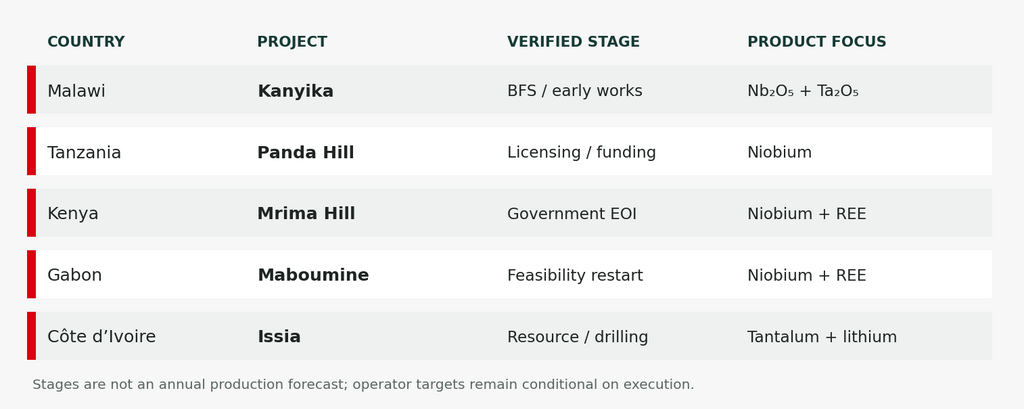
Figure 3. Publicly disclosed stages of five African Tantalum and Niobium projects.
Malawi’s Kanyika provides the clearest quantified development case. Globe Metals & Mining’s 2026 bankable feasibility study targets annual production of 1,502 tonnes of Niobium pentoxide and 65 tonnes of Tantalum pentoxide in an initial phase. At full scale, the targets rise to 3,477 and 156 tonnes respectively. Globe puts initial phase capital at US$139 million and aims for first Niobium oxide in early 2028. These are company targets for oxide products: achieving them still depends on financing, construction and commissioning and the figures should not be compared directly with contained Tantalum in a national mine production table. [9]
Tanzania’s Panda Hill presents a different route. Its operator describes a large Niobium resource and a definitive feasibility study completed in 2016, but the licensing and government framework as well as funding remain important to development. Kenya’s Mrima Hill is earlier: the State Department for Mining sought expressions of interest in April 2026 for a Niobium and rare earths project. An invitation to potential developers establishes interest in the deposit, not a decision to build a mine yet. [10,11]
Gabon and Côte d’Ivoire add two more distinct prospects. Dusk says a 2024 agreement with Gabon restarted studies at Maboumine’s Mabounié deposit. The proposed operation would require a mine, processing facilities, a hydrometallurgical plant and supporting logistics. Its stated feasibility objective of 14,500 tonnes a year of Niobium content remains a study target. At Issia, Switch Metals reported in June 2026 that work on its first Tantalum mineral resource estimate was advanced and that a roughly 2,500-metre drilling programme had begun. The resource, processing route and investment case still need to be established before Issia can be counted as a source of commercial concentrate. [12,13]
The distinction is especially important for older prospects and paused exploration. A deposit in Egypt or elsewhere may have a substantial history of studies without an active processing plant or a recent production record. Similar caution applies to other mineralised countries on the map where operating status has not been confirmed. Their geological potential belongs in a project watchlist, but cannot close a near-term supply gap by itself.
What it takes to turn a deposit into reliable supply
New supply must survive several practical tests between a mineral occurrence and a buyer’s specification. The ore needs a reliable grade and a workable recovery process. An operator needs legal access to the site, capital for a plant and infrastructure and a route for selling material with documented origin and payable metal content. Failure at any one of those points can delay production even where the deposit itself is attractive. [2,9,13]
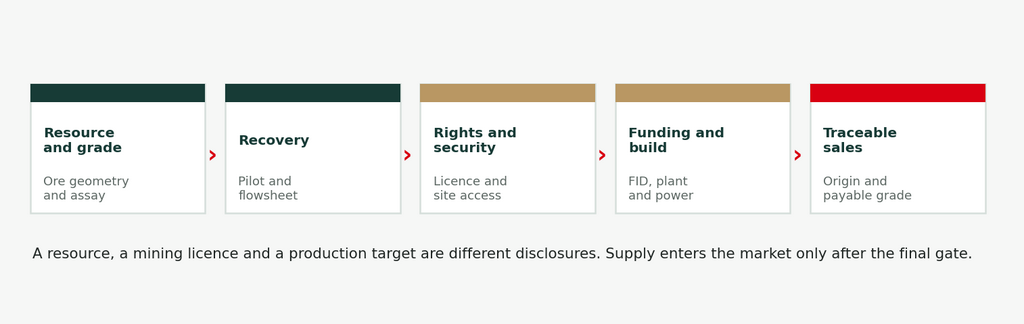
Figure 4. The main requirements between a mineral resource and repeatable commercial sales.
Rubaya in eastern Congo illustrates the gap between physical mineral supply and a bankable project. Reuters reported in February 2026 that the DRC had offered the coltan area to the United States under a proposed minerals partnership while it remained under M23 control. The proposal could draw attention and capital to the deposit, but control of the site, legal rights and traceability have to be resolved before an audited industrial supply chain can emerge. The near-zero North Kivu entry in the harmonised government data should not be mistaken for proof of negligible physical activity. [3,14]
Grade and product form add a second layer of uncertainty. Buyers pay for a defined Tantalum or Niobium content in a parcel, subject to assays, impurities, moisture and contract terms. A tonne of coltan concentrate can therefore yield far less than a tonne of contained Tantalum, while a tonne of Tantalum pentoxide contains approximately 81.9% Tantalum by mass. [1,2,9]
Moving forward
Africa’s importance to the Tantalum market is already visible. What is less visible is the path from each mine or buying centre to a declared, assayed sale. Congo’s conflicting totals and Rubaya’s reporting gap make that question commercially important, while the rest of the continent’s project pipeline cannot yet be counted as replacement supply. The strongest additions will be those that prove recoverable metal, secure access and funding, then deliver repeatable shipments with clear origin and grade. [1,3,9–14]
References
[1] USGS, Mineral Commodity Summaries 2026, Tantalum, February 2026. Source
[2] USGS, Niobium and Tantalum, Professional Paper 1802 M. Source
[3] SMM, DRC Coltan in 2025 What Production and Export Data Reveal, September 2026. Source
[4] DRC Ministry of Mines, statistics portal. Source
[5] Trinity Metals, Musha Mine and Ntunga, operator project page. Source
[6] Andrada Mining, FY2025 Annual Report. Source
[7] Andrada Mining, operating update for year ended February 2026. Source
[8] NEITI, solid minerals audit reports. Source
[9] Globe Metals and Mining, Kanyika Bankable Feasibility Study 2026. Source
[10] Panda Hill Mining, operator project and licence overview. Source
[11] Kenya State Department for Mining, Mrima Hill expression of interest, April 2026. Source
[12] Dusk / New Energy Metals, Maboumine project overview. Source
[13] Switch Metals, FY2025 Annual Report published June 2026. Source
[14] Reuters, Congo offers Rubaya Tantalum deposit under M23 control to US, February 2026. Source
[15] USGS, Mineral Commodity Summaries 2026, Niobium. Source
[16] Andrada Mining, Uis operational update, September 2025. Source