Aluminum alloy futures consolidate and weaken, ADC12 price decline sentiment heats up [ADC12 Price Daily Review]

Published: Oct 08, 2026 15:23 (GMT+8)
[ADC12 Price Daily Commentary: Aluminum Alloy Futures Consolidate and Weaken, ADC12 Price Cut Sentiment Heats Up] Today, the aluminum alloy 2611 contract opened at 23,300 yuan/mt, shot up to an intraday high of 23,620 yuan/mt in early trading before consolidating and pulling back. The market weakened in the afternoon, dipping to a low of 23,255 yuan/mt, and closed at 23,260 yuan/mt, down 260 yuan/mt, a decline of 1.11%.

Futures: The aluminum alloy 2611 contract opened at 23,300 yuan/mt today, shot up to an intraday high of 23,620 yuan/mt in early trading before consolidating and pulling back. The market weakened in the afternoon, dipping to a low of 23,255 yuan/mt, and closed at 23,260 yuan/mt, down 260 yuan/mt, or 1.11%. Daytime session trading volume was 5,952 lots, and open interest decreased by 258 lots, showing a pattern of lower prices on reduced open interest. The daily candlestick closed as a bearish solid body, with prices breaking below short-term moving averages. The DKX indicator's B line remained above the D line, while the KD indicator's K value was below the D value, indicating short-term consolidation turning weaker.

Spot: ADC12 market quotes were generally weak today, with SMM ADC12 prices falling 100 yuan/mt from the last trading day before the holiday to 24,400 yuan/mt. The price weakness was mainly driven by the post-holiday pullback in aluminum prices and futures, along with rising market sentiment to follow the decline. Some enterprises chose to adjust their quotes in line with market conditions. However, aluminum scrap raw material prices fell by a relatively limited margin. With compliant raw material supply remaining tight, the cost side still provided some support to spot prices, so some enterprises kept their quotes unchanged for the time being. Demand side, downstream procurement largely resumed after the holiday, but overall performance was relatively steady, with limited improvement in market transactions. Overall, ADC12 prices are expected to continue moving sideways in the short term. Futures and aluminum price trends will cause some disturbance to market sentiment, but cost support still limits further downside for prices. Attention should be paid to the post-holiday recovery in downstream demand and changes in aluminum scrap raw material prices.
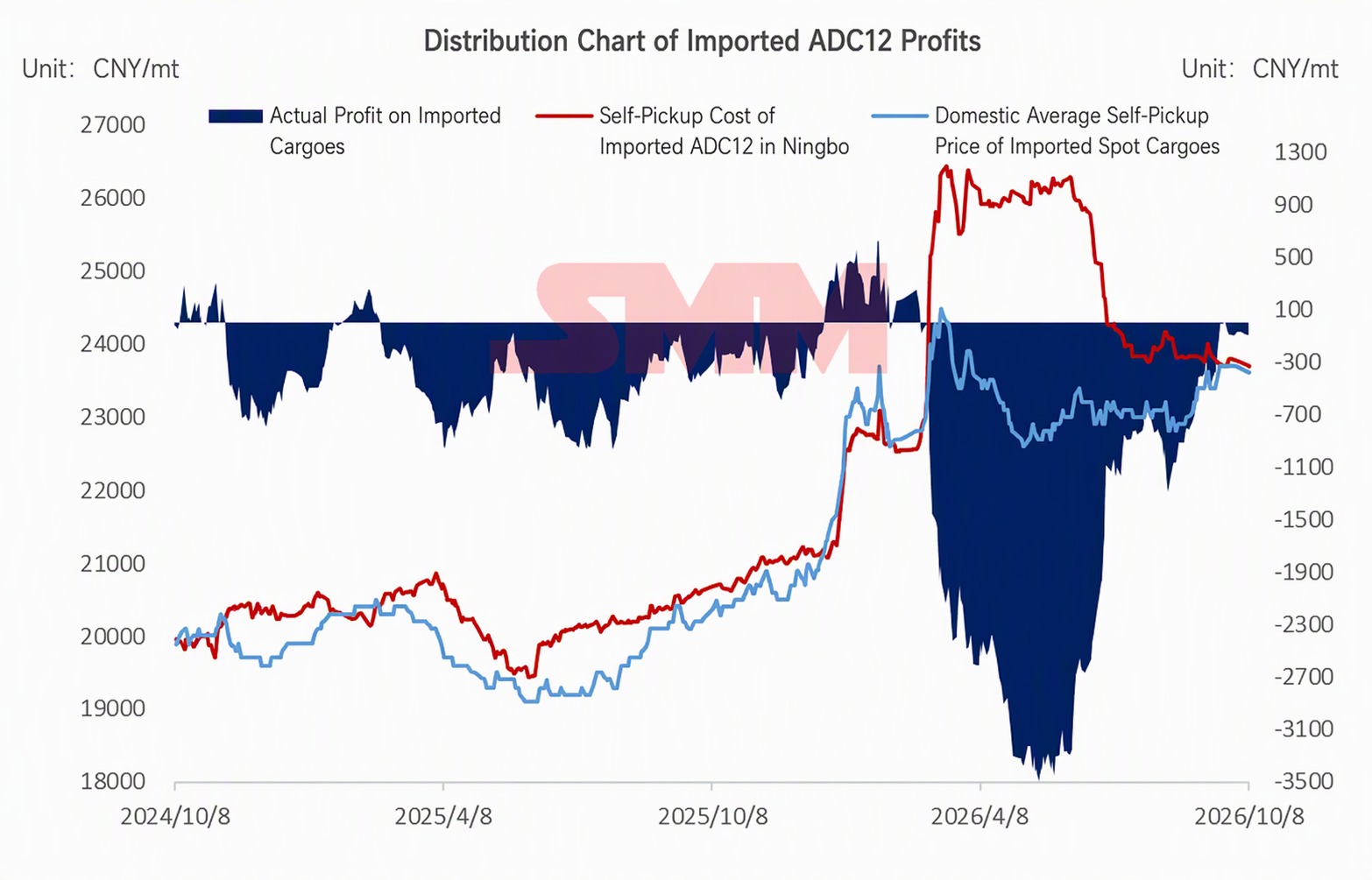
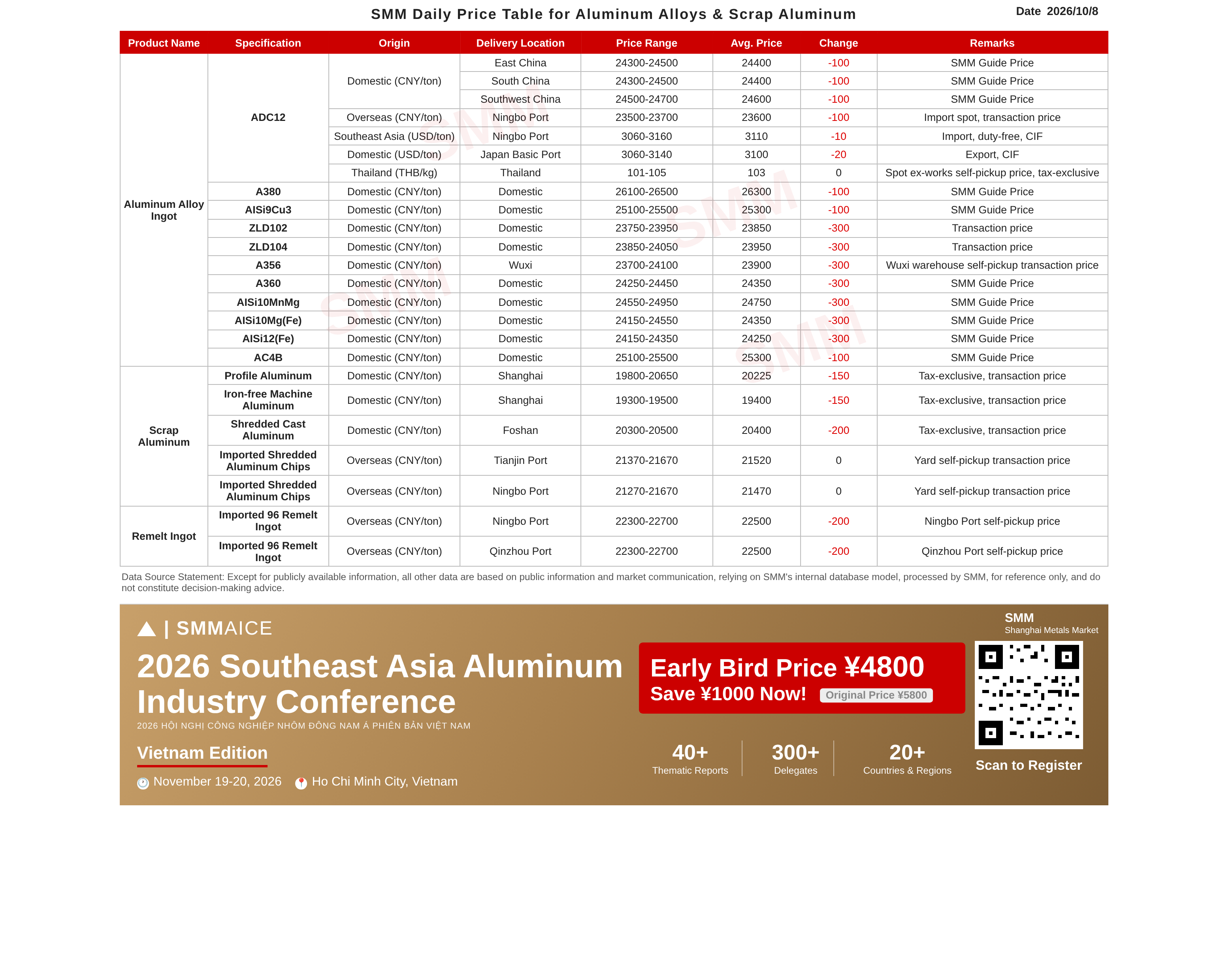


Data Source Statement: Except for publicly available information, all other data are processed by SMM based on publicly available information, market communication, and relying on SMM's internal database model. They are for reference only and do not constitute decision-making recommendations.

Images in this article contain AI-translated captions for reference only.

For any inquiries or for more information, please contact: lemonzhao@smm.cn
For more information on how to access our research reports, please contact:service.en@smm.cn
Related News
[SMM Analysis] Asian Molybdenum Oxide Offers Rise as China Returns—Can the Rally Hold?
1 hour ago
[SMM Analysis] Asian Molybdenum Oxide Offers Rise as China Returns—Can the Rally Hold?
Read More
[SMM Analysis] Asian Molybdenum Oxide Offers Rise as China Returns—Can the Rally Hold?
[SMM Analysis] Asian Molybdenum Oxide Offers Rise as China Returns—Can the Rally Hold?
During China’s 2026 National Day holiday, overseas molybdenum prices were stable before firming. Busan 57% molybdenum oxide indications rose to $33.25–33.40/lb Mo on October 7, although higher levels await transaction confirmation. Ferromolybdenum trading remained subdued. Accidents and labour disruptions at Chilean mines increased supply uncertainty, but no measurable losses were confirmed. SMM expects prices to remain elevated and rangebound after the holiday......
1 hour ago
[SMM Chromium Flash] South Africa's Diesel Surge Raises Chrome Ore Transport Costs
20 hours ago
[SMM Chromium Flash] South Africa's Diesel Surge Raises Chrome Ore Transport Costs
Read More
[SMM Chromium Flash] South Africa's Diesel Surge Raises Chrome Ore Transport Costs
[SMM Chromium Flash] South Africa's Diesel Surge Raises Chrome Ore Transport Costs
South Africa's diesel prices increase sharply from October 7, with 0.005% sulphur diesel rising by 324.38 cents/litre (R3.24/litre) and 0.05% sulphur diesel by 284.38 cents/litre (R2.84/litre). The Department of Mineral and Petroleum Resources attributed the increase mainly to higher international crude and petroleum-product prices, with average Brent crude rising from US$87.89/bbl to US$101/bbl during the pricing period. The increase is likely to add pressure to chrome ore logistics costs, particularly for material transported by road from South African mines to beneficiation plants, smelters and export terminals. Freight News estimates that a truck consuming 4,000 litres of low-sulphur diesel per month would face an additional R11,375–R12,975 in monthly fuel costs, depending on the diesel grade. For chrome producers and traders, the higher fuel bill could put pressure on trucking rates and delivered ore costs, although the actual impact will vary with haulage distance, contract structures and the extent to which higher transport costs are passed through to buyers.
20 hours ago
[SMM Chromium Flash] India's New Mineral Exchange Could Reshape Domestic Chromite Price Discovery
20 hours ago
[SMM Chromium Flash] India's New Mineral Exchange Could Reshape Domestic Chromite Price Discovery
Read More
[SMM Chromium Flash] India's New Mineral Exchange Could Reshape Domestic Chromite Price Discovery
[SMM Chromium Flash] India's New Mineral Exchange Could Reshape Domestic Chromite Price Discovery
India's inclusion of chromite among the five minerals initially eligible for trading on the proposed mineral exchanges provides the regulatory basis for a new domestic price-discovery mechanism. The significance for the chromium market lies in the potential shift from predominantly negotiated or transaction-specific pricing toward a more transparent market reference based on exchange transactions. The framework envisages electronic trading, standardized quality specifications, assaying arrangements and delivery-based contracts, which could make price comparisons across different chromite grades and transactions more consistent. If sufficient miners, processors and ferrochrome producers participate, exchange-generated transaction data could eventually provide a useful reference for domestic chromite prices and quality differentials. However, the extent of its influence will depend on actual trading volumes, market participation and liquidity once an exchange becomes operational; the current registration process does not yet establish that such a price benchmark will emerge.
20 hours ago
Register to Continue Reading
Gain access to the latest insights in metals and new energy
Already have an account?Sign in here