I. Power Spot Market Operations
From September 7 to 13, temperatures across China showed a clear “cooler north, warmer south” pattern. Cold air moved southward across North and Northeast China from September 7 to 9, bringing a noticeable temperature drop to Shandong and neighboring regions, while a tropical depression over the South China Sea brought renewed rainfall to South China later in the week. Beyond weather, fuel costs became an increasingly important support for spot electricity prices. As of September 11, CCTD Qinhuangdao 5,500 kcal thermal coal rose to RMB 754/mt, while 5,000 kcal and 4,500 kcal coal increased to RMB 684/mt and RMB 617/mt, respectively. SMM China LNG arrival prices climbed from USD 26.16/MMBtu on September 7 to a weekly high of USD 28.81/MMBtu on September 10, while average LNG prices in eastern Guangdong rose from RMB 5,860/mt to RMB 6,005/mt on September 9. Higher coal and gas costs lifted the marginal costs of thermal and gas-fired generation, while renewable output, load conditions and interprovincial power flows continued to shape short-term price movements.
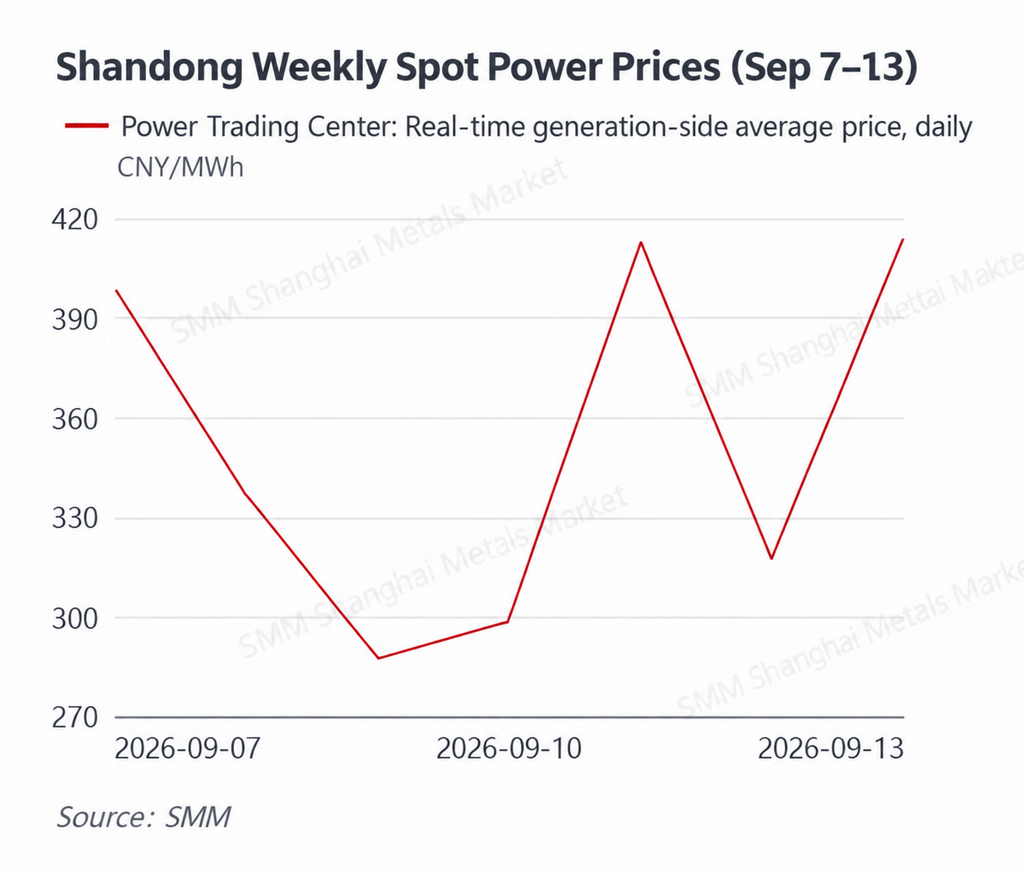
Shandong prices declined first and then rebounded, as cooling reduced load while higher coal costs limited the downside. Shandong’s real-time generation-side average price fell from RMB 398.27/MWh on September 7 to RMB 287.52/MWh on September 9 and remained relatively low at RMB 298.58/MWh on September 10. Prices then rebounded to RMB 412.64/MWh on September 11 and RMB 413.72/MWh on September 13. The weekly average stood at approximately RMB 352.08/MWh. Cold air lowered temperatures by around 4–6°C from September 7 to 9, with minimum temperatures in northern Shandong falling to around 14–16°C, materially reducing cooling demand. As temperatures recovered later in the week, load also improved. Meanwhile, CCTD Qinhuangdao 5,500 kcal coal rose further from RMB 741/mt to RMB 754/mt. With coal-fired generation still playing an important role in marginal pricing in Shandong, higher fuel costs mainly acted as a floor under bids, while changes in renewable output and load conditions drove the intra-week rebound.
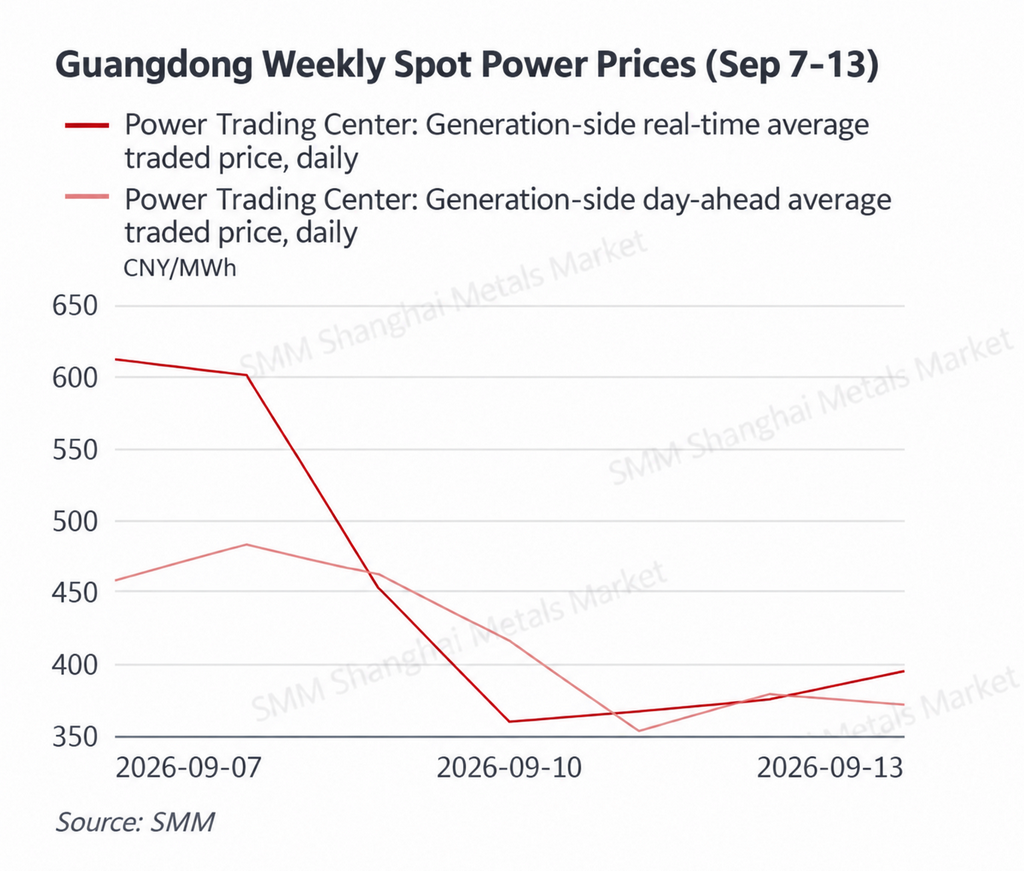
Guangdong moved from high levels early in the week to lower prices later on, as strong cooling demand and gas-fired costs supported prices initially before rainfall weakened load. Guangdong’s day-ahead generation-side average price rose from RMB 456.52/MWh on September 7 to RMB 481.47/MWh on September 8, before gradually declining to RMB 353.27/MWh on September 11 and closing at RMB 372.13/MWh on September 13. The weekly day-ahead average was approximately RMB 417.06/MWh. Real-time prices were more volatile, reaching RMB 611.49/MWh and RMB 601.14/MWh on September 7 and 8, respectively, before dropping to RMB 359.83/MWh on September 10 and stabilising around RMB 376–394/MWh over the weekend. The weekly real-time average was approximately RMB 451.57/MWh. Sunny and warm weather during September 7–10 kept cooling demand relatively resilient, but rainfall intensified from September 11 as the tropical depression affected western Guangdong and coastal areas, weakening air-conditioning demand. At the same time, eastern Guangdong LNG prices rose from RMB 5,860/mt to RMB 6,005/mt, while SMM China LNG arrival prices reached as high as USD 28.81/MMBtu. The rise in gas costs therefore provided stronger support to gas-fired marginal generation costs.
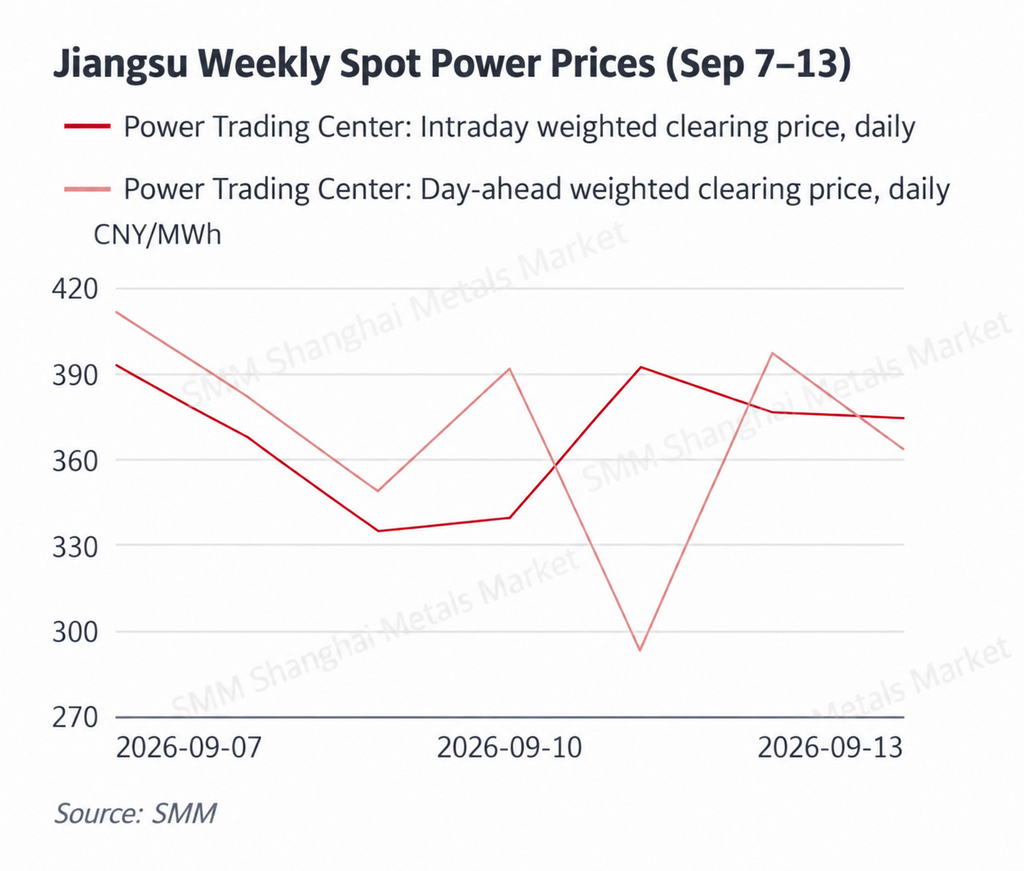
Jiangsu remained volatile, with weaker seasonal demand offset by higher coal-fired generation costs. Jiangsu’s day-ahead weighted average price fell from RMB 411.46/MWh early in the week to RMB 293.28/MWh on September 11, before recovering to RMB 397.30/MWh on September 12 and ending at RMB 363.64/MWh on September 13. The weekly day-ahead average was approximately RMB 369.84/MWh. Intraday prices mainly ranged between RMB 335/MWh and RMB 393/MWh, averaging approximately RMB 368.39/MWh for the week. Cold air pushed temperatures down from around 30°C to 25–27°C during September 8–10, reducing cooling demand and limiting the scope for sustained price increases. However, industrial demand remained relatively resilient, while higher coal prices lifted the marginal cost of coal-fired units. As a result, Jiangsu’s market reflected a tug-of-war between weaker demand and firmer generation costs, with day-ahead and intraday averages remaining relatively close.
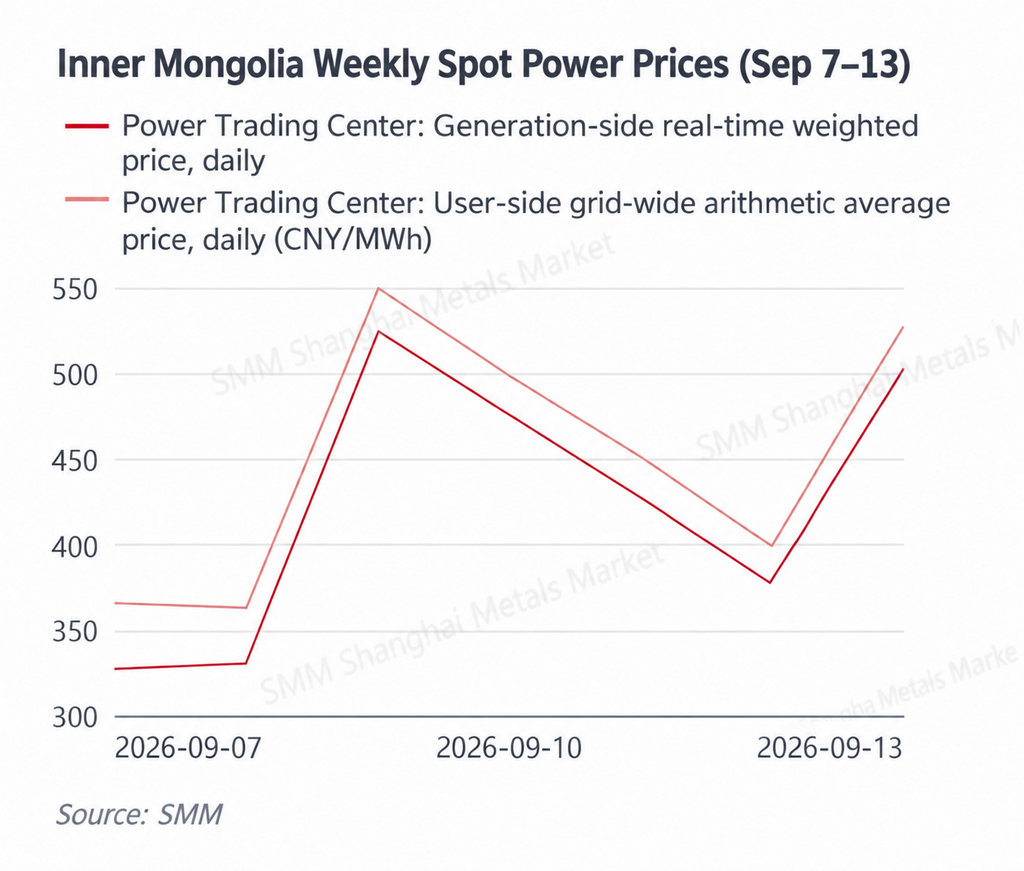
Inner Mongolia strengthened markedly, as fluctuations in renewable output amplified the impact of higher coal-fired marginal costs. The generation-side real-time weighted average price rose from RMB 327.84/MWh on September 7 to RMB 524.74/MWh on September 9, remained elevated at RMB 476.43/MWh on September 10, and climbed again to RMB 502.63/MWh on September 13. The weekly average reached approximately RMB 424.20/MWh, while the user-side system-wide arithmetic average rose to approximately RMB 451.04/MWh. With a high share of wind and solar generation, western Inner Mongolia’s spot market remains highly sensitive to renewable output and export conditions. When renewable generation is strong, prices can fall rapidly; when output underperforms and thermal units are called on more heavily, higher coal prices can feed more directly into marginal bids. The weekly increase therefore reflected not simply higher coal costs, but the interaction between renewable volatility and increased reliance on coal-fired balancing generation.
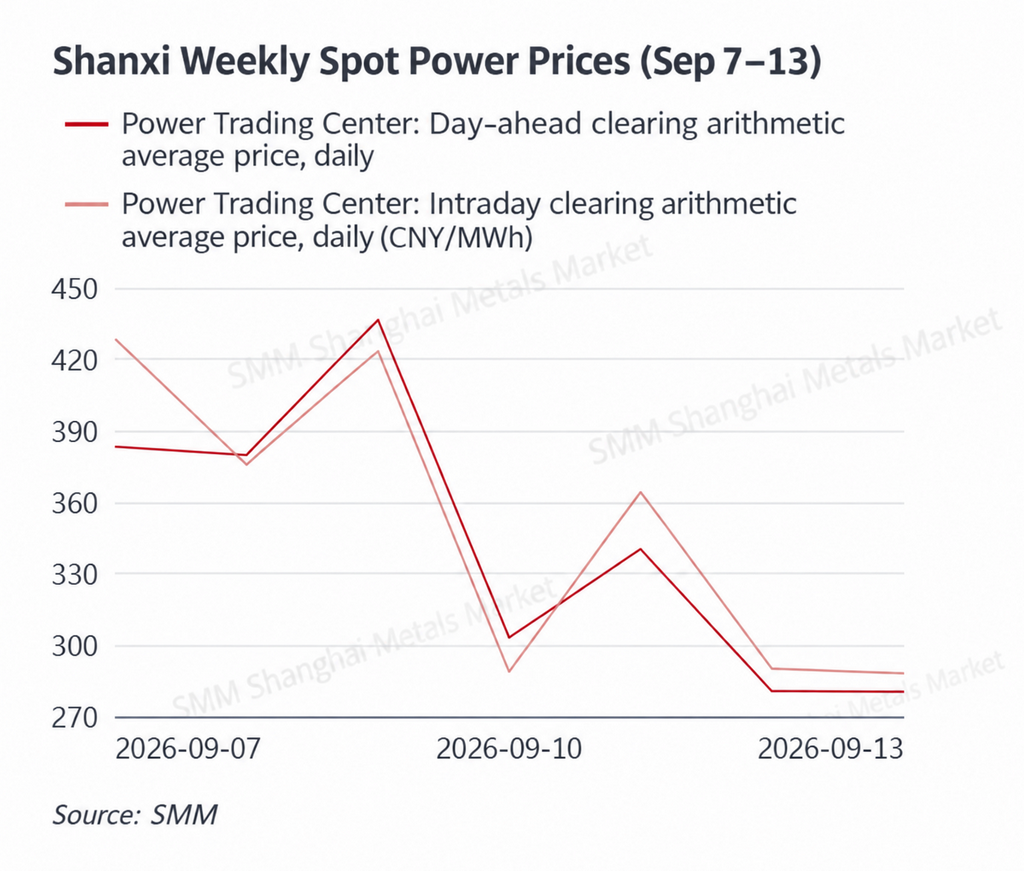
Shanxi moved from high levels early in the week to a clear retreat later on, as stronger coal-cost support was offset by softer supply-demand conditions. Shanxi’s day-ahead arithmetic average price remained elevated at RMB 379–437/MWh during September 7–9, reaching RMB 436.56/MWh on September 9, before falling sharply to around RMB 281/MWh on September 12–13. The weekly day-ahead average was approximately RMB 343.38/MWh. Intraday prices also declined from RMB 428.47/MWh on September 7 to around RMB 288–290/MWh over the weekend, with a weekly average of approximately RMB 351.34/MWh. Shanxi has a relatively high coal-fired generation share, so tighter coal supply and higher fuel prices continued to support marginal generation costs. However, as temperatures declined and system conditions loosened later in the week, weaker load outweighed cost-side support and pushed spot prices lower. Coal prices therefore reinforced the market floor, while short-term price peaks remained dependent on actual load and interprovincial export demand.
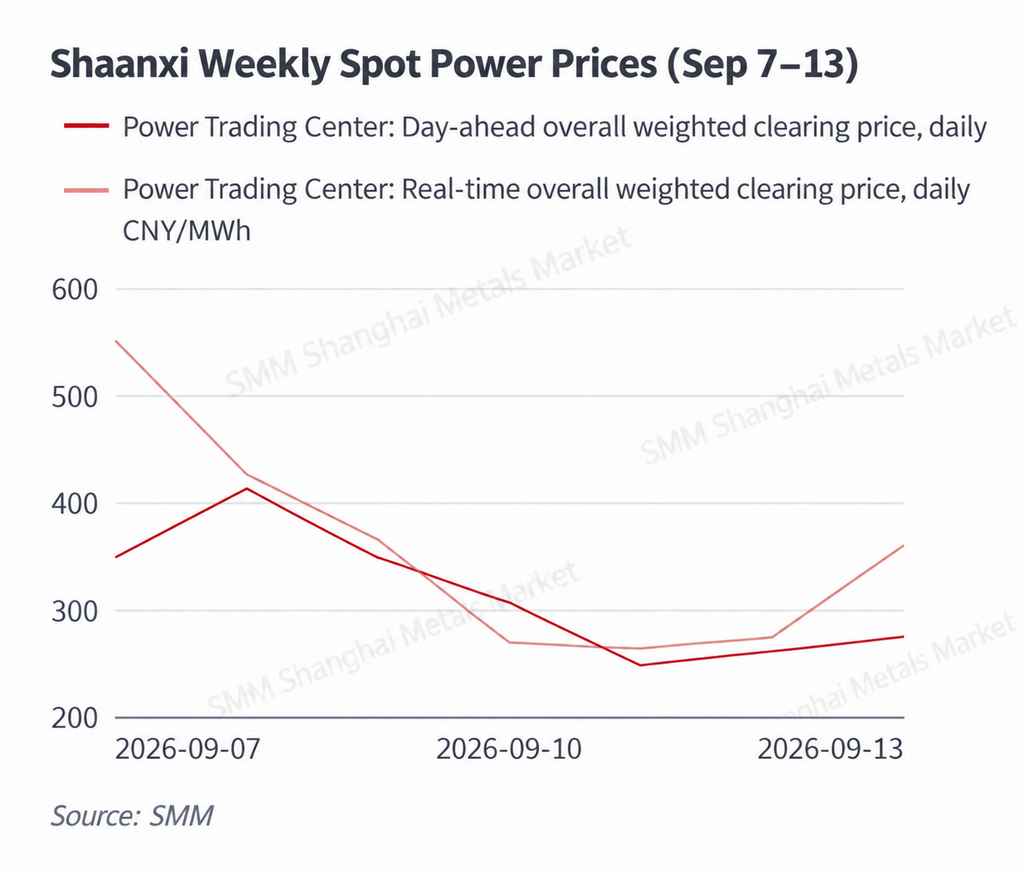
Shaanxi’s price centre moved higher overall, while tight real-time conditions early in the week amplified the impact of coal-fired generation costs. Shaanxi’s day-ahead weighted average price rose from RMB 348.35/MWh on September 7 to RMB 412.76/MWh on September 8, before falling to RMB 248.45/MWh on September 11. The weekly average was approximately RMB 314.60/MWh. Real-time prices reached RMB 550.73/MWh on September 7, then gradually declined to around RMB 263–274/MWh during September 10–12, before rebounding to RMB 359.74/MWh on September 13. The weekly real-time average was approximately RMB 358.43/MWh. The roughly RMB 44/MWh gap between weekly real-time and day-ahead averages indicates that actual operating conditions were generally tighter than anticipated in day-ahead forecasts. Short-term swings in renewable output increased the market’s sensitivity to thermal back-up generation, while higher coal prices raised the marginal cost of thermal units when renewable generation fell short.
Overall, weekly average prices across the six monitored markets were generally higher than in the previous week, but intra-week movements in several provinces showed a clear spike-and-retreat pattern. Cooling weather reduced electricity demand in Shandong, Shanxi and other northern markets, which would normally weigh on spot prices, while higher coal prices limited the extent of the decline. Guangdong faced additional upward pressure from rising LNG costs, strengthening the cost support from gas-fired generation. In western Inner Mongolia and Shaanxi, coal prices did not determine price direction on their own, but higher fuel costs amplified marginal prices during periods of lower renewable output and heavier thermal dispatch. As temperatures continue to ease through mid-September, the market will increasingly focus on the pace of coal-supply recovery, the persistence of high LNG prices, renewable output and changes in interprovincial power flows.
Primary Energy
September 7–13
Thermal coal: Power-sector demand entered the shoulder season, but a slow recovery in supply kept CCTD prices on an upward trend.
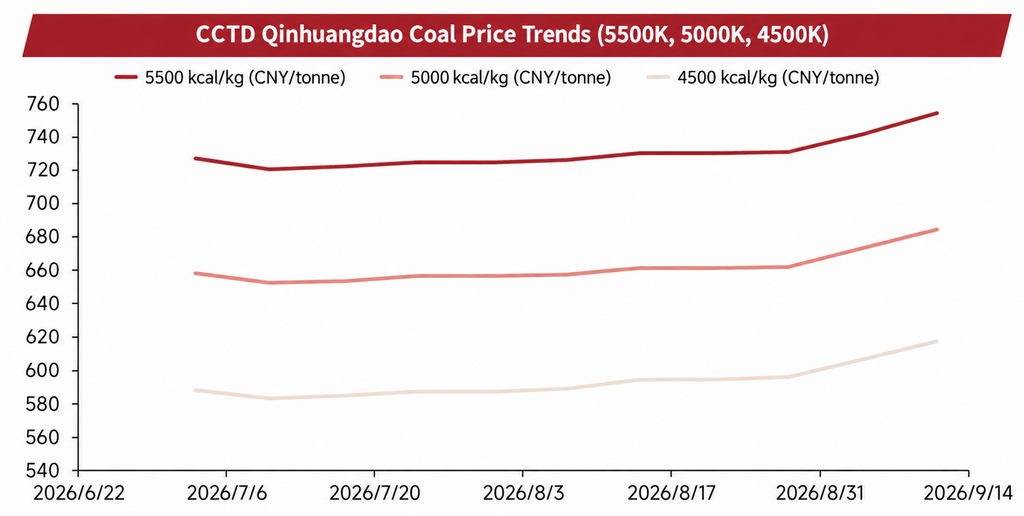
As of September 11, CCTD Qinhuangdao 5,500 kcal thermal coal was assessed at RMB 754/mt, up RMB 13/mt from September 4. The 5,000 kcal grade rose by RMB 11/mt to RMB 684/mt, while the 4,500 kcal grade increased by RMB 11/mt to RMB 617/mt. After the summer peak-demand season, thermal power consumption has already begun to decline, yet coal prices continued to rise, suggesting that the latest rally has been driven more by supply constraints and tightness in the circulation chain than by stronger end-user demand. Domestic coal output remained below year-earlier levels in August, and although the contraction narrowed from July, the pace of supply recovery remained relatively slow.
Demand: As cold air strengthened across northern China, cooling demand declined quickly and coastal power-plant coal consumption entered a seasonal downtrend. Procurement increasingly centred on term-contract deliveries and limited spot replenishment. At the same time, stronger hydropower output in early autumn displaced part of thermal generation demand. Coastal shipping demand also softened, reflecting weaker willingness among power plants to chase higher spot prices. Overall, demand-side support for coal prices has weakened significantly from the peak summer period.
Supply: Safety inspections in major producing regions remained relatively strict, while some mines had yet to fully restore output after earlier disruptions. This kept short-term supply elasticity limited. Earlier increases in mine-mouth prices had also compressed margins for shipments to northern ports, constraining replenishment of port inventories. More recently, transport economics have begun to improve and some imported coal offers have softened, suggesting that the tightest phase of supply may gradually ease. Whether coal prices can continue rising will increasingly depend on the pace of domestic production recovery and the timing of winter stockpiling.
Inventories: By September 11, inventories across nine Bohai Rim ports stood at around 24.13 million mt, down roughly 0.30 million mt week on week, while inventories at power plants in eight coastal provinces rose to around 35.57 million mt. This divergence remains important: relatively tight port inventories continue to support spot offers, while comfortable stocks at end-users reduce the urgency to procure at higher prices. The market therefore remains characterised by “tight ports but adequately stocked power plants”. Coal prices are likely to retain near-term support, although seasonal demand weakness and gradual supply recovery may limit the pace of further gains.
LNG: China’s delivered LNG prices rose rapidly, while eastern Guangdong prices began to follow the increase.
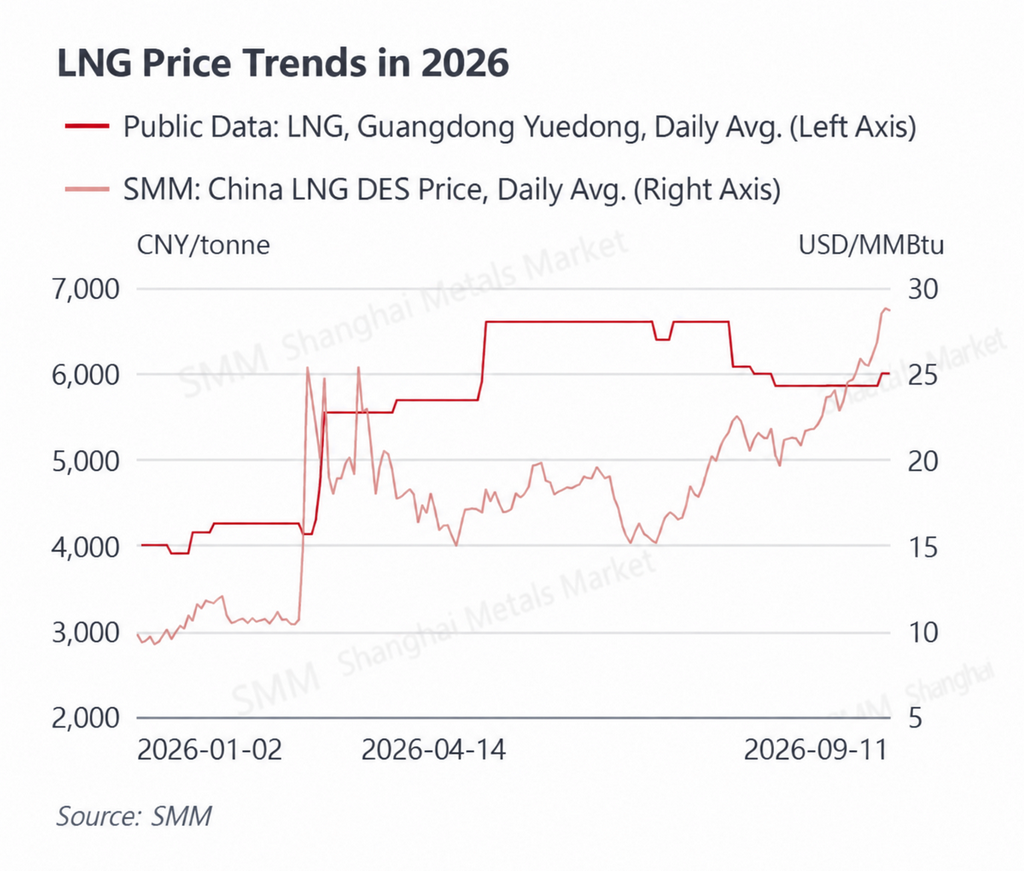
SMM China LNG arrival prices continued to rise during the week, from USD 26.16/MMBtu on September 7 to USD 26.88/MMBtu on September 8, USD 28.51/MMBtu on September 9 and a weekly high of USD 28.81/MMBtu on September 10. Prices remained elevated at USD 28.65/MMBtu on September 11. Eastern Guangdong LNG prices rose from RMB 5,860/mt to RMB 6,005/mt on September 9 and remained at that level thereafter, indicating that the earlier increase in international spot costs had begun to feed through into domestic coastal LNG prices.
Domestic market: Higher upstream feedgas costs, together with maintenance at some liquefaction facilities, tightened domestic LNG supply temporarily and strengthened seller pricing. However, China remains in a seasonal period of relatively modest gas demand, and industrial users have shown limited willingness to accept sharply higher prices. Domestic LNG prices have therefore risen more slowly than imported spot costs. At the same time, term LNG contracts and pipeline gas continue to account for a large share of domestic supply, reducing dependence on expensive spot cargoes and slowing the pass-through of international price spikes.
International market: Asian spot LNG prices continued to strengthen amid elevated supply-risk premiums, expectations for winter procurement and competition for flexible cargoes. Maintenance at some supply facilities and tighter availability of spot cargoes added to the upward pressure. For Guangdong’s power market, the increase in eastern Guangdong LNG prices to RMB 6,005/mt directly raises the marginal generation cost of gas-fired units, strengthening cost support for spot electricity prices during high-load periods or when renewable output is weak.
Weather Review
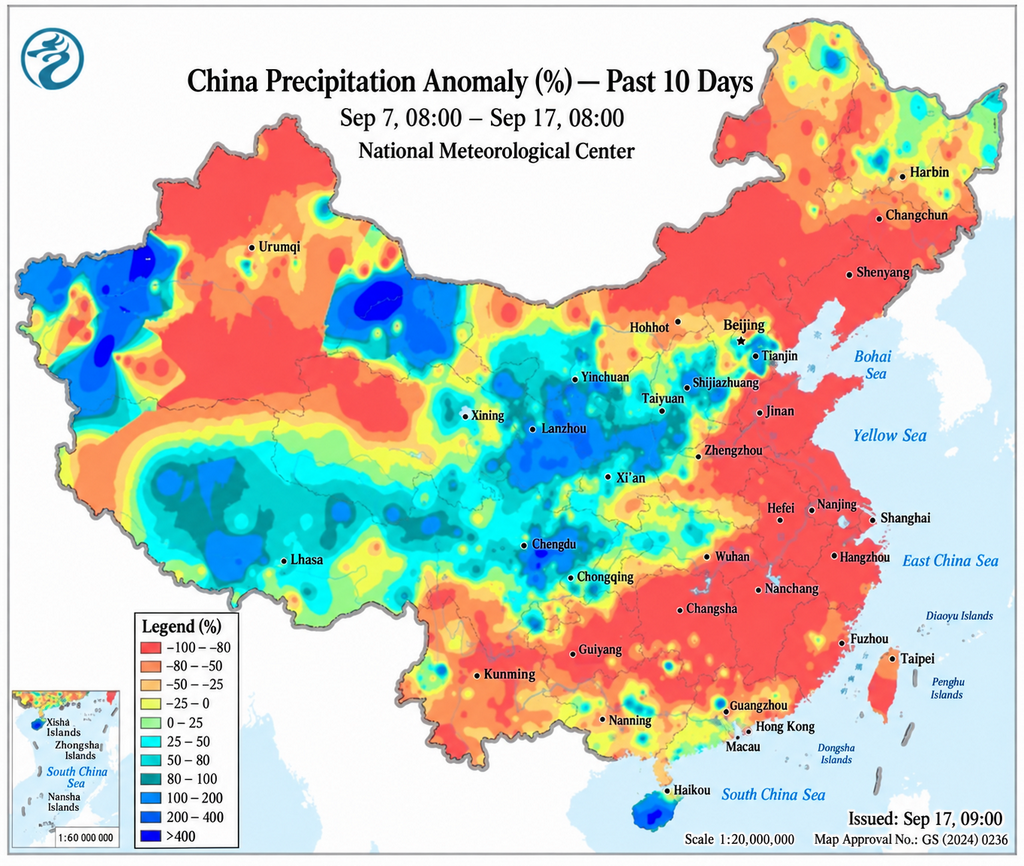
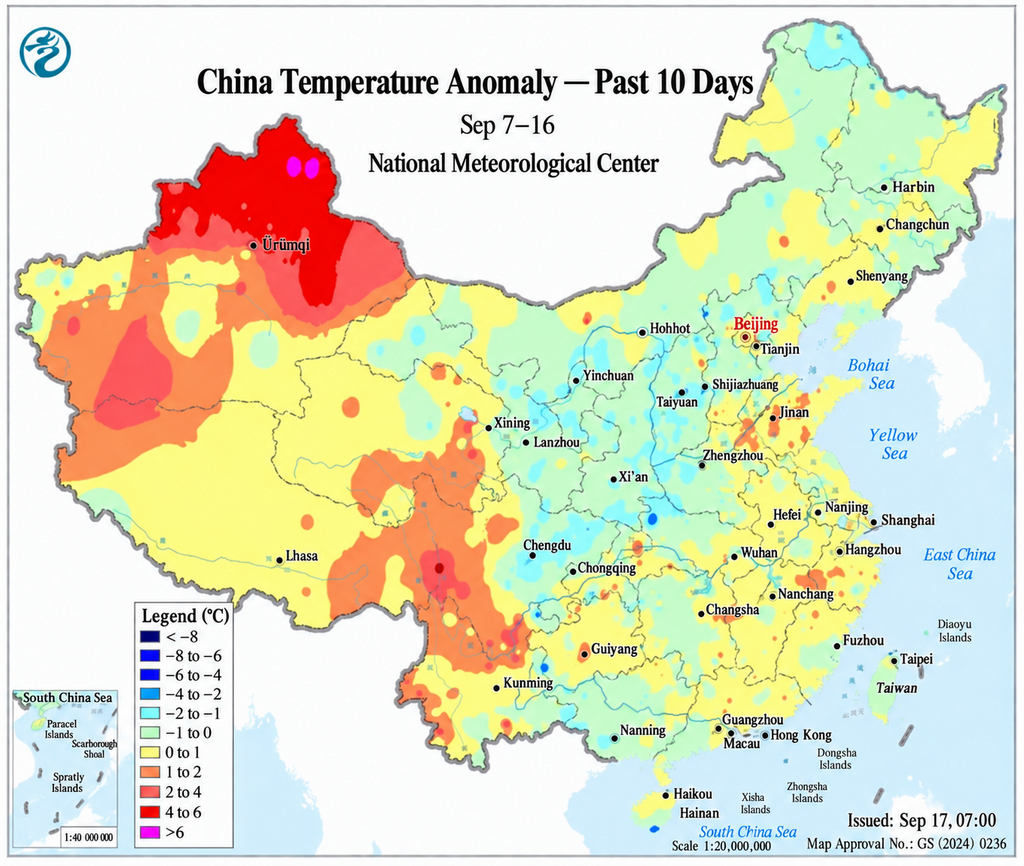
During September 7–13, China experienced a broad “cooler north, warmer south” pattern, with northern cooling occurring alongside heavier rainfall in parts of South China. From September 7 to 9, a moderate cold-air system moved southward through North and Northeast China, bringing temperature declines of around 4–6°C. Shandong’s coastal areas also experienced stronger northerly winds, while the day-night temperature range widened significantly across northern regions.
In South China, the main weather disturbance came from a tropical depression over the South China Sea. From September 11 to 13, rainfall increased across southern Guangdong, Hainan and southern Guangxi, with some areas of Guangdong recording heavy to torrential rain. Guangdong remained hot and humid during the first half of the week, with maximum temperatures around 34°C supporting cooling demand. Once rainfall intensified later in the week, air-conditioning load weakened. In Shandong, maximum temperatures were mainly around 29–33°C, falling sharply early in the week before recovering. Jiangsu also cooled to around 25–27°C during September 8–10 before temperatures gradually recovered from September 12 onward.
Going forward, the main weather focus will continue to shift away from persistent summer heat toward autumn cold-air activity and tropical weather systems. As cooling demand fades further across northern China, weather impacts on spot electricity prices are likely to be transmitted more through wind and solar output, rainfall and short-term load forecast deviations than through sustained high-temperature demand.
II. Key Developments in China's Power Market
On September 9, the East China Energy Regulatory Bureau announced that the Anhui power spot market had entered formal operation. Anhui became the ninth provincial-level power spot market in China, and the second in the Yangtze River Delta, to move into formal operation. The market had been under continuous settlement trial operation since December 31, 2024, for more than 18 months. All provincially dispatched public coal-fired units participate by submitting both quantities and prices, renewable generators fully participate in the market, all commercial and industrial users participate on a quantity-only basis, and independent energy storage is allowed to submit both quantities and prices.
On September 9, the Jiangsu Energy Regulatory Office of the National Energy Administration released the “Announcement on Public Consultation on the Jiangsu Power Ramping Ancillary Services Market Implementation Rules (Draft for Comments)”. The proposed mechanism is designed to address rapid changes in system net load as renewable penetration increases, while expanding market-based revenue channels for thermal generation, energy storage and other flexible resources. The introduction of a dedicated ramping service would further broaden Jiangsu’s storage revenue structure beyond simple peak-valley arbitrage and improve short-duration system flexibility.
In early September, Tianjin opened public consultation on the “Notice on Promoting Full Direct Participation in the Power Market by Electricity Users at 35 kV and Above (Draft for Comments)”. The draft proposes requiring commercial and industrial users at 35 kV and above that are still under grid-agent procurement to complete market registration by the end of 2026, either as wholesale or retail users. The move would further expand direct market participation among large users and increase demand for medium- and long-term trading, retail packages and market-risk management.
On September 11, the Guizhou Provincial Development and Reform Commission opened consultation on the “Implementation Rules for the Sustainable Development Mechanism Auction for Incremental Renewable Energy Projects” and the “Implementation Rules for the Sustainable Development Price Settlement Mechanism for Renewable Energy”. The draft rules further clarify the auction and settlement framework for renewable-energy mechanism prices. For incremental projects, mechanism electricity volumes and prices would be determined through competitive bidding, with the mechanism volume capped at 90% of the project’s total on-grid generation during the applicable period. This would further link renewable-project revenues to both market prices and mechanism-price settlement.
The 16th APEC Energy Ministerial Meeting was held in Beijing on September 10–11. The meeting focused on three priorities: high-quality energy access, two-way empowerment between artificial intelligence and energy systems, and deeper Asia-Pacific energy cooperation. Discussions also covered cross-border power mutual support, energy security and coordination of increasingly renewable-heavy power systems. These themes highlight the growing importance of regional resource optimisation and flexible power-system capacity as renewable penetration continues to rise.
![[SMM Analysis] China Solar Settlement Prices Diverged in H1 2026 as Timing and Seasonality Reshaped Revenue](https://imgqn.smm.cn/usercenter/kuMAH20251217171739.jpg)