SMM, August 31 — China's praseodymium-neodymium (PrNd) oxide output rose by around 10% month-on-month in August. On the supply side, the increase came mainly from scrap recyclers, while primary ore separation has yet to show a marked increase in volume — the operating performance of the two production routes has clearly diverged.
Scrap recyclers were the main driver of this month's growth, lifting operating rates noticeably from earlier levels, supported by two factors. First, on the feedstock side: although some recyclers had scheduled maintenance shutdowns, they did not halt procurement during the maintenance period and in fact maintained a normal restocking pace, leaving current feedstock inventories relatively ample. Once maintenance wrapped up, they were able to raise operating rates and release output quickly, without waiting for a fresh material preparation cycle. Second, market sentiment has turned bullish: most participants hold bullish expectations for September PrNd oxide prices and generally believe that raising output and accelerating shipments within an upward price window is profitable. As maintenance drew to a close, recyclers moved proactively to lift operating rates and capture output, further amplifying the supply increment from the scrap segment.
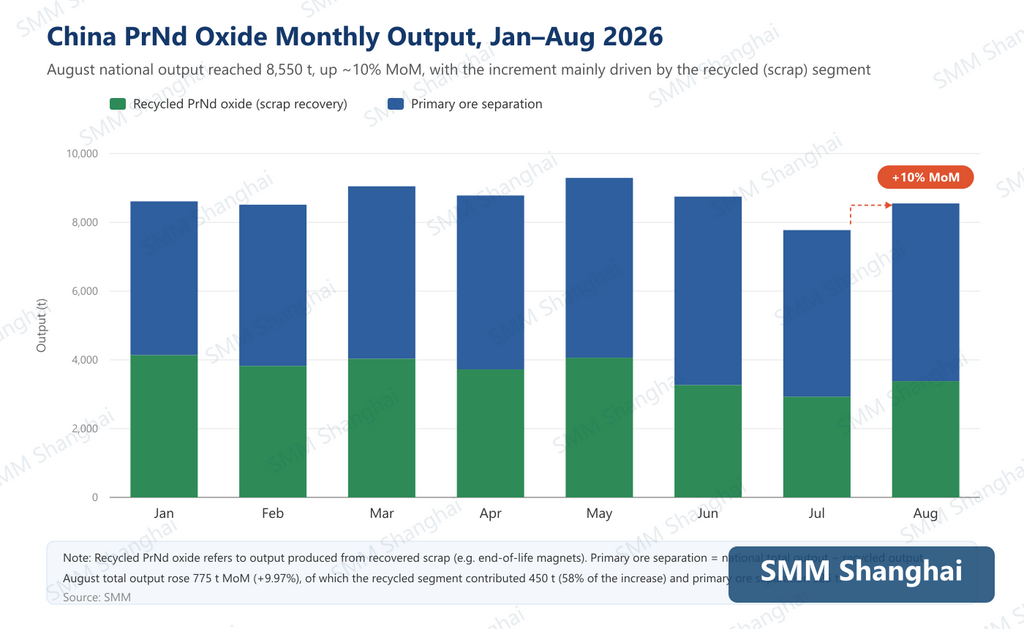
In contrast, primary ore separators saw only a limited increase in operating rates this month, with the actual volume gain not significant. In terms of timing, a meaningful recovery in operating rates at the primary ore separation end may only gradually materialise around October, which means that in September and even earlier, scrap recycling will remain the key variable supporting PrNd oxide supply.
Overall, the August recovery in PrNd oxide output presents a pattern of "scrap-led, primary-lagging". Scrap recyclers, under the dual effect of ample inventories and bullish expectations, were the first to add volume, effectively replenishing market supply; the primary ore separation end, constrained by scheduling and raw materials, has a relatively later window for additional output. Two points warrant close attention going forward: first, the pace at which recyclers draw down the inventories accumulated earlier — if inventories deplete quickly while prices rise as expected, their operating rates may remain high; and second, once primary ore separators lift operating rates around October, the compounding of incremental supply may affect price expectations and downstream purchasing patterns. In short, the near-term marginal easing of supply is dominated by the scrap segment, while the medium term will require observing how additional output from primary ore separation rebalances supply and demand.