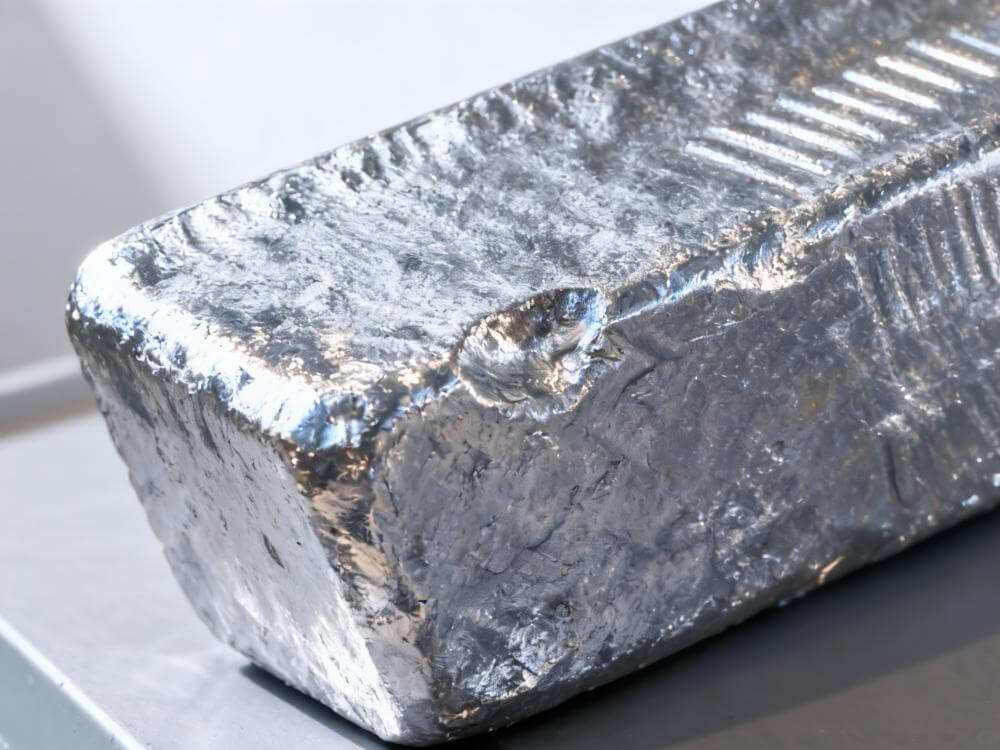
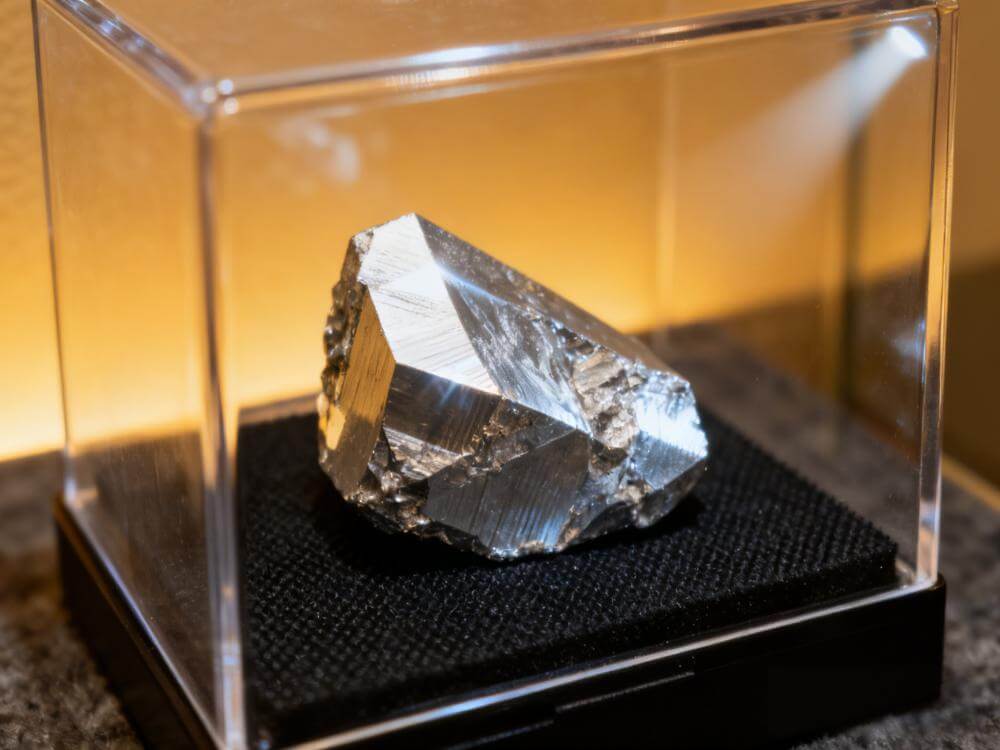
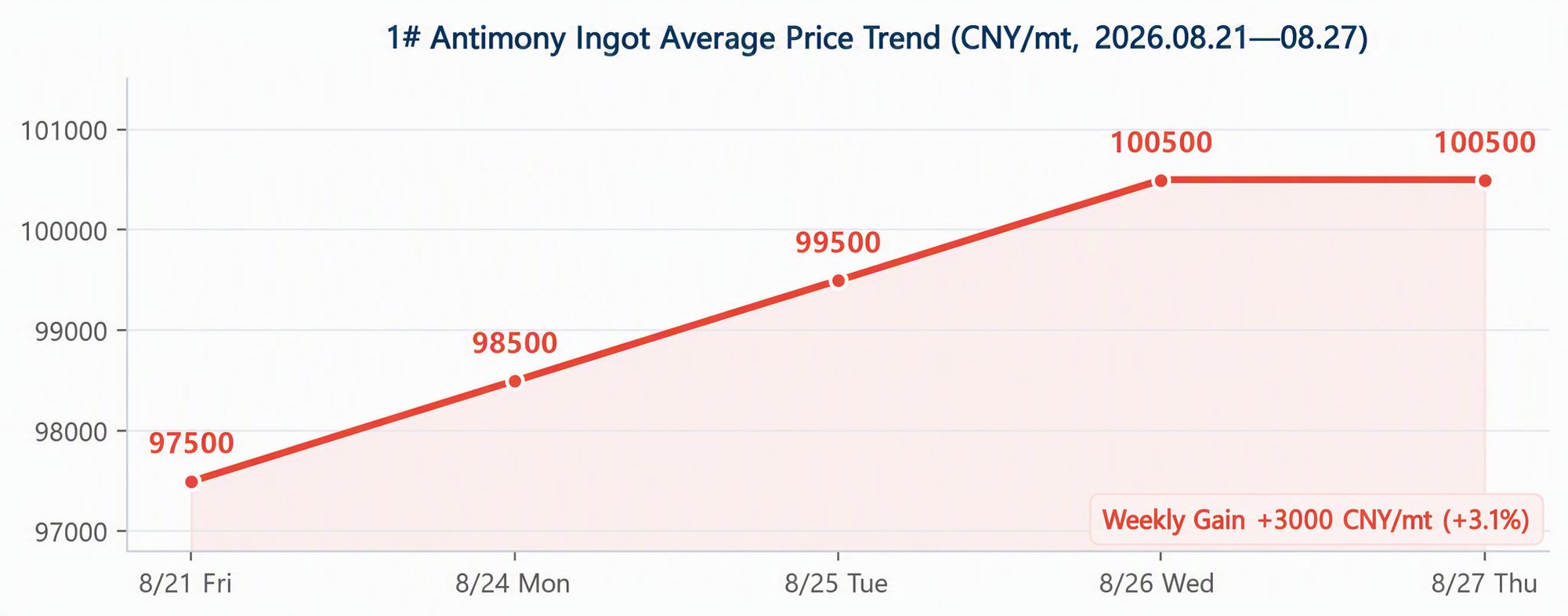
This week (August 24–27), antimony prices extended their upward trend, with the center continuing to move higher, and the average price of 1# antimony ingot firmly holding above the 100,000 yuan/mt threshold. The average price of 1# antimony ingot rose to 100,500 yuan/mt as of August 26, up a cumulative 3,000 yuan/mt (+3.1%) this week; it stabilized on August 27, consolidating at highs. For antimony oxide, this week showed a clear catch-up rally: the average price of 99.8% antimony trioxide was raised consecutively from 86,000 yuan/mt last Friday to 90,000 yuan/mt as of August 26, up a cumulative 4,000 yuan/mt (+4.7%), outperforming antimony ingot; the earlier “strong ingot, weak oxide” price spread was repaired; it stabilized on August 27. The catch-up rally in antimony oxide was mainly driven by raw material cost pass-through and smelters holding prices firm.
In terms of drivers, the core reason for this week’s rise was that smelters, under losses pressure, generally held prices firm and held back from selling, coupled with warming expectations for downstream stockpiling ahead of the September-October peak season; however, market participants generally reported that the pace of restocking for rigid demand slowed down and speculative capital cooled. From August 27, prices stabilized at highs, and market sentiment shifted to mildly bullish.
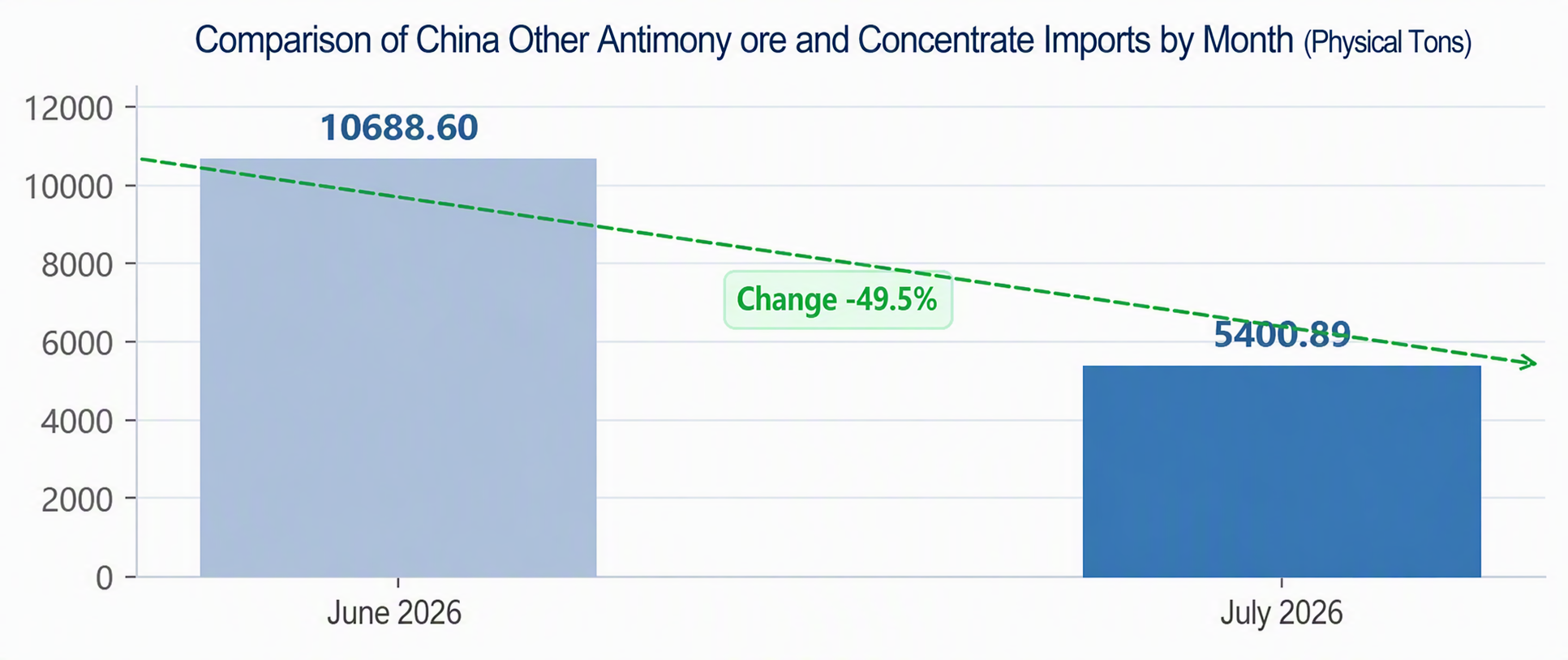
Customs data showed that in July 2026, China’s imports of other antimony ores and concentrates were 5,400.89 mt, down sharply by 49.5% MoM from 10,688.6 mt in June, hitting a year-to-date low and ending the prior streak of staying above 10kt for three consecutive months. Myanmar was the largest source of imports, while the previously watched “Spain variable” ore supply was not sustainable. However, cumulative antimony ore imports in H1 reached 59,347.5 mt in physical content, exceeding the full-year total for 2025, and cumulative imports from January to July still rebounded YoY; large volumes of imported ore had previously been converted into antimony ingot production—SMM-assessed China antimony ingot (including antimony ingot, crude antimony equivalent, antimony cathode, etc.) production in July rose by about 30% MoM, making supply temporarily ample.
Structurally, in July, imports of crude antimony (antimony concentrates) were 107.18 mt, antimony sulfide imports were 1.4 mt, and imports of antimony oxides were only 0.156 mt, all at low levels; there were no import records for unwrought antimony. Looking ahead, overseas ore supply tightened and the pace of arrivals slowed down; coupled with production halts at some mines in China and limited production growth, the long-term tightness in antimony ore raw materials remained unchanged. On the cost side, after adding mining costs of self-owned antimony ore and smelting processing fees, some major producers’ costs had gradually approached spot prices, and smelters showed highly aligned willingness to hold prices firm and hold back from selling—this was the core support enabling prices to rise continuously this week. In addition, if the planned 10kt-per-year 1# antimony ingot smelting project in Xierkule, Xinjiang is implemented, it may affect the long-term supply landscape.
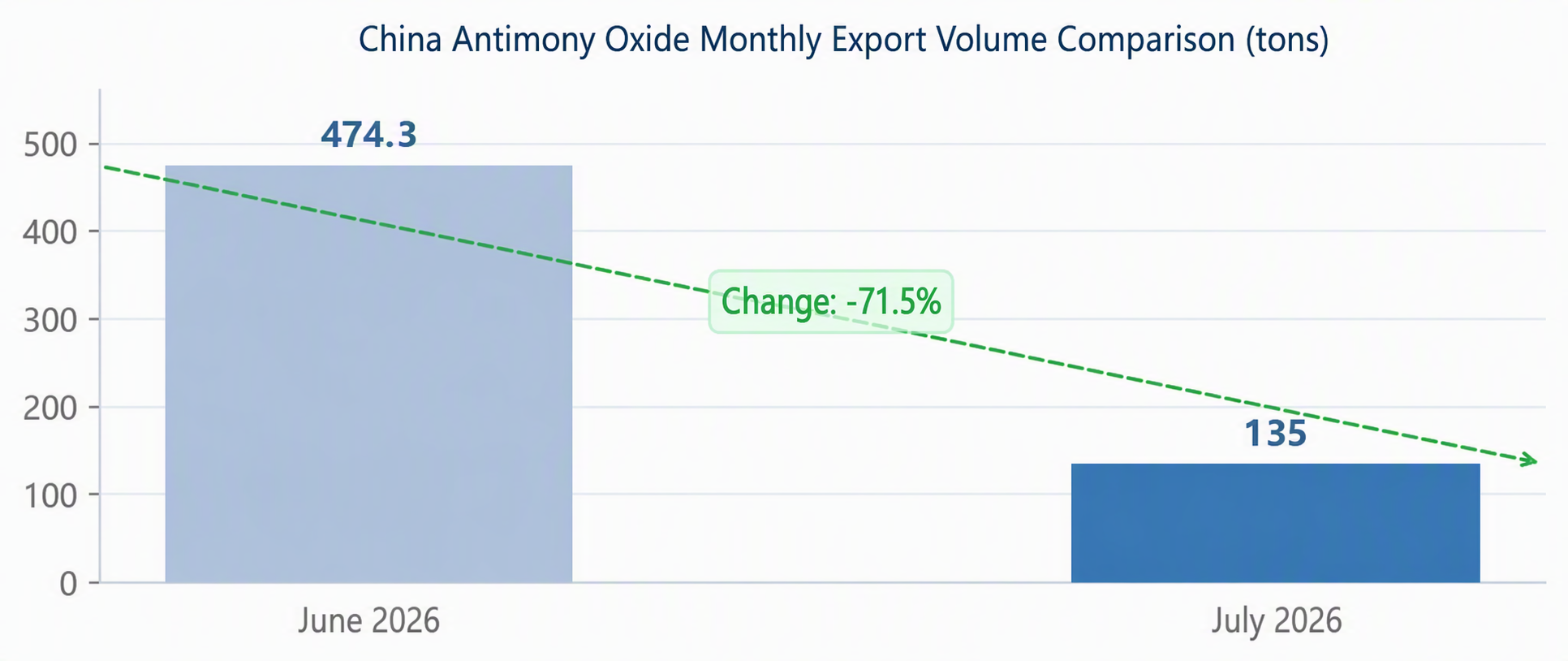
Customs data showed that in July 2026, China’s antimony oxide exports were 135 mt, down sharply by 71.5% MoM from 474.3 mt in June, with export volumes falling again to a historically low range. By destination, Russia was the largest export market, accounting for more than 60%. Meanwhile, July exports of unwrought antimony (antimony ingot) were zero; antimony ingot exports remained constrained, and overall exports of antimony products in China continued to contract. On the policy side, antimony and antimony products remained listed in the Catalogue of Goods Subject to Export License Administration (2026), and were subject to dual management under “state trading + dual-use items export controls” (a total of 11 state-trading enterprises for antimony exports in 2026–2027, and the dual-use items control list 3C003 covering antimony-related items), keeping export channels continuously constrained.
|
Product |
July 2026 |
June 2026 |
MoM Change |
|
Imports of antimony ores and concentrates (mt) |
5,400.89 |
10,688.6 |
-49.5% |
|
Antimony oxide exports (mt) |
135 |
474.3 |
-71.5% |
|
Unwrought antimony exports (mt) |
0 |
0 |
Flat |
|
Crude antimony (antimony concentrates) imports (mt) |
107.18 |
— |
Low level |
|
Imports of antimony oxides (mt) |
0.156 |
— |
Low level |
Overall, antimony product imports and exports in July continued the dual-decline pattern of “lower imports and shrinking exports.” The sharp pullback in raw material imports reinforced smelters’ willingness to hold prices firm on the cost side, becoming the core support for this week’s rise in antimony ingots; persistently weak exports had previously capped the price elasticity of antimony oxide, but under cost pass-through this week, antimony oxide posted a clear catch-up rally, and the “strong ingot, weak oxide” structure was repaired temporarily. If subsequent monthly antimony oxide exports can continue to break above 500 mt or even reach the 1,000-mt level, it will substantively validate expectations for an export recovery and significantly ease demand-side concerns.
End-use demand overall showed a divergent pattern: the flame-retardant sector showed signs of mild improvement, but procurement still mainly followed orders, and pass-through of high-price transactions was not smooth; the PV glass industry implemented a second round of production cuts, with demand remaining mediocre—expectations for supply contraction were clear, providing limited demand boost for antimony; sodium pyroantimonate demand was mediocre, with production maintaining low-level fluctuations. Although inventories at end-use manufacturers had already been sufficiently replenished earlier, considering expectations for the September-October peak season, stockpiling was only a matter of time; however, during the price uptrend, downstream wait-and-see sentiment of rushing to buy amid continuous price rise and holding back amid price downturn persisted, the pace of restocking for rigid demand slowed somewhat, and speculative enthusiasm also cooled in tandem.
In the short term, smelters holding prices firm and holding back from selling under losses, together with downstream stockpiling expectations for the September-October peak season, remained the main support for prices. After the average price of 1# antimony ingot firmly held above 100,000 yuan/mt, antimony prices were expected to continue consolidating on a strong note and consolidating at highs; however, with the pace of restocking for rigid demand slowing down, speculative enthusiasm cooling, and poor pass-through of high-price transactions, the upward slope may gradually narrow, and a slight correction cannot be ruled out before another buildup of momentum. The key variables are whether downstream peak-season orders can materialize and the strength of demand release. In the medium and long-term, the long-term tightness in antimony ore raw materials remained unchanged, antimony ingot exports stayed constrained, and export control policies continued; with strengthened transshipment hubs in regions such as Thailand, the price center was expected to gradually repair.
![Supply-demand weakness is evident, and antimony prices show a weak trend [SMM Antimony Market Spot Weekly Review]](https://imgqn.smm.cn/usercenter/HGHao20251217171725.jpg)