Southeast Asia's Role in Global Trade and Supply Chains
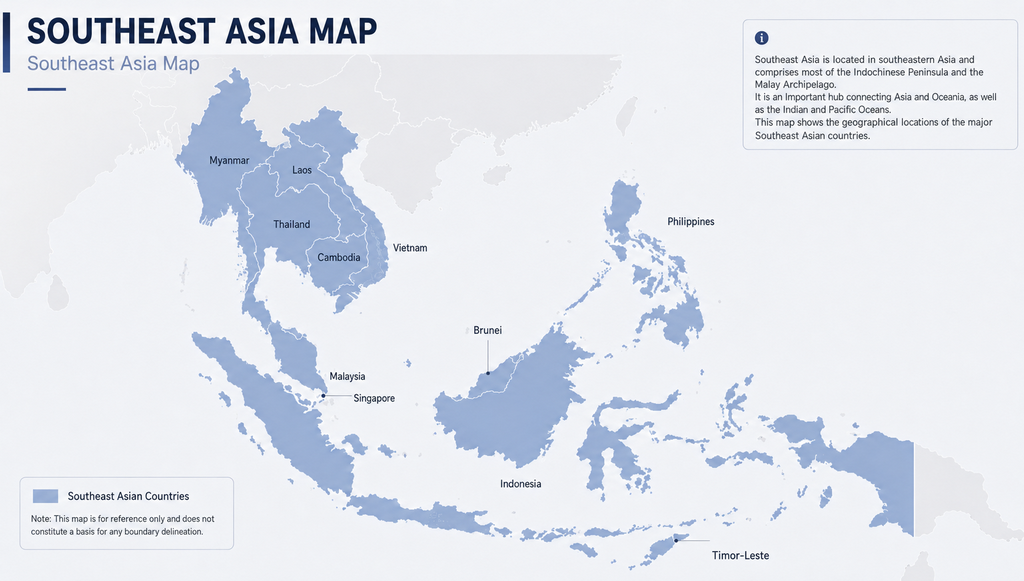
Situated between the Indian and Pacific Oceans, Southeast Asia serves as a crucial node for trade and supply chains, connecting East Asia, South Asia, the Middle East, and Europe. Driven by regional economic development, the expansion of manufacturing, and the shifting of industrial supply chains, its position within global production, processing, and trade systems continues to elevate.
Furthermore, Southeast Asia possesses abundant mineral resources, such as coal and nickel, and actively participates in the regional and global circulation of energy and industrial raw materials. Consequently, Southeast Asia is not only a vital source of resources but also a critical link in the global supply chain and the commodity trade system.
1.0 Southeast Asian Coal Market Overview
Industrialization and electricity demand in Southeast Asia continue to grow, and coal remains an important source of support for baseload power generation and industrial energy use across the region.
Coal resources in the region are highly concentrated in Indonesia and Vietnam. Indonesia primarily produces low- to medium-rank coal, mainly sub-bituminous coal and lignite, and is the largest coal producer and exporter in Southeast Asia. In 2024, the country produced approximately 836 Mt of coal and exported around 555 Mt, making it the dominant supplier of seaborne coal in the region. Vietnam, meanwhile, has significant anthracite resources, particularly in Quang Ninh Province.
On the demand side, coal consumption is mainly concentrated in Indonesia, Vietnam, and Malaysia. Over the long term, the energy transition, expansion of renewable energy, and development of power grids are expected to gradually constrain coal demand growth and eventually exert downward pressure on demand. However, the timing of peak coal demand varies across countries due to differences in electricity demand growth, the scale of existing coal-fired power capacity, and the expansion of captive power plants for industrial use. In the short term, electricity generation and energy-intensive industries continue to provide strong support for coal demand.
Current market risks mainly stem from Indonesia’s production quota policy under the Work Plan and Budget (Rencana Kerja dan Anggaran Biaya, RKAB), as well as differences in coal quality requirements across markets, including calorific value, sulfur content, ash fusion temperature, and the Hardgrove Grindability Index (HGI). These differences can create risks related to supply substitution and contract fulfillment.
2.0 Coal Industry Structure and Market Roles of Major Southeast Asian Countries
2.1 Cumulative Coal Production and Consumption in Major Southeast Asian Countries, 2020–2025
Coal Production Trends and Cumulative Output in Major Southeast Asian Countries, 2020–2025
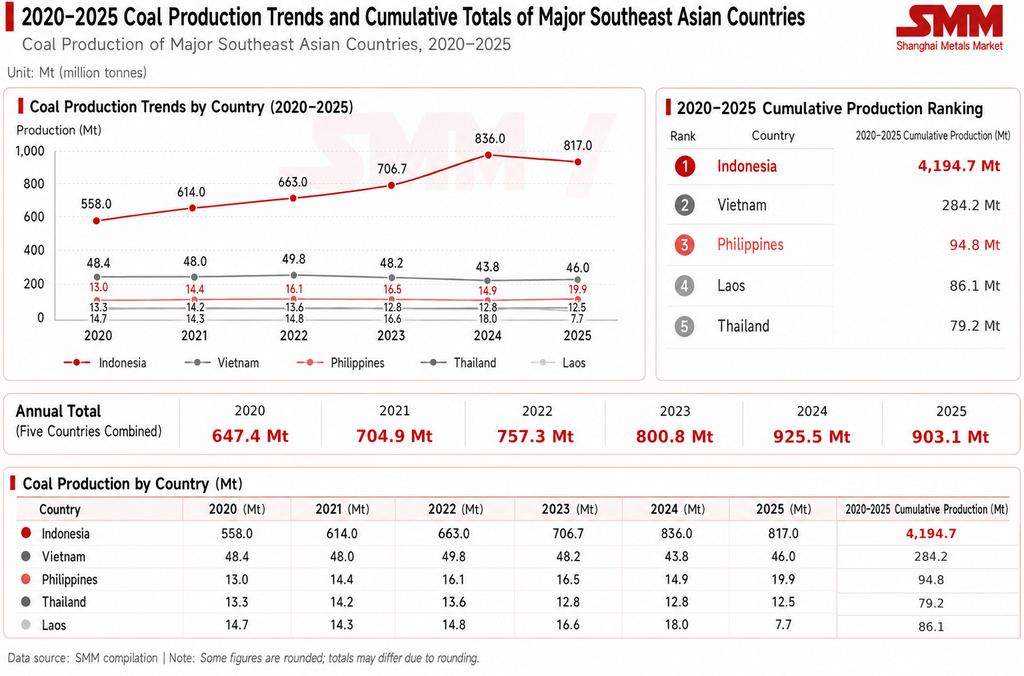
Southeast Asia’s Coal Production Expands, but Supply Remains Highly Concentrated
From 2020 to 2025, the combined coal production of Southeast Asia’s five major coal-producing countries increased from 647.4 Mt to 903.1 Mt, representing an overall increase of 39.5%. However, this production growth did not lead to a significant diversification of supply sources. Over the six-year period, Indonesia’s cumulative coal production reached 4,194.7 Mt, accounting for approximately 88.5% of the combined production of the five countries, while Vietnam, the Philippines, Laos, and Thailand together accounted for only about 11.5%. Therefore, the expansion of regional coal supply remained fundamentally dependent on Indonesia rather than being driven by broad-based production growth across all producing countries.
This structure means that the main risk facing the Southeast Asian coal market is not a lack of coal-producing countries, but rather the insufficient scale of alternative supply from other producers. If coal production in Indonesia is disrupted, domestic supply policies are tightened, or rising domestic industrial coal demand reduces export availability, Vietnam, the Philippines, Laos, and Thailand would find it difficult to replace an equivalent volume of supply in the short term. As a result, Indonesia’s production plans, domestic coal demand, and export policies have a strong influence on regional coal supply.
It is worth noting that the combined production of the five countries reached 925.5 Mt in 2024 before declining to 903.1 Mt in 2025, a decrease of 22.4 Mt, or approximately 2.4%. However, this chart can only demonstrate that production declined; it cannot, on its own, explain the reasons for the decline. Whether the decrease was related to the Work Plan and Budget (RKAB), coal prices, weather conditions, mine operations, or changes in import demand still needs to be further verified using policy developments, company production data, and trade data.
Even if Indonesia maintains a high level of coal production, the amount of coal available for export could still decline if domestic coal demand from PLN, nickel smelting industrial parks, and other industries rises at the same time. Therefore, assessing whether coal supply in Southeast Asia is loose or tight requires more than just looking at production. Domestic consumption, export volumes, and trade flows must also be taken into account.
Coal Consumption Trends and Cumulative Consumption in Major Southeast Asian Countries, 2020–2025
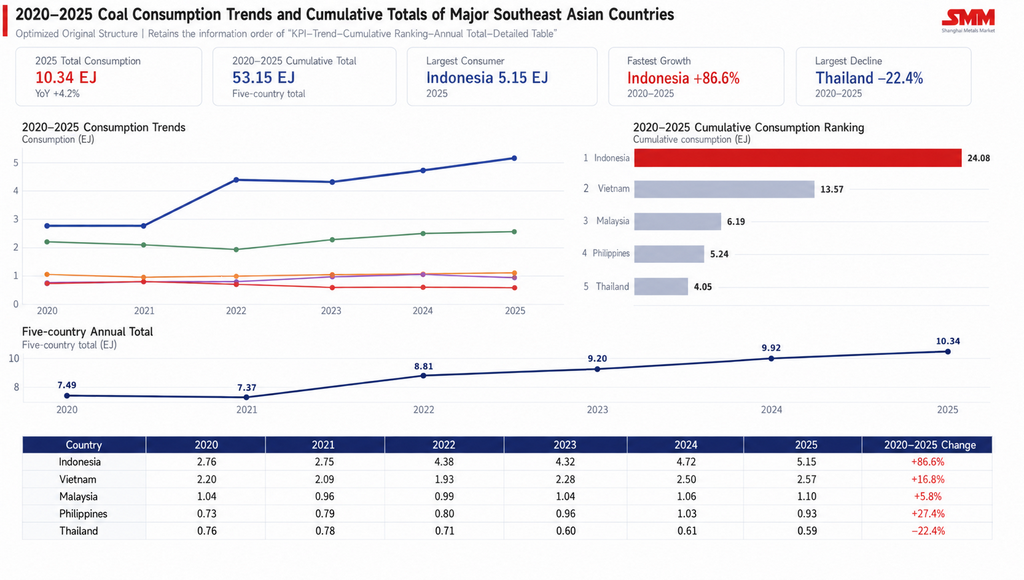
Data Source: Energy Institute
Growth and Structural Changes in Coal Consumption in Major Southeast Asian Countries, 2020–2025
From 2020 to 2025, total coal consumption across five major Southeast Asian countries increased from 7.49 EJ to 10.34 EJ, a cumulative increase of 2.85 EJ, or 38.1%, indicating that the absolute scale of coal consumption in these five countries continued to expand. However, regional growth was not driven evenly across countries and was highly concentrated in Indonesia. Over the six-year period, Indonesia’s coal consumption increased by 2.39 EJ, accounting for 83.9% of the five countries’ net increase, while Vietnam recorded an increase of 0.37 EJ, making it the second-largest contributor to consumption growth. Together, Indonesia and Vietnam accounted for 66.2% of total consumption in 2020, rising to 74.7% in 2025, an increase of approximately 8.4 percentage points. This indicates a further concentration of regional coal consumption in these two countries.
This shift is supported by underlying industrial developments. In Indonesia, consumption growth has been driven not only by public coal-fired power generation, but also by the expansion of nickel smelting and captive coal-fired power generation for industrial use. Vietnam, meanwhile, continued to rely on coal-fired power generation to meet rising electricity demand. In the first ten months of 2025, coal-fired power generation reached 124.26 TWh, accounting for 46.2% of the country’s total electricity generation and imports. By comparison, coal consumption in Malaysia remained broadly stable, consumption in the Philippines increased but showed year-to-year fluctuations, while Thailand’s consumption declined from 0.76 EJ to 0.59 EJ. Therefore, although overall coal demand in Southeast Asia continued to rise, the sources of growth were uneven. Future changes in regional coal demand are likely to be increasingly influenced by electricity demand, the development of energy-intensive industries, and energy policy adjustments in Indonesia and Vietnam.
2.2 Indonesia: The Core of Regional Supply and the Largest Growth Market for Coal Demand
2.2.1 Major Coal-Producing Regions and Coal Types
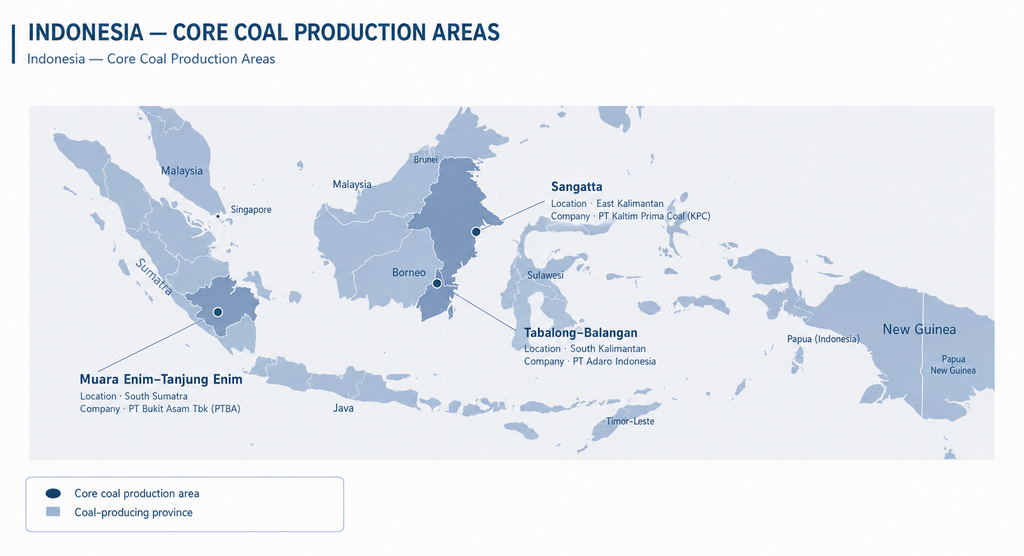
Coal production in Indonesia is highly concentrated in Kalimantan and Sumatra, with three major production hubs: East Kalimantan, South Kalimantan, and South Sumatra. East Kalimantan is represented by large-scale open-pit coal mines such as Sangatta, with major producers including PT Kaltim Prima Coal (KPC). South Kalimantan is represented by the Tabalong–Balangan coal-producing area and PT Adaro Indonesia, while South Sumatra is centered on the Muara Enim–Tanjung Enim mining area and PT Bukit Asam Tbk (PTBA).
Overall, Indonesia’s coal supply is characterized by a high degree of regional concentration and the dominance of large-scale open-pit mining. These characteristics are also an important foundation for the country’s ability to maintain large-scale and relatively low-cost coal supply over the long term.
2.2.2 Major Coal Producers
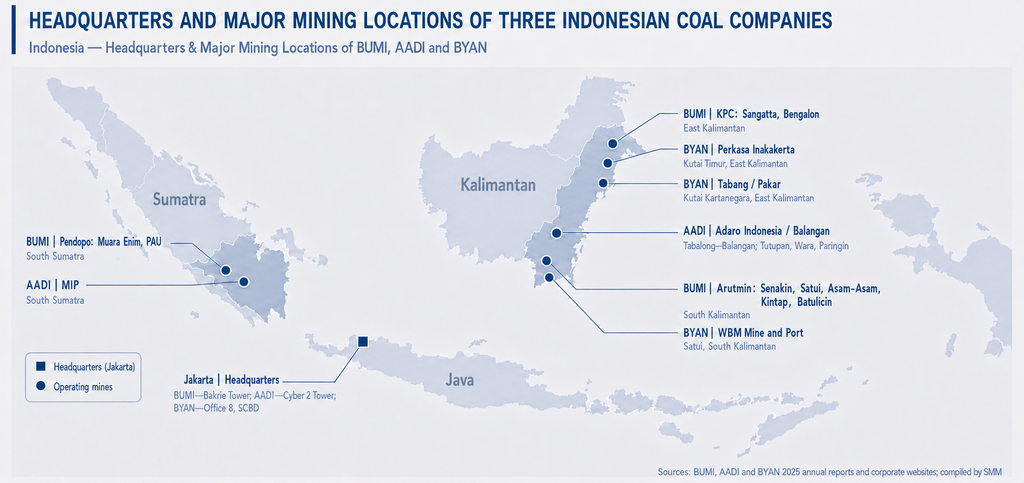
PT Bumi Resources Tbk(BUMI)
BUMI is one of Indonesia’s largest thermal coal groups, with its coal operations mainly conducted through KPC and PT Arutmin Indonesia (Arutmin). KPC’s core assets are the Sangatta and Bengalon mining areas in East Kalimantan. Arutmin operates several open-pit mines in South Kalimantan, including Senakin, Satui, Mulia/Jumbang, Sarongga, Asam-Asam, and Kintap, supported by associated port and conveyor facilities.
In 2025, BUMI produced 74.8 Mt of coal, of which KPC contributed 53.5 Mt and Arutmin approximately 21.3 Mt. The group recorded net profit of USD 122.3 million, including approximately USD 81.01 million in net profit attributable to shareholders of the parent company.
Its cost structure is mainly driven by overburden removal, mining contractor expenses, fuel, transportation, and royalties. In 2025, the stripping ratios at KPC and Arutmin were approximately 8.5x and 6.6x, respectively. Therefore, reducing the stripping ratio, fuel consumption, and haulage distance is critical to controlling production costs.
PT Adaro Andalan Indonesia Tbk(AADI)
AADI is an integrated thermal coal producer. Its core mining assets include the Tutupan and Wara mining areas operated by PT Adaro Indonesia, three mining areas under Balangan Coal, and Mustika Indah Permai (MIP) in South Sumatra. The company also operates across mining services, barge transportation, terminals, coal-fired power generation, and water supply, forming an integrated logistics chain from the mine to vessel loading.
In 2025, coal production reached 68.73 Mt, up 4.4% year on year, while coal sales rose 5.7% year on year to 71.94 Mt. The sales volume included approximately 3.2 Mt of third-party coal trading. Net profit was approximately USD 760 million.
The average stripping ratio for the year was approximately 4.24x, significantly lower than those at BUMI’s major mining operations. As a result, lower overburden removal requirements and the company’s integrated logistics network provide a cost advantage. However, fuel costs, mining contractor expenses, and royalties remain key cost variables.
PT Bayan Resources Tbk(BYAN)
BYAN is an integrated thermal coal producer, with its core assets located in the Tabang and Pakar mining areas in East Kalimantan. The company also operates multiple coal logistics facilities, including the Balikpapan Coal Terminal (BCT) and the Kalimantan Floating Transfer Facility (KFT). The large reserves and relatively low stripping ratios at Tabang and Pakar are key contributors to the company’s production growth and low-cost operations.
In 2025, coal production reached 68.0 Mt, up 19.6% year on year, while coal sales totaled 70.8 Mt. Net profit attributable to shareholders of the parent company was approximately USD 767.9 million. The average cash cost for the year was approximately USD 32.5/t. Its cost advantage mainly comes from relatively low stripping ratios, shorter waste haulage distances, and control over coal transportation, barging, and vessel-loading infrastructure.
2.2.3 Coal Consumption Structure
Coal consumption in Indonesia is primarily driven by thermal coal used for power generation, but the demand structure is shifting from the traditional public power system toward a dual structure of “public power generation + industrial captive power generation.” PLN and IPP remain the largest coal-consuming segments. At the same time, the expansion of nickel smelting, stainless steel, and coking projects has made industrial parks such as IMIP and IWIP important sources of incremental coal demand.
Public power plants mainly consume domestically produced Indonesian thermal coal, while industrial parks use thermal coal for power generation and also require coking coal for coke production.
2.2.4 Major Coal-Consuming Companies and Industrial Groups
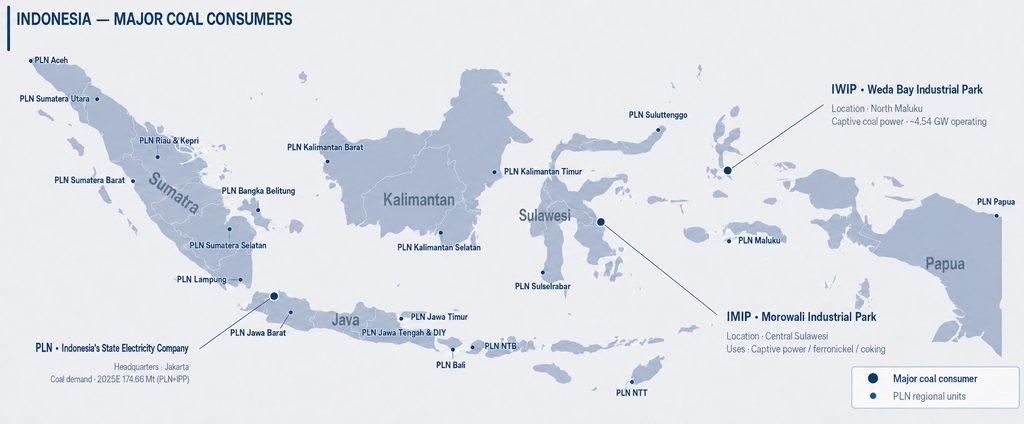
PT Perusahaan Listrik Negara(PLN)/PLN Energi Primer Indonesia(PLN EPI)
PLN and IPP power plants together constitute Indonesia’s largest source of coal demand. In 2024, PLN EPI projected that coal demand from PLN and IPPs would reach 174.66 Mt in 2025, up 4% from the 2024 forecast of 167.98 Mt. This figure represents projected coal demand for the entire public power system rather than the actual coal consumption of PLN alone.
Coal is mainly supplied by domestic Indonesian mining companies and is secured under the Domestic Market Obligation (DMO). Key cost variables within the PLN system include delivered coal prices, compatibility of calorific value and ash content with power plant requirements, barging and seaborne transportation costs, and inventory management. Although lower-calorific-value coal is generally cheaper on a per-tonne basis, a larger volume is required to generate the same amount of electricity. Therefore, procurement costs cannot be assessed solely by comparing coal prices per tonne.
Indonesia Morowali Industrial Park(IMIP)
IMIP was jointly developed by Tsingshan Holding Group, a major Chinese steel and nickel company, and Indonesia’s Bintang Delapan Group. It is a large integrated industrial park centered on nickel smelting and downstream industries. IMIP’s main activities include nickel smelting, ferronickel production, stainless steel production, and battery materials.
IMIP is one of Indonesia’s most important industrial coal-consuming clusters. Coal is mainly used for captive coal-fired power generation and coke production. Thermal coal is primarily used in captive power plants to supply electricity to nickel smelting, stainless steel, and other industrial facilities, while coking coal is used in coking projects to produce coke for steelmaking within the industrial park.
China Risun, a Chinese coking company, has disclosed that approximately one-third of the coking coal feedstock used by its IMIP coking project comes from Indonesia, although this proportion should not be taken as representative of the entire industrial park. In 2025, small volumes of Chinese coking coal were also traded into Sulawesi, indicating that the industrial park has some flexibility to adjust its international procurement sources. The cost of IMIP’s captive coal-fired power plants is mainly affected by thermal coal prices, power plant efficiency, and utilization rates.
Indonesia Weda Bay Industrial Park(IWIP)
IWIP is a large integrated industrial park jointly developed by Chinese industrial groups including Tsingshan, Huayou, and Zhenshi. Its development is primarily centered on nickel resource processing, nickel smelting, and electric vehicle battery materials. IWIP was established in 2018 and currently hosts multiple companies engaged in nickel processing, smelting, and battery material production.
IWIP’s coal demand mainly comes from captive coal-fired power plants that supply electricity to nickel smelting and other industrial facilities within the park. Nickel smelting, particularly processes such as the Rotary Kiln–Electric Furnace (RKEF), requires large volumes of continuous and stable electricity. As a result, the industrial park has developed large-scale captive coal-fired power generation capacity. As of 2025, publicly available project information indicates that coal-fired power capacity associated with IWIP had exceeded 4 GW, providing electricity for the production of ferronickel, nickel matte, and other intermediate nickel products.
2.3 Vietnam: Domestic Anthracite Production Alongside Import Coal Demand
2.3.1 Major Coal-Producing Regions and Coal Types
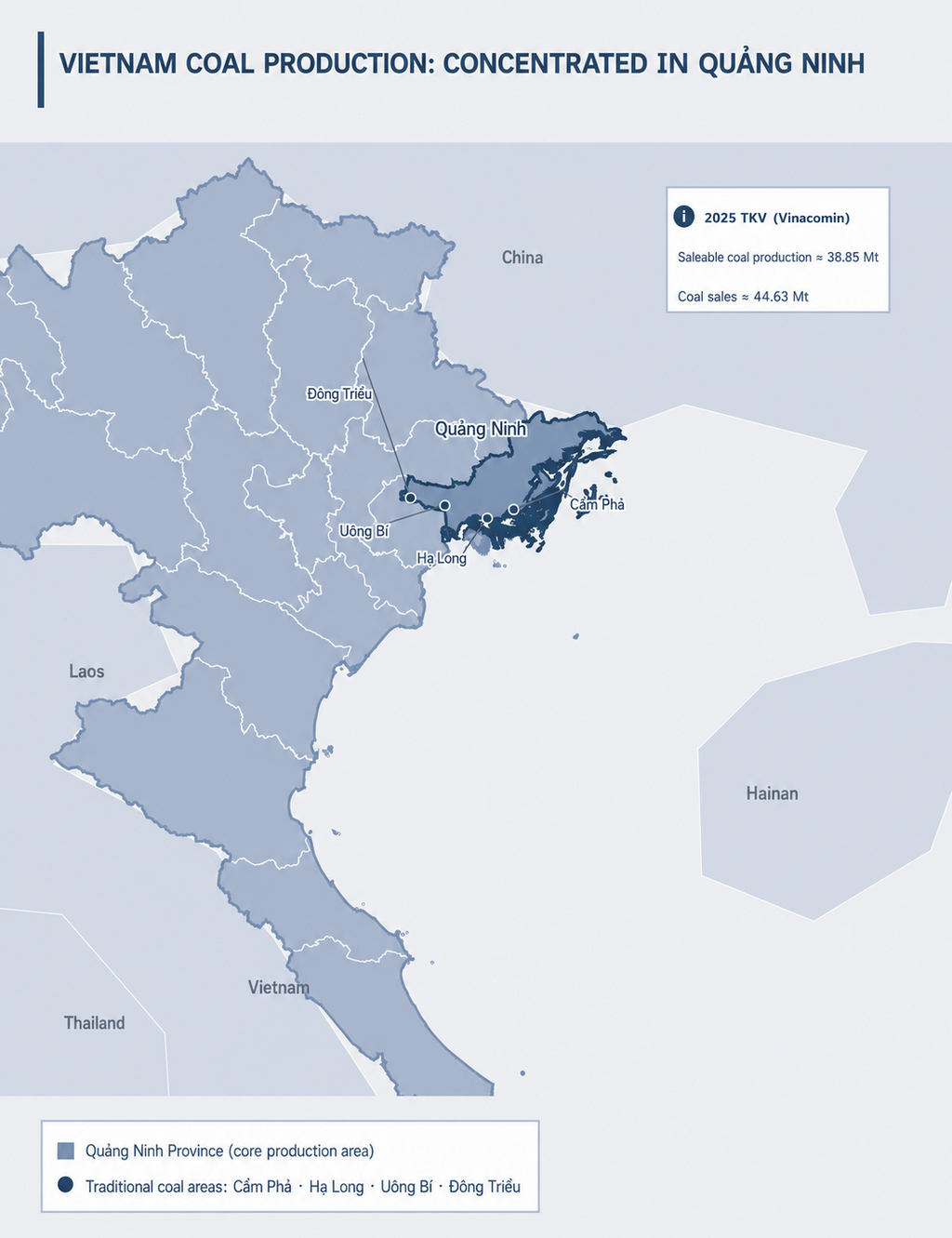
Vietnam’s coal production is even more geographically concentrated, with its core producing areas almost entirely located in Quảng Ninh Province. Major traditional coal-producing areas include Cẩm Phả, Hạ Long, Uông Bí, and Đông Triều. The representative coal type is anthracite, which differs significantly from Indonesia’s supply structure, where low- to medium-calorific-value sub-bituminous coal predominates.
Compared with lignite, sub-bituminous coal, and bituminous coal, anthracite is characterized by the highest carbon content, lower impurity levels, greater hardness and density, a higher ignition temperature, and smokeless combustion. Vietnamese anthracite generally has a carbon content of above 80%, with purity of more than 65%. Due to its low sulfur content, it typically produces little unpleasant odor during combustion. Its calorific value generally ranges from 6,900 to 7,300 kcal/kg, while volatile matter is typically around 3%–10%.
Vietnam National Coal and Mineral Industries Group (VINACOMIN / TKV) is the country’s most important coal production group. In 2025, TKV produced approximately 38.85 Mt of saleable coal and recorded coal sales of approximately 44.63 Mt.
Overall, Vietnam is characterized not only by a high degree of geographical concentration in coal production, but also by a coal type and statistical reporting framework that differ significantly from those of Indonesia.
2.3.2 Major Coal Producers
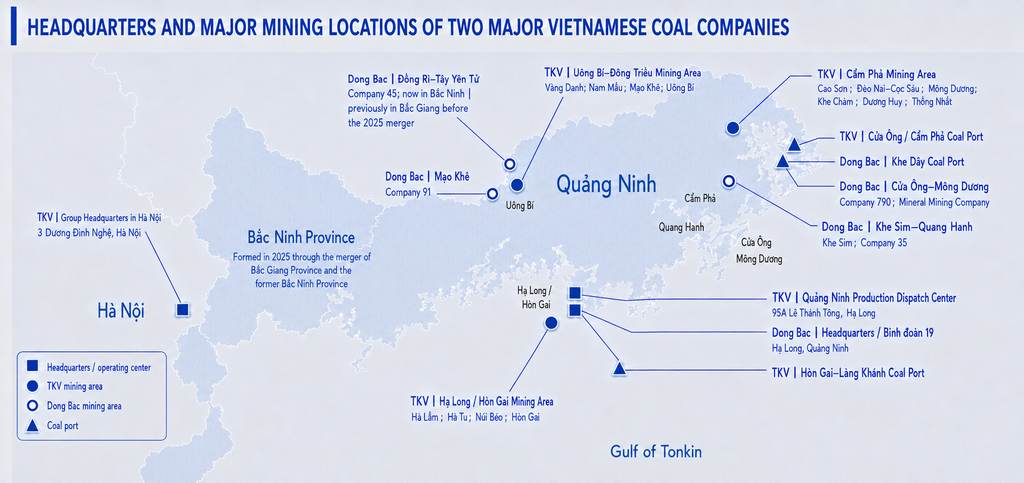
TKV/VINACOMIN
Although TKV is Vietnam’s largest state-owned coal and mineral group, with its coal mines mainly concentrated in Quang Ninh and its mining operations covering both open-pit and underground mines, the group also operates its own power generation business through DTK / Vinacomin - Power Holding Corporation. Coal Import Export JSC (Coalimex), meanwhile, was established before the formation of the current TKV group structure and was later incorporated into the TKV system as Vietnam’s coal industry underwent restructuring. Coalimex is an independent joint-stock company and a member of the TKV group under state-controlled ownership, mainly engaged in coal imports and exports, international procurement, processing, and trading.
TKV’s representative open-pit mines include Cao Son, Deo Nai–Coc Sau, and Ha Tu, while its major underground mines include Ha Lam, Khe Cham, Mao Khe, Vang Danh, and Nui Beo.
In the first five months of 2025, TKV sold approximately 22.24 Mt of coal, of which 19.21 Mt was supplied to power plants, accounting for around 86% of total sales. In 2025, TKV produced approximately 38.4 Mt of raw coal and 38.85 Mt of saleable coal, while coal sales reached 44.63 Mt. Sales exceeded its own production mainly because TKV also sold imported coal, blended coal products, and coal from inventories. The group recorded consolidated profit of approximately VND 7.66 trillion, but this figure also includes its minerals, power generation, chemicals, and other businesses and therefore should not be regarded as profit from the coal segment alone. As underground mining continues to extend to greater depths, ventilation, drainage, roadway development, safety management, and labor are becoming major sources of cost pressure.
Dong Bac Corporation(Dong Bac)
Dong Bac is a defense-economic enterprise under Vietnam’s Ministry of National Defence and is the country’s most important domestic coal producer outside the TKV system. Its mining operations are mainly located in Quang Ninh and include both open-pit and underground mining. The company also engages in coal screening, processing, imports, and blending.
In recent years, Dong Bac’s average coal production has exceeded 7 Mt per year, while coal sales have approached 11 Mt per year. The higher sales volume reflects the inclusion of imported coal in its sales portfolio, meaning that sales volume should not be directly equated with its own coal production.
Because its mining operations are relatively dispersed and geological conditions are complex, its cost structure is mainly affected by underground mining costs, mine-site transportation, coal screening and processing, as well as the cost of imported coal used for blending.
2.3.3 Coal Consumption Structure
Vietnam’s coal consumption continues to be dominated by the power sector. Domestically produced anthracite is mainly supplied to coal-fired power plants in northern Vietnam, while imported bituminous and sub-bituminous coal is primarily used by power plants in central and southern Vietnam that are designed to burn imported coal.
Although coal consumption in the steel industry remains lower than in the power sector, the importance of coking coal demand is increasing as blast furnace projects such as Hoa Phat Dung Quat 2 come into operation.
2.3.4 Major Coal-Consuming Companies
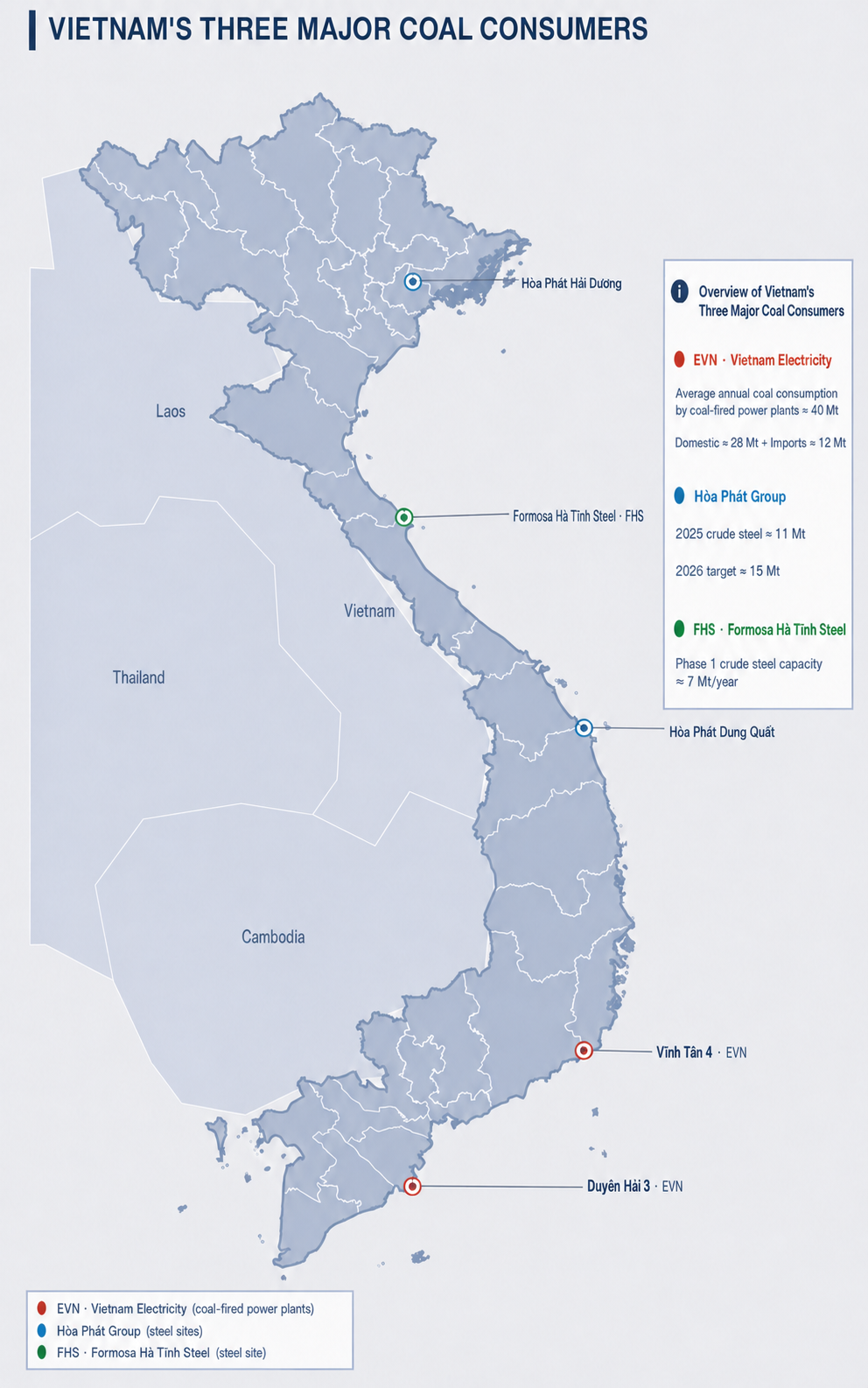
Vietnam Electricity(EVN)
EVN is Vietnam’s state-owned integrated power group, with operations covering power generation, transmission, distribution, and electricity sales. Coal-fired power plants operated by EVN and its Power Generation Corporations (GENCOs) consume an average of approximately 40 Mt of coal per year, including around 28 Mt of domestically produced anthracite and approximately 12 Mt of imported bituminous or sub-bituminous coal. Under the 2025 operating plan scenario, demand for domestic coal was estimated at approximately 27.31–28.53 Mt, while demand for imported coal was approximately 11.13 Mt, bringing total coal demand to around 38.44–39.66 Mt.
EVN also owns the National Power Transmission Corporation (EVNNPT), which is responsible for the national high-voltage transmission network. Its five major regional electricity distribution and retail companies are EVNNPC (Northern Vietnam), EVNCPC (Central Vietnam), EVNSPC (Southern Vietnam), EVNHANOI (Hanoi), and EVNHCMC (Ho Chi Minh City). These companies and EVNNPT are all part of the EVN system, but they perform different functions across electricity transmission, distribution, and retail.
Domestic anthracite and blended coal are mainly supplied by TKV and Dong Bac, while imported bituminous and sub-bituminous coal is primarily used by generating units designed for imported coal, including Vinh Tan 4, Duyen Hai 3, and the Duyen Hai 3 Expansion. Fuel costs within the EVN system are mainly affected by domestic coal prices, CFR prices of imported coal, coal quality and blending ratios, as well as port and transportation costs.
Hoa Phat Group(Hoa Phat)
Hoa Phat is one of Vietnam’s largest integrated steel producers using the blast furnace–basic oxygen furnace route. Its steel operations are mainly concentrated at the Hai Duong and Dung Quat integrated steel complexes, which are equipped with coking, sintering, blast furnace, basic oxygen furnace, and rolling facilities. In 2025, the group’s crude steel production reached 11 Mt, up 26% year on year.
Hoa Phat uses the Blast Furnace–Basic Oxygen Furnace (BF–BOF) production route. Coking coal is first converted into coke in coke ovens and then used in blast furnaces for ironmaking. Pulverized Coal Injection (PCI) coal is also injected into blast furnaces to partially replace coke. Therefore, Hoa Phat’s coal demand is mainly concentrated in coking coal and PCI coal rather than conventional thermal coal used in the power sector. As Dung Quat 2 ramps up to full production, higher hot metal and crude steel output will correspondingly increase demand for coke, coking coal, and PCI coal.
Dung Quat is Hoa Phat’s largest steel production base, with an overall designed capacity of nearly 12 Mt per year. It is also equipped with a deep-water port capable of handling large bulk carriers, facilitating the direct import of bulk raw materials such as iron ore and coking coal. The group’s current crude steel capacity is approximately 16 Mt per year and is expected to increase further to 18 Mt per year by 2027, including around 9 Mt of hot-rolled coil (HRC) and 9 Mt of long steel products. However, part of the additional capacity will come from electric arc furnace projects, meaning that growth in the group’s total steelmaking capacity cannot be directly translated into a proportional increase in coking coal demand.
Hoa Phat’s raw material costs are mainly affected by international coking coal and PCI coal prices, iron ore prices, coke rate, PCI rate, freight costs, exchange rates, and blast furnace utilization rates. Australian Premium Hard Coking Coal (PHCC) can serve as an important international benchmark for its coking coal costs, although actual procurement costs also depend on the coal mix, blending structure, and delivered logistics costs.
Formosa Ha Tinh Steel(FHS)
FHS is a foreign-invested integrated steel producer located in the Vung Ang Economic Zone of Ha Tinh Province, Vietnam. The project is led by Formosa Plastics Group of Taiwan, with participation from China Steel Corporation (CSC) of Taiwan and Japan’s JFE Steel.
FHS operates a complete integrated steelmaking production chain, including coking, sintering, blast furnaces, basic oxygen furnaces, and rolling facilities. It has also developed and operates Son Duong Port, which is used for importing bulk raw materials such as iron ore and coal, as well as for exporting steel products. According to official information from FHS, its two blast furnaces have a combined hot metal production capacity of approximately 7 Mt per year, while its semi-finished steel capacity, including billets and slabs, is approximately 7.1 Mt per year, and its coke production capacity is around 3 Mt per year.
FHS uses the blast furnace–basic oxygen furnace production route, meaning that its coal demand is mainly concentrated in coking coal and PCI coal. Coking coal is first processed in coke ovens to produce coke, which is then used in blast furnaces for ironmaking. PCI coal is injected directly into blast furnaces to partially replace coke. FHS’s internal energy system also utilizes by-product gases from the steelmaking process, including coke oven gas and blast furnace gas.
In addition, FHS proposed a further expansion in 2025 that would increase the steelmaking capacity of the integrated complex to approximately 15 Mt per year.
2.4 Philippines: Domestic Low-Rank Coal Supply Complemented by Imports
2.4.1 Major Coal-Producing Regions and Coal Types
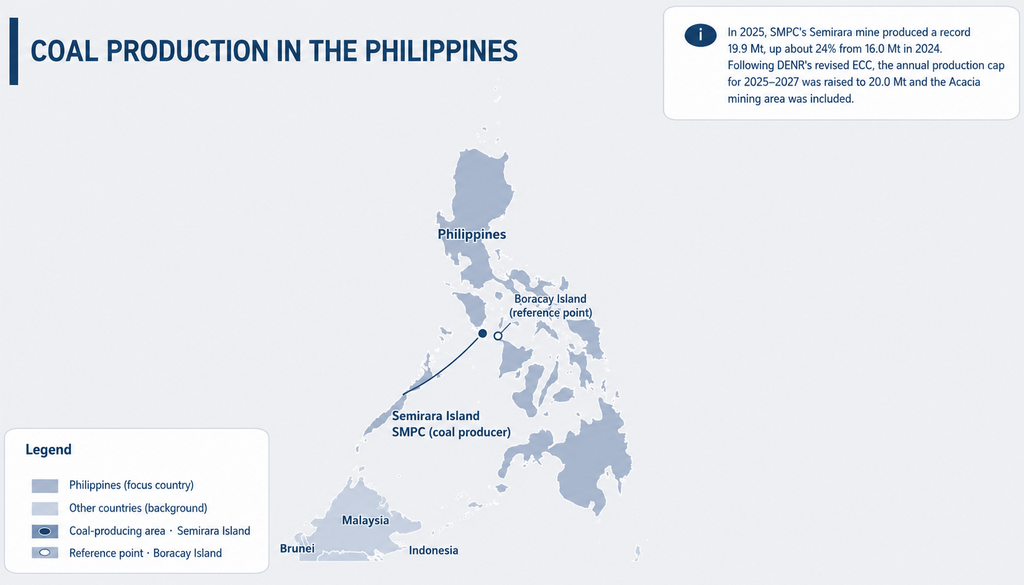
Coal production in the Philippines is almost entirely concentrated on Semirara Island, with Semirara Mining and Power Corporation (SMPC) serving as the country’s principal coal producer.
Previously, the Environmental Compliance Certificate (ECC) for the Semirara Coal Mine Complex capped annual coal production at 16.0 Mt. In 2025, the Philippine Department of Environment and Natural Resources (DENR) approved a revised ECC that expanded the project scope to include the Acacia mine and raised the annual production limit to 20.0 Mt for 2025–2027.
Driven by improved mining conditions at the Narra mine and the relaxation of production constraints, SMPC’s coal output rose to a record 19.9 Mt in 2025, up approximately 24% from 16.0 Mt in 2024.
2.4.2 Major Coal Producers
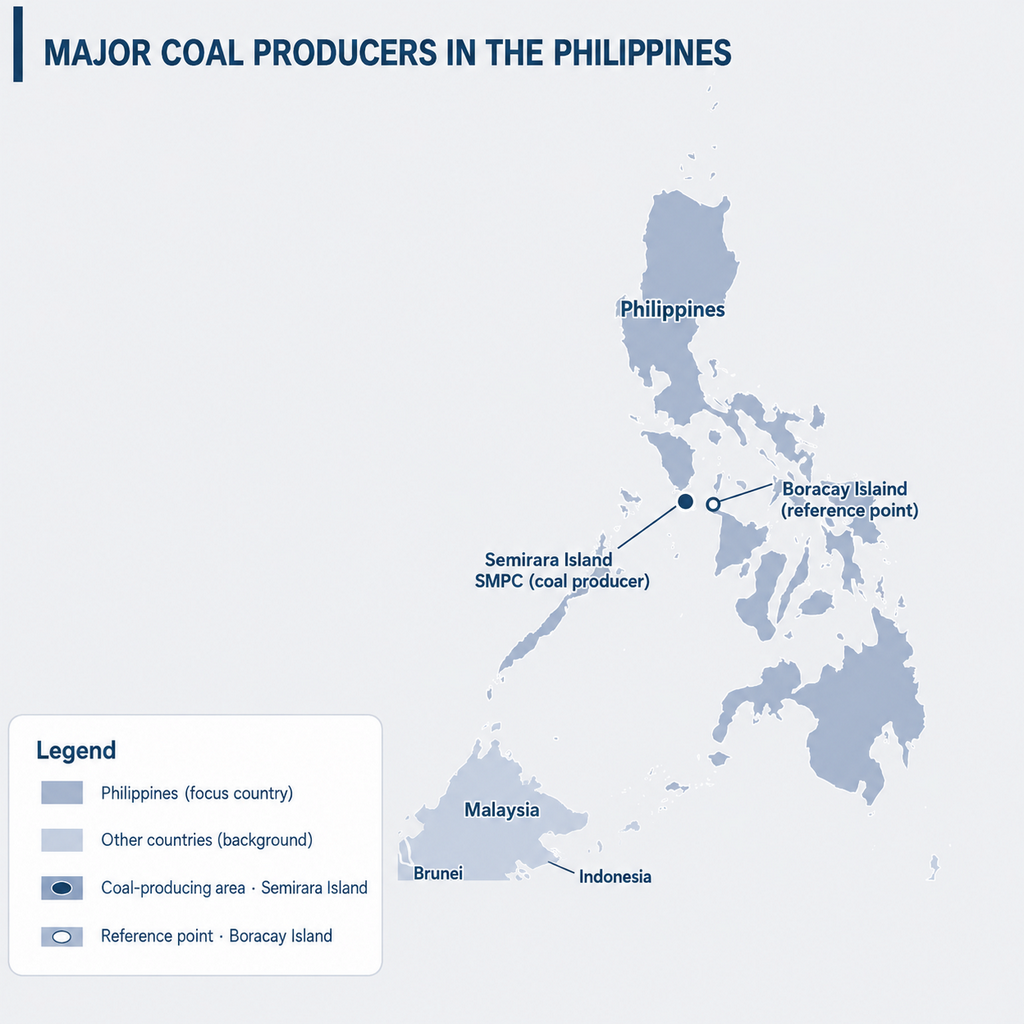
SMPC
SMPC is the largest coal producer in the Philippines, with its core mining operations located on Semirara Island in Antique Province. According to the latest data from the Philippine Department of Energy (DOE) cited in the company’s 2025 report, SMPC accounted for approximately 97% of the country’s total coal production. As of the end of 2025, DMCI Holdings held approximately 56.65% of SMPC’s shares, making it the company’s controlling shareholder. SMPC also operates coal-fired power generation businesses through Sem-Calaca Power Corporation (SCPC) and Southwest Luzon Power Generation Corporation (SLPGC), making it a vertically integrated energy company combining coal mining and coal-fired power generation.
In 2025, SMPC’s coal production reached approximately 19.9 Mt, a record high, while the group’s consolidated net profit was approximately PHP 13.06 billion. SMPC’s annual coal production limit was increased from 16 Mt to 20 Mt under its Environmental Compliance Certificate (ECC), rather than solely as a result of an expansion in the mine’s technical production capacity.
In 2025, SMPC’s effective stripping ratio was approximately 11.4:1. As the company operates large-scale open-pit mines, its production costs are significantly affected by overburden removal volumes, diesel costs, labor, and the operation and maintenance of mining equipment. In addition, depreciation and amortization associated with new mining equipment and pre-stripping activities at the Narra mine also affect unit coal production costs.
2.5 Malaysia: A Coal-Consuming Market Highly Dependent on Imports
2.5.1 Coal Consumption Structure
Coal consumption in Malaysia is highly concentrated in the power sector, with the country relying almost entirely on imported coal. In 2025, coal-fired power accounted for approximately 58.6% of electricity generation in Peninsular Malaysia, making large coal-fired power plants the primary coal consumers. Although steel producers also consume coking coal and coke, their overall consumption volumes remain smaller than those of the coal-fired power generation sector.
2.5.2 Major Coal-Consuming Companies
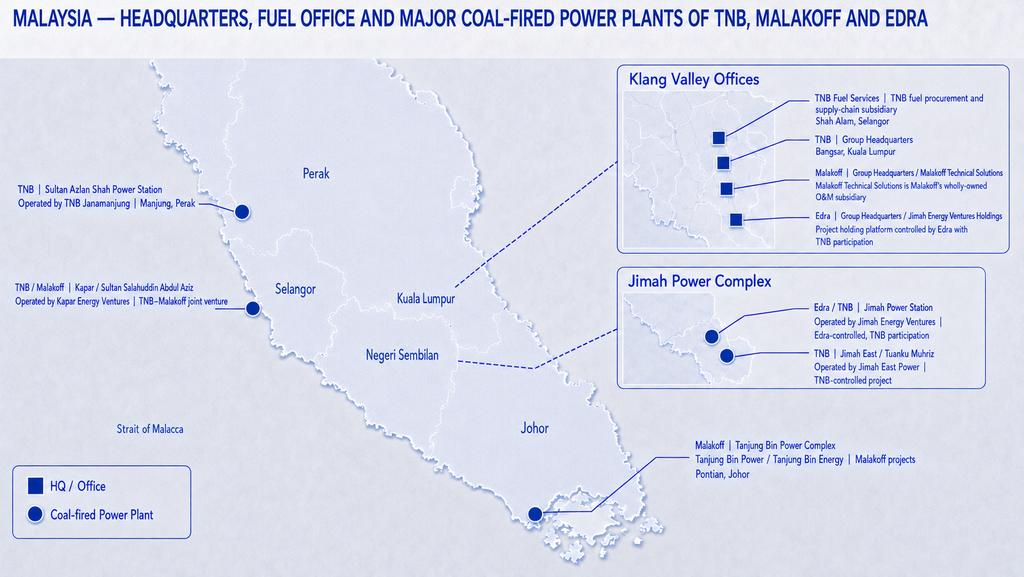
Tenaga Nasional Berhad(TNB)
TNB is the core integrated power utility in Peninsular Malaysia. Its major coal-fired assets under its control or in which it holds equity interests include the approximately 4.08 GW Sultan Azlan Shah Power Station (Manjung), the 2.0 GW Jimah East Power Station, in which TNB holds a 70% stake, and the Kapar Energy Ventures (KEV) power generation complex, in which TNB holds a 60% stake. Coal procurement and transportation are mainly handled by TNB Fuel Services (TNBF).
TNBF supplies coal not only to coal-fired power plants controlled by TNB, but also to certain IPP that have Power Purchase Agreements (PPAs) within the TNB power system. Therefore, TNBF’s coal supply volume should not be directly interpreted as the coal consumption of TNB-owned power plants.
In 2025, TNBF delivered approximately 36.39 Mt of coal to power plants, up from 34.89 Mt in 2024, representing year-on-year growth of around 4.3%. During the same period, actual coal consumption by TNB and related IPP coal-fired power plants in Peninsular Malaysia was approximately 35.9 Mt, compared with 34.7 Mt in FY2024. The two figures represent different measures: one refers to coal delivered to power plants, while the other refers to coal actually consumed by the plants. The difference mainly reflects changes in power plant inventories, delivery timing, and statistical methodology. Therefore, the 36.39 Mt figure should not be directly equated with coal consumption at TNB-owned power plants.
TNBF primarily procures imported thermal coal. Coal-fired power plants in Peninsular Malaysia are highly dependent on overseas supply, with Indonesia serving as the largest source, while Australia and other countries provide supplementary supply.
Regarding coal consumption at Manjung, some secondary sources have stated that the power station consumes approximately 30,000 tonnes of coal per day while also citing annual coal consumption of around 15 Mt. However, even assuming continuous operation at 30,000 tonnes per day for 365 days, annual consumption would amount to only approximately 10.95 Mt. Therefore, the figures of “30,000 tonnes per day” and “15 Mt per year” cannot both be arithmetically correct.
Coal costs within the TNB system are mainly affected by the delivered cost of imported coal, the Malaysian ringgit–US dollar exchange rate, coal calorific value and quality, seaborne freight rates, and port logistics costs. As imported coal is generally priced in US dollars, depreciation of the Malaysian ringgit can increase actual fuel costs even when international coal prices remain unchanged. Changes in fuel prices are partially passed through to the electricity system through the Applicable Coal Price (ACP) and related fuel cost adjustment mechanisms. As a result, an increase in international coal prices does not simply or immediately translate into an equivalent reduction in TNB’s own profits.
Malakoff Corporation Berhad
Malakoff’s core coal-fired power generation assets in Johor consist of the Tanjung Bin Power Plant (TBPP) and the Tanjung Bin Energy Power Plant (TBEPP), with a combined installed capacity of approximately 3.1 GW. TBPP has an installed capacity of 2.1 GW, comprising three 700 MW coal-fired generating units, while TBEPP consists of a single 1,000 MW coal-fired unit. The two plants are operated by Malakoff subsidiaries Tanjung Bin Power Sdn. Bhd. and Tanjung Bin Energy Sdn. Bhd., respectively, and represent Malakoff’s principal coal-fired power generation assets.
In 2025, Malakoff’s energy business reported coal energy consumption of approximately 188.37 million GJ, down from 207.03 million GJ in 2024, representing a year-on-year decline of approximately 9%.
Fuel for the Tanjung Bin coal-fired power projects is mainly sourced through Peninsular Malaysia’s imported thermal coal supply system, with TNBF playing an important role in the relevant coal procurement and supply arrangements. As coal fuel costs can be passed through to the electricity system through PPAs and related fuel cost pass-through mechanisms, higher international coal prices generally increase power generation costs but do not necessarily result in a proportional decline in Malakoff’s profits. Malakoff’s profitability is also affected by factors such as plant availability, electricity generation, maintenance, PPA terms, and operational efficiency.
Edra Power Holdings(Edra)
Edra Power Holdings was originally formed in 2014 through the consolidation of three major Malaysian independent power producer groups—Powertek Energy Group, KLPP Group, and Jimah Energy Group. In 2016, it was acquired by China General Nuclear Power Corporation (CGN), becoming an independent power generation platform under CGN.
For the Jimah coal-fired power project, Edra holds a 75% interest in Jimah Energy Ventures Holdings (JEVH), while Tenaga Nasional Berhad (TNB) holds the remaining 25%. JEVH, in turn, owns 100% of Jimah Energy Ventures (JEV), which operates the Jimah Power Station. Through this ownership structure, Edra indirectly holds an effective 75% interest in the Jimah Power Station, while TNB holds 25%.
The Jimah Power Station is located in Port Dickson, Negeri Sembilan. It consists of two 700 MW subcritical coal-fired generating units, with a total installed capacity of 1.4 GW, and is an important baseload coal-fired power source in Peninsular Malaysia.
Its fuel-related costs are mainly affected by plant utilization rates, coal calorific value and quality, imported coal prices, and seaborne freight costs. As coal costs are subject to cost pass-through arrangements under the relevant PPA and fuel supply mechanisms, higher international coal prices increase fuel costs for the power system but do not necessarily reduce Edra’s profits by the same proportion.
![[SMM Analysis]Limited Upside/Downside Drivers; GO Silicon Steel Prices to Stay Weak and Stable in October](https://imgqn.smm.cn/usercenter/mpffV20251217171715.jpg)