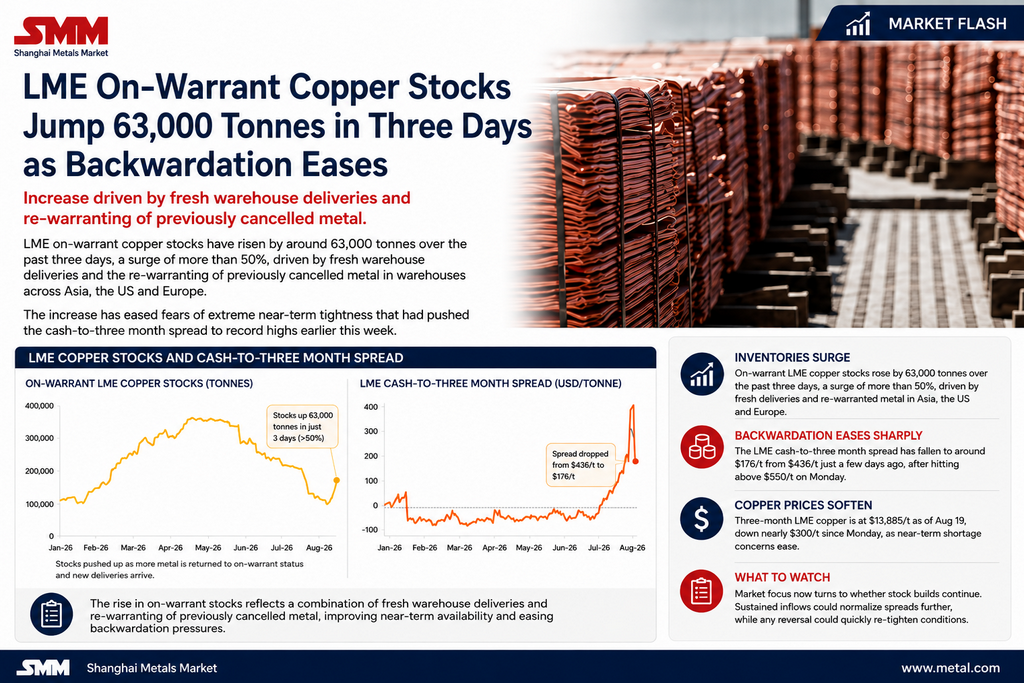
LME on-warrant copper stocks have risen by around 63,000 tonnes over the past three days, an increase of more than 50%, as a combination of fresh warehouse deliveries and the re-warranting of previously cancelled metal boosted immediately available exchange inventories. The rapid increase has materially eased the acute nearby tightness that had pushed LME copper spreads to extreme levels earlier this week.
The cash-to-three-month spread has narrowed to around $176/t, down from roughly $436/t only a few days earlier. At one stage on Monday, the spread exceeded $550/t, highlighting how severe the squeeze in nearby metal had become before additional stock returned to warrant.
Around 28,000 tonnes of the recent increase came from fresh deliveries onto the exchange, while the remainder largely reflected previously cancelled stock being re-warranted and returned to available inventory. The distinction is important because the 63,000-tonne rise does not represent entirely new copper entering the LME system, but rather a combination of new metal and previously unavailable stock becoming deliverable again.
Copper prices have responded to the easing in physical tightness. As of August 19, three-month LME copper was trading at around $13,885/t, nearly $300/t lower than Monday, as concerns over an immediate shortage of deliverable metal receded.
From a market-structure perspective, the move suggests that the recent squeeze was driven in part by the availability and status of exchange stocks rather than by an outright disappearance of copper from the global market. The sharp compression in backwardation indicates that immediate demand for nearby units has eased, even though broader concerns around mine supply, concentrate availability and regional stock imbalances remain.
The next key signal will be whether LME inventories continue to rebuild. Sustained deliveries and further re-warranting could normalise nearby spreads and reduce short-term price volatility, while any renewed drawdown in available stocks could quickly tighten conditions again.