AI-Driven Electronic Fabric: From Supporting Material to Computing Power Base
Electronic fabric (electronic-grade glass fiber cloth) is the core reinforcing substrate for copper clad laminate (CCL), which ultimately goes into printed circuit boards (PCB). In the past, electronic fabric was mostly used as a supporting material, but as AI servers dramatically raise requirements for PCB layer count, signal speed, and stability, low-dielectric (Low-Dk) and ultra-low-loss electronic fabric has become a rigid demand, upgrading electronic fabric into a core foundational material for computing and communication infrastructure.
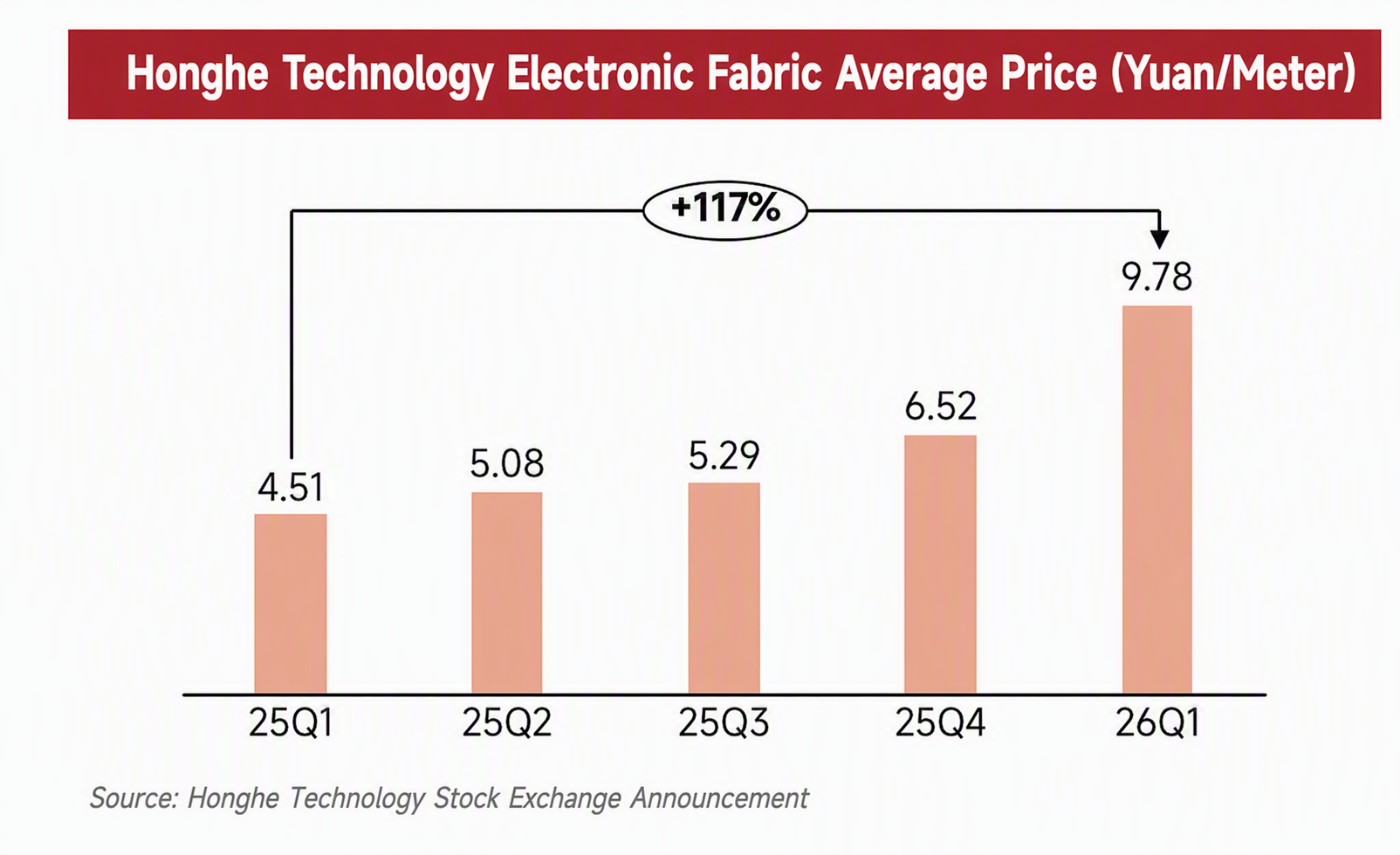
This demand boost has led to tighter supply and rising prices. Taking the operating data disclosed by industry leader Honghe Technology as an example, the average price of electronic-grade glass fiber cloth climbed from 4.51 yuan/meter in Q1 2025 to 9.78 yuan/meter in Q1 2026, a YoY increase of 116.85%.
2026 Expansion Panorama: An "Electronic Fabric Arms Race"
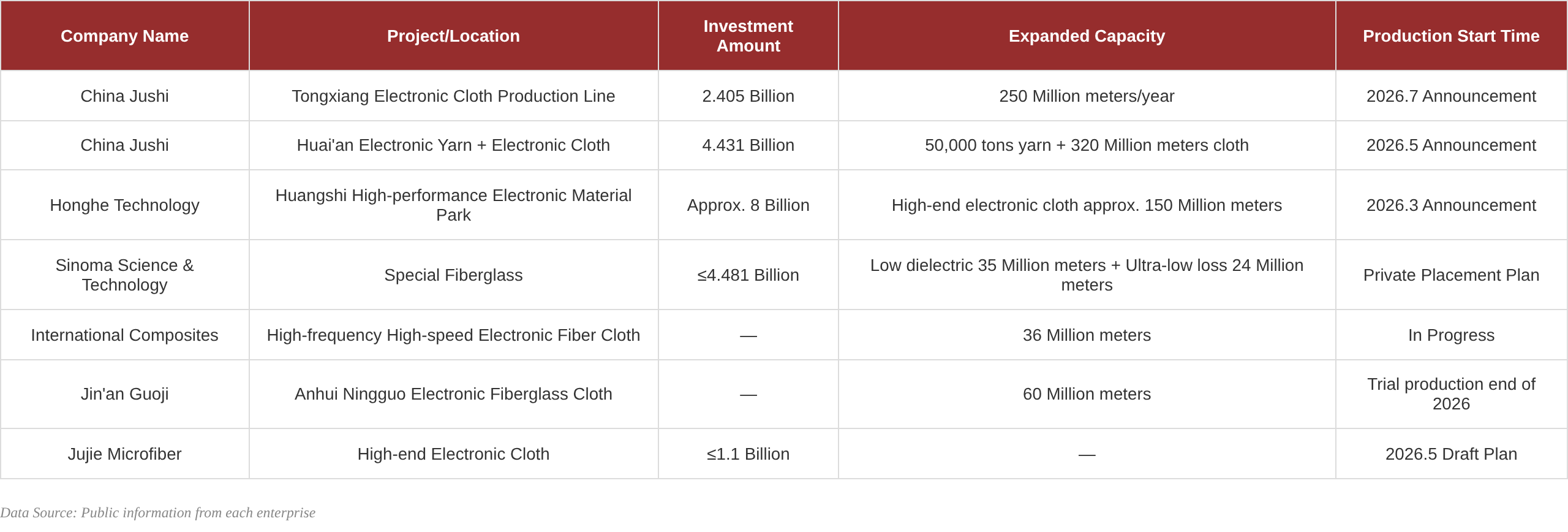
Driven by AI demand, publicly listed firms across the industry chain densely disclosed electronic fabric project construction and capacity deployment plans in 2026, with capital expenditure intensity at a high level in recent years. Based on public information alone, the newly planned capacity of top-tier players is already considerable: China Jushi's electronic fabric sales reached 1.062 billion meters in 2025, ranking first in the industry; Jushi alone has announced approximately 570 million meters in new planned capacity over the past two months. Many enterprises are currently operating at full production and full sales.
Glass Fiber Drawing and Pt-Rh Bushings
The birth of electronic fabric begins at an ultra-high temperature of around 1600°C: raw materials like quartz sand and pyrophyllite are melted into molten glass, which flows through an alloy bushing precisely formulated with platinum and rhodium, streaming out from thousands of micron-scale nozzles. Pulled by high-speed drawing machines, it is stretched into glass fibers finer than human hair (down to below 9 microns). This bushing is the key component of a glass fiber production line and the entry point for platinum demand:
- Irreplaceability: In a 1300–1600°C molten glass environment, ordinary metals would rapidly oxidize, corrode, or even melt; only Pt-Rh alloy possesses the combined ability to withstand high temperatures, resist molten glass erosion, and conduct electrical heating for temperature control.
- Perpetual Consumable Attribute: Bushings undergo continuous wear under high-temperature scouring, with a service life of about 1–1.5 years (shorter for standard bushings; dispersion-strengthened bushings can reach 12–18 months), resulting in very strong repurchase demand. In 2025, the total in-service Pt-Rh bushing inventory across the industry reached 85.7 mt, with over 10,000 bushings in operation.
- Capital Expenditure Threshold: For a 100-kt level direct roving production line, the investment in Pt-Rh alloy alone has risen from approximately 200 million yuan to about 450 million yuan; each ton of electronic yarn produced requires about 6,300–6,900 yuan in Pt-Rh bushing input.
- Demand Volume: The global glass fiber industry has an annual platinum demand of approximately 700,000 ounces (about 21.8 mt). The platinum circulation volume involved in the full life cycle of bushings in China exceeds 3.5 million ounces (approximately 109 mt). The annual feed volume for bushing manufacturers doubled over the past five years. In 2025, the total global volume of platinum-rhodium bushings in service was approximately 85.7 mt, with over 10,000 bushings in operation. The bushing lifespan is about 1–1.5 years, requiring maintenance or replacement for over 10,000 units annually. China accounts for over 60% of global glass fiber capacity, making it the largest consumer market; correspondingly, the majority share of the in-service stock is concentrated in domestic production lines.
Overall, electronic cloth has become another clear demand growth pole for platinum, following hydrogen energy. Platinum-rhodium alloy is the core consumable for glass fiber tank furnace drawing bushings. Establishing new production lines requires a substantial one-time initial feed, while ongoing volatilization losses during production constitute a continuous net consumption. This round of high-end PCB capacity expansion, driven by AI computing power, boosts both volume and price for electronic cloth, accelerating capacity deployment for ultra-thin and low-dielectric specialty cloth. This, in turn, leads to a dual increase in new bushing procurement and full-production loss, providing marginal growth for industrial platinum demand. In terms of scale, the overall demand of the glass fiber sector remains smaller than that of autocatalysts, but it exhibits high prosperity elasticity and strong linkage with the AI industry chain, representing a structural growth point on the platinum demand side that cannot be overlooked. Currently, the core pricing of platinum is still dominated by macro factors, mineral supply, and autocatalyst demand, while electronic cloth mainly amplifies the supply-demand tight balance expectations at the margin.
![[SMM Precious Metals Express]](https://imgqn.smm.cn/usercenter/OQqCm20251217171736.jpg)

![[SMM Precious Metals Express]](https://imgqn.smm.cn/usercenter/VphiQ20251217171736.jpg)