De acordo com os dados alfandegários mais recentes da Indonésia, o comércio de enxofre e ácido sulfúrico do país em junho de 2026 apresentou divergências significativas. As importações de enxofre caíram na comparação anual, mas se recuperaram na mensal, enquanto as importações de ácido sulfúrico dispararam tanto na comparação anual quanto na mensal. As exportações de enxofre aumentaram substancialmente em relação ao mês anterior, enquanto as de ácido sulfúrico permaneceram zeradas.
Resumo:
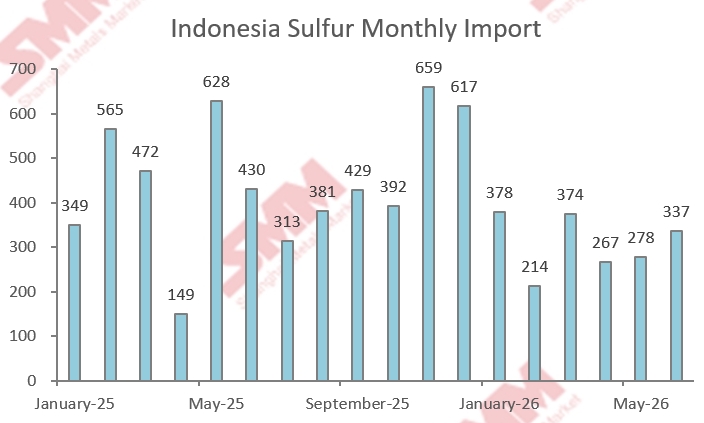
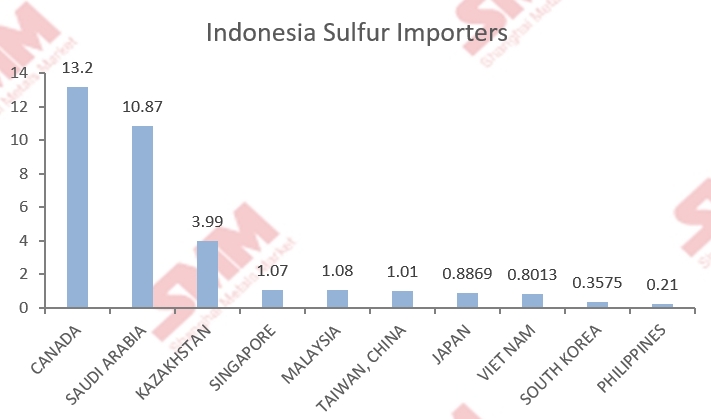
- Importações de enxofre: 336.900 toneladas, alta de 21% no mês e queda de 26% no ano. Principais fornecedores: Canadá, Arábia Saudita, Cazaquistão, Malásia, Singapura, Taiwan (China), Japão, Vietnã, Coreia do Sul e Filipinas.
- Exportações de enxofre: 54.800 toneladas, alta expressiva tanto na comparação mensal quanto anual. Principais destinos: Malásia, China, Timor-Leste e Alemanha.
- Importações de ácido sulfúrico: 111.200 toneladas, alta de 101% no mês e de 150% no ano. Principais fornecedores: Coreia do Sul, Japão e China.
- Exportações de ácido sulfúrico: Zero.
I. Importações de Enxofre: Queda de 26% no Ano, Alta de 21% no Mês
Em junho, as importações indonésias de enxofre (incluindo enxofre natural e refinado) totalizaram aproximadamente 334.700 toneladas, queda de 26% em relação às 454.800 toneladas do mesmo mês do ano anterior, mas alta de 21% ante as 277.800 toneladas de maio de 2026. Principais portos de recebimento, por volume:
- Ilha OBI: Principal centro receptor, com aproximadamente 177.600 toneladas, oriundas principalmente de Canadá, Cazaquistão, Arábia Saudita e Taiwan (China).
- MOROWALI: Aproximadamente 76.400 toneladas, oriundas principalmente de Canadá, Malásia e Singapura.
- TANJUNG PERAK: Aproximadamente 19.300 toneladas, oriundas principalmente de Coreia do Sul, Omã, Arábia Saudita, Reino Unido e Estados Unidos.
- TANJUNG PRIOK: Aproximadamente 9.927 toneladas, oriundas principalmente de China, Índia, Itália, Japão, Coreia do Sul, Malásia, Filipinas, Arábia Saudita e Vietnã.
- TERMINAL FUTONG: Aproximadamente 8.003 toneladas, todas do Vietnã.
- MERAK: Aproximadamente 2.450 toneladas, todas do Japão.
- BELAWAN: Aproximadamente 397 toneladas, oriundas principalmente de China, Coreia do Sul, Malásia, Taiwan (China) e Turquia.
Por país de origem, os principais fornecedores foram: Canadá (aproximadamente 132.000 toneladas, maior fornecedor do mês), Arábia Saudita (aproximadamente 108.670 toneladas, segundo colocado), Cazaquistão (aproximadamente 39.944 toneladas), Singapura (aproximadamente 10.701 toneladas), Malásia (aproximadamente 10.768 toneladas), Taiwan (China) (aproximadamente 10.051 toneladas), Japão (aproximadamente 8.869 toneladas), Vietnã (aproximadamente 8.013 toneladas), Coreia do Sul (aproximadamente 3.575 toneladas) e Filipinas (aproximadamente 2.100 toneladas). As exportações chinesas de enxofre para a Indonésia em junho totalizaram apenas cerca de 257 toneladas, uma forte retração em relação aos meses anteriores.
II. Importações de Ácido Sulfúrico: Alta de 150% no Ano, 101% no Mês
Em junho, as importações indonésias de ácido sulfúrico (concentração >80%) totalizaram aproximadamente 111.200 toneladas, alta de 150% em relação às 44.500 toneladas do mesmo mês do ano anterior, e de 101% ante as 55.300 toneladas de maio de 2026. As importações destinaram-se principalmente a polos de projetos de fundição de níquel, por volume:
- Ilha OBI: Aproximadamente 47.300 toneladas, oriundas principalmente de Japão e Coreia do Sul.
- WEDA: Aproximadamente 42.900 toneladas, oriundas principalmente de China e Coreia do Sul.
- GRESIK: Aproximadamente 10.500 toneladas, todas do Japão.
- LHOK SEUMAWE: Aproximadamente 10.500 toneladas, todas do Japão.
- TANJUNG PRIOK: Aproximadamente 1 tonelada.
Por país de origem, Coreia do Sul foi o maior fornecedor de ácido sulfúrico para a Indonésia em junho (aproximadamente 52.900 toneladas), seguido por Japão (aproximadamente 39.300 toneladas) e China (aproximadamente 19.000 toneladas).
III. Exportações de Enxofre: Alta Expressiva no Ano, Aumento Substancial no Mês
Em junho, as exportações indonésias de enxofre totalizaram aproximadamente 54,8 toneladas, alta expressiva ante apenas 1 tonelada no mesmo mês do ano anterior e aumento substancial em relação às 24 toneladas de maio de 2026.
- Malásia foi o maior destino, recebendo aproximadamente 44 toneladas, respondendo por cerca de 80% do total exportado.
- China foi o segundo maior destino, recebendo aproximadamente 10,5 toneladas, cerca de 19% do total.
- Pequenos volumes de enxofre refinado foram enviados para Timor-Leste (285 kg) e Alemanha (6,12 kg).
Adicionalmente, a Indonésia registrou zero exportações de ácido sulfúrico em junho, mantendo a tendência observada no mesmo período do ano anterior e em maio deste ano.
IV. Conclusão
Em junho de 2026, as importações indonésias de enxofre atingiram 334.700 toneladas, queda de 26% no ano, mas alta de 21% no mês, com Canadá e Arábia Saudita como os dois maiores países de origem. As importações de ácido sulfúrico dispararam 150% no ano e 101% no mês, para 111.200 toneladas, com a Coreia do Sul como maior fornecedor e a Ilha OBI e WEDA como os dois principais centros receptores. As exportações de enxofre subiram substancialmente no mês, para 54,8 toneladas, destinadas principalmente à Malásia e China, enquanto as exportações de ácido sulfúrico permaneceram zeradas por vários meses consecutivos.
![[SMM Analysis] Início lento da alta temporada do mercado de cobalto: recuperação da demanda não ganha impulso](https://imgqn.smm.cn/usercenter/olwlF20251217171731.jpg)
![Mercado de aplicações de segunda vida estável, carbonato de lítio sobe e depois cai, demanda por LFP supera a ternária [Análise semanal SMM]](https://imgqn.smm.cn/usercenter/GVVKq20251217171728.jpg)
![[Revisão Semanal SMM] Mercado de Reciclagem Hidrometalúrgica Esta Semana: Mercados de Cobalto Puro e Massa Negra Ternária Lentos, Preços de LFP Majoritariamente Oscilando, 31/08/2026-03/09/2026](https://imgqn.smm.cn/usercenter/fblvS20251217171729.png)