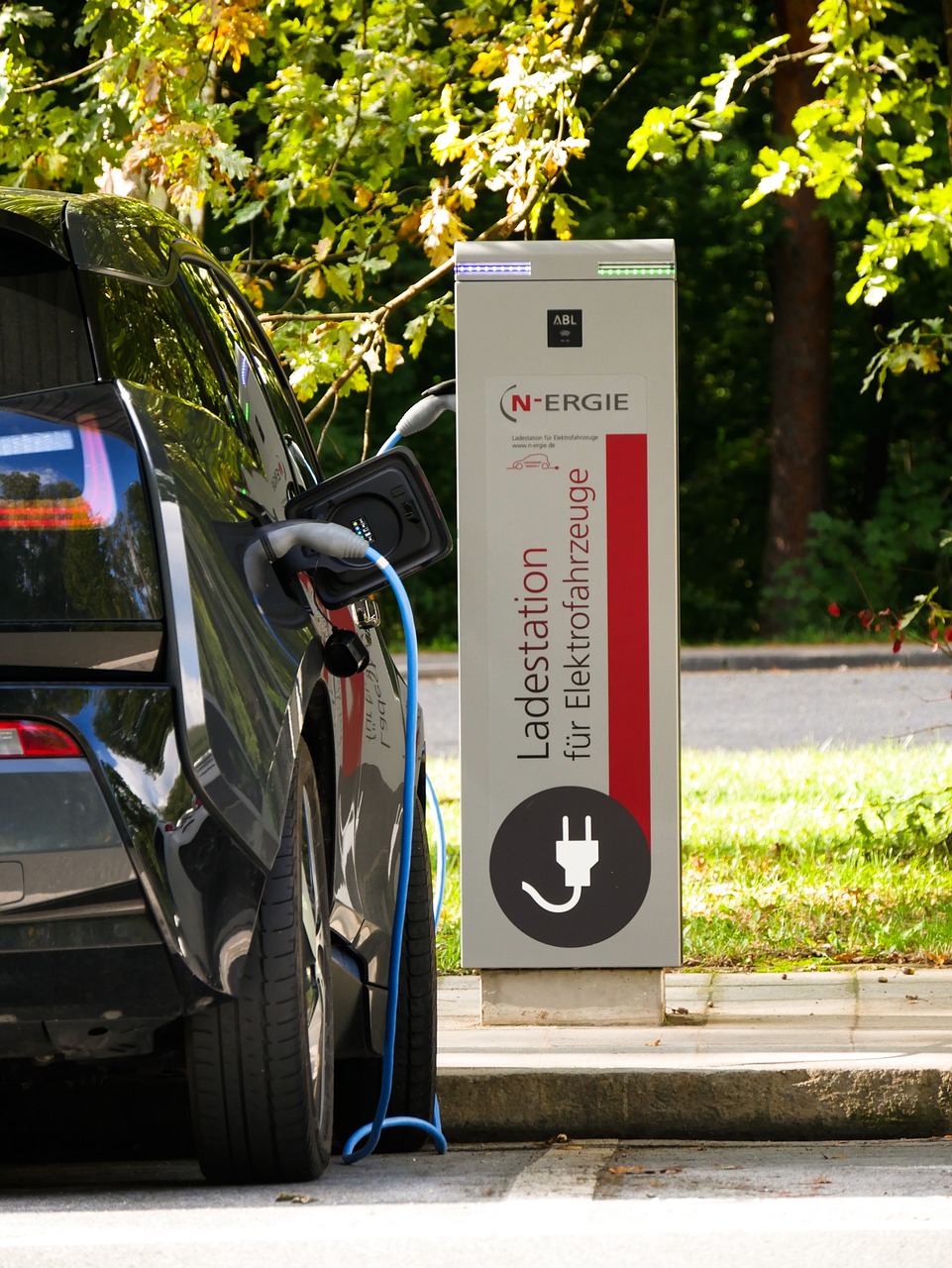
As the traditional "September-October peak season" for car sales is about to arrive, demand from NEVs and other sectors continues to increase, and coupled with the rapid expansion of the energy storage industry, the supply-demand pattern for upstream lithium carbonate is undergoing a critical shift.
A research report from CSC states that as the peak demand season arrives in H2 2026, the lithium carbonate supply gap is expected to gradually widen, reaching its maximum in Q4. If advance stockpiling across the industry chain is factored in, the price peak during the year may occur between late Q3 and early Q4.
Demand side, the NEV and energy storage industries have become the twin engines driving lithium demand. China's "September-October peak season" for car purchases, combined with rush delivery schedules for overseas vehicle exports, has prompted mainstream automakers to start ramping up production schedules in Q3. Battery capacity per vehicle continues to rise, and procurement demand for lithium raw materials in power batteries is steadily rebounding. Meanwhile, the energy storage industry has already become a core new growth pole for lithium demand. Utility-scale energy storage stations, industrial and commercial ESS, and AI-related energy storage projects in China and overseas are being launched intensively. A large number of forward orders have been locked in through 2027, and ESS battery installations maintained strong YoY growth, providing sustained and robust incremental support for upstream lithium resources.
Taking into account the impact of three key industries—energy storage, EVs, and sodium-ion batteries—CSC expects the price range for lithium carbonate in H2 2026 to be 150,000–200,000 yuan/mt, with the industry's profitability continuing to expand.
In addition, SMM recently analyzed that the expected official imposition of a battery consumption tax in early September is creating a certain front-loading effect on July–August production schedules. Some battery companies and automakers are ramping up stockpiling efforts before the policy window closes to reduce future tax costs. Against this backdrop, supported by both peak-season stockpiling and the rush to beat the consumption tax, the MoM growth rates of LFP power battery cells and ternary power battery cells are expected to both remain at a relatively high level of around 8% in August.
Even into 2027, demand is expected to remain robust, and while lithium carbonate supply will be gradually released, a surplus for the full year is still unlikely.
Looking ahead to 2027, CSC expects a lithium carbonate supply-demand gap of 15,000–99,000 mt (equating to 0.5%–3.4%), with the supply-demand situation slightly looser than this year but still in undersupply. Based on a 2027 PE of 10–15 times, the corresponding lithium carbonate price implied in the market caps of major lithium miners next year is 110,000–140,000 yuan/mt.
Against the backdrop of rising lithium prices, the earnings flexibility of A-share publicly listed firms in the lithium mine and lithium chemicals sectors is fully unleashed. Most of these enterprises saw soaring profits in H1, and many successfully turned losses into profits, highlighting the sector's investment value.
Meanwhile, the global lithium mine supply side is also undergoing new changes, as the pace of lithium mine production resumptions overseas accelerates, further reshaping the global lithium resource supply-demand pattern.
Recently, according to foreign media reports, Zimbabwe's state-owned Mutapa Energy Resources announced that its Sandawana lithium mine project has confirmed 39.9 million mt of JORC-compliant lithium resources, of which 28.7 million mt are measured resources, accounting for about 72% of the total.
Zimbabwe's Vice President Chiwenga stated previously that the currently uncovered reserves at the Sandawana lithium mine project are about 39 million mt, while the total potential lithium resources across the entire mining concession area could be as high as 600 million mt.
Separately, the website of Japan's Nikkei recently reported that lithium is a critical mineral for manufacturing products such as EV batteries, and that Australian companies are expanding lithium mine production, with several projects that were suspended due to the market downturn in 2024 now being restarted.
According to the West Australian, PLS's Ngungaju processing plant has restarted production of spodumene concentrates. In July, the plant processed its first batch of ore and is expected to reach stable production within Q3.
Mineral Resources plans to restart the Bald Hill lithium mine in Western Australia. Bald Hill is designed to produce 165,000 mt of spodumene concentrates annually with a grade of 5.1%, equivalent to about 140,000 mt of SC6 (approximately 17,500 mt of LCE). As planned, the first shipment is expected to depart from the Port of Esperance in Q1 of fiscal year 2027, with full-capacity production to be achieved in Q2.
Core Lithium announced on May 20 that the Finniss project has officially resumed production, with the Grants mine area commencing its first blast. Raw ore processing is expected to begin in Q3 2026, and the first shipment of spodumene concentrates is scheduled for Q4 2026.
In addition, the regulatory authorities in Western Australia have recently officially approved the expansion plan for the Mt Holland lithium mine project, under which the annual spodumene concentrates capacity will be raised to 4 million mt from the current level. The project is managed and operated by Covalent Lithium Pty Ltd, a 50/50 joint venture between Chile's SQM and Australia's Wesfarmers.
![[SMM Energy Storage Battery Cell Market Weekly Review 8.27] Battery cell prices pull back slightly, tighter US grid access regulations for large-scale equipment](https://imgqn.smm.cn/usercenter/JmyWy20251217171729.png)
![[SMM Weekly Review] This week in the hydrometallurgical recycling market: LFP prices oscillated, while pure cobalt and ternary black mass prices continued to decline, 2026.8.24-2026.8.27.](https://imgqn.smm.cn/usercenter/zJWny20251217171726.jpg)
![[SMM Separator Weekly Review] Prices Were Stable This Week](https://imgqn.smm.cn/usercenter/ipFFo20251217171725.jpg)